EnglishFreePrintable

Reading Between the Lines

A free english worksheet ready for your classroom. Open in Kuraplan to grab the print-ready PDF, customize it for your students, or generate a fresh version in seconds.
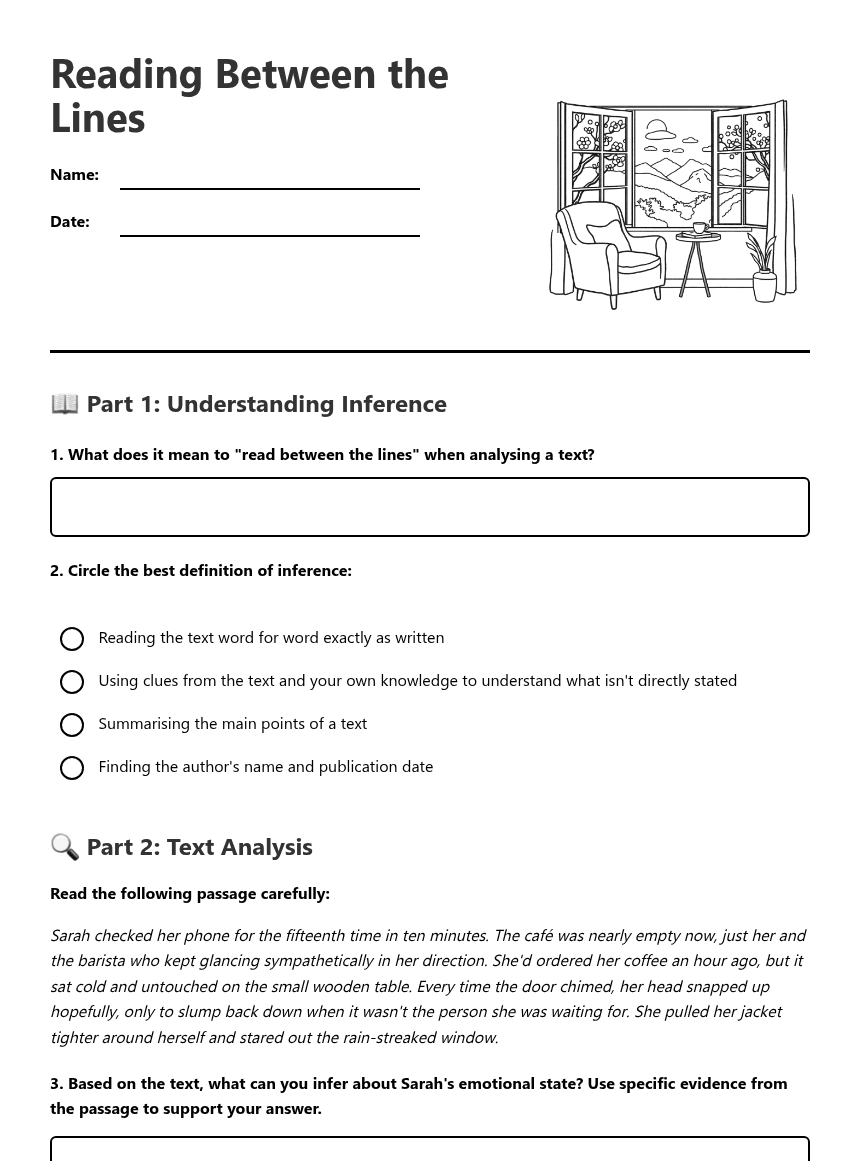
Reading Between the Lines worksheet preview
Reading Between the Lines

Reading Between the Lines

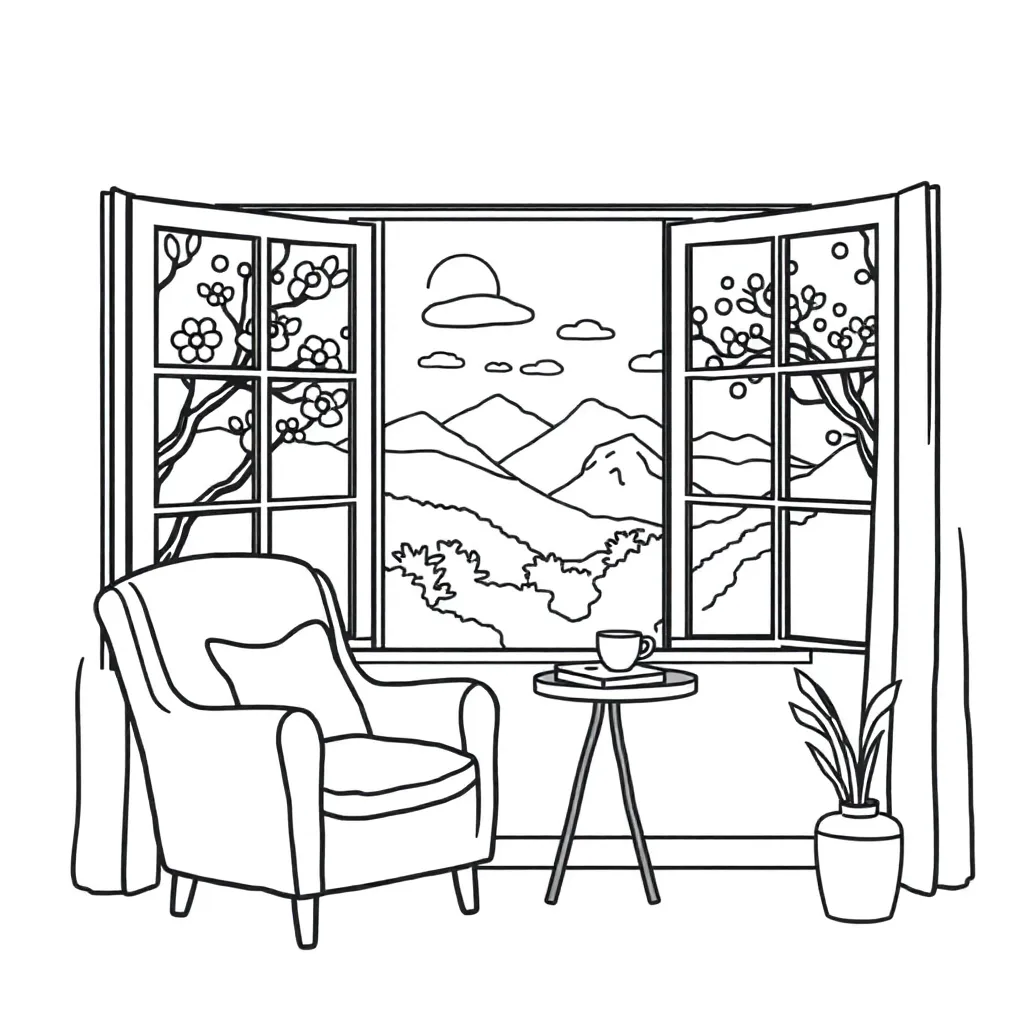
Student reading and thinking critically

📖 Part 1: Understanding Inference

1. What does it mean to "read between the lines" when analysing a text?
2. Circle the best definition of inference:

Reading the text word for word exactly as written

Using clues from the text and your own knowledge to understand what isn't directly stated

Summarising the main points of a text

Finding the author's name and publication date

🔍 Part 2: Text Analysis

Read the following passage carefully:

Sarah checked her phone for the fifteenth time in ten minutes. The café was nearly empty now, just her and the barista who kept glancing sympathetically in her direction. She'd ordered her coffee an hour ago, but it sat cold and untouched on the small wooden table. Every time the door chimed, her head snapped up hopefully, only to slump back down when it wasn't the person she was waiting for. She pulled her jacket tighter around herself and stared out the rain-streaked window.

3. Based on the text, what can you infer about Sarah's emotional state? Use specific evidence from the passage to support your answer.
4. What do you think is happening in this scene? What clues led you to this inference?
5. Why do you think the author chose to describe the coffee as "cold and untouched"?

🎯 Part 3: Making Connections

6. What prior knowledge or personal experiences help you understand Sarah's situation? Explain how this background knowledge enhances your understanding of the text.
7. Predict what might happen next in this scene. Base your prediction on the evidence you've gathered from the text.

💭 Part 4: Inference Techniques

8. Match each inference technique with its description:
1. Character actions
2. Setting details
3. Dialogue
4. Author's word choice
A. What characters say reveals personality and relationships
B. Time and place can create mood and atmosphere
C. Specific words carry emotional weight and meaning
D. What characters do shows their feelings and motivations
9. Which of these are good sources of evidence for making inferences? (Check all that apply)

Character's thoughts and feelings

Descriptive language and imagery

Your own assumptions without text support

Character interactions and relationships

Setting and atmosphere

Random guesses about the plot

✍️ Part 5: Reflection and Application

10. Complete this inference statement about the café passage:

I inferred that __________________ because the text says __________________ and from my own experience I know __________________.

11. How does making inferences enhance your understanding and enjoyment of texts? Write a short paragraph explaining your thoughts.
12. Choose one inference strategy you will focus on during your next independent reading session. Explain why you chose this strategy.

About This Worksheet

Free in Kuraplan

Sign up free, grab the PDF, and customize it for your class.

Print-Ready

Formatted for standard paper. Clean layout, easy to read.

AI-Generated

Created with Kuraplan's AI, designed for real classroom use.

For Teachers & Parents

Use in classrooms, for homework, tutoring, or homeschool.

Need a custom version of this worksheet?

Kuraplan's AI generates custom worksheets in seconds — differentiated for every learner, aligned to your curriculum.

Generate Custom Worksheets — Free
No credit card Curriculum-aligned Under 60 seconds