Whangaroa Kaitiakitanga Worksheet
A free social sciences worksheet ready for your classroom. Open in Kuraplan to grab the print-ready PDF, customize it for your students, or generate a fresh version in seconds.
Whangaroa Kaitiakitanga Worksheet
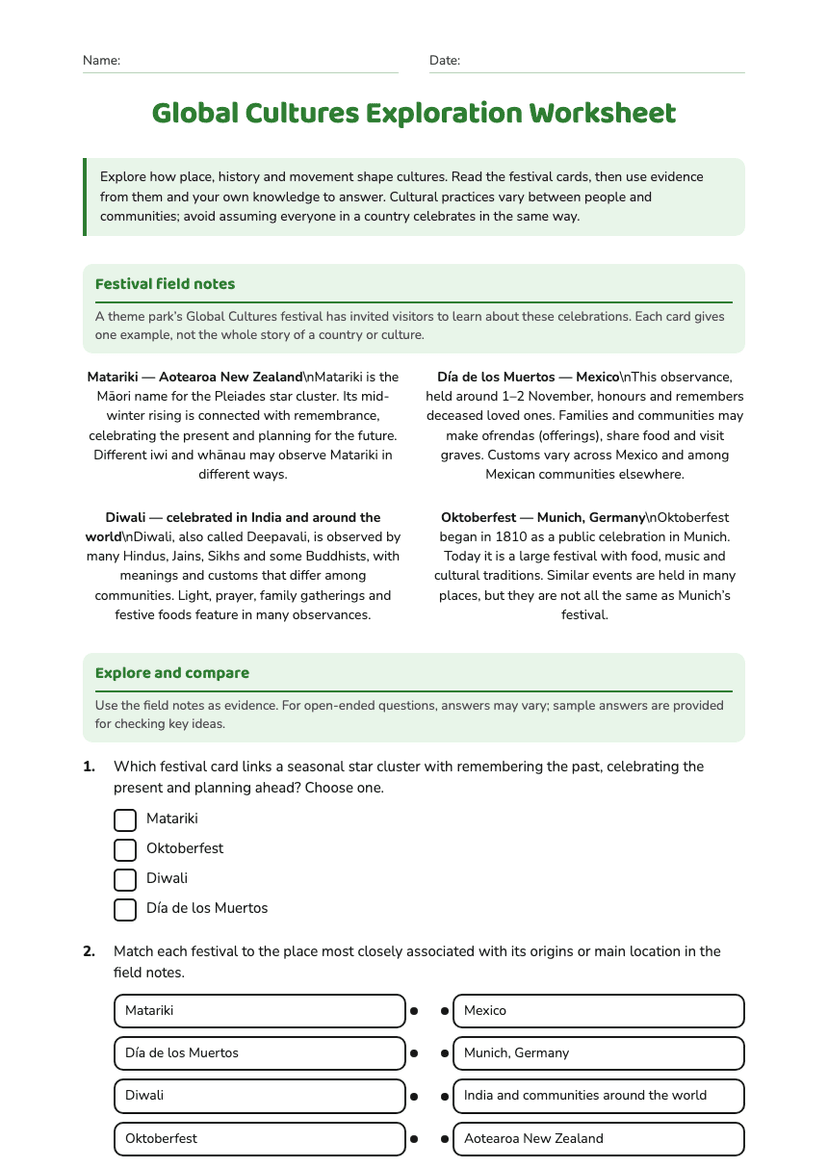
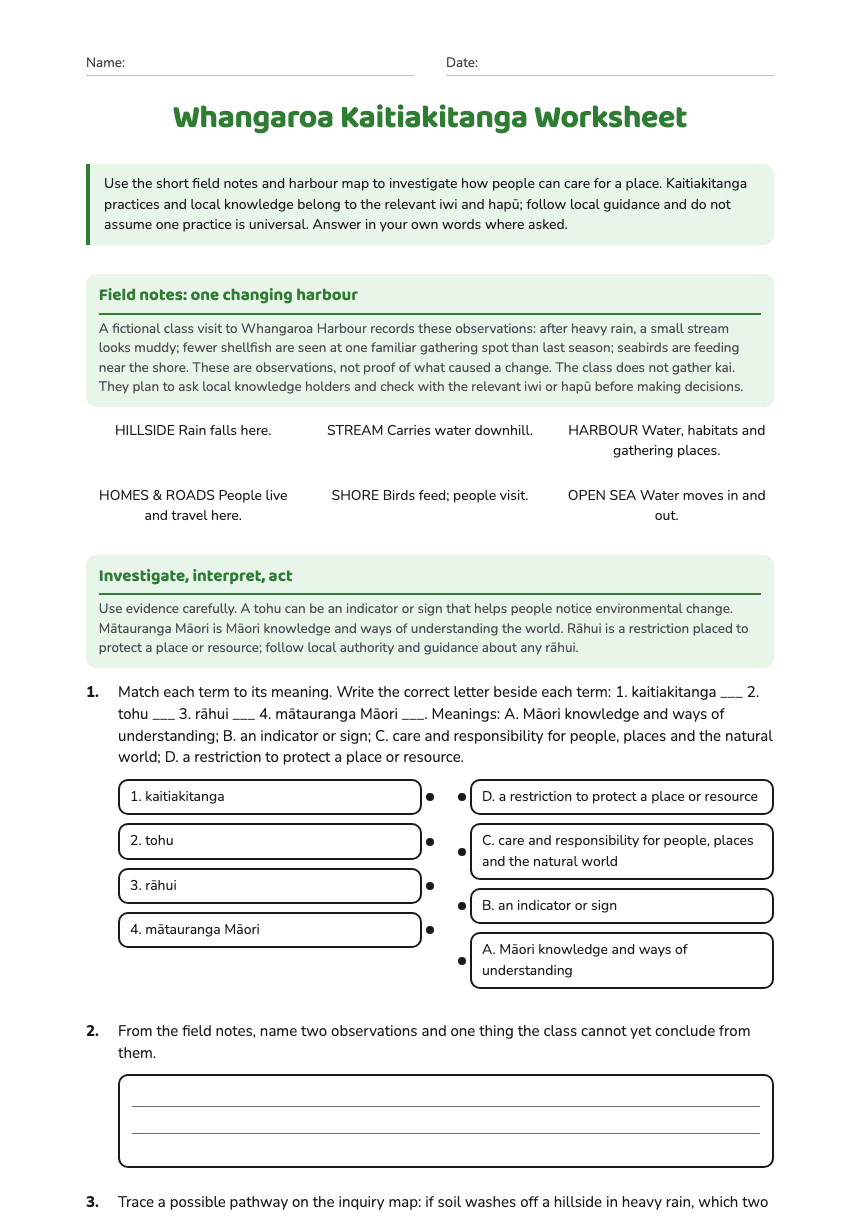
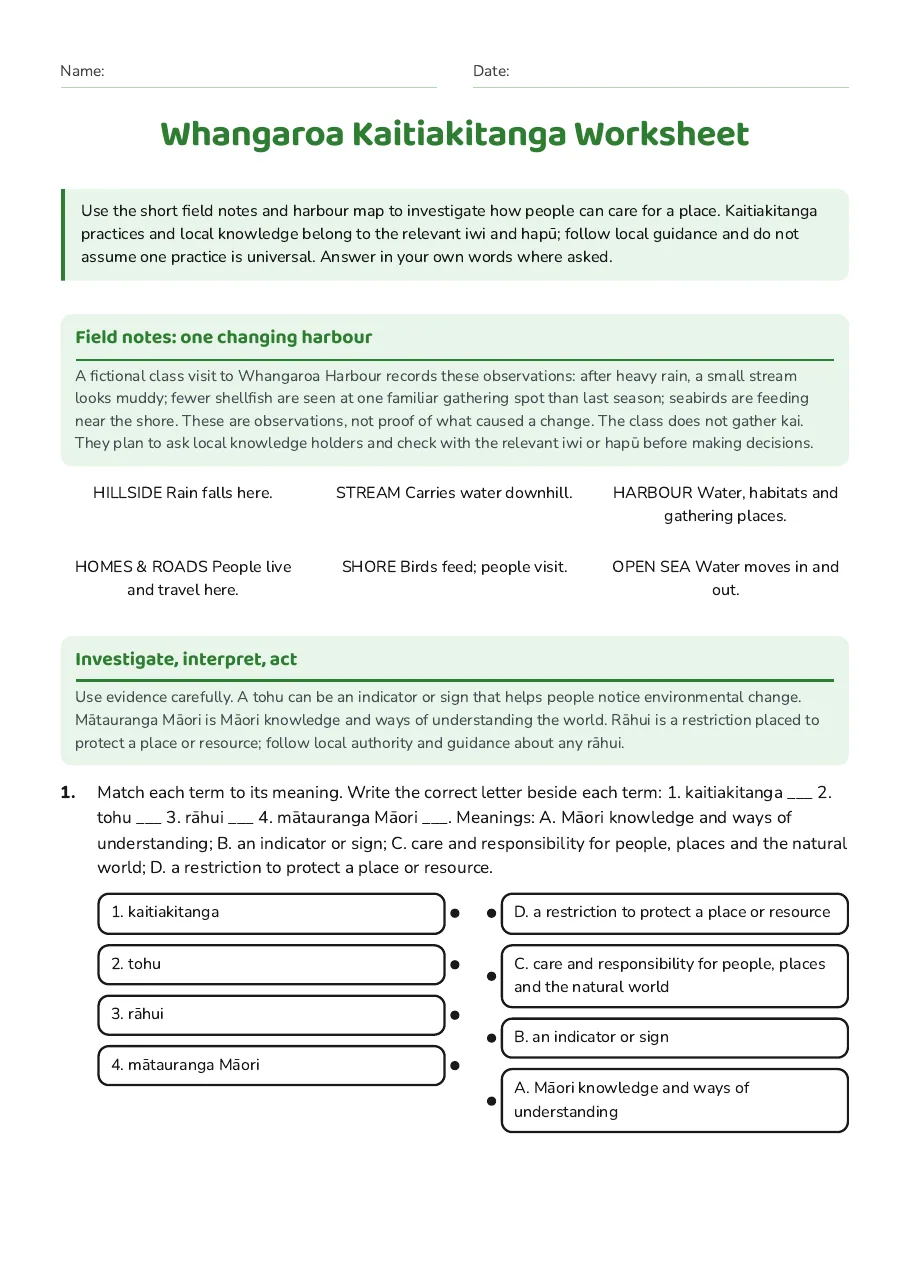
Field notes: one changing harbour
A fictional class visit to Whangaroa Harbour records these observations: after heavy rain, a small stream looks muddy; fewer shellfish are seen at one familiar gathering spot than last season; seabirds are feeding near the shore. These are observations, not proof of what caused a change. The class does not gather kai. They plan to ask local knowledge holders and check with the relevant iwi or hapū before making decisions.
HILLSIDE Rain falls here.
STREAM Carries water downhill.
HARBOUR Water, habitats and gathering places.
HOMES & ROADS People live and travel here.
SHORE Birds feed; people visit.
OPEN SEA Water moves in and out.
Investigate, interpret, act
Use evidence carefully. A tohu can be an indicator or sign that helps people notice environmental change. Mātauranga Māori is Māori knowledge and ways of understanding the world. Rāhui is a restriction placed to protect a place or resource; follow local authority and guidance about any rāhui.
- 1. kaitiakitanga
- 2. tohu
- 3. rāhui
- 4. mātauranga Māori
- D. a restriction to protect a place or resource
- C. care and responsibility for people, places and the natural world
- B. an indicator or sign
- A. Māori knowledge and ways of understanding
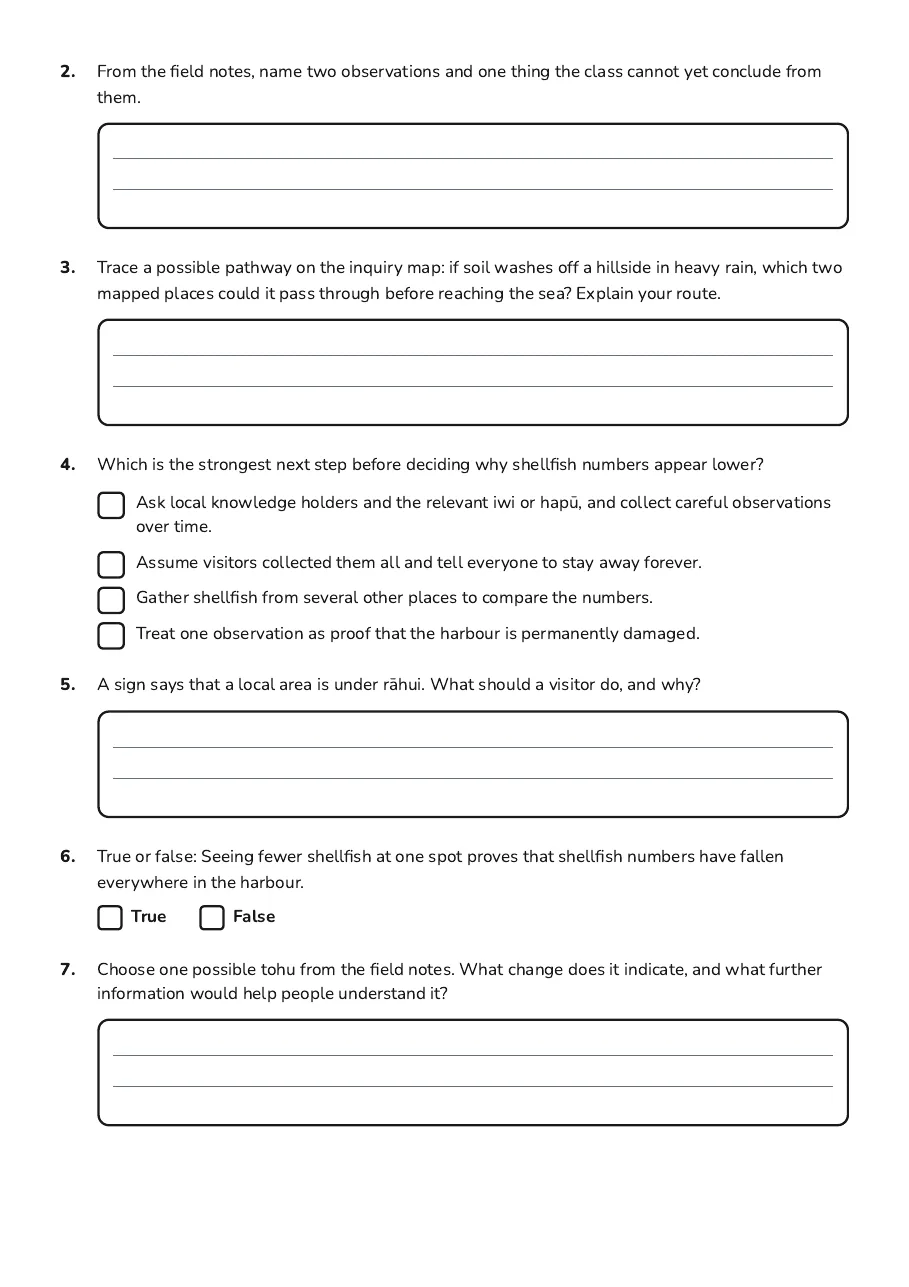
- Ask local knowledge holders and the relevant iwi or hapū, and collect careful observations over time.
- Assume visitors collected them all and tell everyone to stay away forever.
- Gather shellfish from several other places to compare the numbers.
- Treat one observation as proof that the harbour is permanently damaged.
3 printable pages
Page 1
Page 2
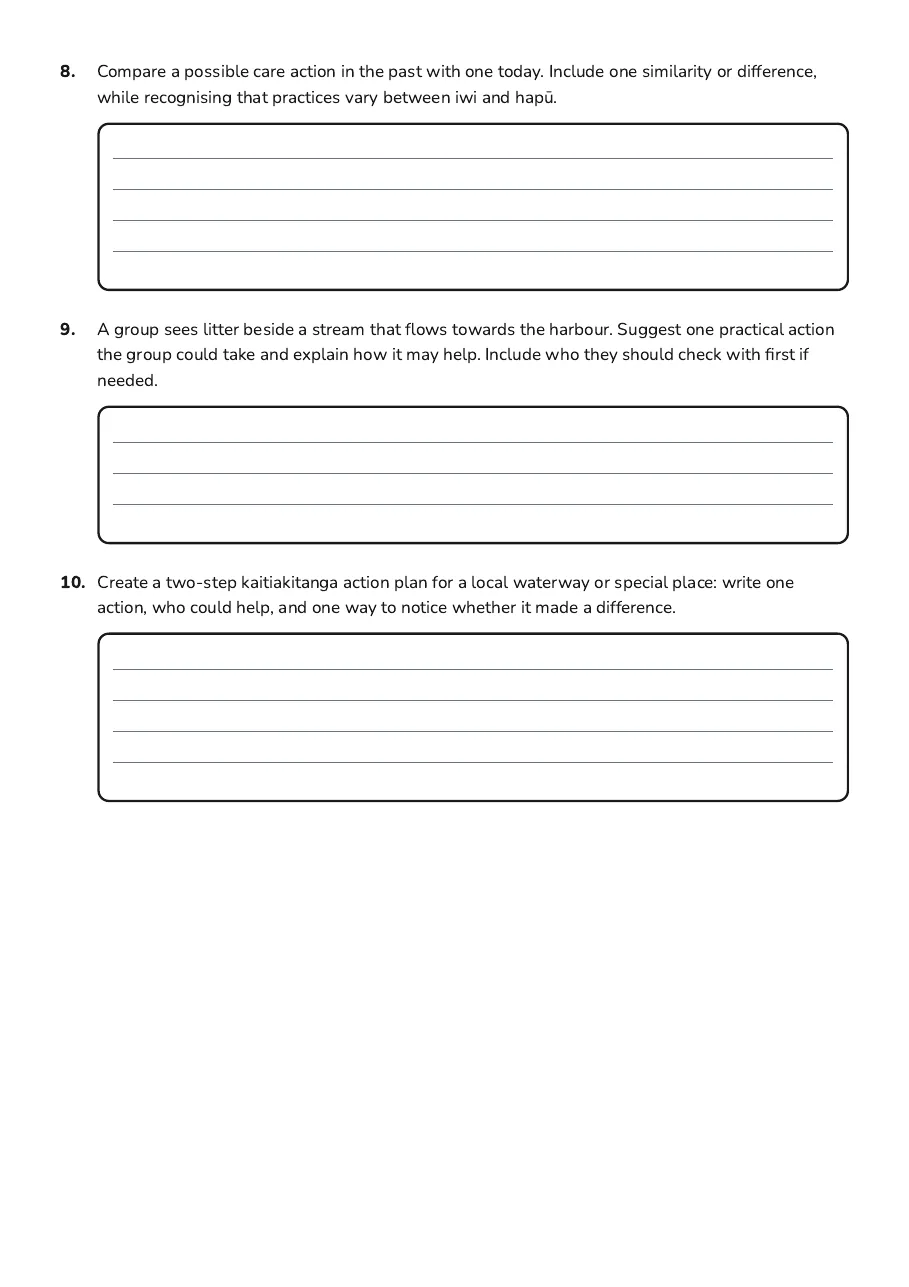
Page 3
About This Worksheet
Free in Kuraplan
Sign up free, grab the PDF, and customize it for your class.
Print-Ready
Formatted for standard paper. Clean layout, easy to read.
AI-Generated
Created with Kuraplan's AI, designed for real classroom use.
For Teachers & Parents
Use in classrooms, for homework, tutoring, or homeschool.
Need a custom version of this worksheet?
Kuraplan's AI generates custom worksheets in seconds — differentiated for every learner, aligned to your curriculum.
Generate Custom Worksheets — FreeMore Social Sciences Worksheets
Migration, Culture and Belonging
Free
Te Taiao Year 9 Quiz
Free
Exploring North Korea Today
Free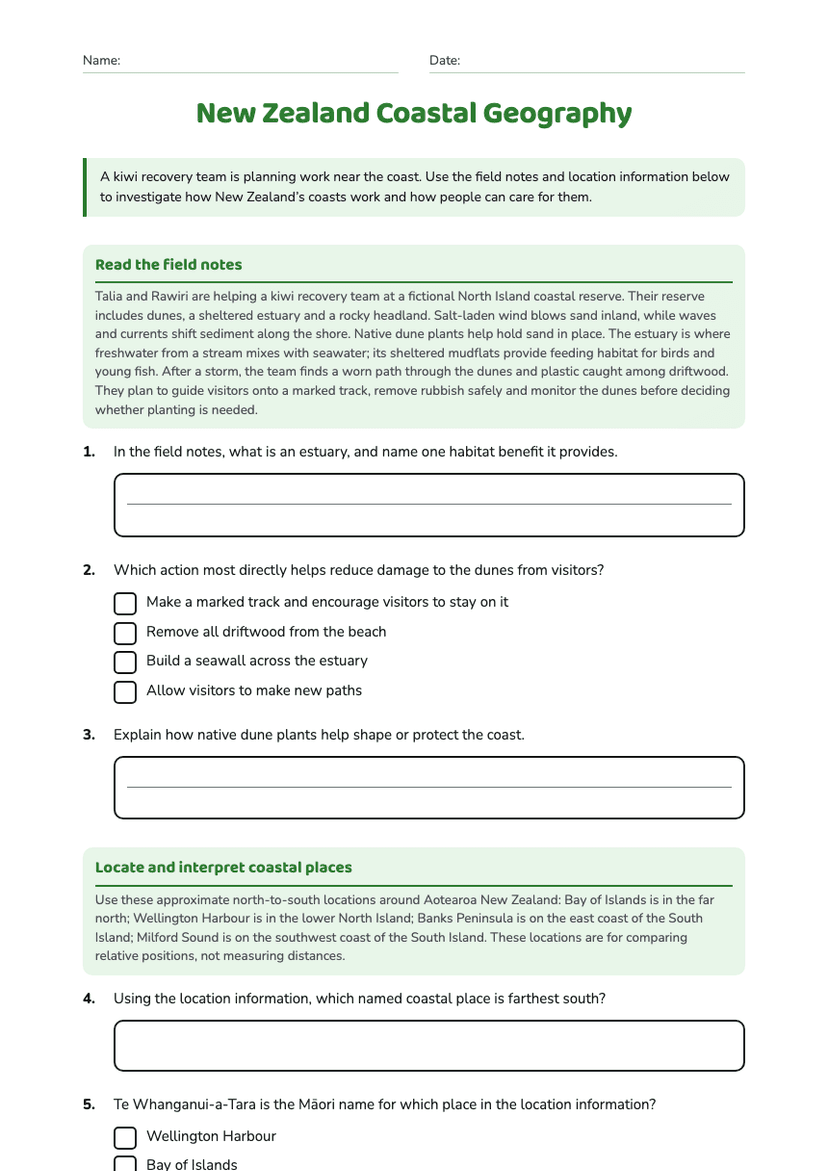
New Zealand Coastal Geography
Free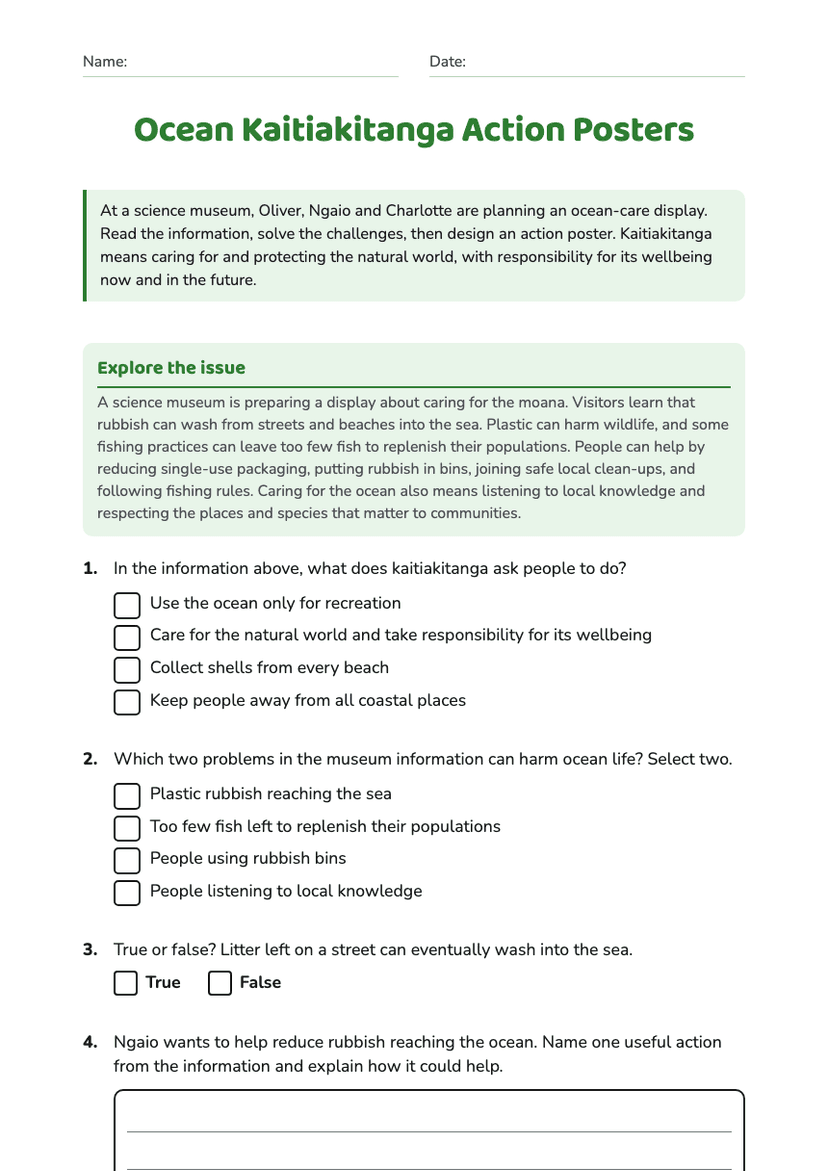
Ocean Kaitiakitanga Action Posters
Free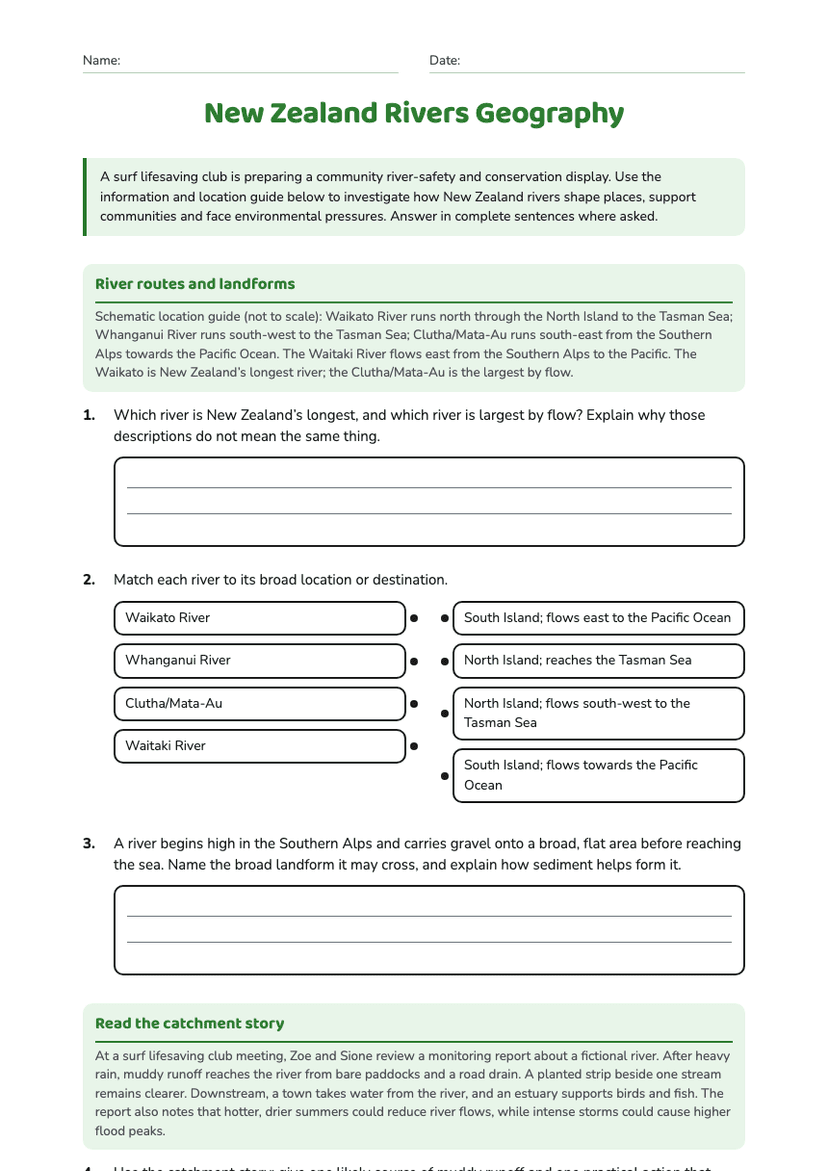
New Zealand Rivers Geography
Free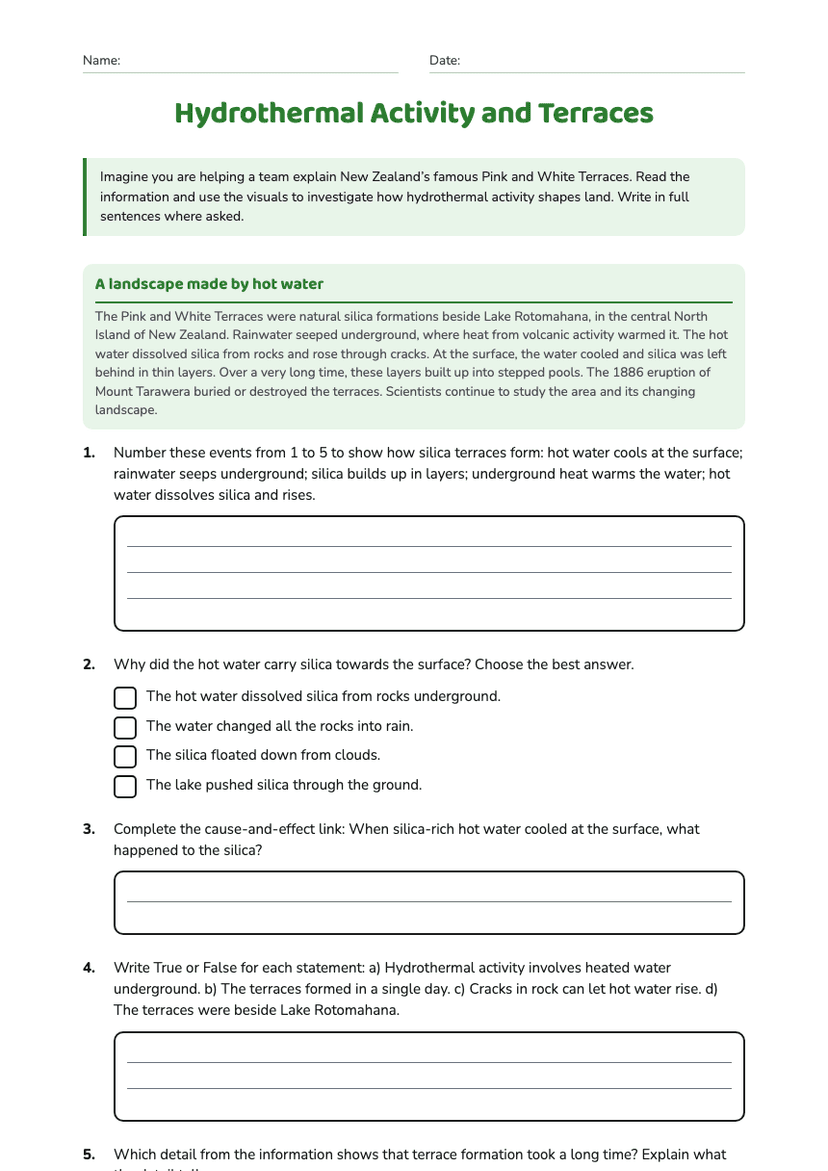
Hydrothermal Activity and Terraces
Free