Behavioural and Cognitive Approaches to Psychopathology
Year 12 Psychology Understanding Mental Health Through Different Lenses 60-Minute Journey
Learning Objectives
Explain the behavioural approach to phobias using the two-process model Evaluate systematic desensitisation and flooding as treatments Analyse Beck's negative triad and Ellis's ABC model for depression Assess the effectiveness of Cognitive Behavioural Therapy Apply psychological theories to real-world scenarios
Starter Activity: What Scares You?
Think-Pair-Share: Common fears and phobias How do you think these fears develop? What might help someone overcome them?
The Behavioural Approach: Core Principles
All behaviour is learned through experience Focus on observable, measurable behaviours Mental health problems = maladaptive learned behaviours Treatment involves 'unlearning' problematic behaviours Based on principles of classical and operant conditioning
Understanding Phobias
Persistent, irrational fear of specific objects or situations Causes significant distress and avoidance behaviour Common examples: spiders, heights, social situations Affects approximately 10% of the population Can severely impact daily functioning
Role-Play: Phobia Development
Groups of 4: Act out phobia development scenarios Include both classical and operant conditioning phases Scenarios: dog bite → dog phobia, lift breakdown → claustrophobia Debrief: How did avoidance maintain the fear?
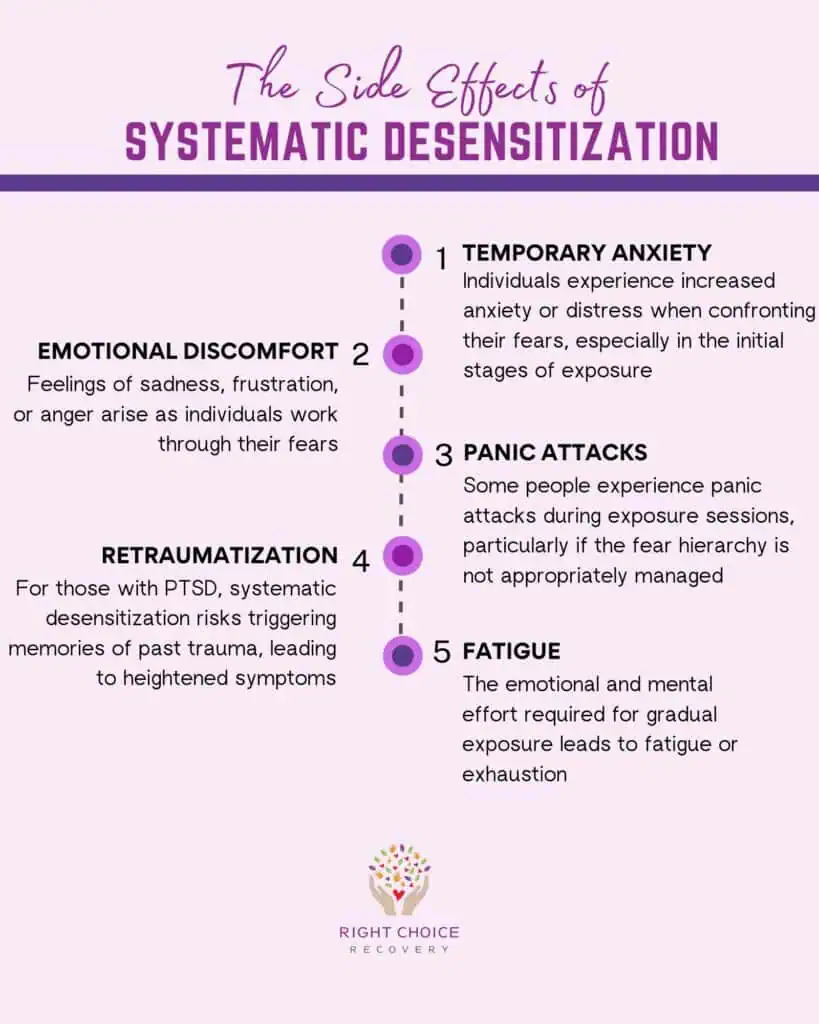
Systematic Desensitisation: The Gentle Approach
Gradual exposure to feared stimulus Based on counterconditioning principles Uses reciprocal inhibition (can't be relaxed and anxious simultaneously) Three key stages: relaxation training, anxiety hierarchy, gradual exposure Highly effective for specific phobias

Anxiety Hierarchy Example: Spider Phobia
{"left":"1. Looking at cartoon spider\n2. Photo of small spider\n3. Video of spider moving\n4. Toy spider in same room\n5. Real spider in closed jar","right":"6. Real spider 10 feet away\n7. Real spider 5 feet away\n8. Real spider 1 foot away\n9. Touching spider jar\n10. Holding live spider"}
Create Your Own Anxiety Hierarchy
Choose a common fear (heights, public speaking, injections) Create 10-step hierarchy from least to most anxiety-provoking Include relaxation techniques at each stage Share with partner and get feedback

Research Evidence: Gilroy et al. Study
42 patients with spider phobia treated with systematic desensitisation Compared to control group (50 patients) with relaxation only Measured using Spider Questionnaire and observation Results: SD group showed significant improvement at 3 and 33 months Demonstrates long-term effectiveness of treatment
Flooding: The Intensive Approach
Immediate, intense exposure to feared stimulus No escape possible - prevents avoidance behaviour Based on extinction principle Anxiety naturally decreases over time Cost-effective but more distressing initially
Comparing Phobia Treatments
{"left":"Systematic Desensitisation: Gradual, comfortable, higher completion rates, suitable for learning difficulties\nFlooding: Quick, cost-effective, one session, high intensity","right":"SD: Takes multiple sessions, more expensive\nFlooding: High dropout rates, ethically questionable, not suitable for complex phobias"}
19 more slides available after you open the deck.
Download all 31 slides