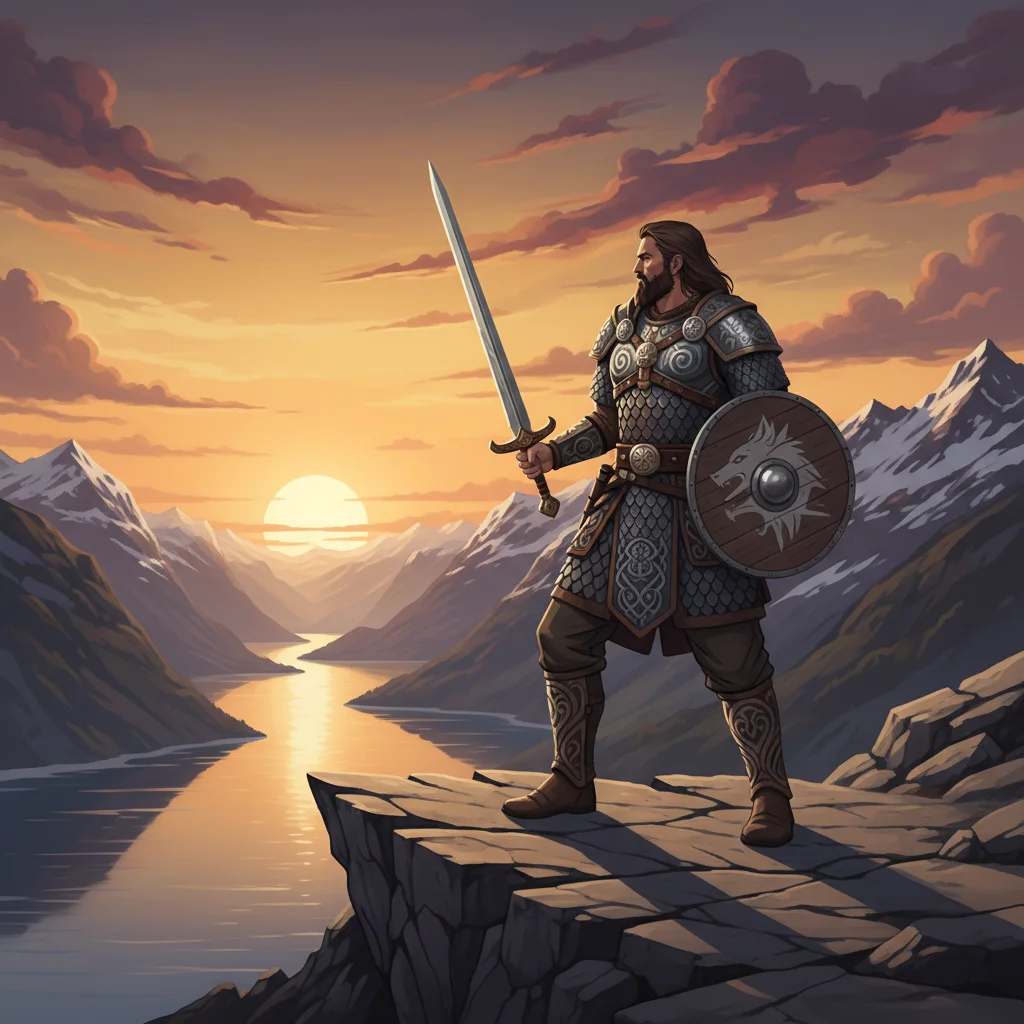
Creating Our Viking Saga Heroes
Year 6 English Exploring character creation through Viking literature
Learning Objectives
Recap the key features of Viking sagas Identify literary techniques in saga writing Create a compelling hero character Use descriptive language and 'show don't tell'
What Makes a Saga Special?
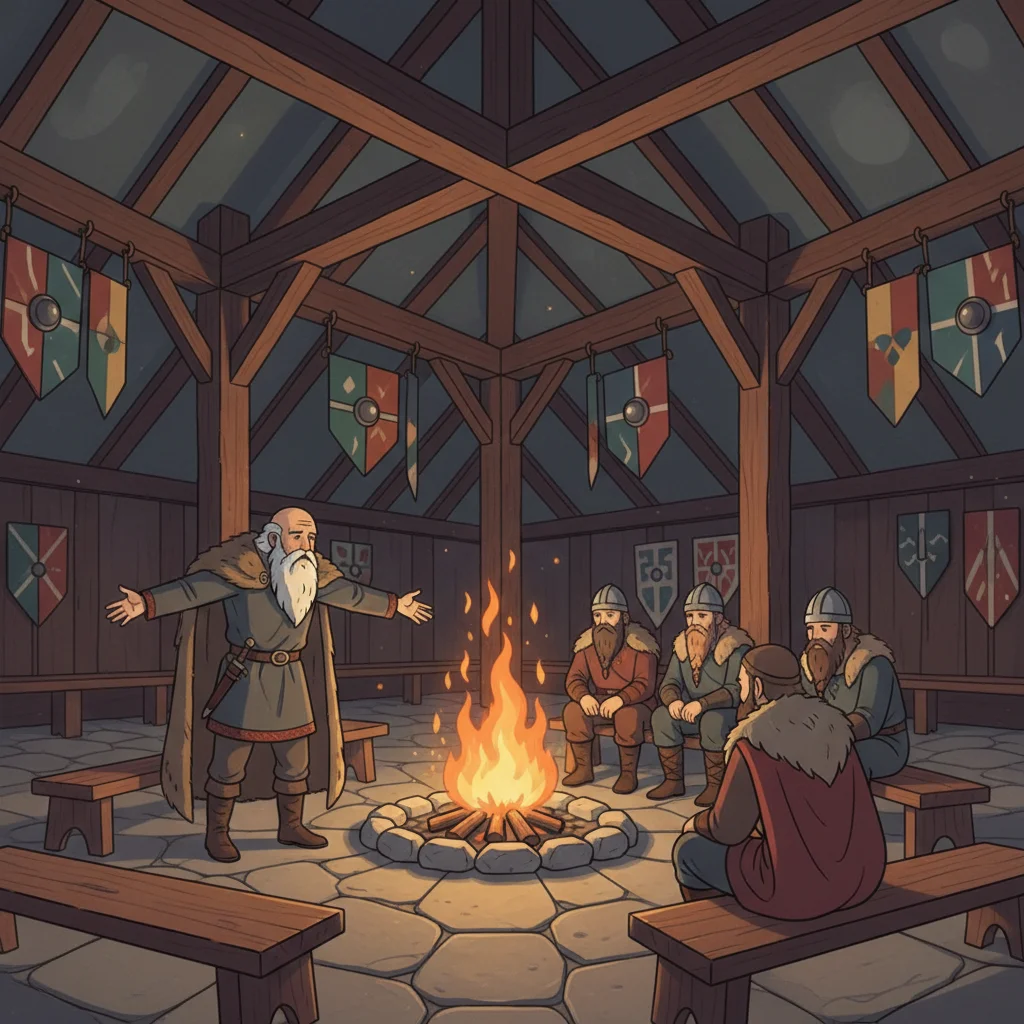
Think back to yesterday's reading... What key features did you notice? How were the stories told?
Key Features of Viking Sagas
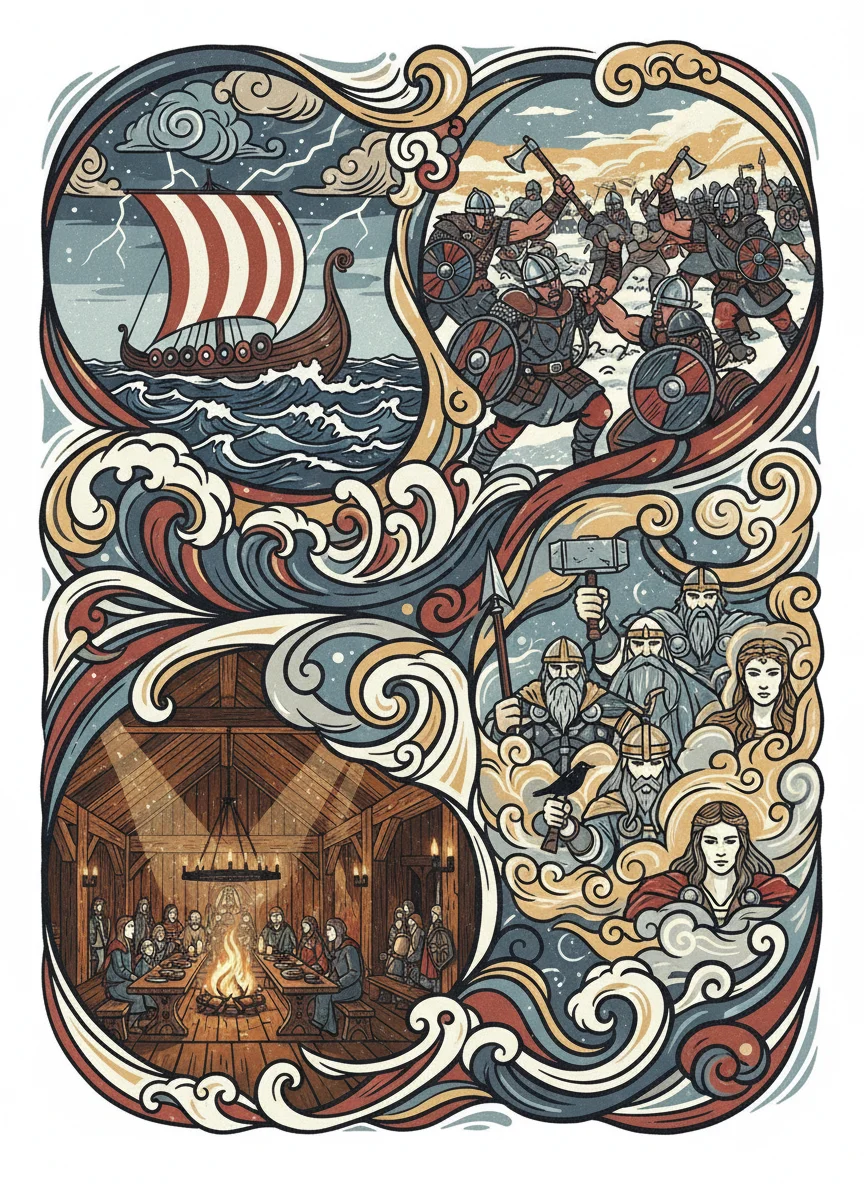
Stories of brave heroes and their adventures Passed down through generations by storytellers Include supernatural elements and gods Focus on honour, courage, and family loyalty Often based on real historical events
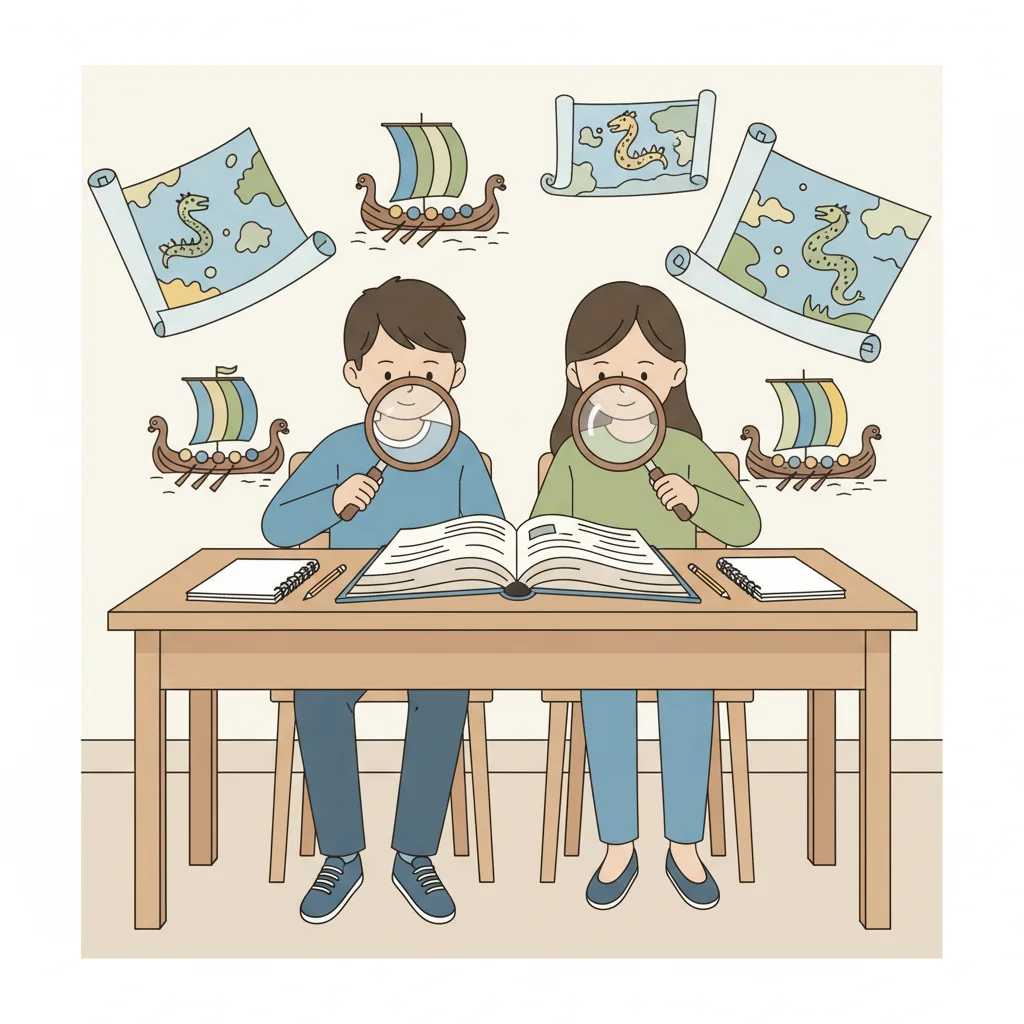
Analysing Our Hero
Re-read yesterday's hero description Work in pairs to identify: • Similes and metaphors • Descriptive language • 'Show don't tell' examples
Literary Techniques in Sagas
Similes: 'as brave as a lion' Metaphors: 'his heart was ice' Show don't tell: describing actions rather than stating feelings Vivid adjectives and strong verbs
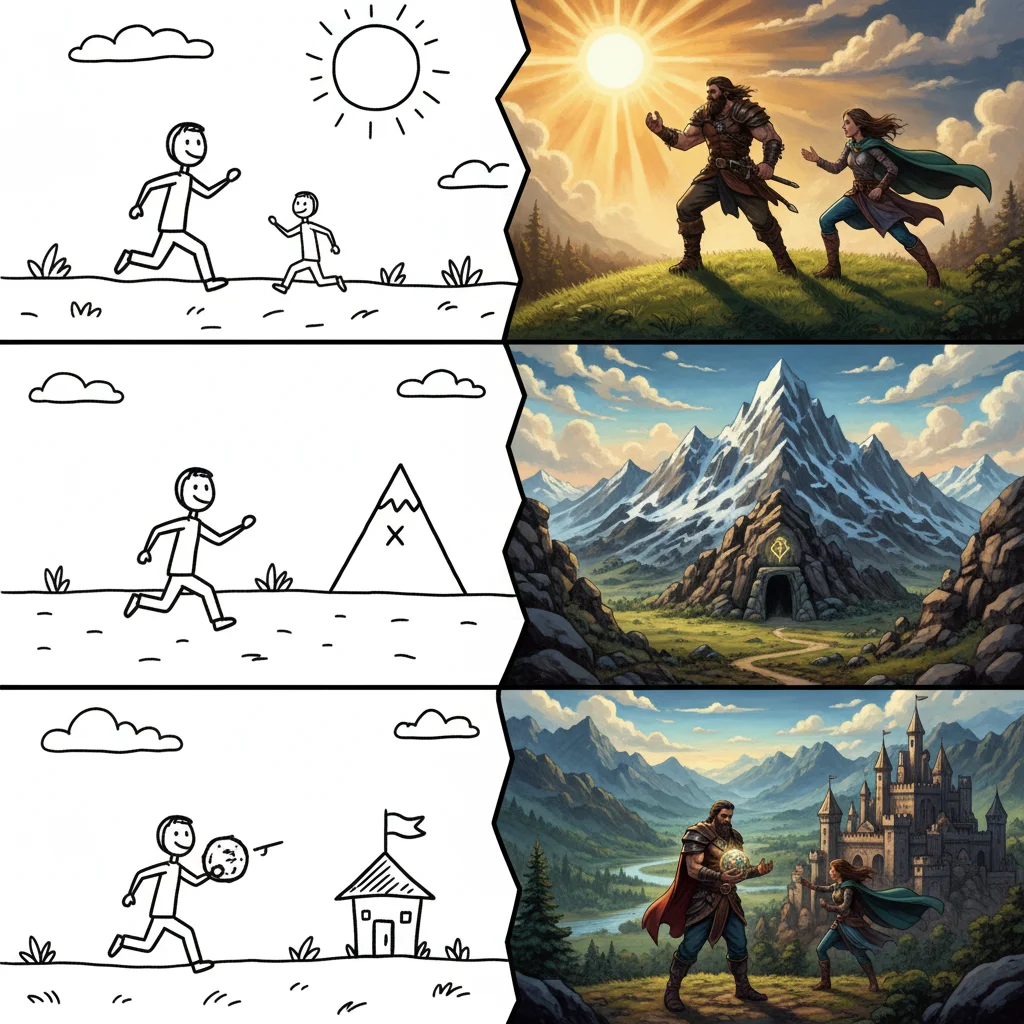
Show Don't Tell Examples
{"left":"TELLING: The warrior was brave\nTELLING: She was worried\nTELLING: The village was peaceful","right":"SHOWING: He charged into battle without hesitation\nSHOWING: Her hands trembled as she watched the horizon\nSHOWING: Smoke drifted lazily from cottage chimneys"}
Creating Your Hero's Name
Choose a Viking-style name Consider these elements: • Strength and power • Connection to nature • Family heritage Examples: Erik Ironhand, Astrid Stormborn
Hero Skills and Qualities
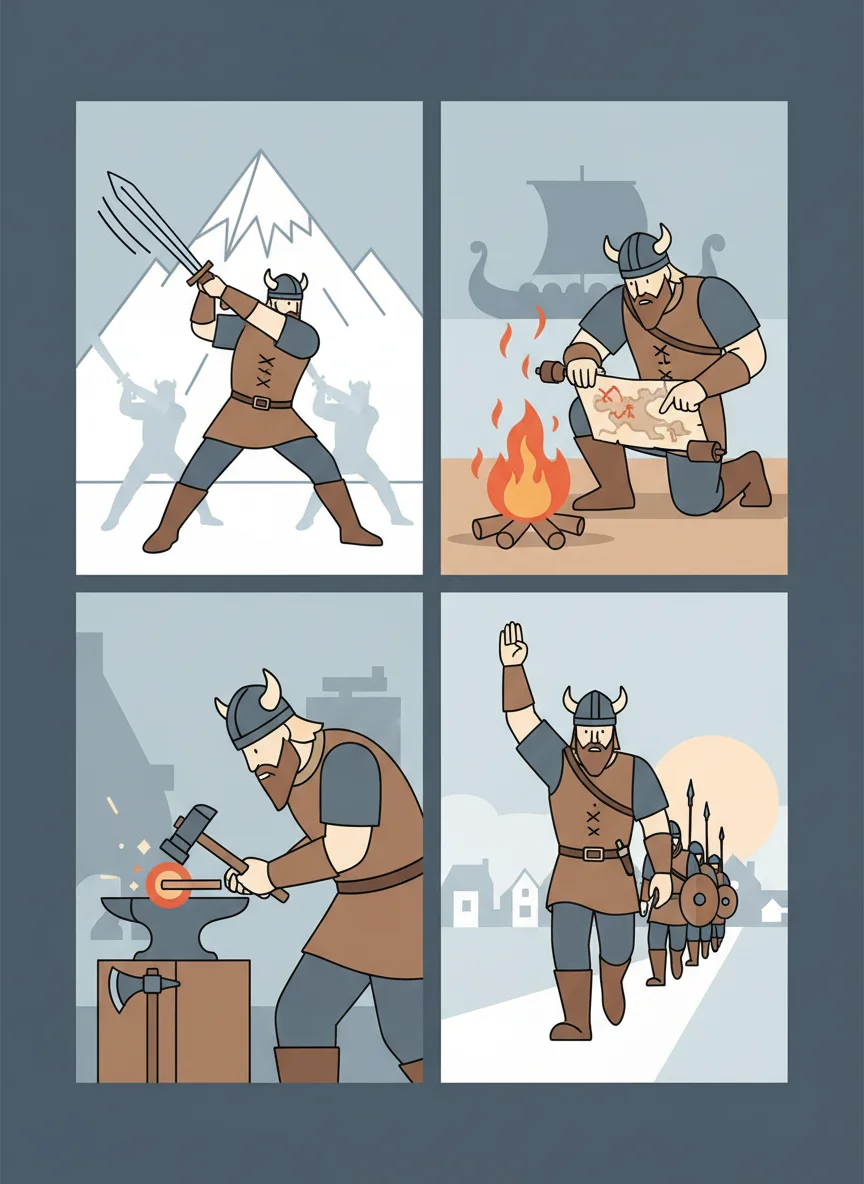
Physical abilities (strength, speed, fighting skills) Mental qualities (wisdom, cunning, leadership) Special talents (navigation, craftsmanship, healing) Character traits (loyalty, honour, determination) Possible flaws (pride, quick temper, stubbornness)
What Makes a Hero Memorable?
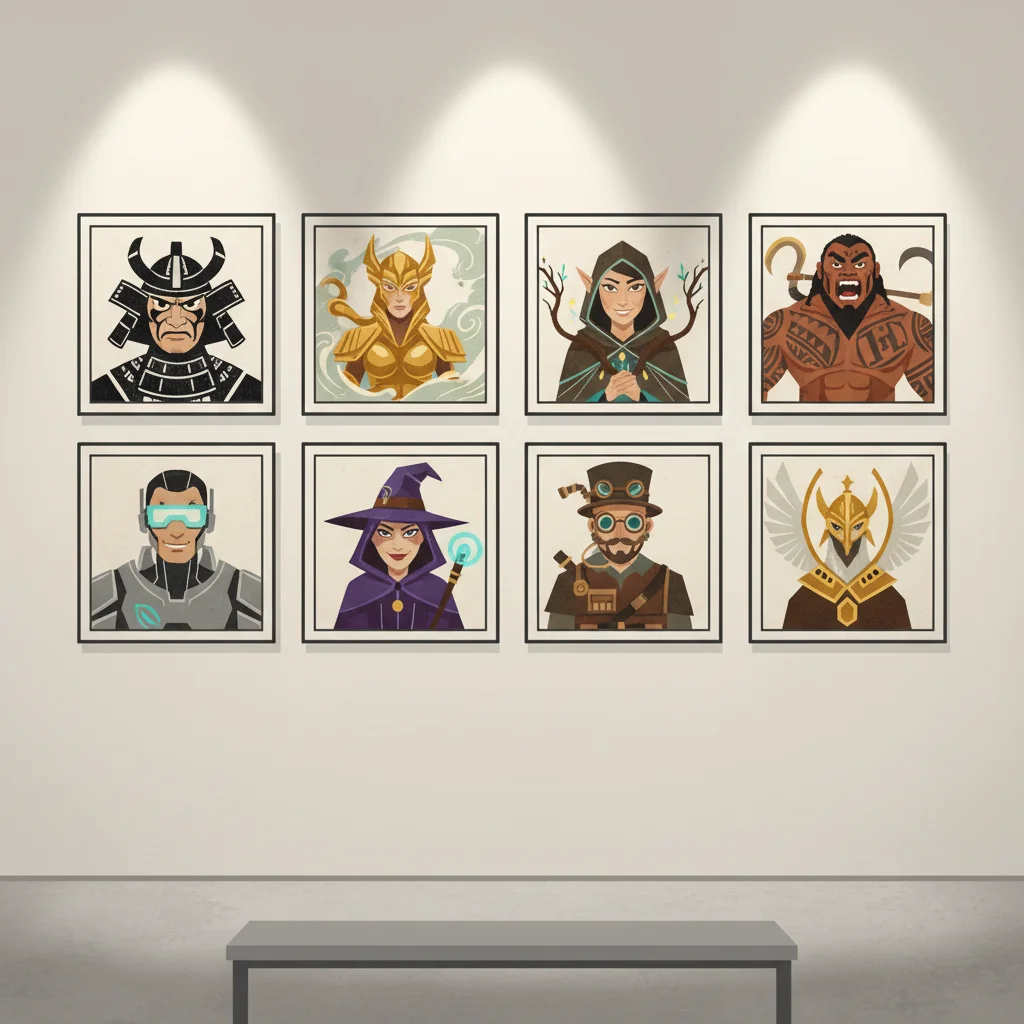
Think about your favourite characters from books or films What makes them special? How do their qualities help them in their adventures?
Planning Your Hero
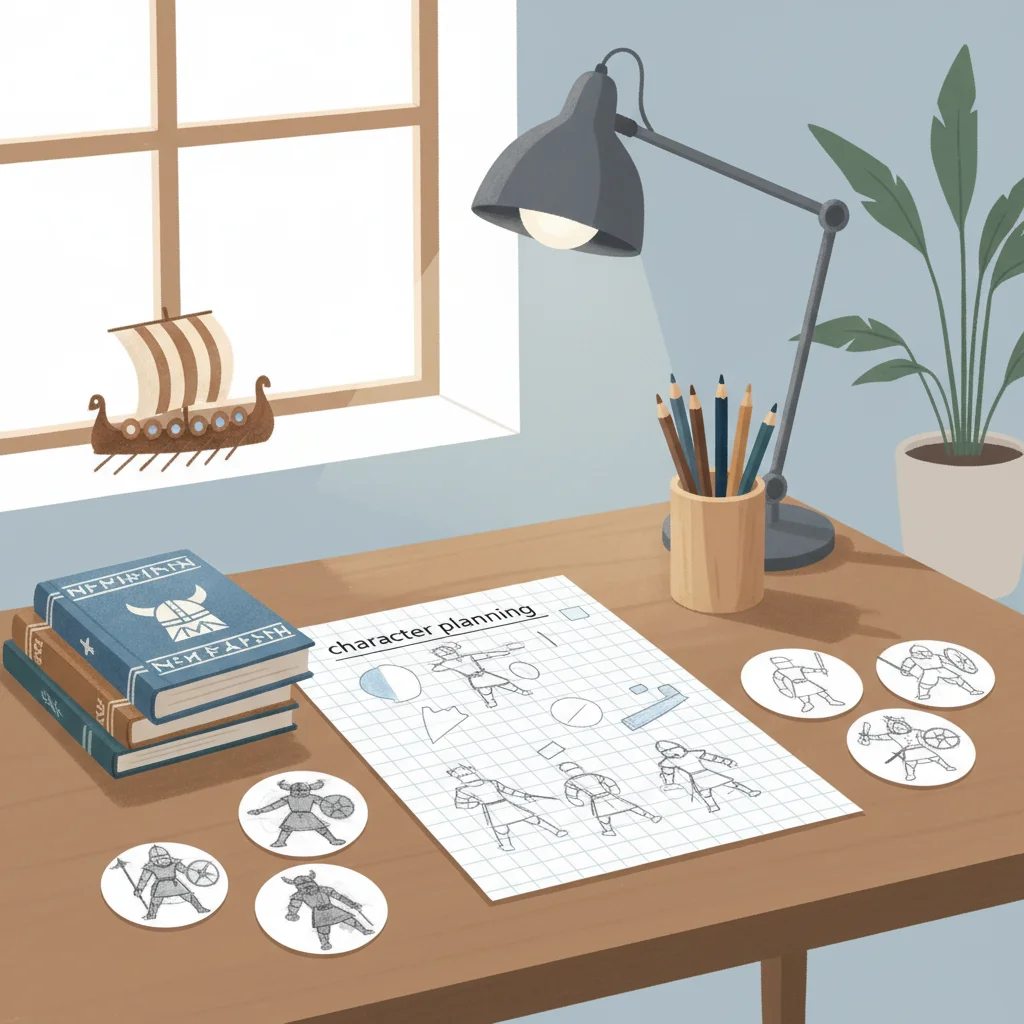
Complete your hero planning sheet: • Name and appearance • Three main skills/qualities • One interesting flaw • Brief background story
Next Steps: Writing Your Opening
Use your planning to write your first paragraph Include your hero's name and key qualities Use 'show don't tell' techniques Include at least one simile or metaphor Make your reader want to know more!