Expanding Single Brackets Made Easy
Year 7 Mathematics UK National Curriculum Building Algebraic Skills
What Are Brackets in Algebra?
Brackets group terms together They show which operations to do first Example: 3(x + 2) means 3 × (x + 2) We need to 'expand' or 'multiply out' the brackets
The Distributive Property
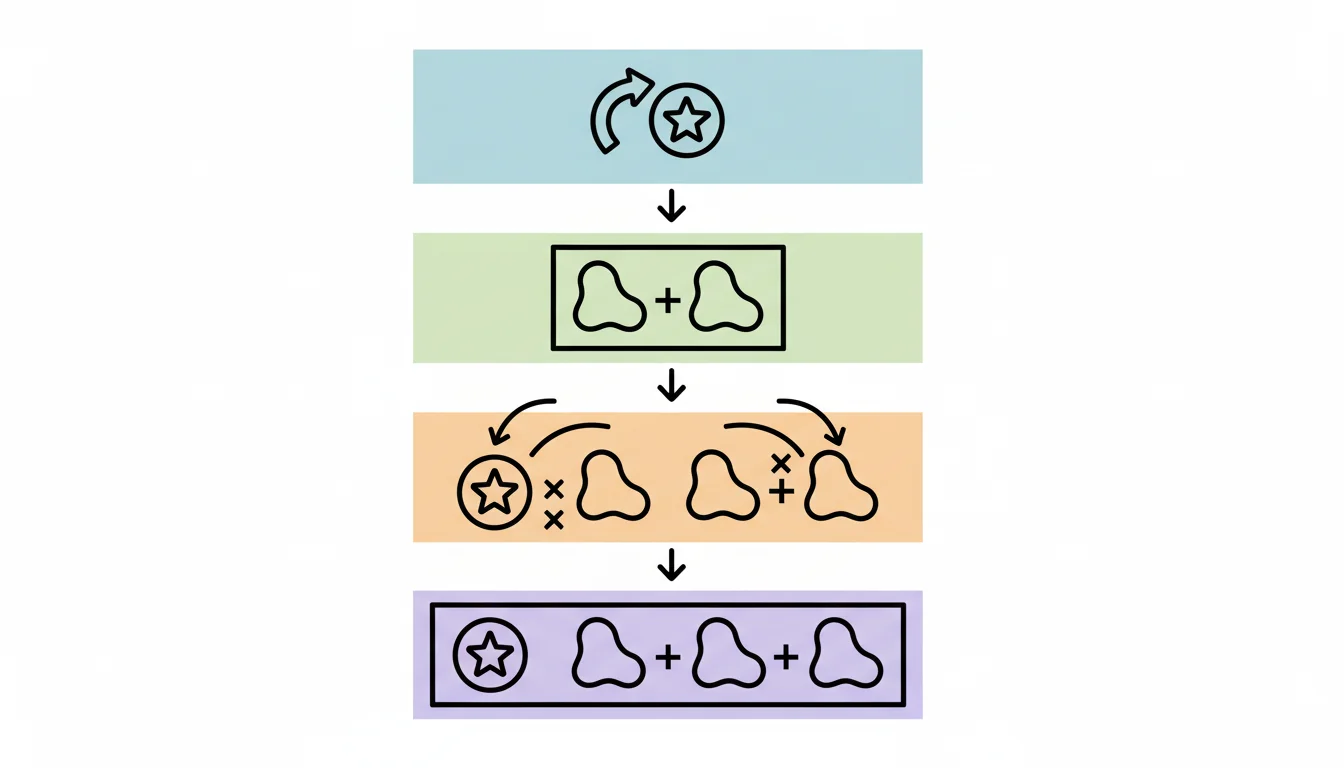
Multiply the number outside by everything inside a(b + c) = ab + ac This is called the distributive property Think of it as 'sharing out' the multiplication
Step-by-Step Method
Example 1: Simple Expansion
Let's expand: 3(x + 4) Step 1: Outside term = 3 Step 2: Inside terms = x and 4 Step 3: 3 × x = 3x and 3 × 4 = 12 Step 4: Answer = 3x + 12
Example 2: With Negative Terms
Let's expand: 2(x - 5) Step 1: Outside term = 2 Step 2: Inside terms = x and -5 Step 3: 2 × x = 2x and 2 × (-5) = -10 Step 4: Answer = 2x - 10
Your Turn: Practice Time
Try these expansions: a) 4(x + 3) b) 5(y - 2) c) 6(2a + 1)
Common Mistakes to Avoid
{"left":"Forgetting to multiply both terms inside the brackets\nGetting confused with negative signs\nNot writing the final answer clearly","right":"Only multiplying the first term in the brackets\nMixing up addition and subtraction signs\nForgetting to include the variable letter"}
Quick Check Question
What is the expansion of 7(x + 3)? A) 7x + 3 B) 7x + 21 C) x + 21 D) 7x + 10

Summary: Key Points to Remember
Expanding brackets means multiplying out Use the distributive property: a(b + c) = ab + ac Multiply the outside term by EVERY term inside Be careful with negative signs Always check your answer makes sense Practice makes perfect!