
Flowers and Pollination Science Adventure
Year 7 Science Exploring Plant Reproduction 60-minute lesson

WALT - We Are Learning To
Identify the main parts of a flower and describe their functions Explain how pollination occurs and why it is important for plant reproduction Explore different methods of pollination (insect and wind) Complete activities to demonstrate our understanding

Success Criteria - What We'll Achieve
I can label the parts of a flower accurately I can describe the role of pollen and stigma in pollination I can explain how flowers attract pollinators I can complete worksheets to demonstrate understanding I can discuss different pollination methods confidently

Starter Question
Have you ever wondered how plants make seeds? Look at this beautiful flower - what do you notice? Why do you think flowers are so colorful and smell so nice?

Parts of a Flower - The Reproductive Organs
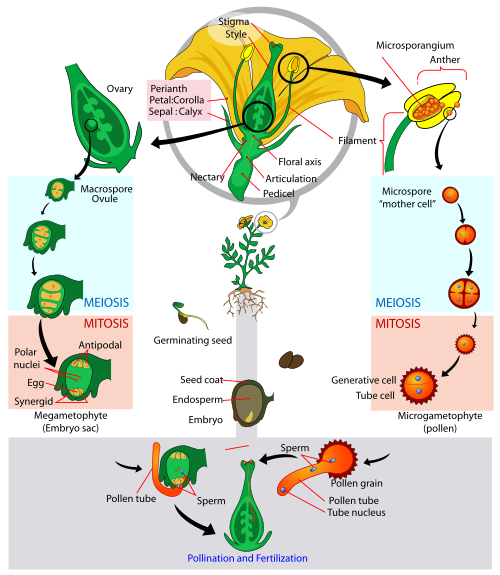
Petals - attract pollinators with color and scent Stamens - male parts containing anthers that produce pollen Pistil - female part with stigma, style, and ovary Stigma - receives pollen during pollination Ovary - contains eggs that become seeds after fertilization

What is Pollination?
Pollination is the transfer of pollen from an anther to a stigma This allows fertilization to occur inside the ovary Fertilized eggs develop into seeds Seeds grow into new plants Without pollination, plants cannot reproduce sexually

Types of Pollination
{"left":"Insect Pollination\nFlowers are brightly colored\nSweet scents attract insects\nNectar provides food reward\nSticky pollen attaches to insects","right":"Wind Pollination\nFlowers are small and plain\nNo scent or nectar needed\nLight, powdery pollen\nReleased in large quantities"}

Worksheet Challenge - Time to Apply Your Knowledge!
Complete your differentiated worksheet Core: Label flower parts and fill gaps Support: Use sentence starters and word bank Extension: Create diagrams and explain pollination Work individually or in pairs 25 minutes to complete

Pollination Quiz - Test Your Understanding!
What is the role of the stigma? How does wind pollination differ from insect pollination? Why are some flowers brightly colored? What happens after pollen reaches the stigma? Use thumbs up/down to show confidence!
Lesson Summary - What We've Learned
Flowers are plant reproductive organs with specific parts Pollination transfers pollen from anther to stigma Insect pollination uses color, scent, and nectar Wind pollination uses light pollen and no rewards Successful pollination leads to seed formation Different plants use different pollination strategies