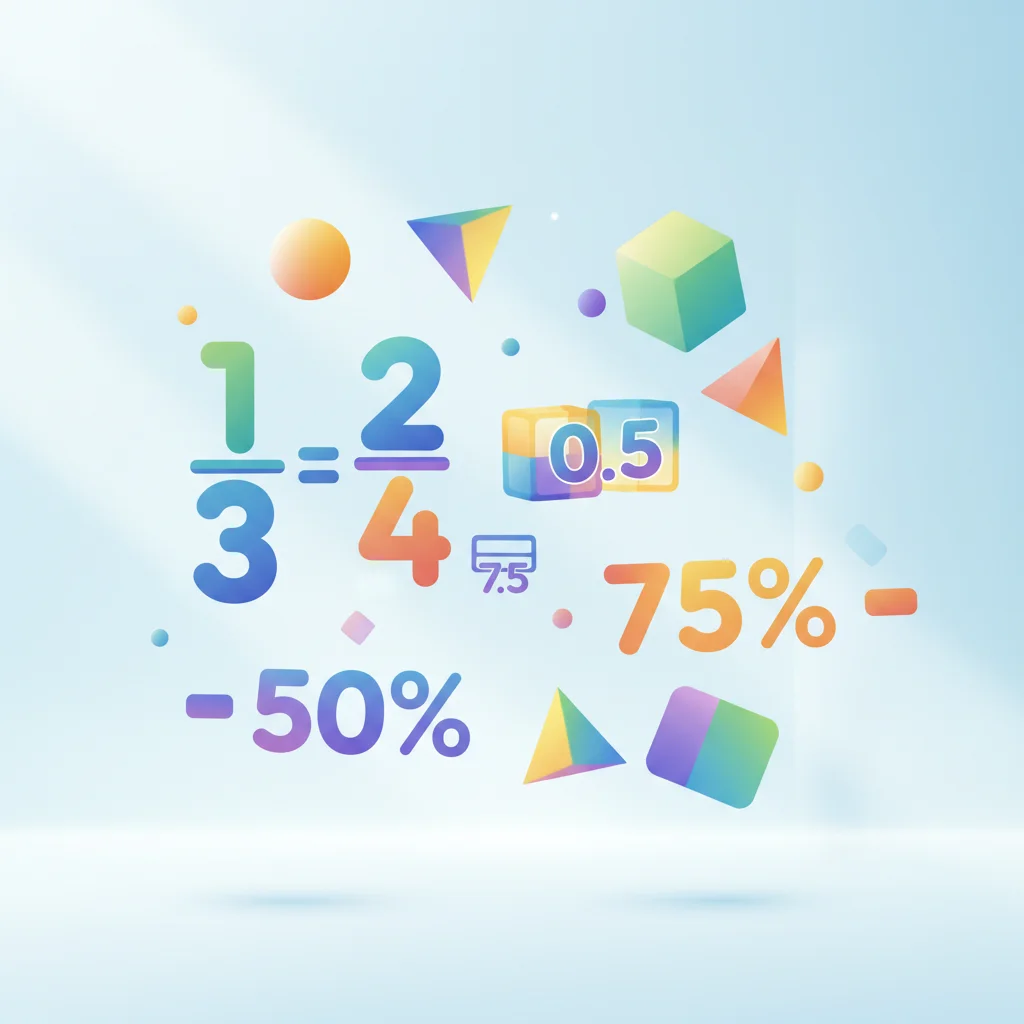
Fractions, Decimals, Shapes & Nets
Year 6 Mathematics Exploring equivalences and geometry UK National Curriculum
Learning Objectives
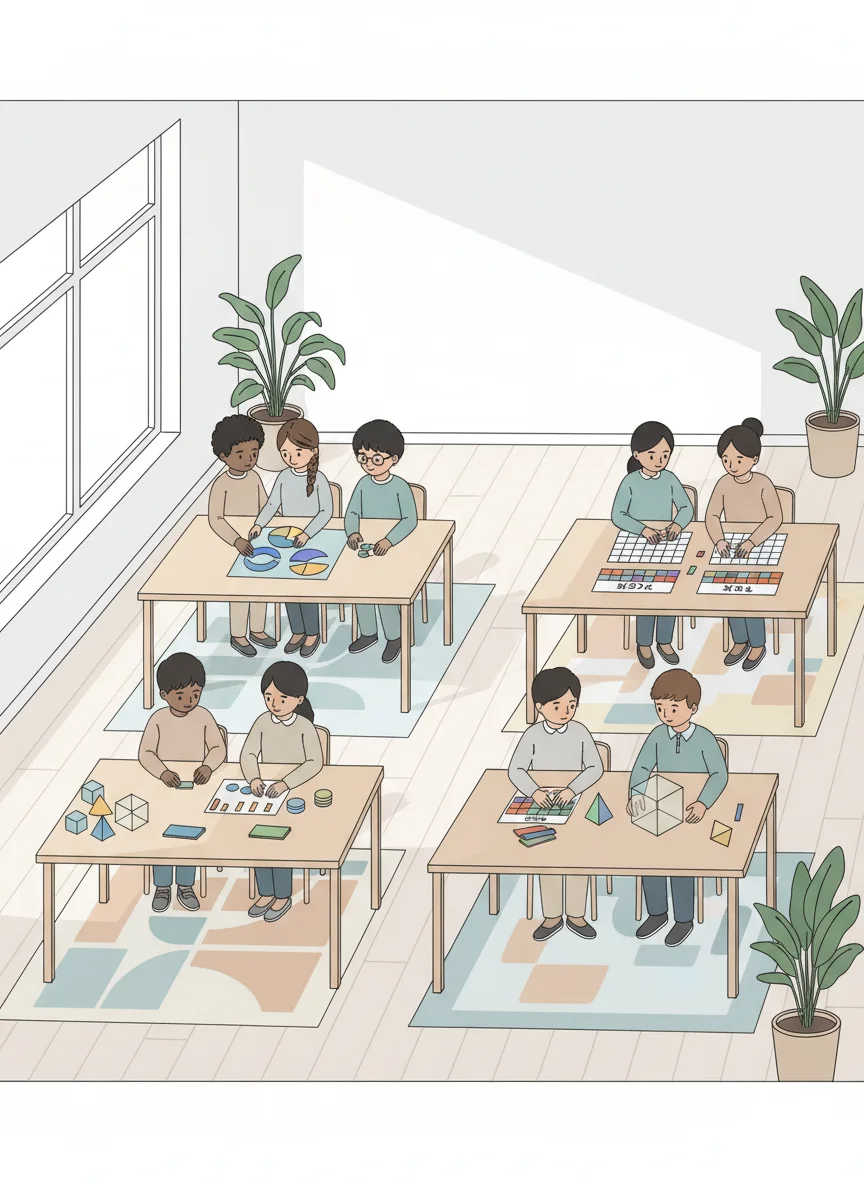
Convert between fractions, decimals, and percentages Simplify fractions using common factors Identify and classify 2D shapes by properties Recognise and build nets of 3D shapes Use mathematical language to explain relationships
Starter: Fraction-Decimal-Percentage Matching
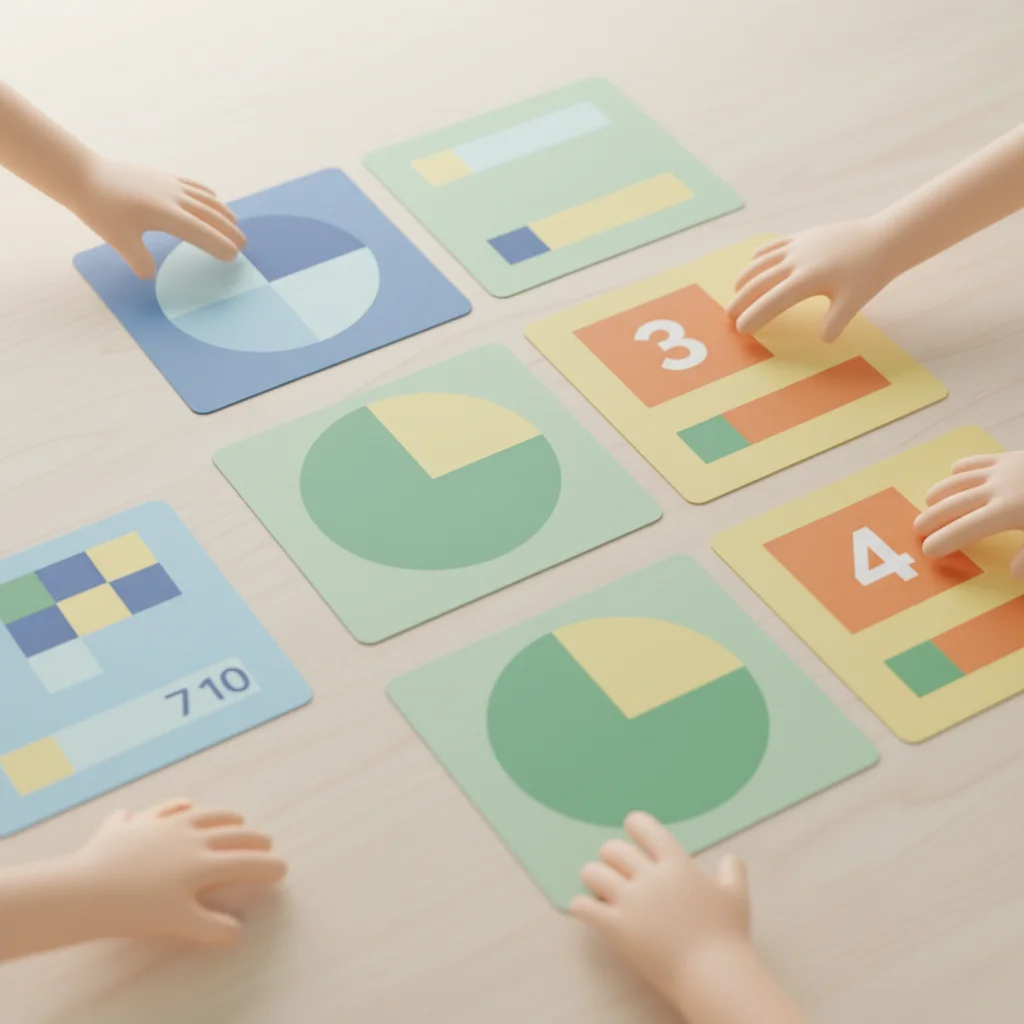
Work in pairs Match equivalent cards 1/2 = 0.5 = 50% 3/4 = 0.75 = 75% Discuss your reasoning
Simplifying Fractions
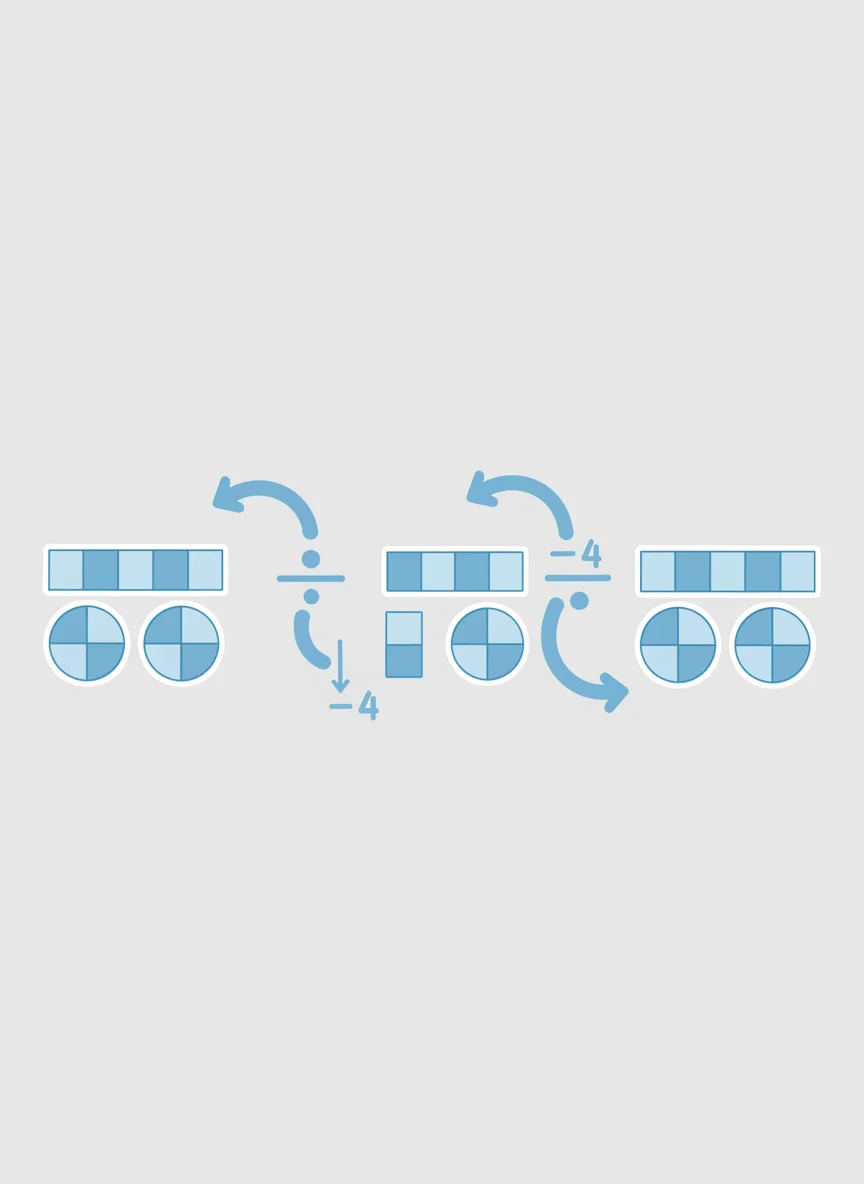
Find the highest common factor (HCF) Divide numerator and denominator by HCF Example: 12/16 = 3/4 (÷4) Example: 15/20 = 3/4 (÷5) Always check if you can simplify further

Converting Between Forms
{"left":"Fraction to Decimal: Divide numerator by denominator\nDecimal to Percentage: Multiply by 100","right":"Percentage to Fraction: Write over 100, then simplify\nFraction to Percentage: Convert to decimal first, then multiply by 100"}
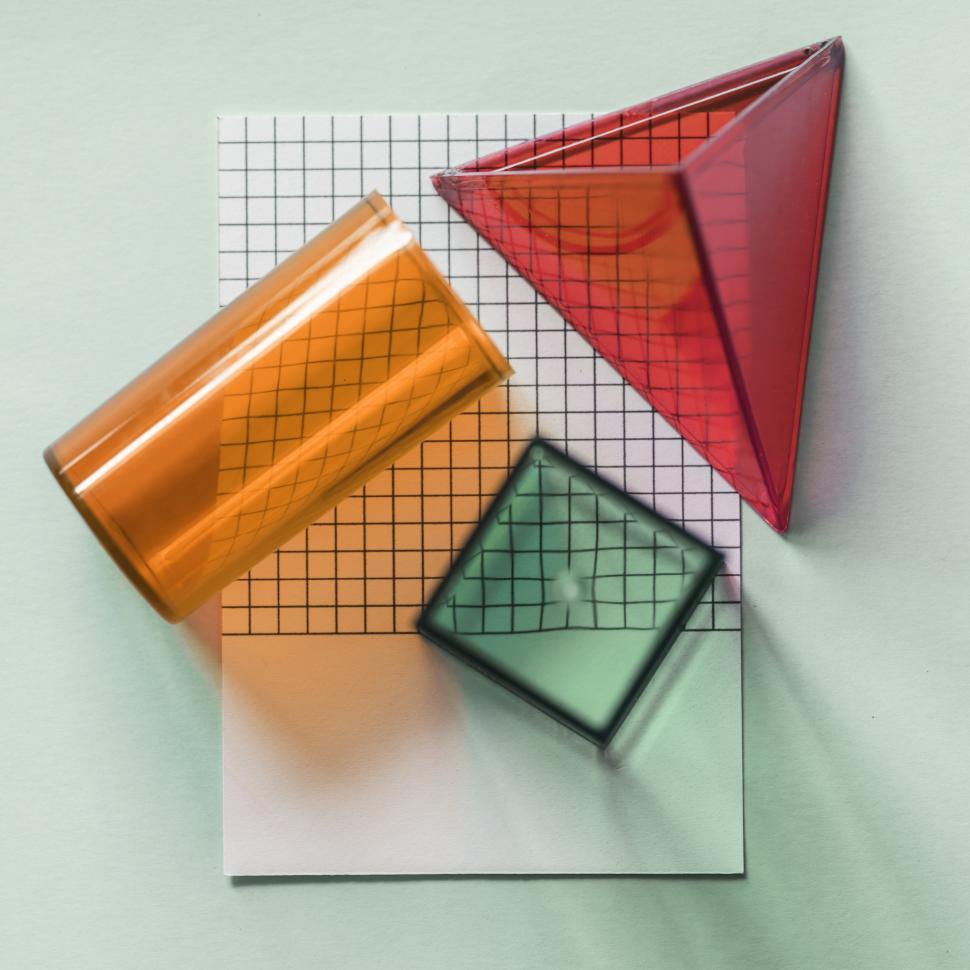
Practical Geometry: Shape Investigation
Measure angles and sides of 2D shapes Classify triangles: equilateral, isosceles, scalene Identify quadrilaterals: square, rectangle, parallelogram Count vertices, edges, and angles Use rulers and protractors

Properties of 2D Shapes
Triangles: 3 sides, 3 angles, angles sum to 180° Quadrilaterals: 4 sides, 4 angles, angles sum to 360° Regular shapes: all sides and angles equal Parallel lines never meet Perpendicular lines meet at 90°

3D Shapes and Their Nets

Building 3D Shapes from Nets
Fold nets into 3D shapes Count faces, edges, and vertices Match nets to solid shapes Predict the 3D shape before folding Work with cube, cuboid, and pyramid nets
Plenary: Reasoning Challenge
Convert 3/5 to decimal and percentage Which 2D shape has all equal sides and angles? How many faces does a cuboid have? Explain your thinking to a partner Use mathematical vocabulary