
GCSE Business: Organisational Structures Explained
Understanding how businesses are organised Edexcel GCSE Business Studies Year 11

What is Organisational Structure?
The way a business arranges its workforce Shows reporting relationships and authority Determines how information flows Affects decision-making processes

Types of Organisational Structures
{"left":"Hierarchical Structure\nFlat Structure\nMatrix Structure","right":"Functional Structure\nDivisional Structure\nNetwork Structure"}
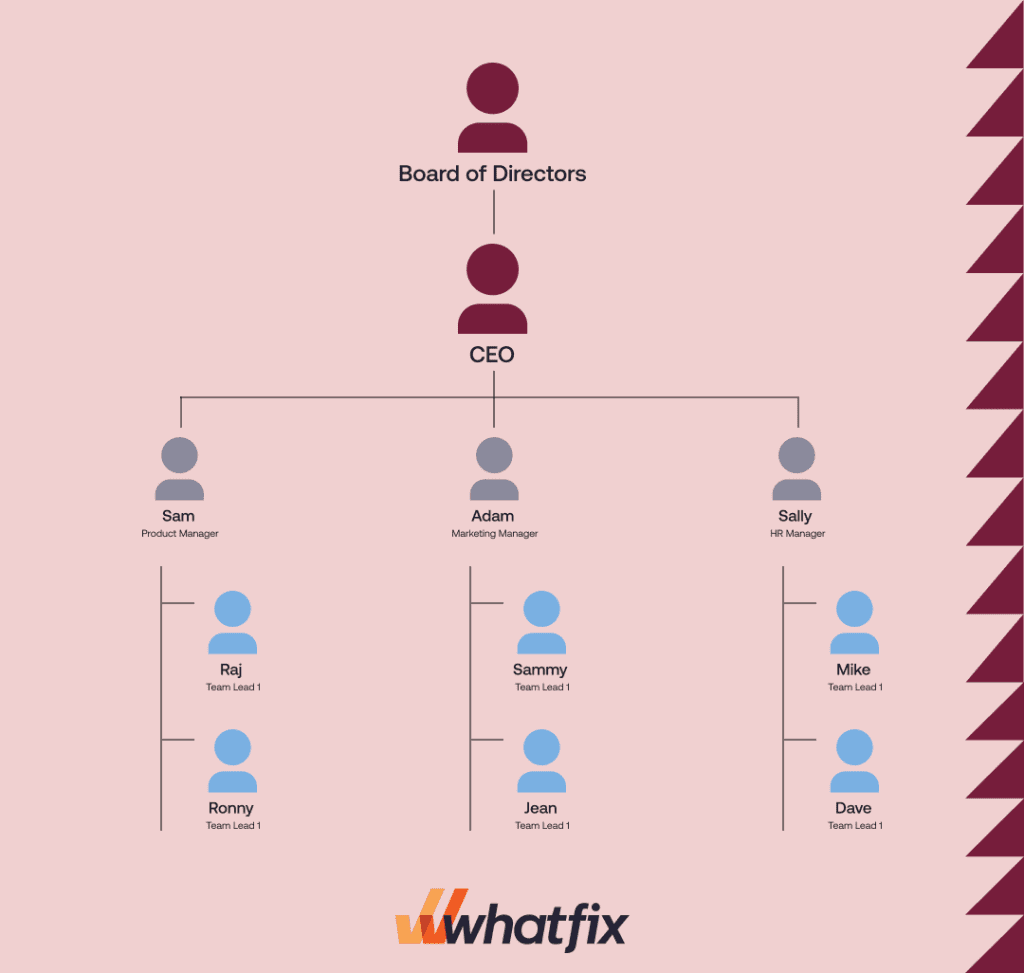
Hierarchical Structure
Traditional pyramid shape Clear chain of command Multiple layers of management Authority flows from top to bottom

Spot the Structure Activity
Look at the company examples provided Identify whether each uses hierarchical or flat structure Discuss your reasoning with a partner Be ready to justify your answers
Flat Structure
Few layers of management Wide span of control Employees have more autonomy Faster decision-making

Discussion Question
Why might a large multinational company like McDonald's choose a hierarchical structure? Consider: control, consistency, training, quality standards

Advantages and Disadvantages
{"left":"HIERARCHICAL ADVANTAGES: Clear authority, Specialisation, Career progression, Control and coordination\nHIERARCHICAL DISADVANTAGES: Slow decision-making, Communication barriers, Less flexibility, Higher costs","right":"FLAT ADVANTAGES: Faster decisions, Better communication, More flexibility, Lower costs\nFLAT DISADVANTAGES: Role confusion, Limited career progression, May lack control, Overworked managers"}

Factors Affecting Structure Choice
Size of the business Type of product or service Business objectives External environment Company culture and values

Key Takeaways
Structure affects how businesses operate Hierarchical provides control but can be slow Flat structures enable speed but may lack direction Choice depends on business needs and context Structures can change as businesses grow