Holderness Coast: Change & Impact
How the coast has changed over time How people are affected by coastal processes

Quick Recall Quiz
1. What is deposition? A) Rocks wearing away B) Sand and mud being dropped C) Waves getting bigger 2. True or False: Rivers can create landforms through deposition 3. Fill in the blank: A _______ is formed when a river deposits sediment at its mouth

Where is the Holderness Coast?
Located in East Yorkshire, England 61 kilometres of coastline From Bridlington to Spurn Point Fastest eroding coastline in Europe

What Makes the Coast Erode So Fast?
Soft boulder clay cliffs (easily worn away) Strong waves from the North Sea No natural protection from rocks Prevailing winds from the northeast

Coastal Erosion Timeline

How Coastal Change Affects People
{"left":"Homes and farms lost to the sea\nRoads and infrastructure destroyed\nJobs in farming and tourism affected","right":"Communities forced to move inland\nProperty values fall near the coast\nInsurance becomes very expensive"}

Coastal Defences at Mappleton
Rock armour (rip rap) placed along the shore Groynes built to trap sand Cost £2 million in 1991 Protects 50 homes and the main road

Discussion Question
Should the government spend millions protecting coastal communities, or should people be encouraged to move away from the coast? Think about: Cost, fairness, practical challenges

Positive Effects of Coastal Processes
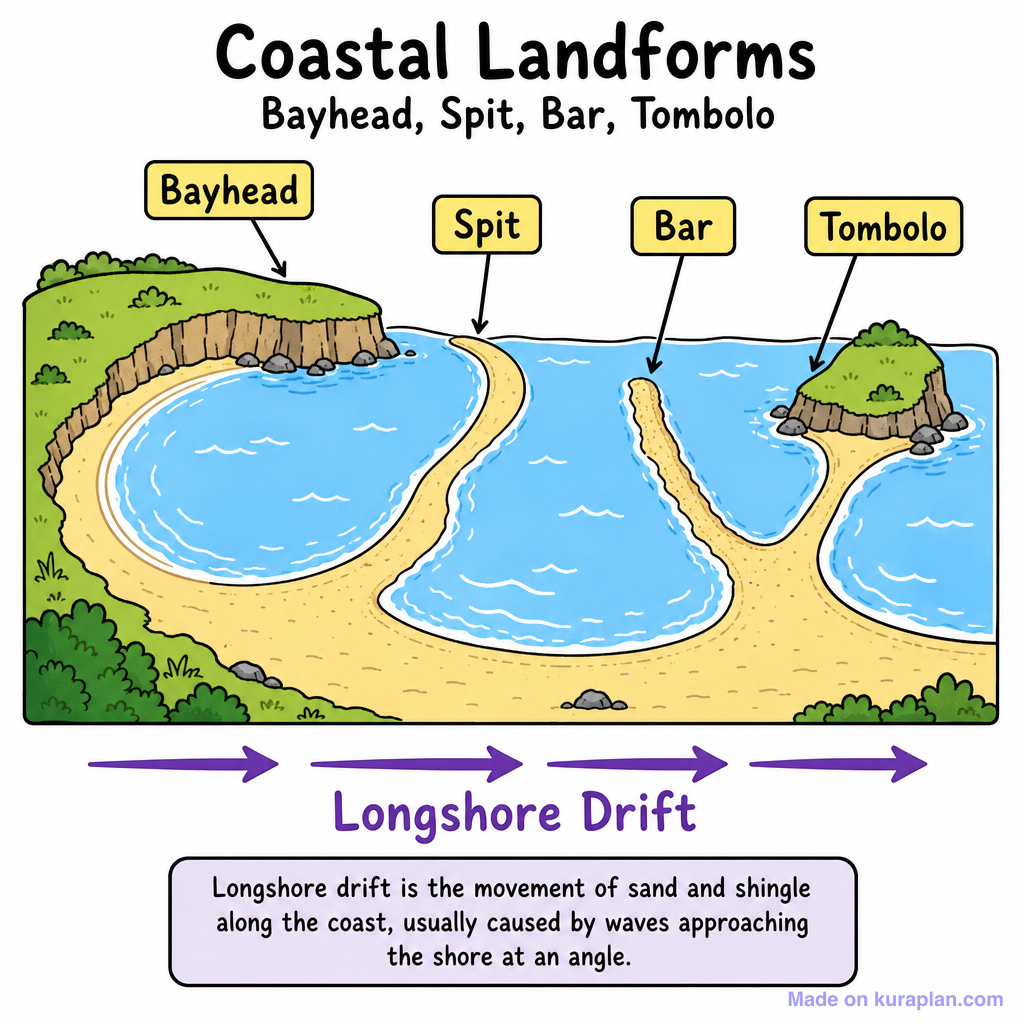
Spurn Point spit created by longshore drift New beaches formed from eroded material Wildlife habitats created in coastal areas Tourism benefits from dramatic coastline

Key Learning Summary
The Holderness Coast changes through natural erosion and human management. People must adapt to these changes while protecting what they can.
More Coastal Erosion slide decks
Other ready-to-teach decks on coastal erosion.

Free Deposition images
Drop these illustrations straight into your lesson.