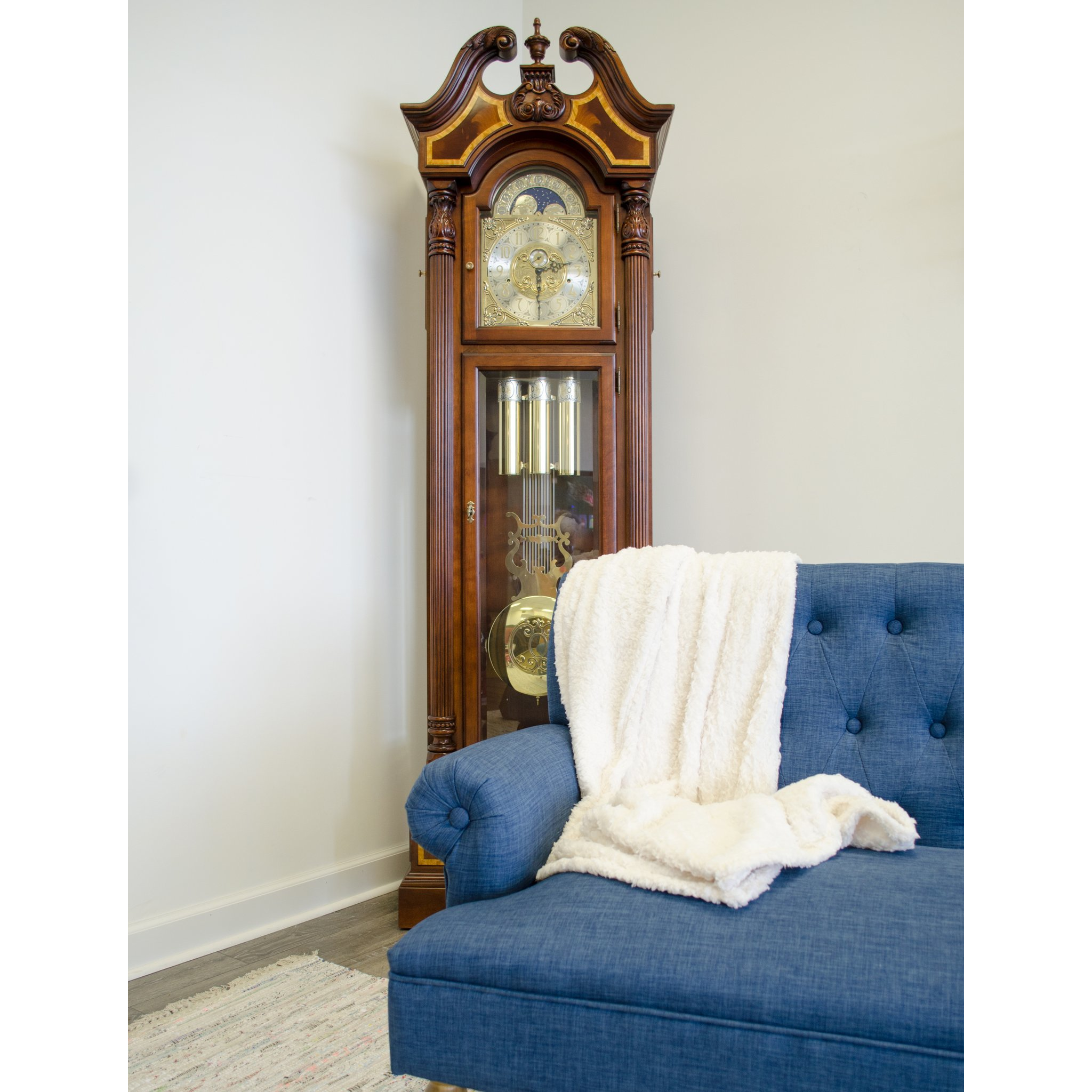
Introduction to Analogue Clock Parts
Year 6 Mathematics Understanding Time and Clocks 30-minute lesson

What Do You Know About Clocks?
Who uses clocks in their daily life? What do clocks help us with? What parts can you see on a clock? Why are clocks important?
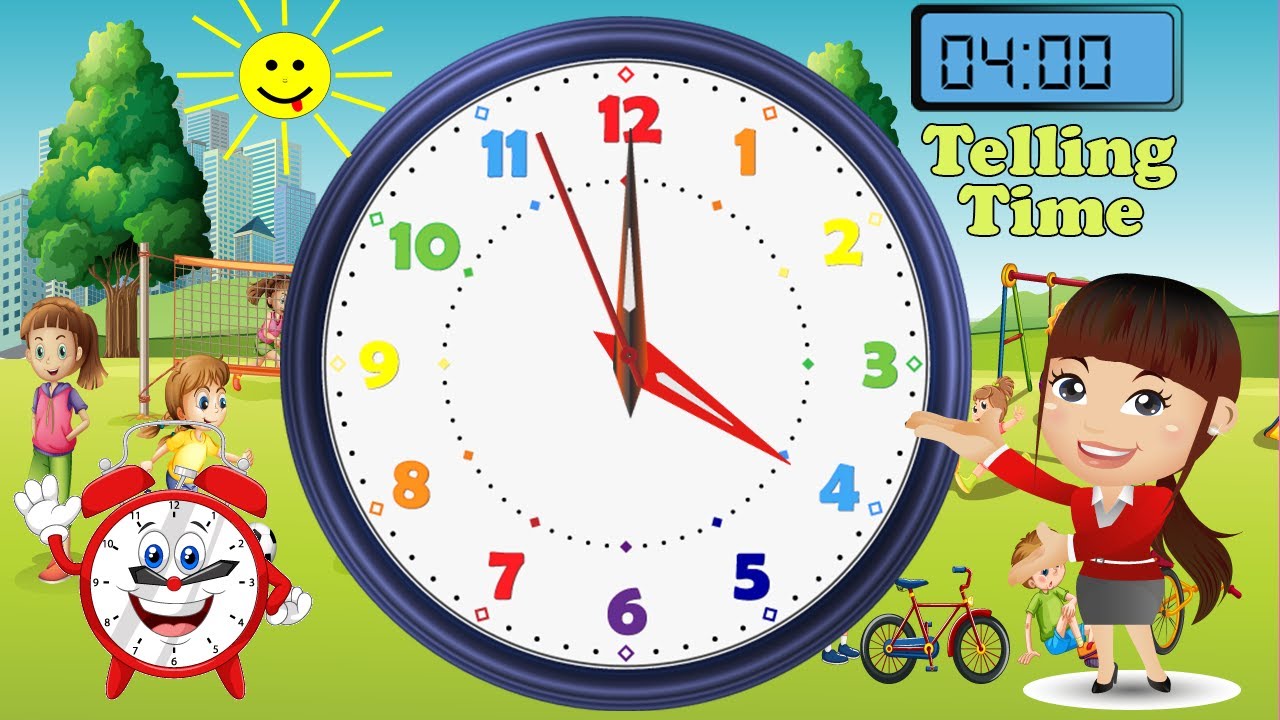
The Clock Face
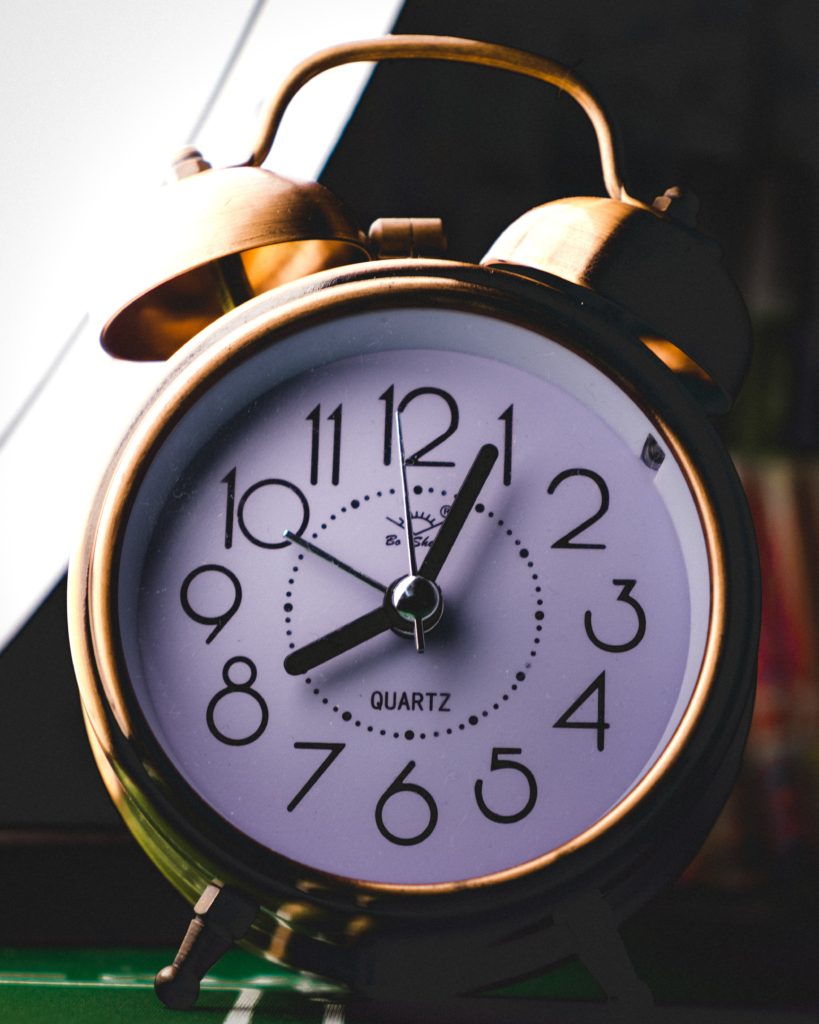
The Hour Hand
The shorter, thicker hand Points to the hour (1, 2, 3, etc.) Moves slowly around the clock Takes 12 hours to go around once
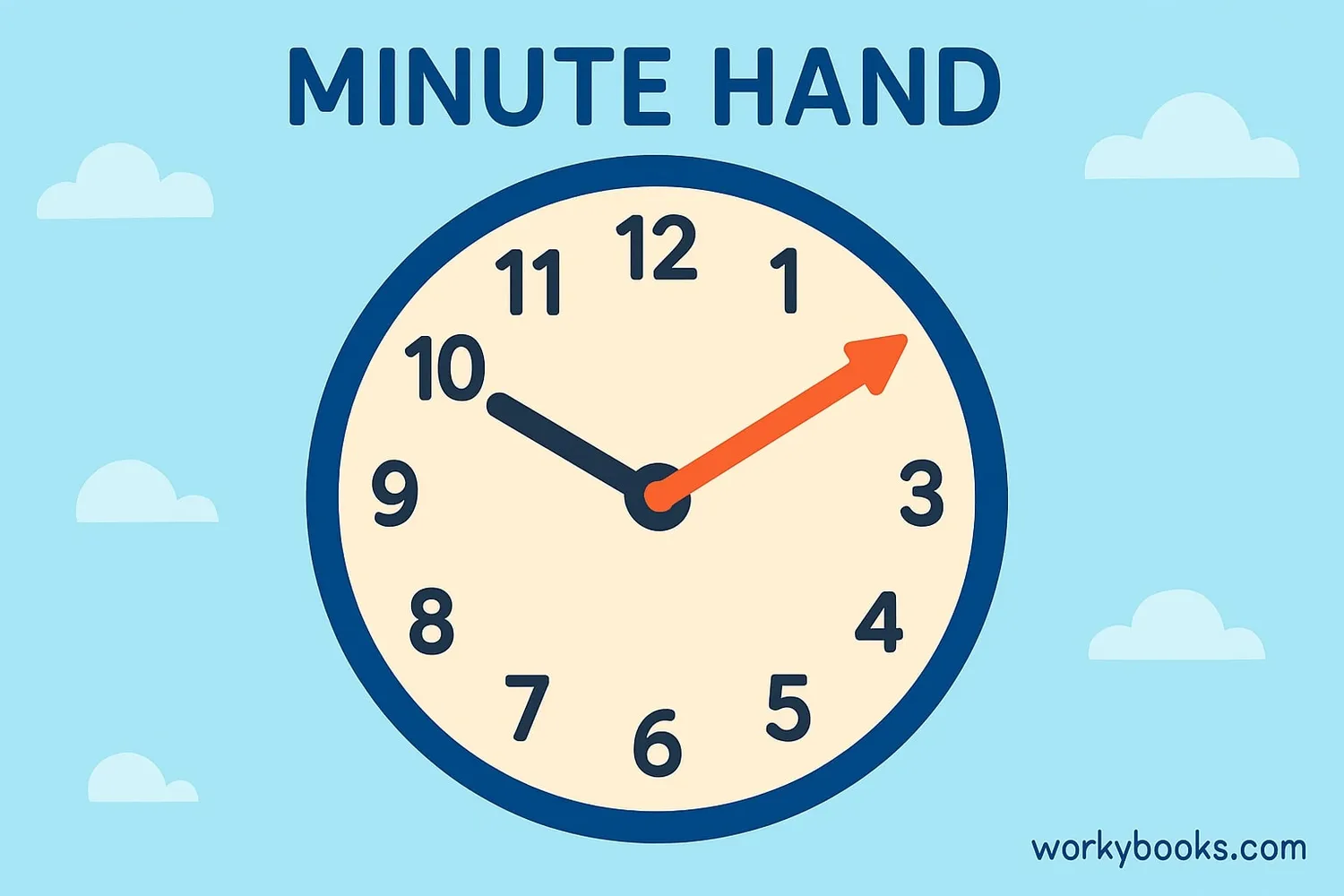
The Minute Hand
The longer, thinner hand Points to the minutes Moves faster than the hour hand Takes 60 minutes to go around once

Label the Clock Activity
Use your worksheet to label the clock parts Draw the hour hand (short and thick) Draw the minute hand (long and thin) Mark the centre point where hands meet

Quick Review: Clock Parts
{"left":"Clock Face: Shows numbers 1-12\nHour Hand: Short, shows the hour","right":"Minute Hand: Long, shows minutes\nCentre: Where hands attach and rotate"}
Test Your Knowledge!
Which hand tells us the hour? What number does the hour hand point to at 4 o'clock? Why is the minute hand longer? How many numbers are on a clock face?