
Mastering Ratios for GCSE Success
Year 11 Mathematics Understanding Ratio Notation & Problem Solving Real-Life Applications & Exam Preparation

What is a Ratio?
A ratio compares quantities by showing their relative sizes Written as 3:4 or '3 to 4' Shows how many parts of one thing compared to another Example: In a class of 15 boys and 10 girls, the ratio is 15:10 or 3:2
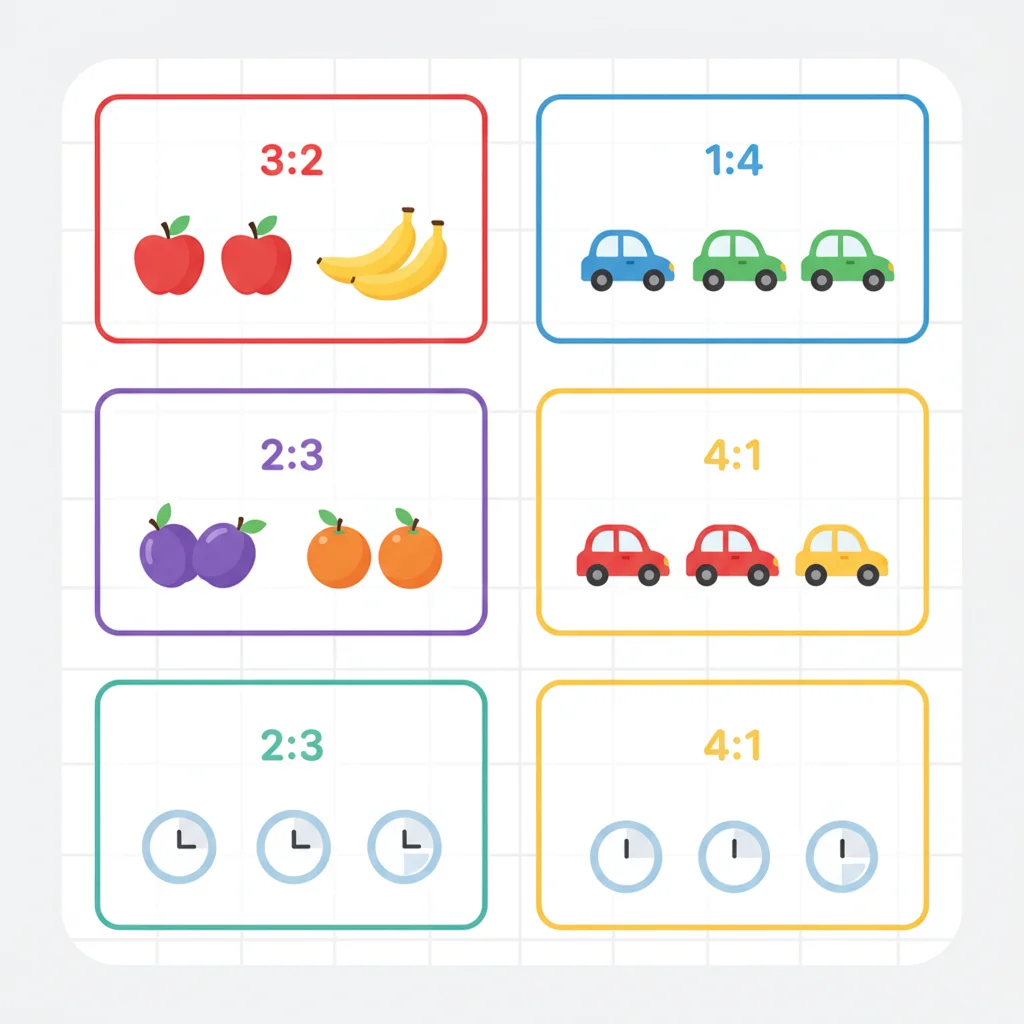
Ratio Notation Practice
Write these ratios in standard form: • 6 apples to 4 oranges • 12 red cars to 8 blue cars • 20 minutes to 15 minutes Quick check: Can you spot equivalent ratios?
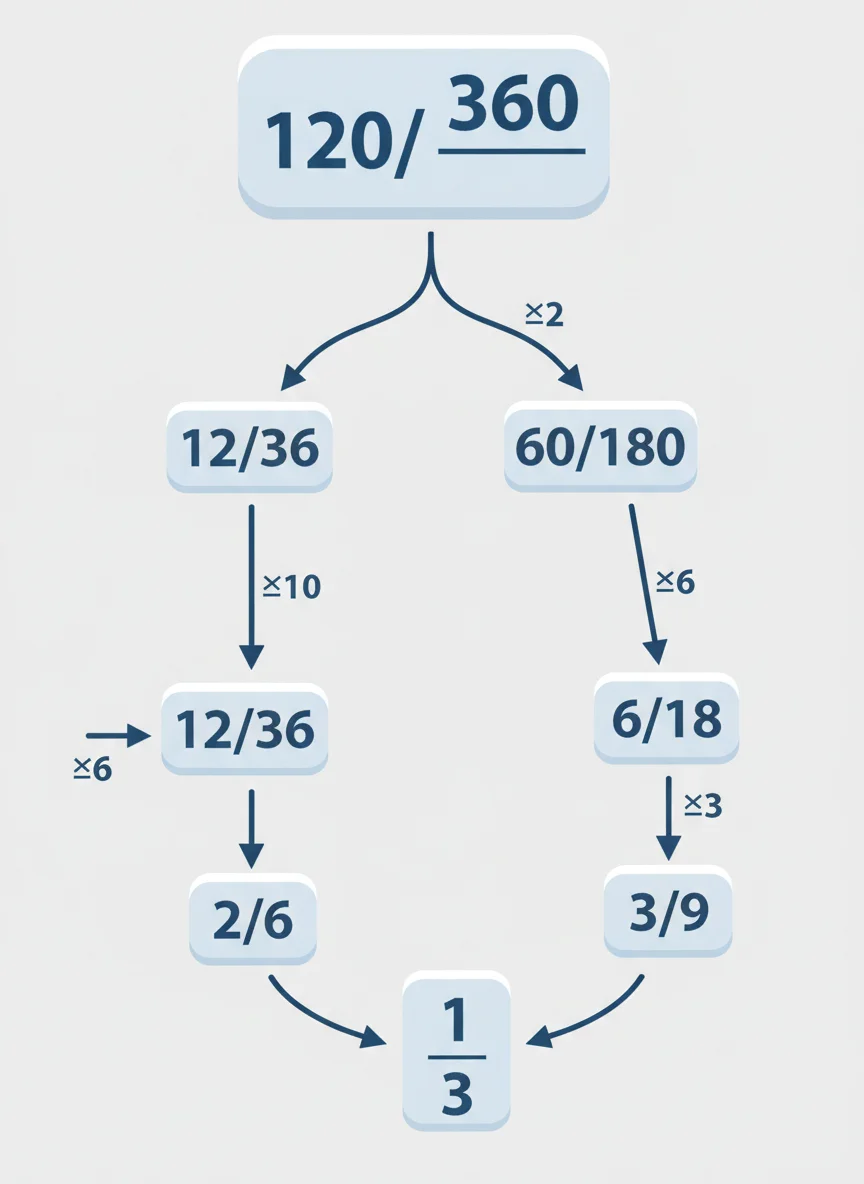
Simplifying Ratios
Find the highest common factor (HCF) of both numbers Divide both parts by the HCF Example: 12:18 → HCF is 6 → 12÷6:18÷6 = 2:3 Always express ratios in their simplest form

Types of Ratio Problems
{"left":"Sharing in a given ratio\nScaling up recipes or quantities\nFinding missing parts\nComparing different quantities","right":"Direct proportion problems\nMap scales and distances\nMixture problems\nUnit rates and pricing"}
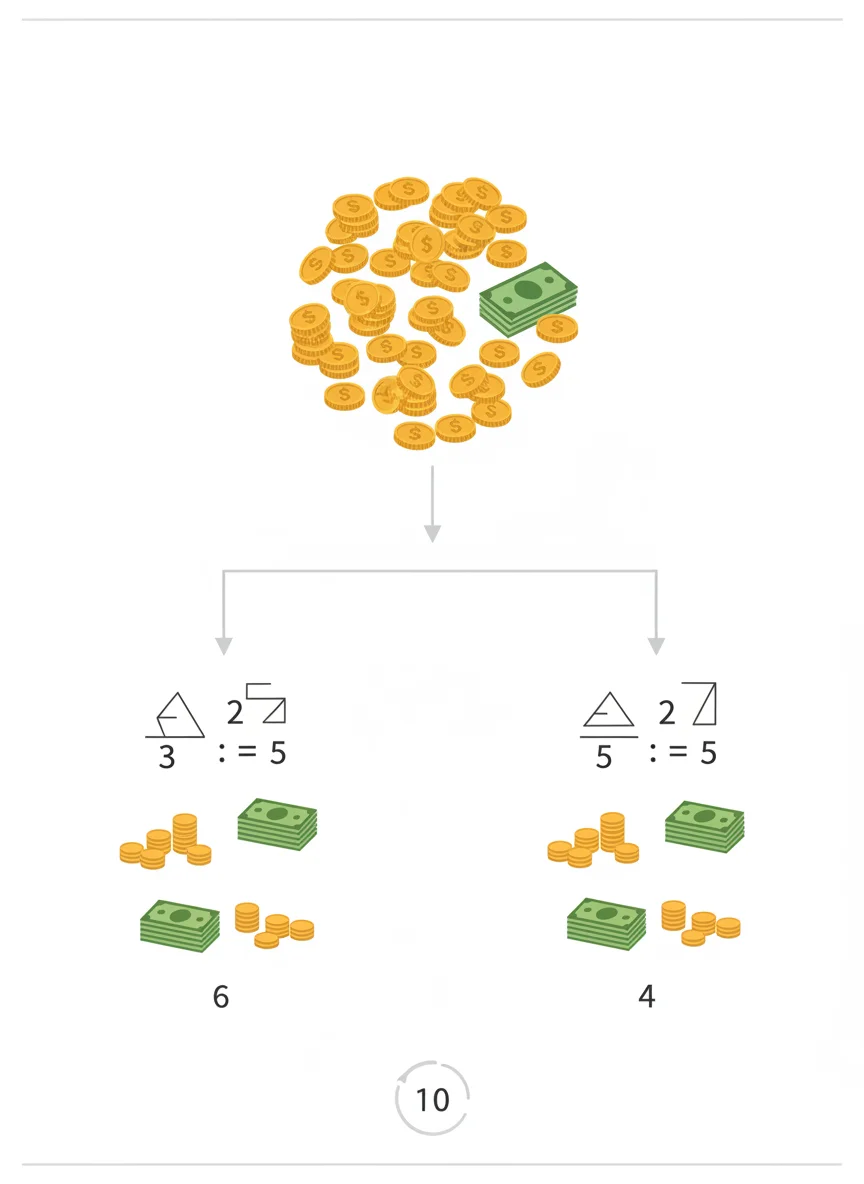
Solving Sharing Problems
Step 1: Add the ratio parts together Step 2: Divide the total amount by the sum Step 3: Multiply each part by this value Example: Share £360 in ratio 2:3 Total parts = 2+3 = 5, Each part = £360÷5 = £72 First share = 2×£72 = £144, Second share = 3×£72 = £216
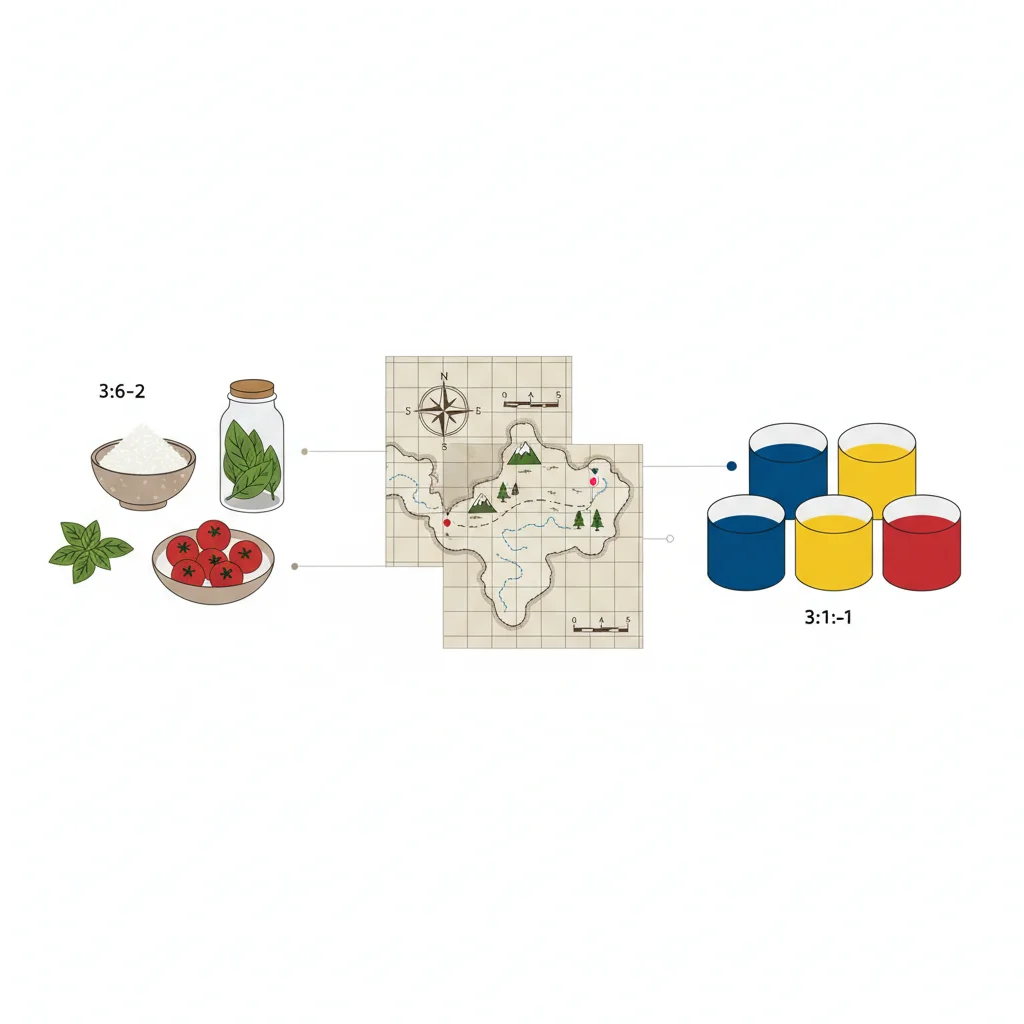
Real-Life Ratio Challenge
Problem 1: A recipe for 4 people uses 200g flour and 150g sugar. How much of each for 6 people? Problem 2: On a map, 2cm represents 5km. What distance does 7cm represent? Problem 3: A paint mixture uses red and blue in ratio 3:2. How much blue paint for 15L of red?

Ratios in the Real World

Quick Check Quiz
1. Simplify the ratio 18:24 2. Share £120 in the ratio 3:5 3. If 4:7 represents 33 items total, how many in each part? Show your working on mini whiteboards!

Key Points for GCSE Success
Always simplify ratios to lowest terms Check your answers make sense Show clear working in exams Practice with real-world contexts Remember: ratios show relationships, not actual amounts Next steps: Practice past paper questions