Movement on Surfaces Science Investigation
Year 3 Science Exploring Friction and Forces 60-minute lesson

National Curriculum Links
Key Stage 2 Science Programme of Study Compare how things move on different surfaces Notice that some forces need contact between objects Understand friction as a contact force
Learning Objectives
Describe how different surfaces affect object movement Conduct a simple experiment with observations Use scientific vocabulary: force, friction, surface, movement Understand that friction is a contact force
Resources We Need Today
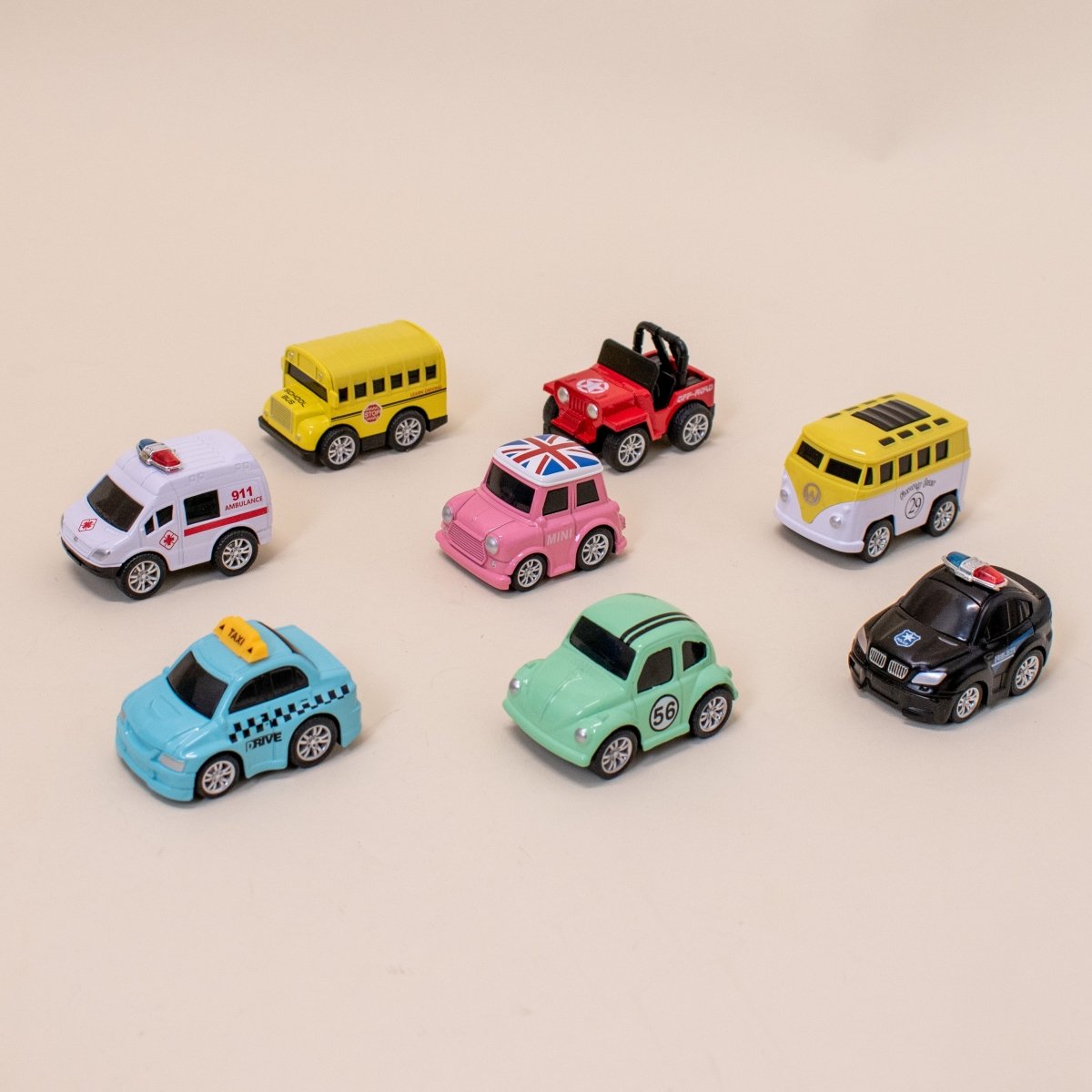
Toy cars or wheeled blocks (shared in pairs) Surface samples: carpet, tile, sandpaper Measuring tape and stopwatches Recording sheets for observations Scientific vocabulary cards

Starter Question
If I push this toy car across carpet, tile, or sandpaper... Do you think it will move the same distance? Why or why not?
What is Friction?
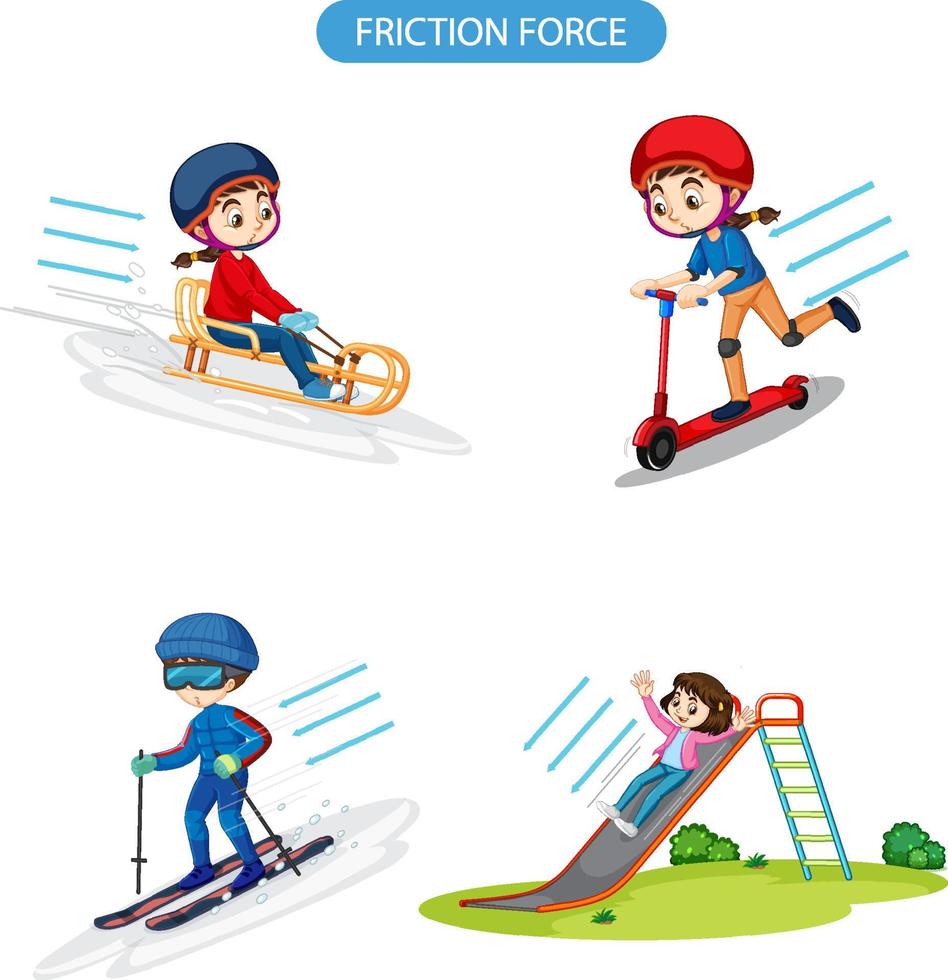
Friction is a force that happens when surfaces touch It slows things down or stops movement Different surfaces create different amounts of friction Rough surfaces = more friction, Smooth surfaces = less friction

Our Investigation Plan
Set up three different surfaces side by side Push the car with the same force each time Measure how far the car travels on each surface Record results and repeat for accuracy

Group Investigation Time
{"left":"Groups of 4 students\nTake turns pushing the car\nMeasure and record distances\nUse scientific vocabulary","right":"Teacher circulates asking questions\nWhich surface stopped the car quickest?\nWhy did that surface slow it down more?\nWhat do you notice about the surfaces?"}
Recording Our Results
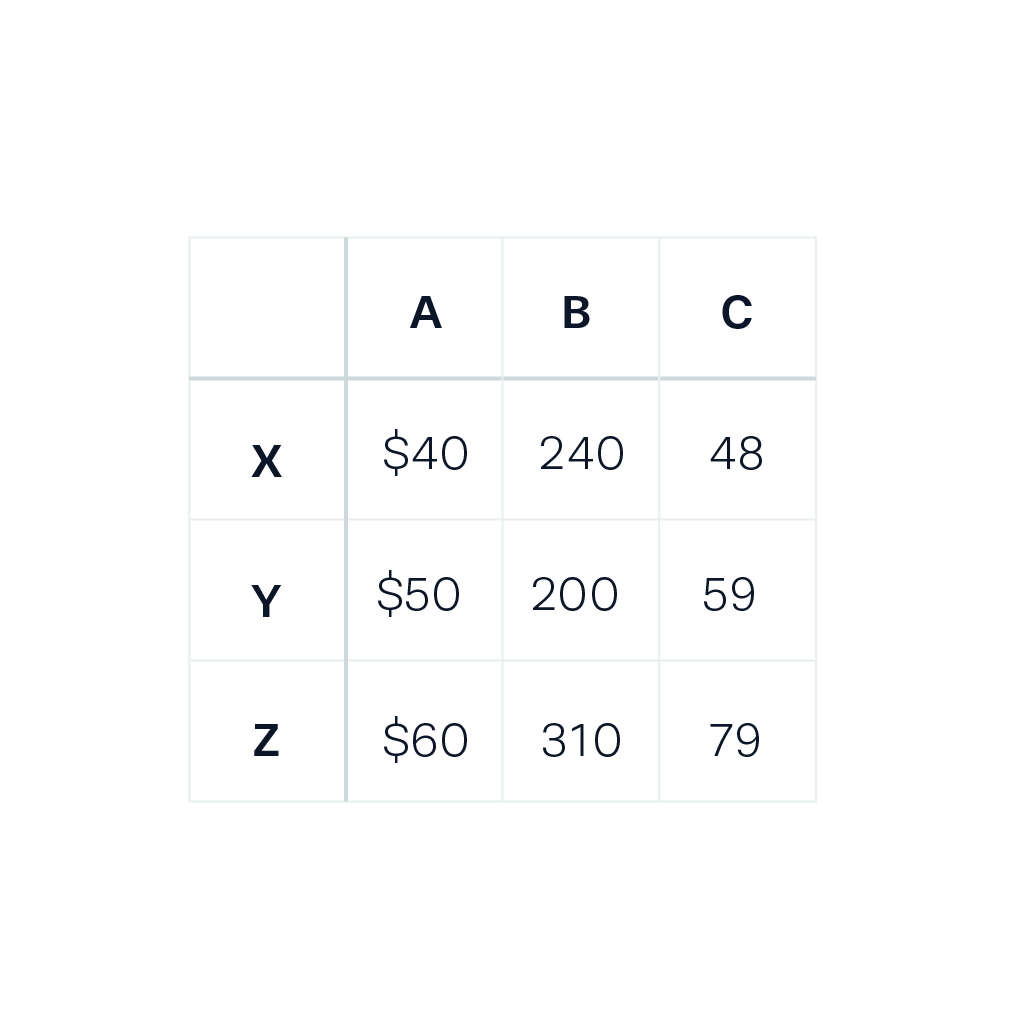
Create a class results table on the whiteboard Compare findings from different groups Identify patterns in the data Which surface allowed the furthest movement? Which surface stopped the car quickest?
Key Discovery
"Friction depends on surface texture. Rough surfaces create more friction and slow objects down more than smooth surfaces."
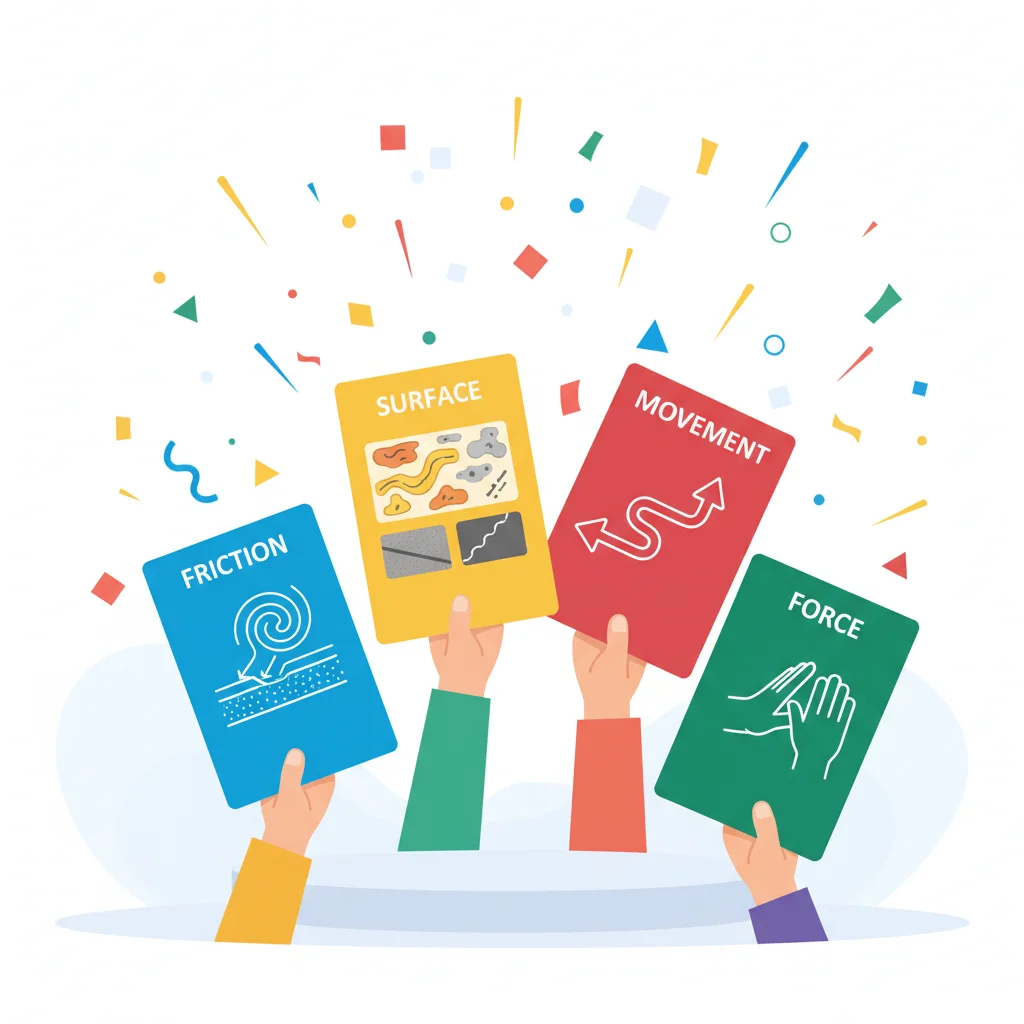
Vocabulary Recap Quiz
Hold up the correct vocabulary card when I give a clue! A force that slows things down when surfaces touch The texture of what objects move across How objects change position A push or pull that can change motion
Assessment and Next Steps
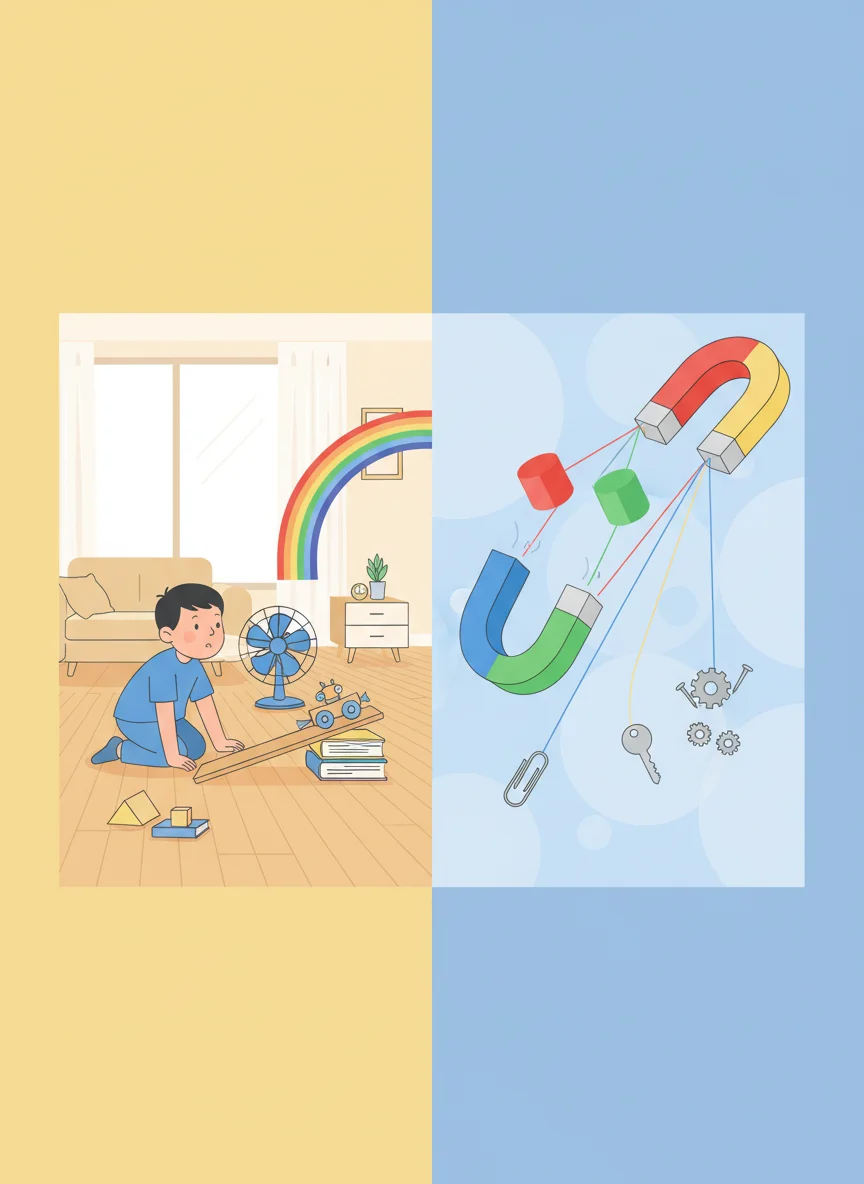
Extension: Try the car experiment at home on different surfaces Draw or write about what you discover Next lesson: Magnetic forces that work without touching! Remember: Scientists always ask questions and test ideas