
Powers, Fractions & Visual Learning
Year 10 Mathematics Understanding Indices and Fractional Powers 60-minute interactive lesson

Learning Objectives
Recall and apply laws of indices with integer and fractional powers Simplify algebraic expressions involving powers and fractions Solve equations with fractional powers and coefficients Understand the relationship between roots and fractional indices

Quick Starter Quiz
What is 3² × 3³? What does a^(1/2) represent? Simplify x³ × x⁴ What is 9^(1/2)?
Laws of Indices Refresher
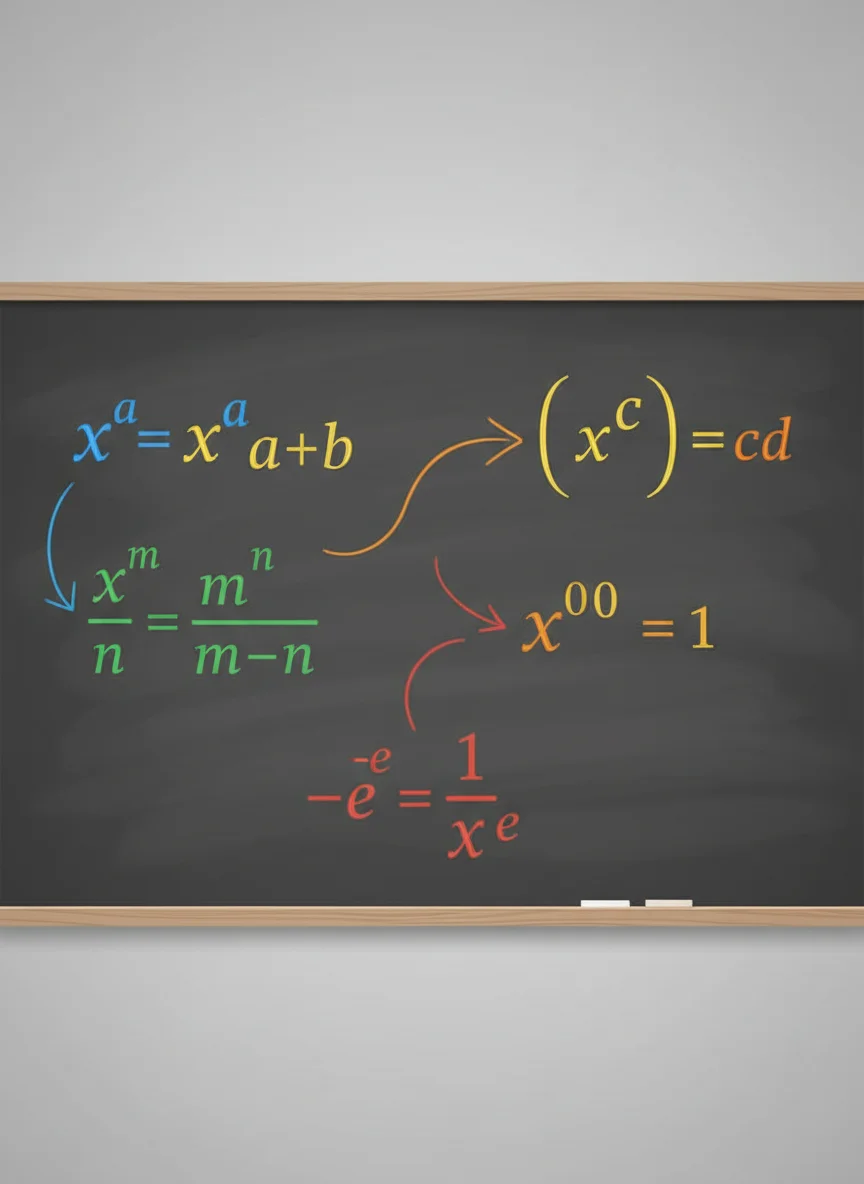
Multiplication: a^m × a^n = a^(m+n) Division: a^m ÷ a^n = a^(m-n) Power of a power: (a^m)^n = a^(mn) Fractional indices: a^(1/n) = ⁿ√a Negative indices: a^(-n) = 1/a^n

Practice with Fractional Indices
Work through these examples: Simplify 4^(3/2) Calculate 8^(-1/3) Simplify (x³y⁻¹)²
Fractional Powers vs Roots
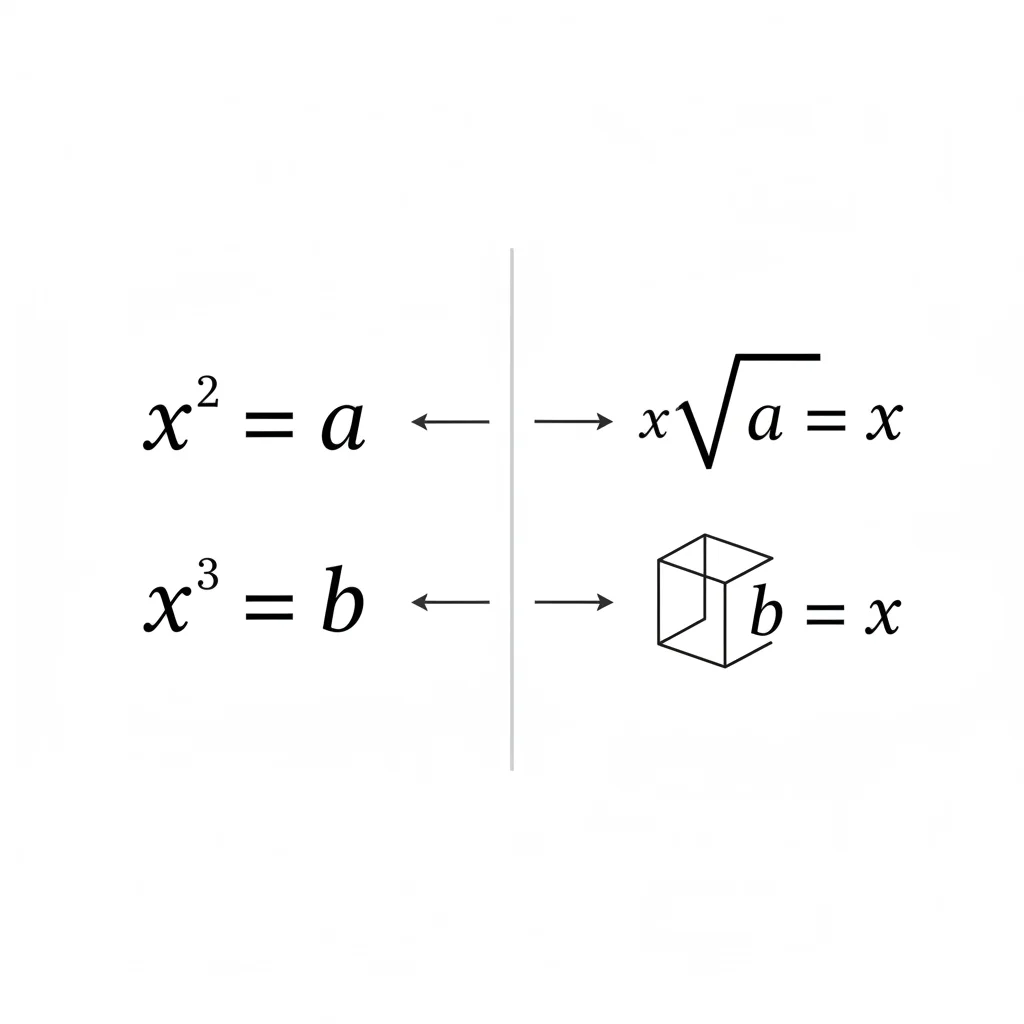
{"left":"x^(1/2) = √x\nx^(1/3) = ³√x\nx^(2/3) = (³√x)² or ³√(x²)\nx^(3/4) = (⁴√x)³ or ⁴√(x³)","right":"Powers with fractions follow the same rules\nThe denominator tells us the root\nThe numerator tells us the power\nWe can calculate either way around"}
Solving Equations with Fractional Powers
Example 1: x^(2/3) = 16 Step 1: Raise both sides to the power 3/2 Step 2: x = 16^(3/2) Step 3: x = (16^(1/2))³ = 4³ = 64 Always check your answer by substituting back!
Equation Challenge
Solve these equations: x^(2/3) = 16 (2/3)x - 4 = 1/3 x^(1/2) = 5 2x^(3/4) = 16

Equation Matching Game
Match the complex expressions with their simplified forms Work in pairs Justify your matches out loud Use correct mathematical vocabulary

Key Takeaways
Fractional indices are just another way of writing roots The same index laws apply to fractional powers Always check your solutions by substituting back Practice makes perfect with these calculations!