Recognising Simple Fractions
Year 8 Functional Skills Maths Duration: 50 minutes Learning about halves, quarters and tenths

We Are Learning To
Recognise and find simple fractions (halves, quarters, and tenths) of whole numbers Understand how to represent fractions visually and numerically Apply knowledge of fractions in practical contexts Calculate simple fractions accurately

Success Criteria
I can identify halves, quarters, and tenths as fractions of a whole number I can represent fractions visually using diagrams or bar models I can calculate simple fractions of given whole numbers accurately I can explain my reasoning when finding fractions of quantities
Starter Question
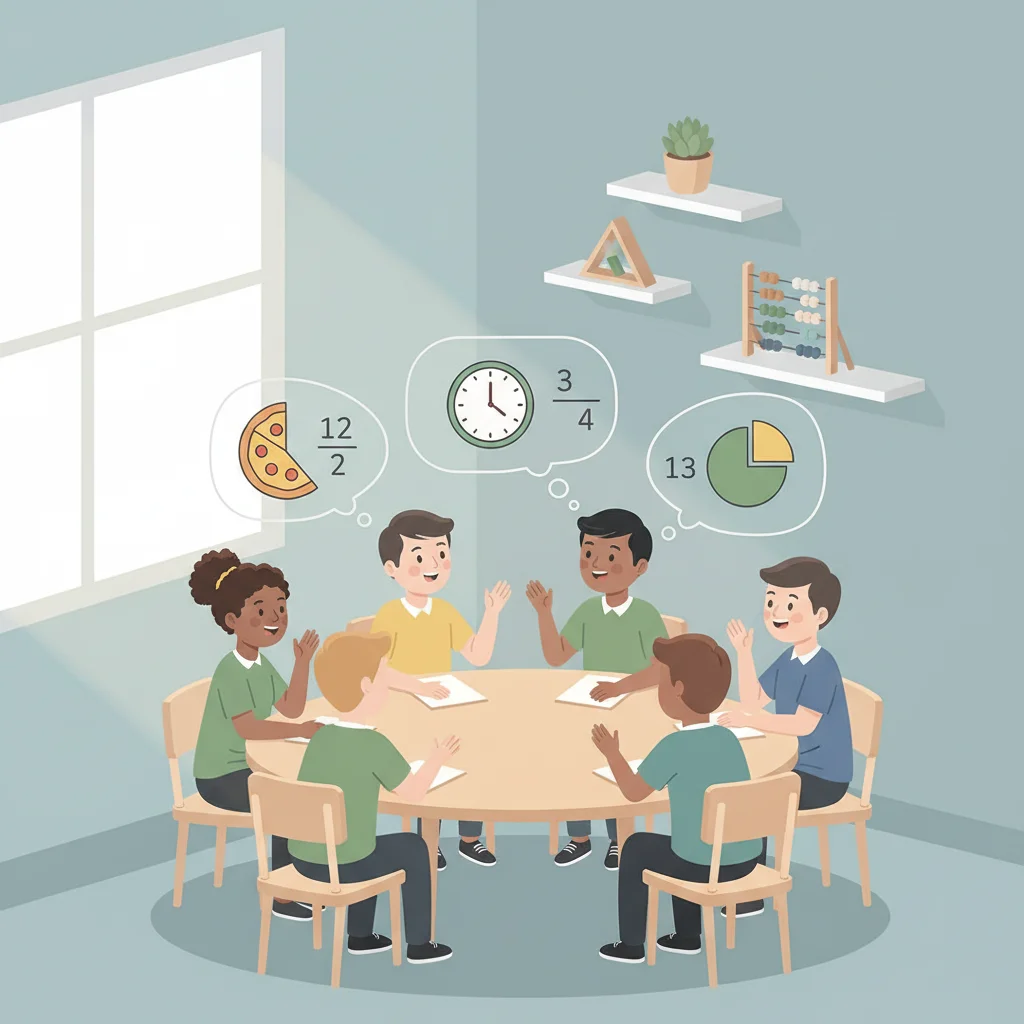
What do you already know about halves, quarters, and tenths? Think about where you see fractions in everyday life Discuss with a partner for 2 minutes
What is a Fraction?
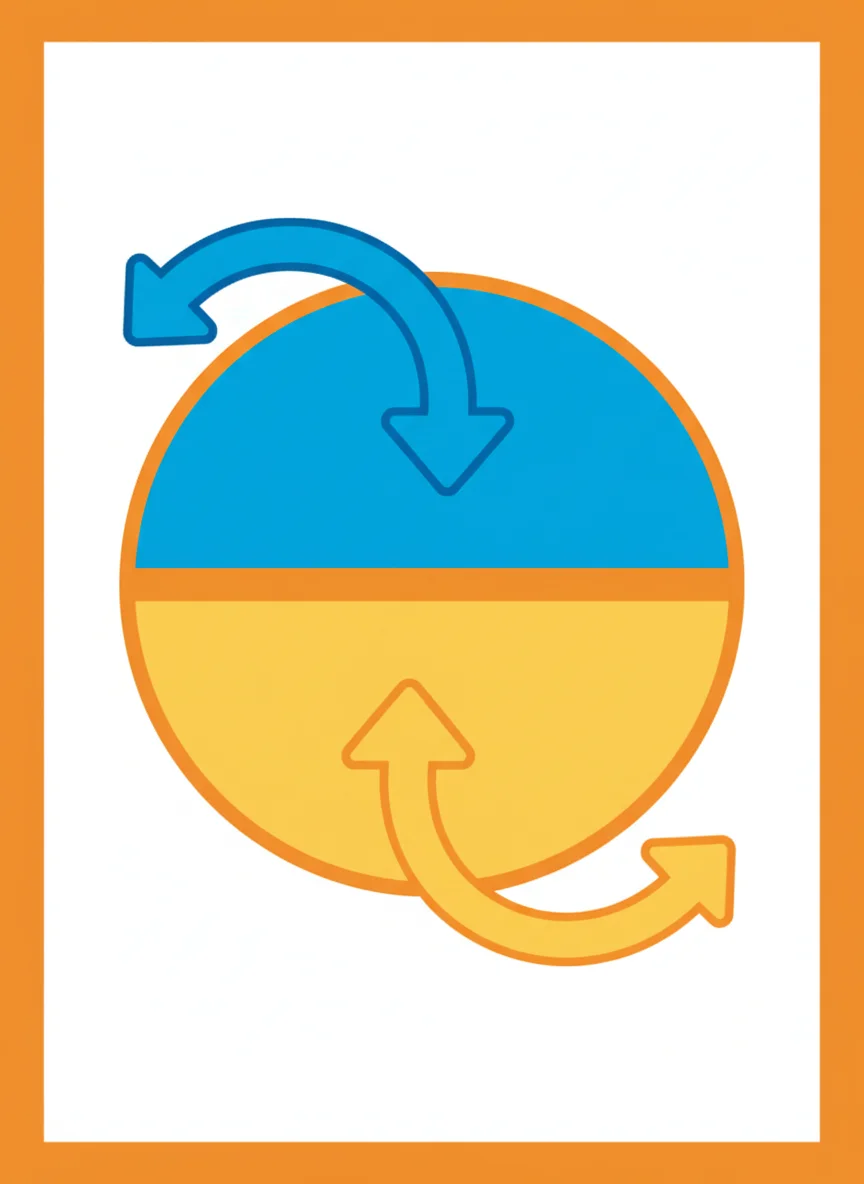
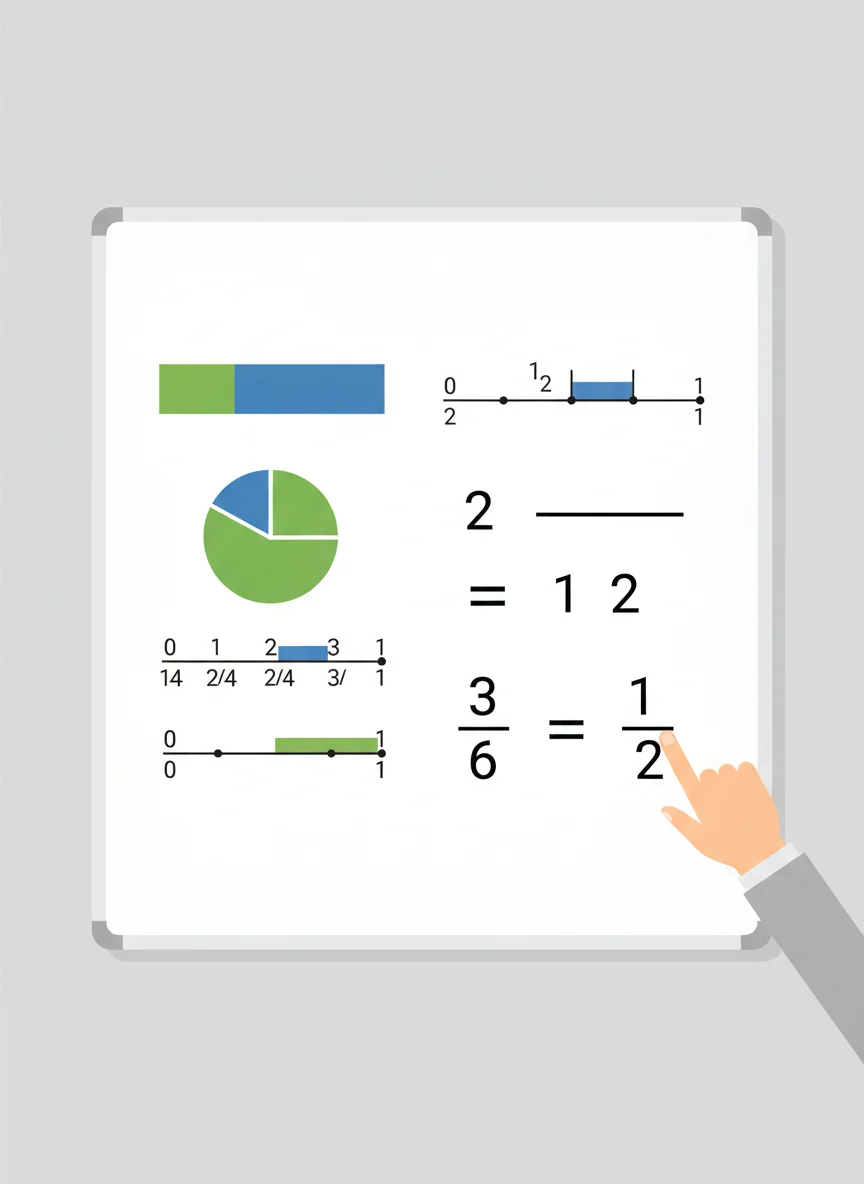
A fraction represents part of a whole The bottom number (denominator) tells us how many equal parts the whole is divided into The top number (numerator) tells us how many parts we have Examples: 1/2 means 1 out of 2 equal parts
Visual Fraction Representations
Calculating Fractions of Numbers
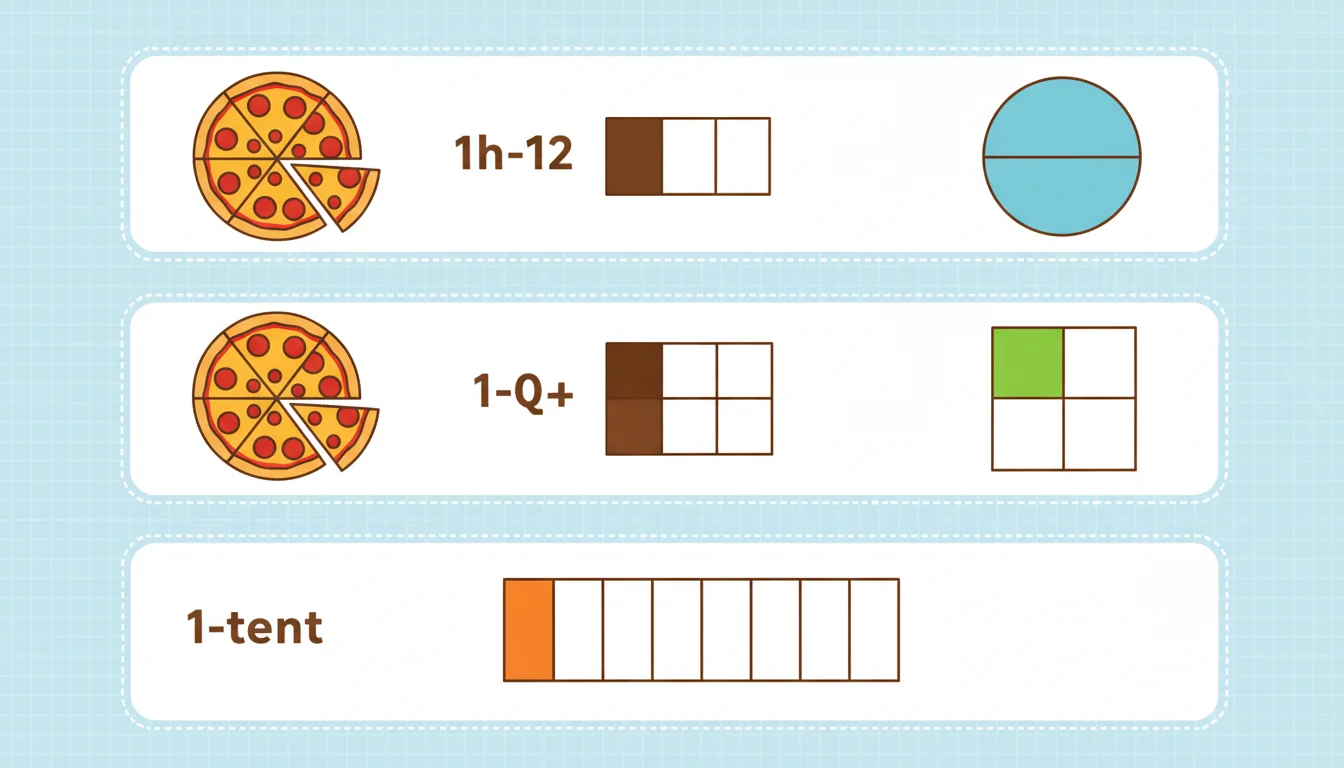
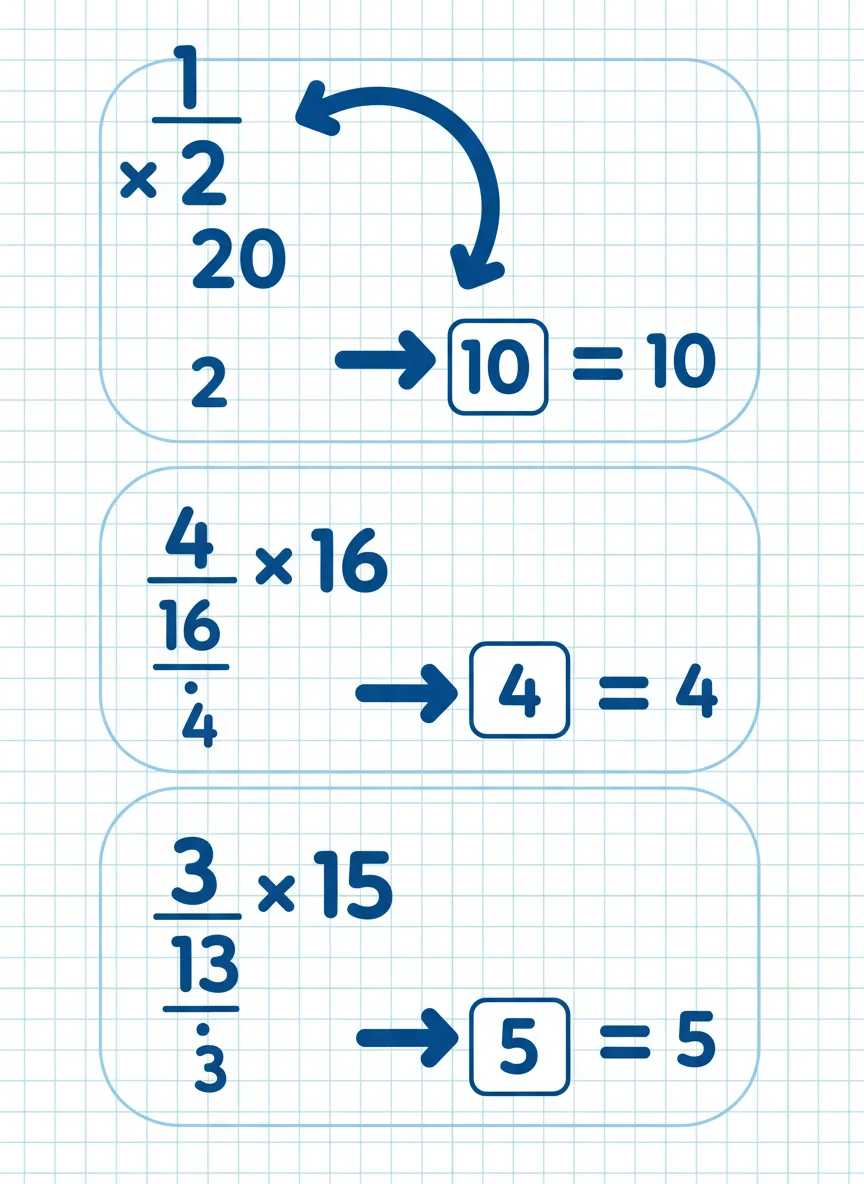
To find 1/2 of a number: divide by 2 To find 1/4 of a number: divide by 4 To find 1/10 of a number: divide by 10 Example: 1/2 of 20 = 20 ÷ 2 = 10

Real-Life Fraction Examples
A packet has 40 sweets. What is 1/4 of the sweets? You read 1/2 of a 60-page book. How many pages? A pizza has 8 slices. What is 1/2 of the pizza? Work out the answers with your partner
Guided Practice - Let's Try Together
Find 1/2 of 30 Find 1/4 of 36 Find 1/10 of 50 Show your working and explain your method
Independent Challenge
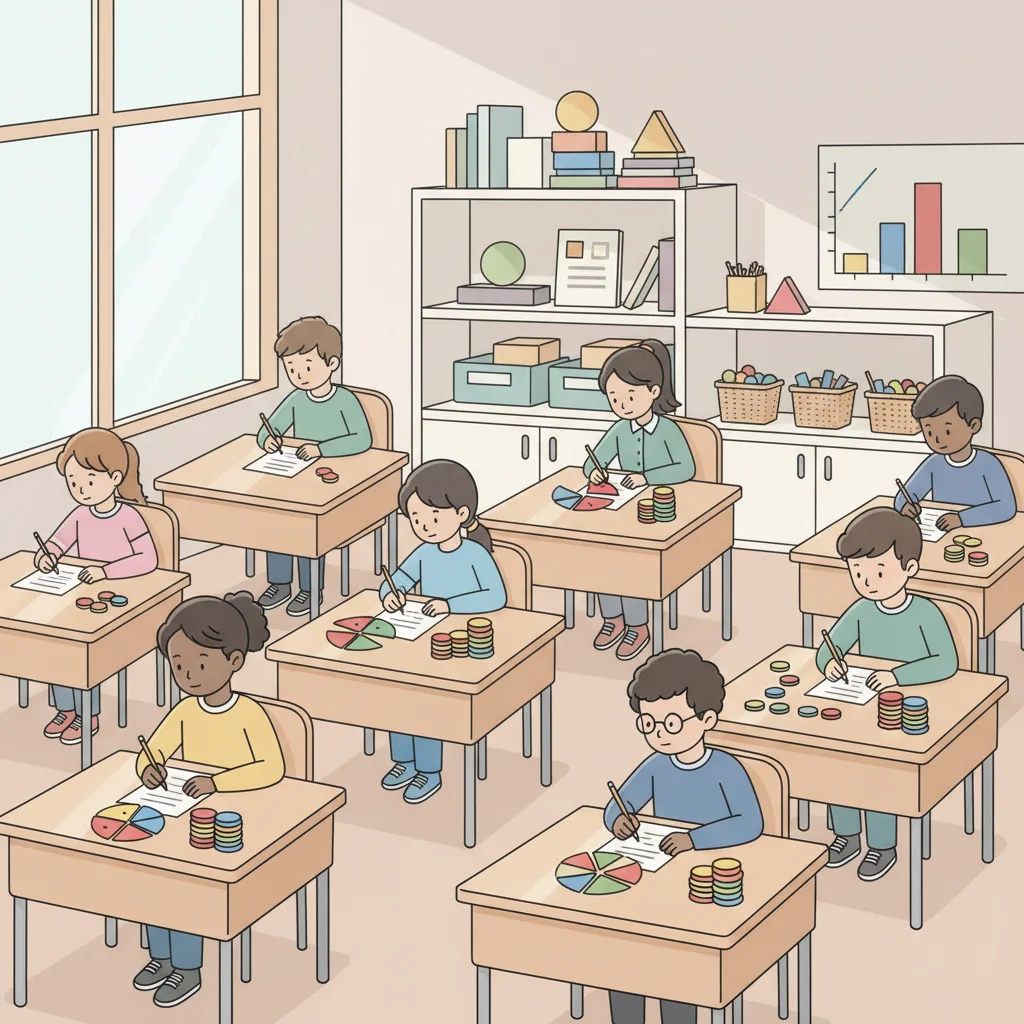
Complete the worksheet problems Try the extension task: Find 3/4 of 40 Explain your reasoning Use fraction manipulatives if helpful
Lesson Summary & Review
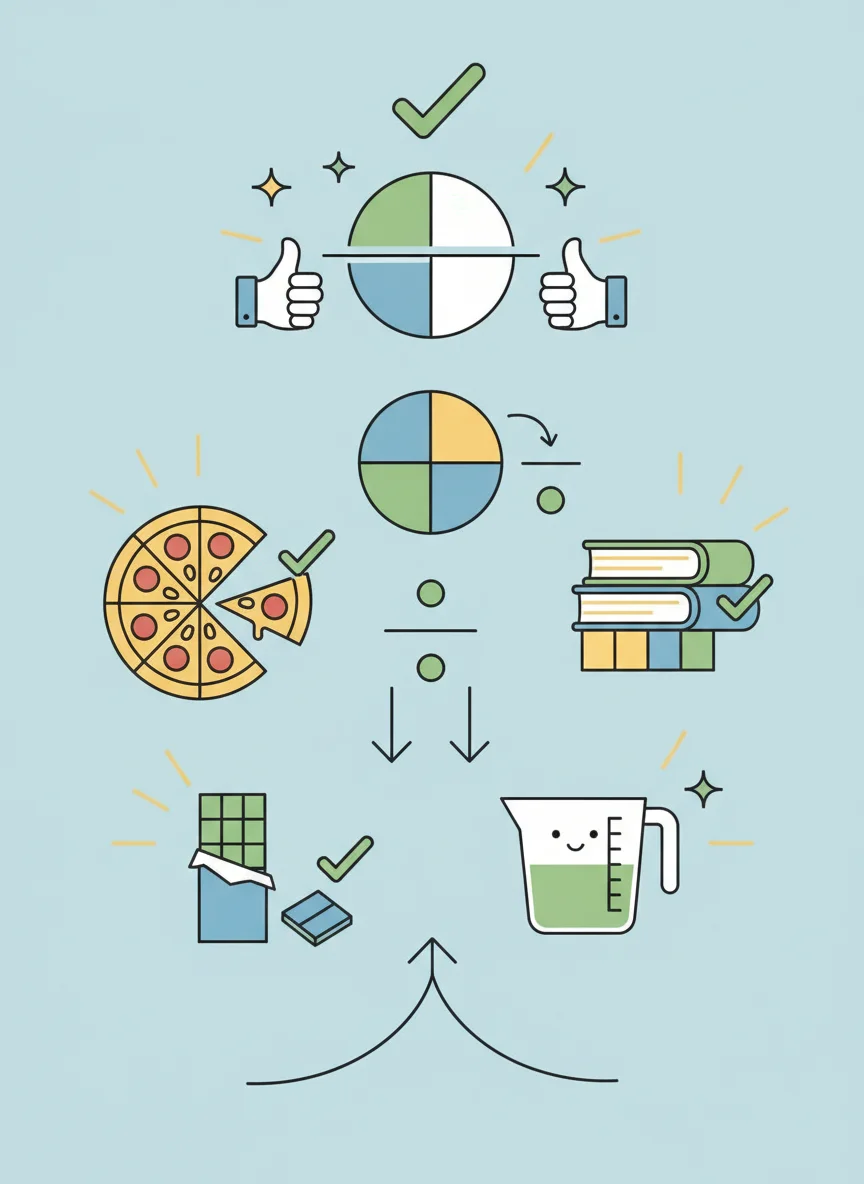
We learned to recognise halves, quarters, and tenths We can calculate fractions by dividing Fractions help us solve real-life problems Key vocabulary: numerator, denominator, fraction