Recurring Decimals Mastery
Year 9 Mathematics Understanding patterns in decimal numbers Converting between fractions and recurring decimals

Learning Objectives
Identify and write recurring decimals using proper notation Convert simple fractions to recurring decimals Explain why some decimals recur and others terminate Apply knowledge to solve numerical problems confidently
Starter: Quick Decimal Conversions
Convert these fractions to decimals: 1/2 = ? 3/4 = ? 2/5 = ? Use your mini-whiteboards!
What Are Recurring Decimals?
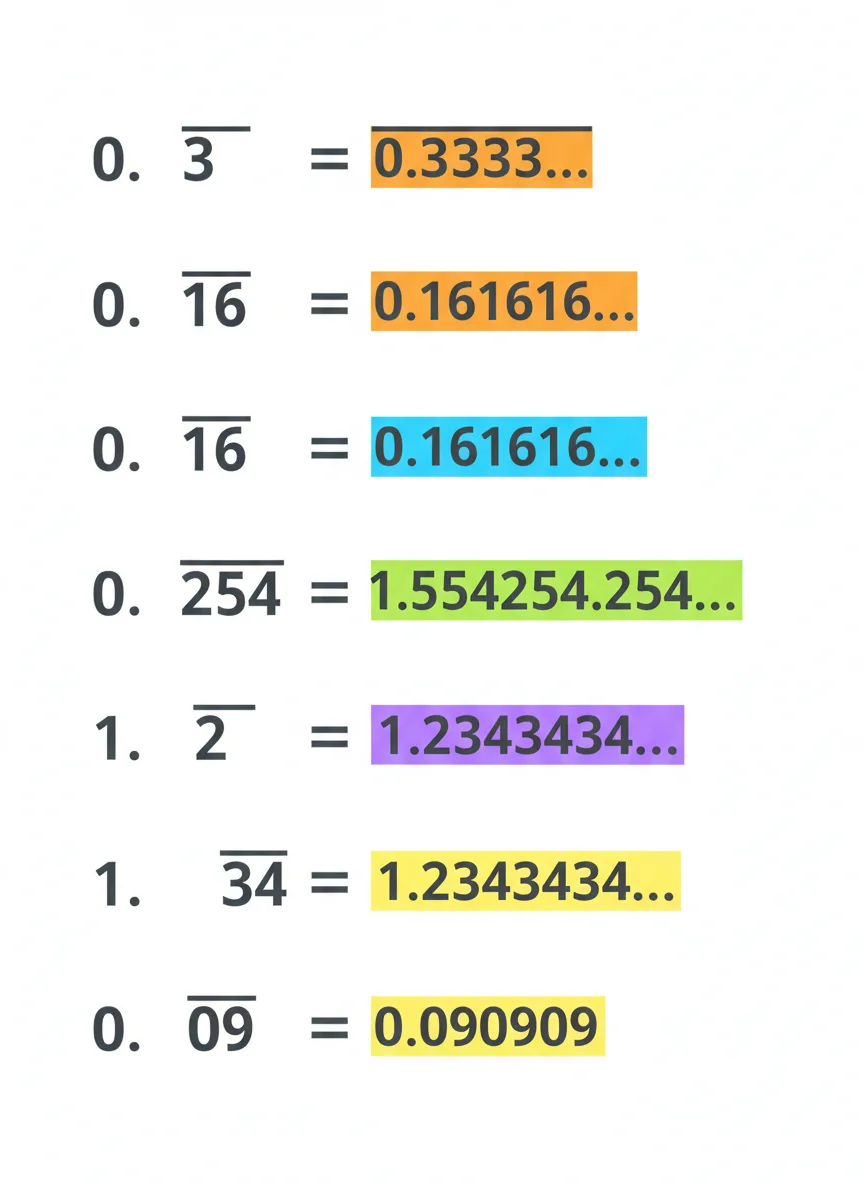
Decimals that repeat a pattern forever Examples: 0.333... or 0.3̄ The bar notation shows which digits repeat Also written as 0.̄3 (bar over the 3)

Think About This...
Why do you think some decimals go on forever while others stop? What might be special about fractions like 1/2 compared to 1/3?

Why Do Some Decimals Recur?
It depends on the denominator's prime factors Denominators with only 2s and 5s → terminating decimals Denominators with other prime factors → recurring decimals Example: 1/4 = 0.25 (factors: 2×2) vs 1/3 = 0.3̄ (factor: 3)
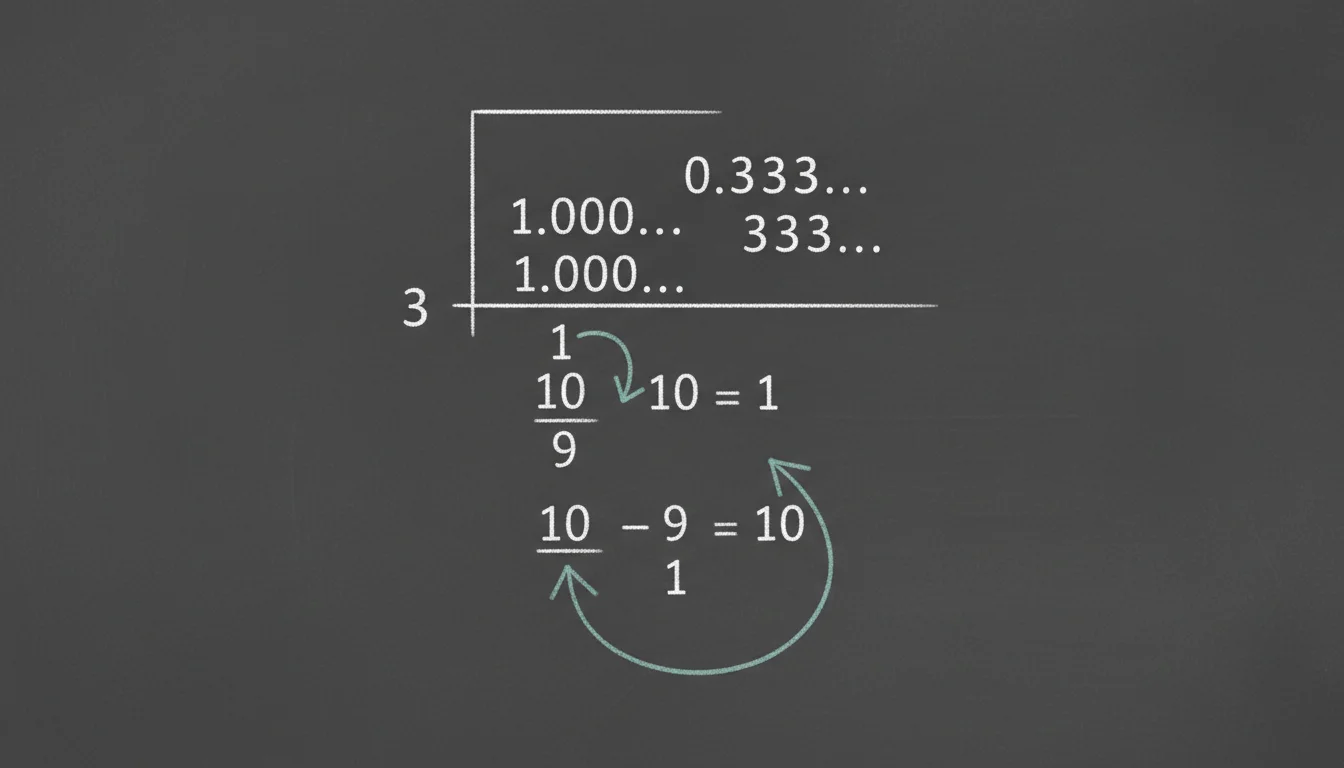
Converting 1/3 to a Recurring Decimal
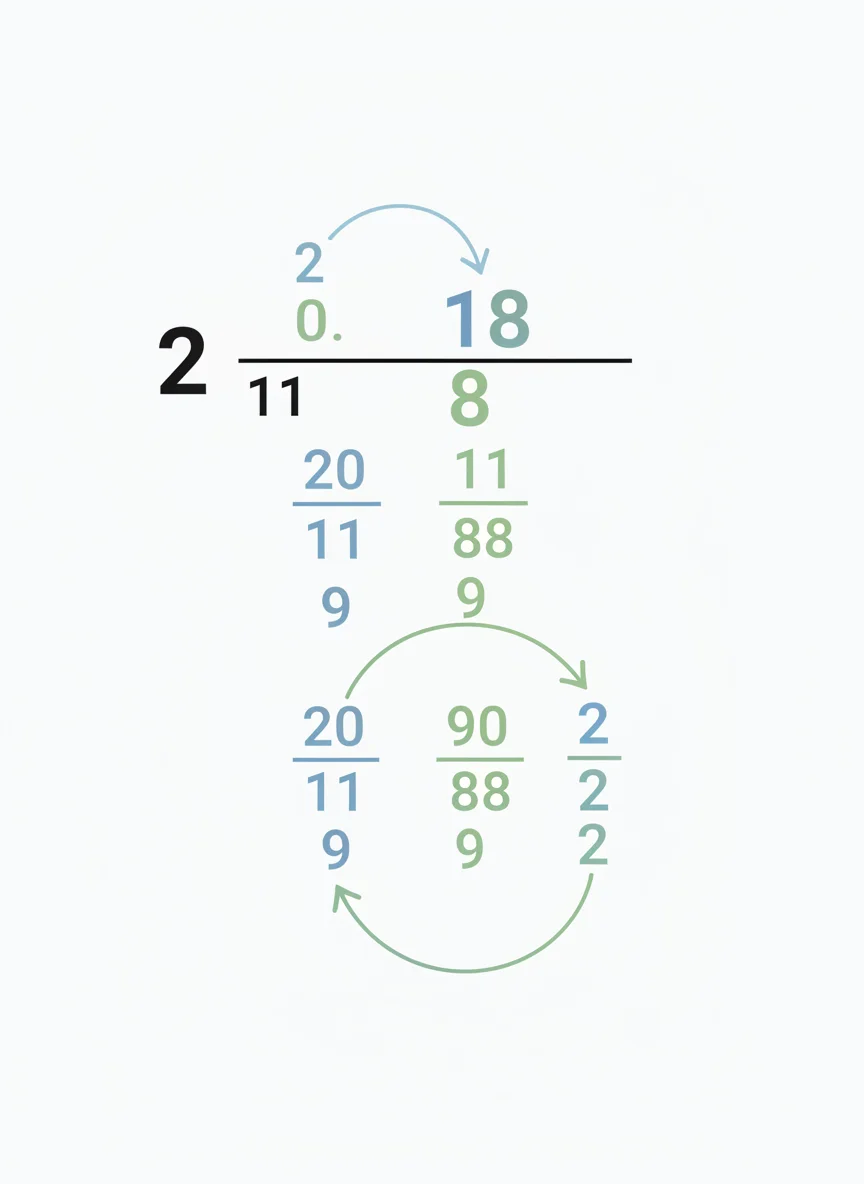
Worked Example: 2/11
Let's convert 2/11 to a decimal Use long division: 2 ÷ 11 Watch for when the remainder repeats Result: 0.181818... = 0.1̄8̄
Your Turn: Practice Time
Convert these fractions to recurring decimals: 1/7 = ? 4/9 = ? 5/6 = ? Remember to use bar notation!
AFL Check: Which Are Recurring?
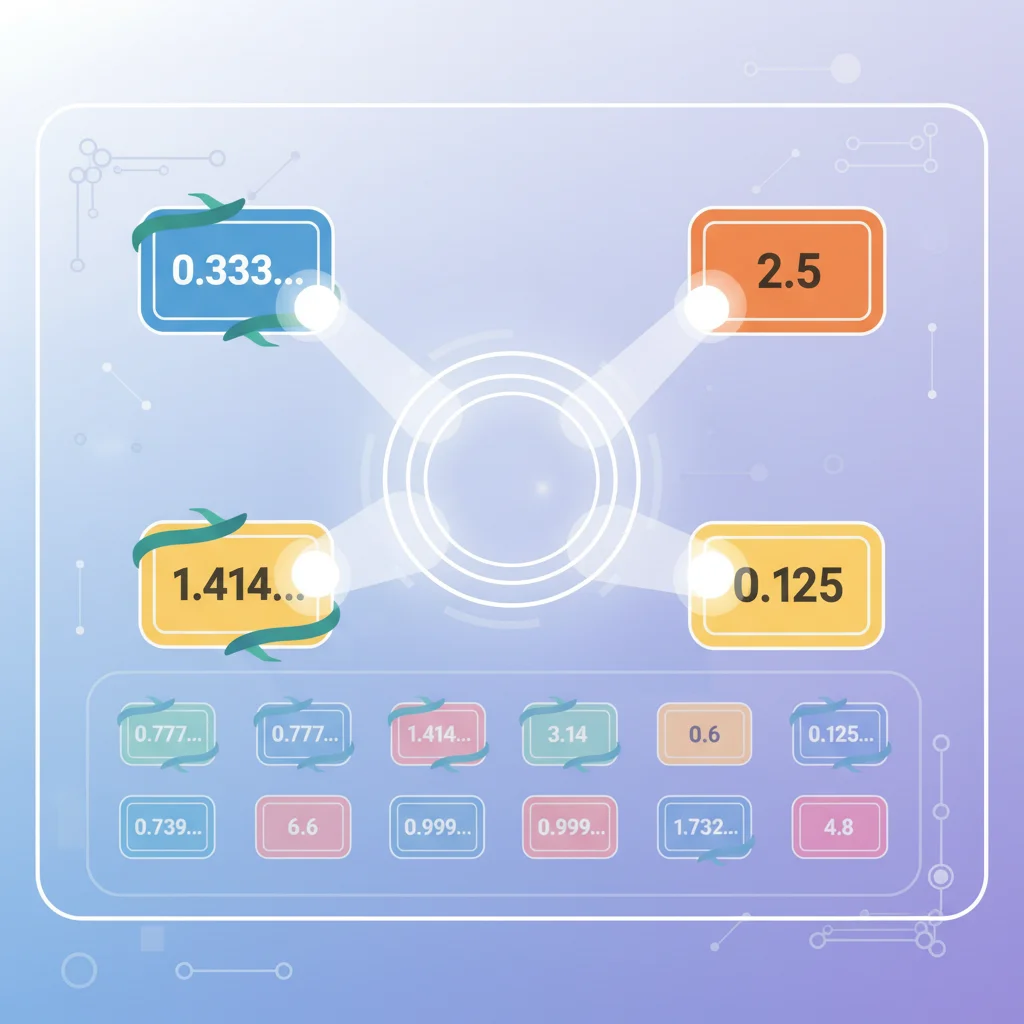
Look at these decimals: 0.125 0.666... 0.75 0.142857142857... Hold up your answers on mini-whiteboards!
Converting Back: Recurring to Fraction
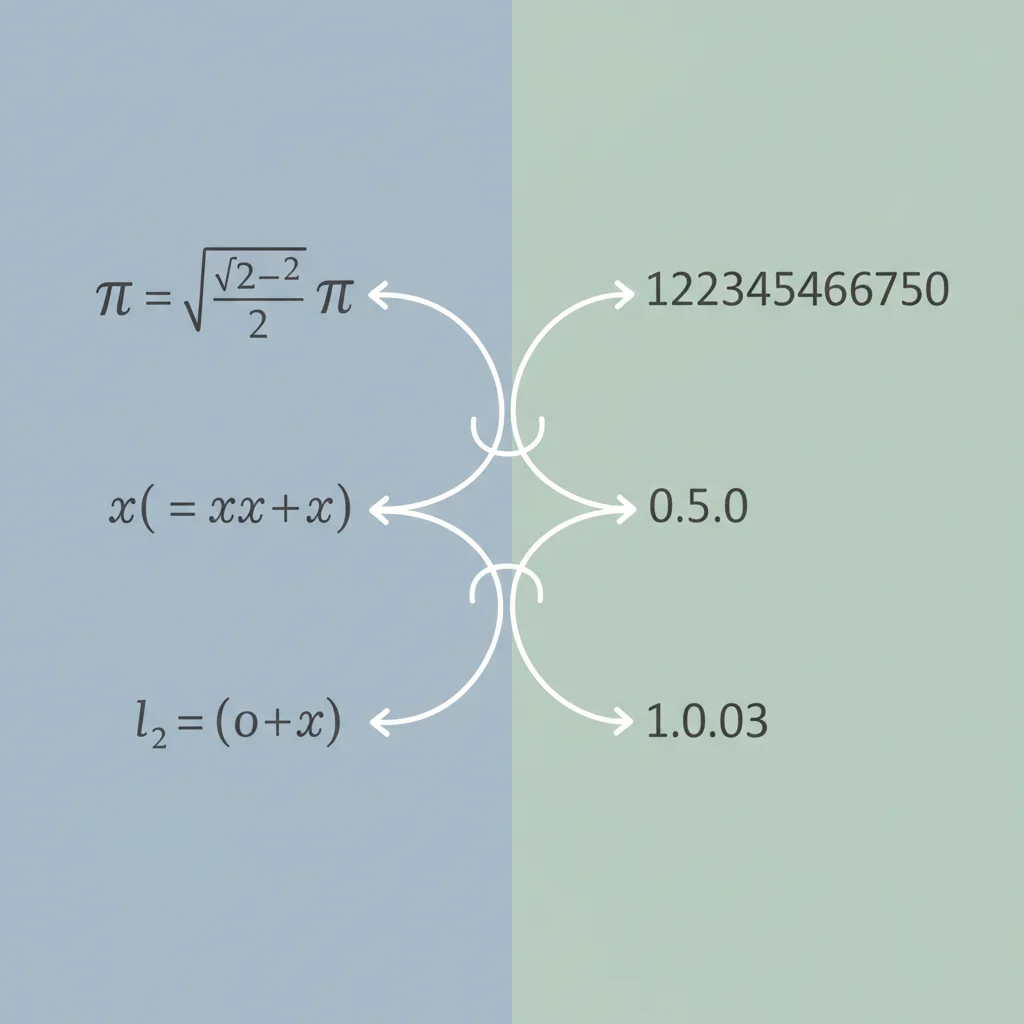
{"left":"Let x = 0.3̄\nThen 10x = 3.3̄\nSubtract: 10x - x = 3.3̄ - 0.3̄\n9x = 3\nx = 3/9 = 1/3","right":"We can reverse the process!\nUse algebra to find the fraction\nMultiply by appropriate power of 10\nSubtract to eliminate the recurring part"}

Quick Fire Round
True or False? 1/8 gives a recurring decimal All fractions with 3 in denominator recur 0.25 is a recurring decimal 1/6 = 0.166...
3 more slides available after you open the deck.
Download all 15 slides