Teaching Money Rounding Skills Simply
A Guide for Year 4 Teachers Rounding to the nearest £1 and 10p UK National Curriculum

Why Teach Money Rounding?
Essential life skill for shopping and budgeting Builds number sense and place value understanding Develops estimation skills Supports mental maths calculations
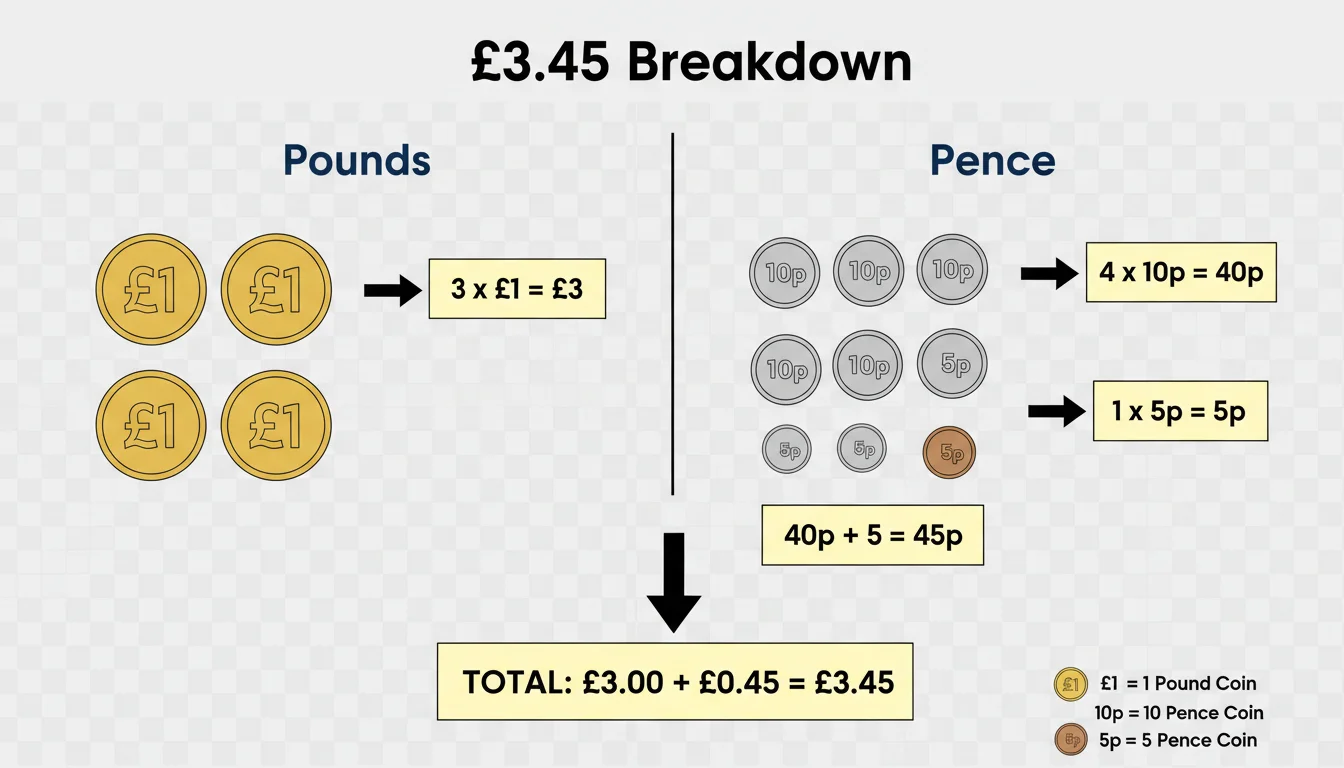
Understanding Place Value in Money
Pounds (£) are like whole numbers Pence (p) are like decimal places £3.45 = 3 pounds and 45 pence The decimal point separates pounds from pence
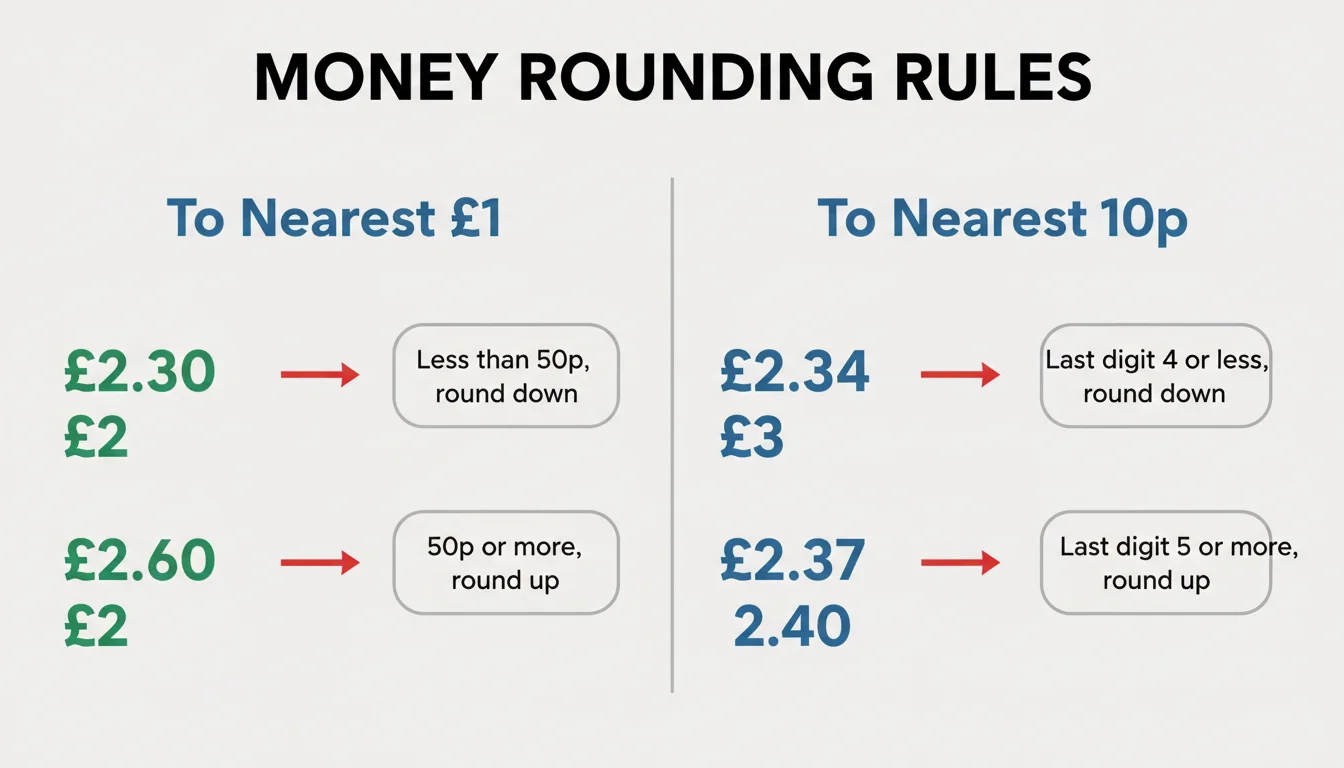
Rounding Rules for Money
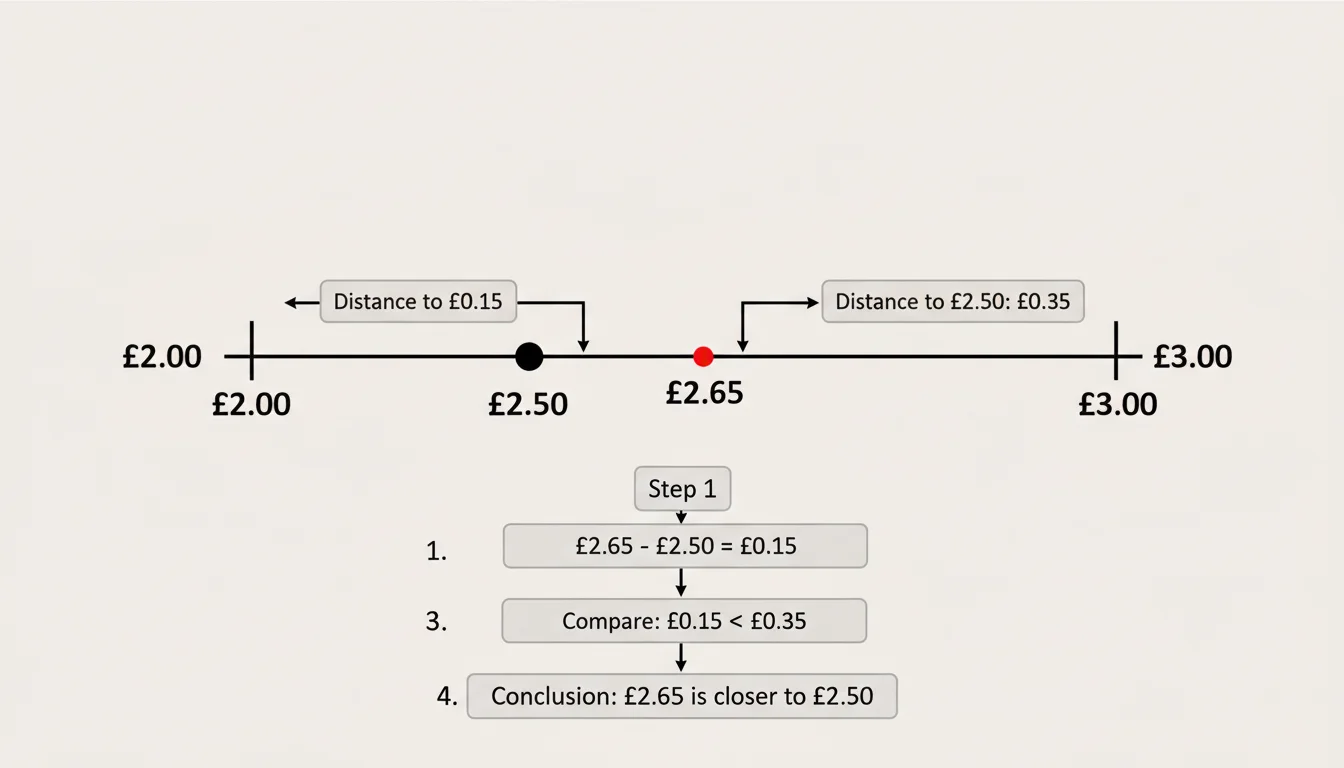
Using Number Lines for Rounding
Visual way to see which number is closer Mark the amount on the line See which end is nearer Great for visual learners
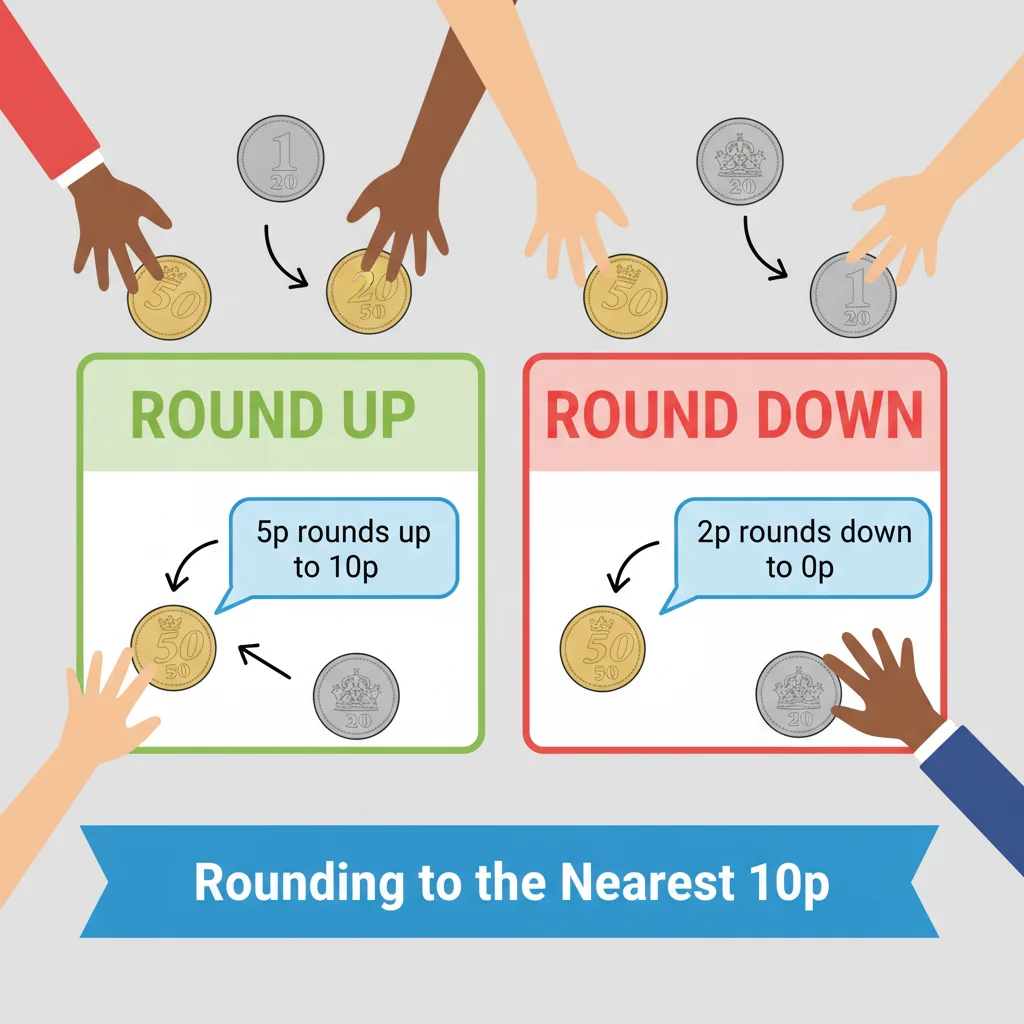
Coin Sorting Activity
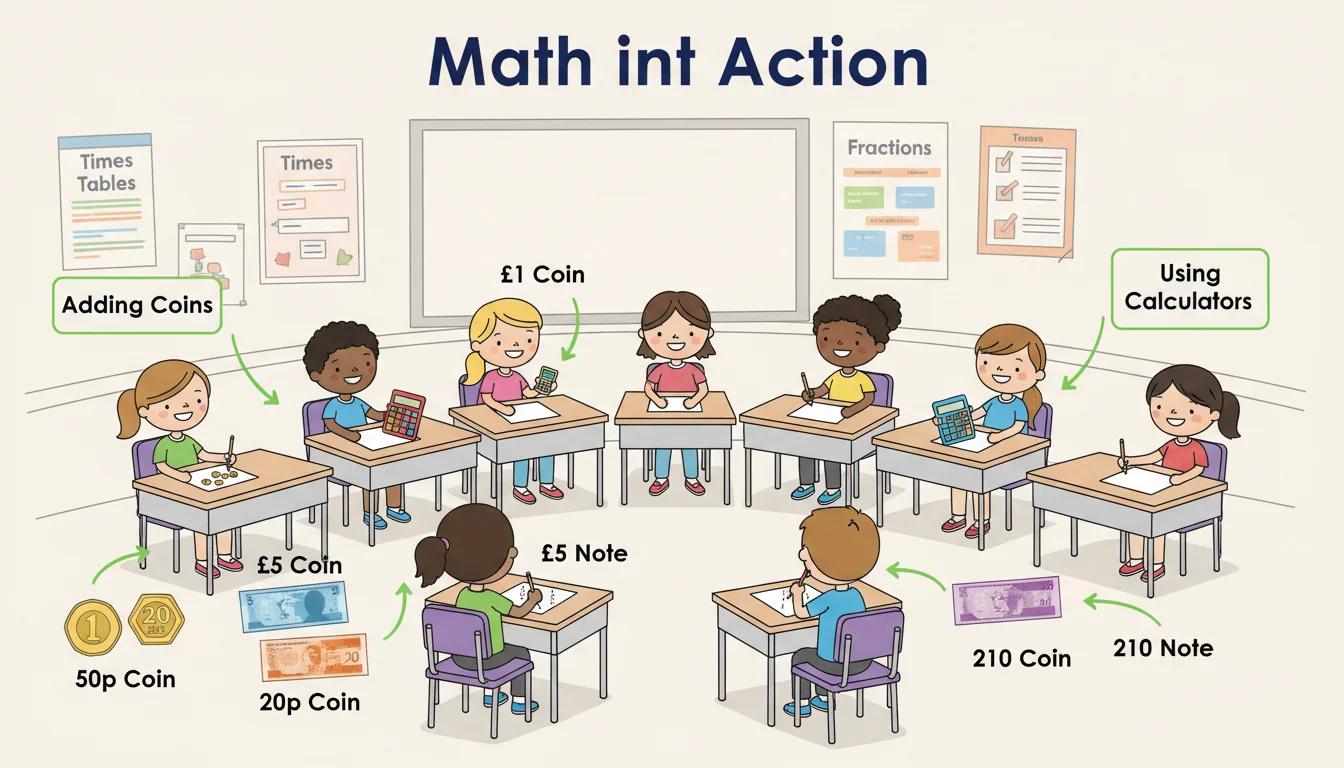
Sort amounts into 'round up' or 'round down' boxes Use real coins when possible Start with nearest £1, then try 10p Work in pairs for discussion
Rounding to Nearest £1 vs 10p
{"left":"Nearest £1:\n• £3.25 → £3\n• £3.67 → £4\n• £3.50 → £4\n","right":"Nearest 10p:\n• £3.23 → £3.20\n• £3.27 → £3.30\n• £3.25 → £3.30"}
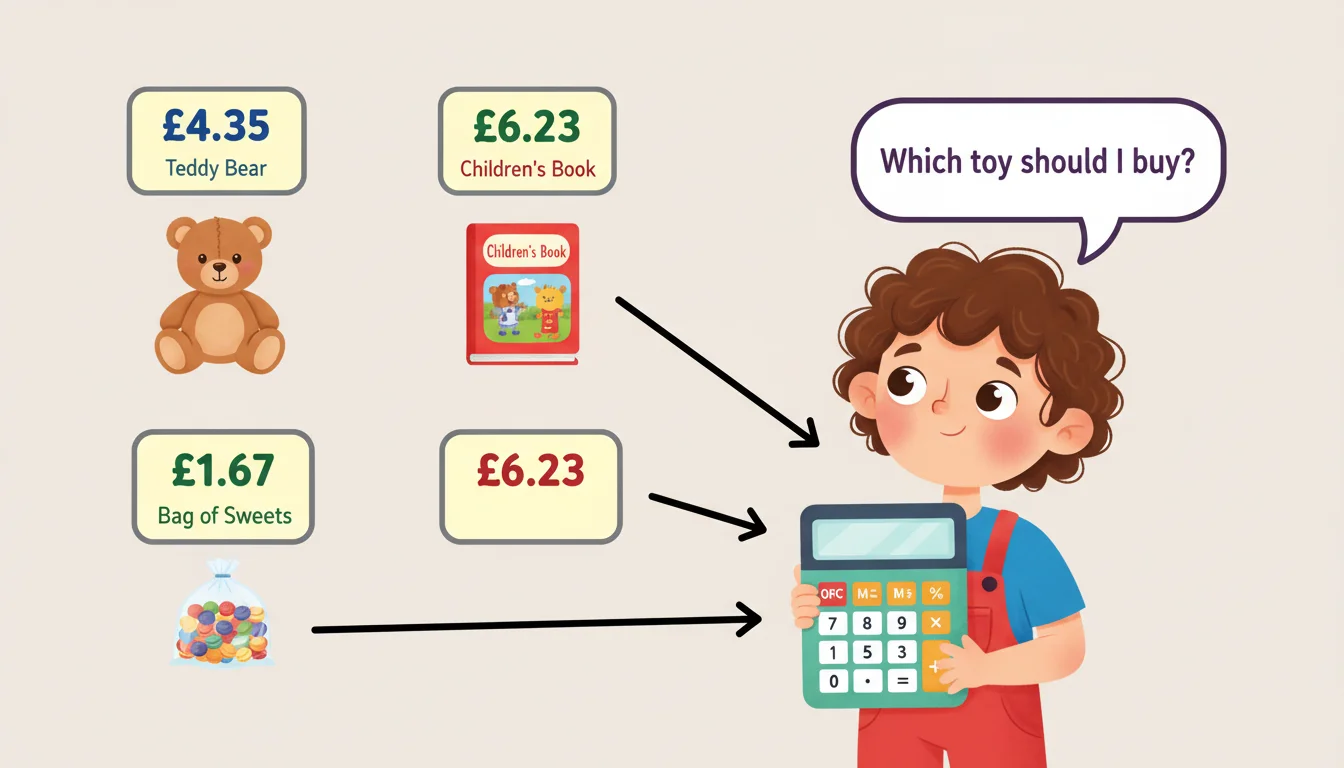
Real-Life Shopping Examples
A toy costs £4.35 - about £4 Sweets cost £1.67 - about £2 A book costs £6.23 - about £6.20 Help estimate total shopping costs
Quick Check: What Would You Round These To?
£5.48 to the nearest £1 = ? £2.34 to the nearest 10p = ? £7.89 to the nearest £1 = ? Discuss your answers with a partner!
Summary and Next Steps
Rounding helps us work with money more easily Look at the middle point (50p or 5p) Practice with real shopping scenarios Use number lines when unsure Keep practicing with different amounts