Times Tables Mastery: Multiplication Division
Year 8 Mathematics 40-Minute Interactive Session Building Fluency & Understanding Inverse Operations
National Curriculum Alignment
Recall multiplication and division facts for tables up to 12 × 12 Recognise inverse relationship between multiplication and division Develop fluency in using number facts efficiently Apply understanding to solve related problems
Learning Objectives
Quickly recall multiplication facts for tables 1 to 12 Confidently identify division facts corresponding to multiplication facts Demonstrate improved fluency by matching multiplication and division as inverse operations Apply knowledge to solve related problems with accuracy and speed
Success Criteria
Match at least 90% of multiplication facts to corresponding division facts Explain the inverse relationship for at least 5 pairs verbally or in writing Show improved speed and confidence in recalling times tables facts Complete fluency challenges within allocated time

Resources & Materials
Custom multiplication cards (24 cards) Corresponding division cards (24 cards) Timer for fluency challenges Dyslexia-friendly fonts and colored backgrounds Whiteboard for explanations
Understanding Inverse Operations
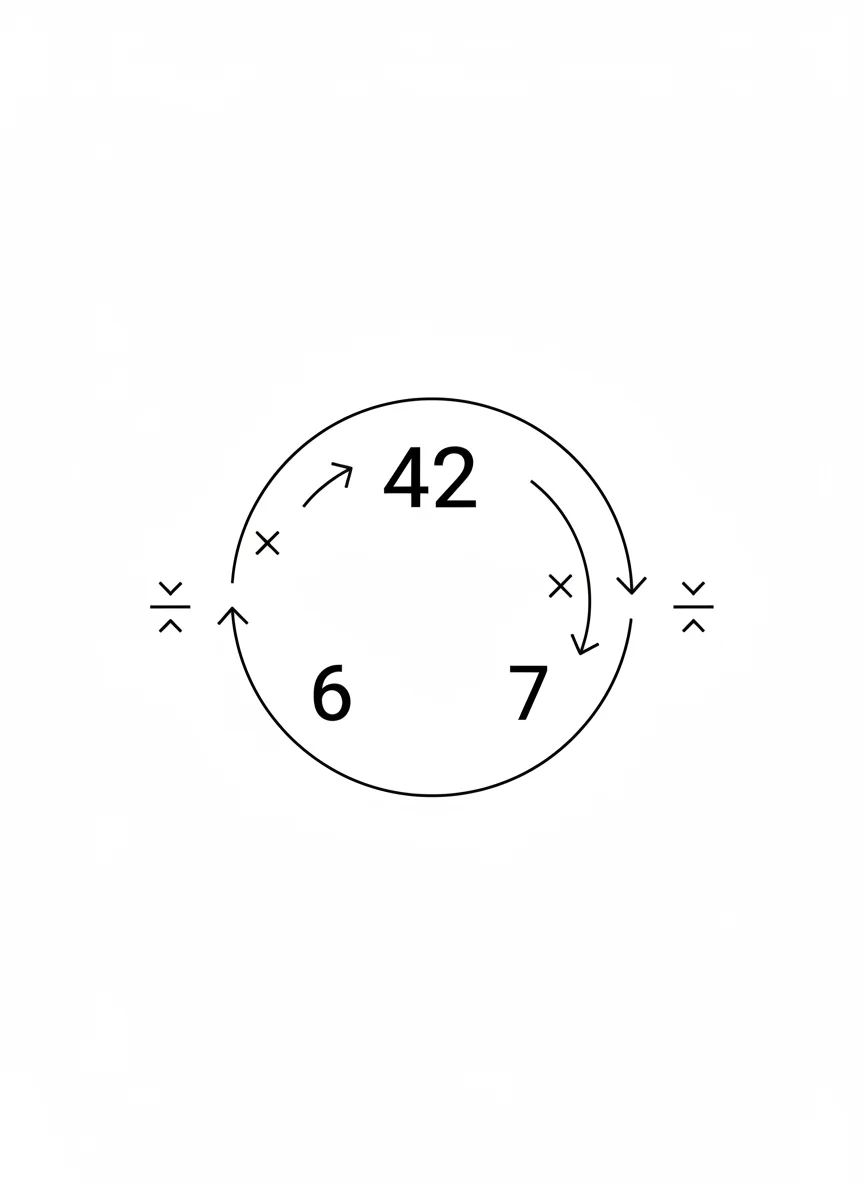
Multiplication and division are opposite operations If 6 × 7 = 42, then 42 ÷ 7 = 6 One operation 'undoes' the other This relationship helps us check our answers
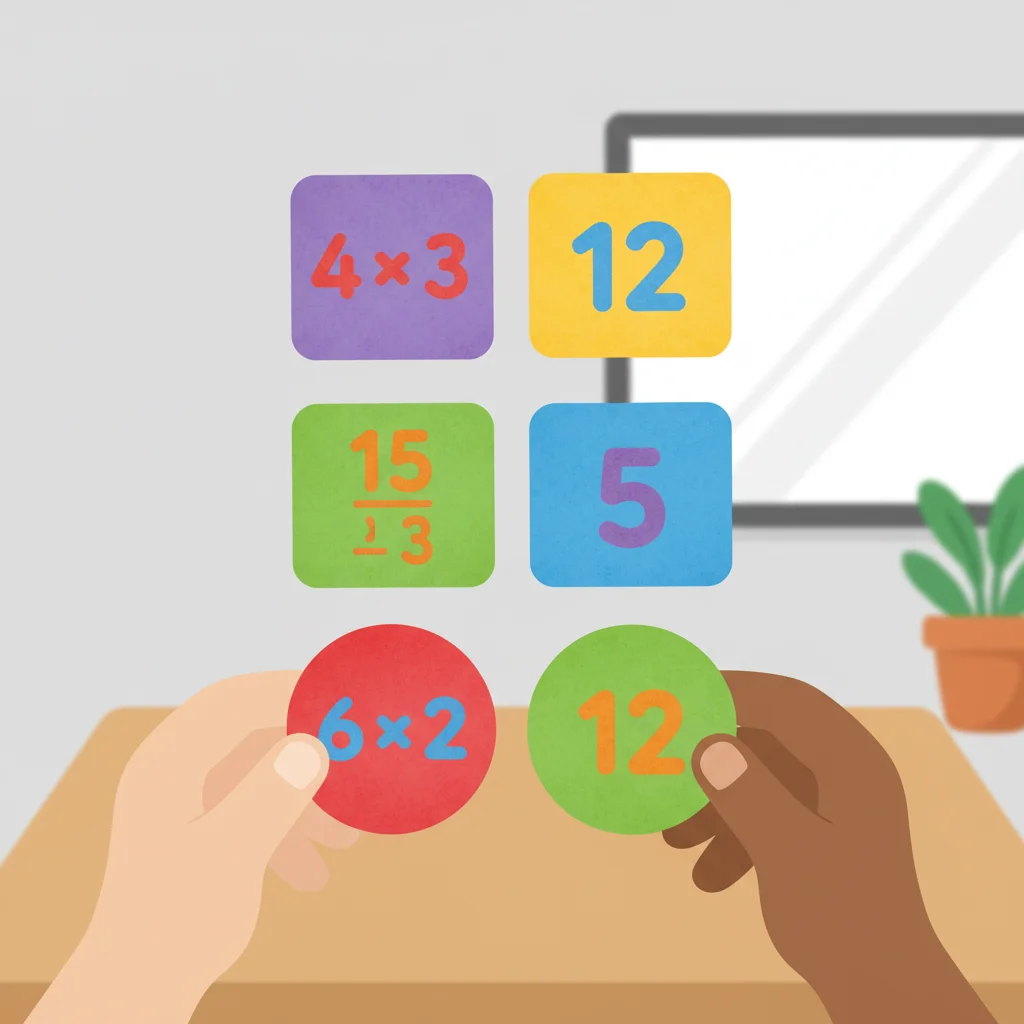
Card-Matching Game Instructions
Pick one multiplication card Find the matching division card Explain why they match Keep correct pairs Use timer for fluency rounds
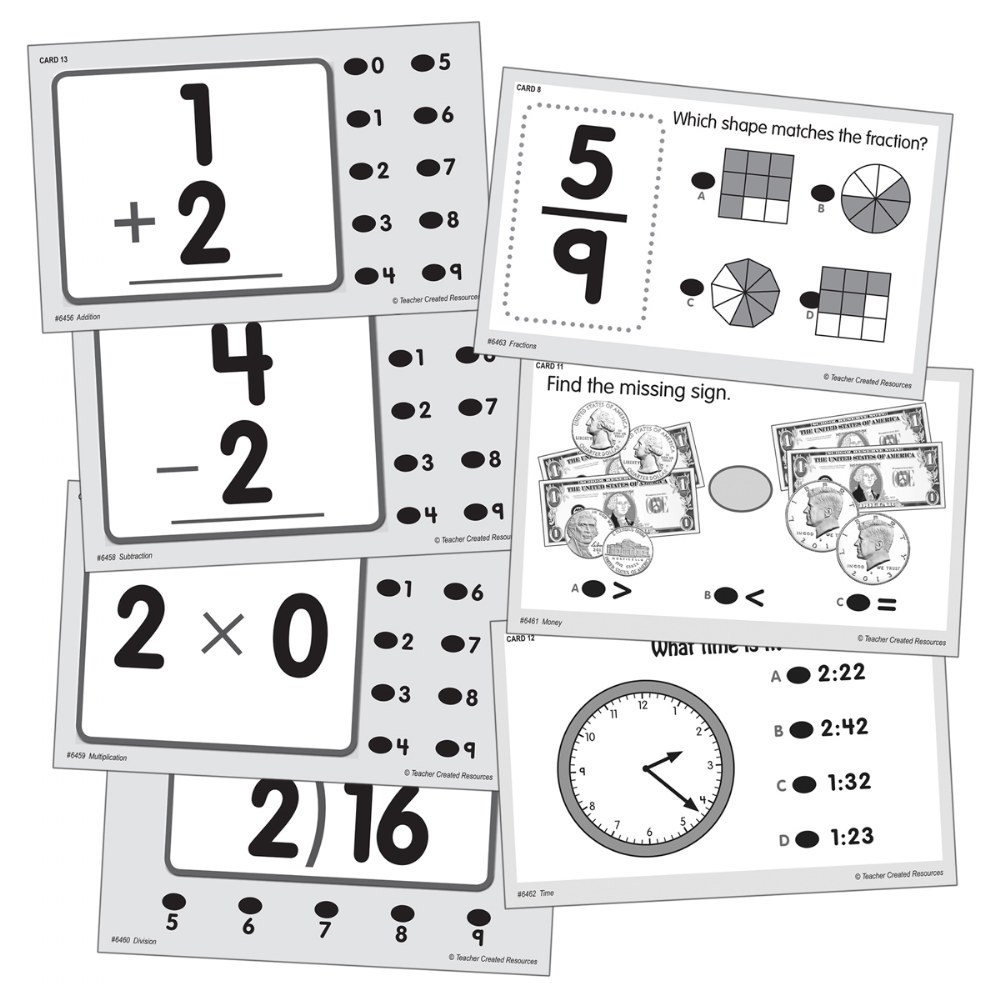
Quick Check: Can You Find the Match?
If I have the card 8 × 9 = 72 Which division card would match? How do you know they're related?
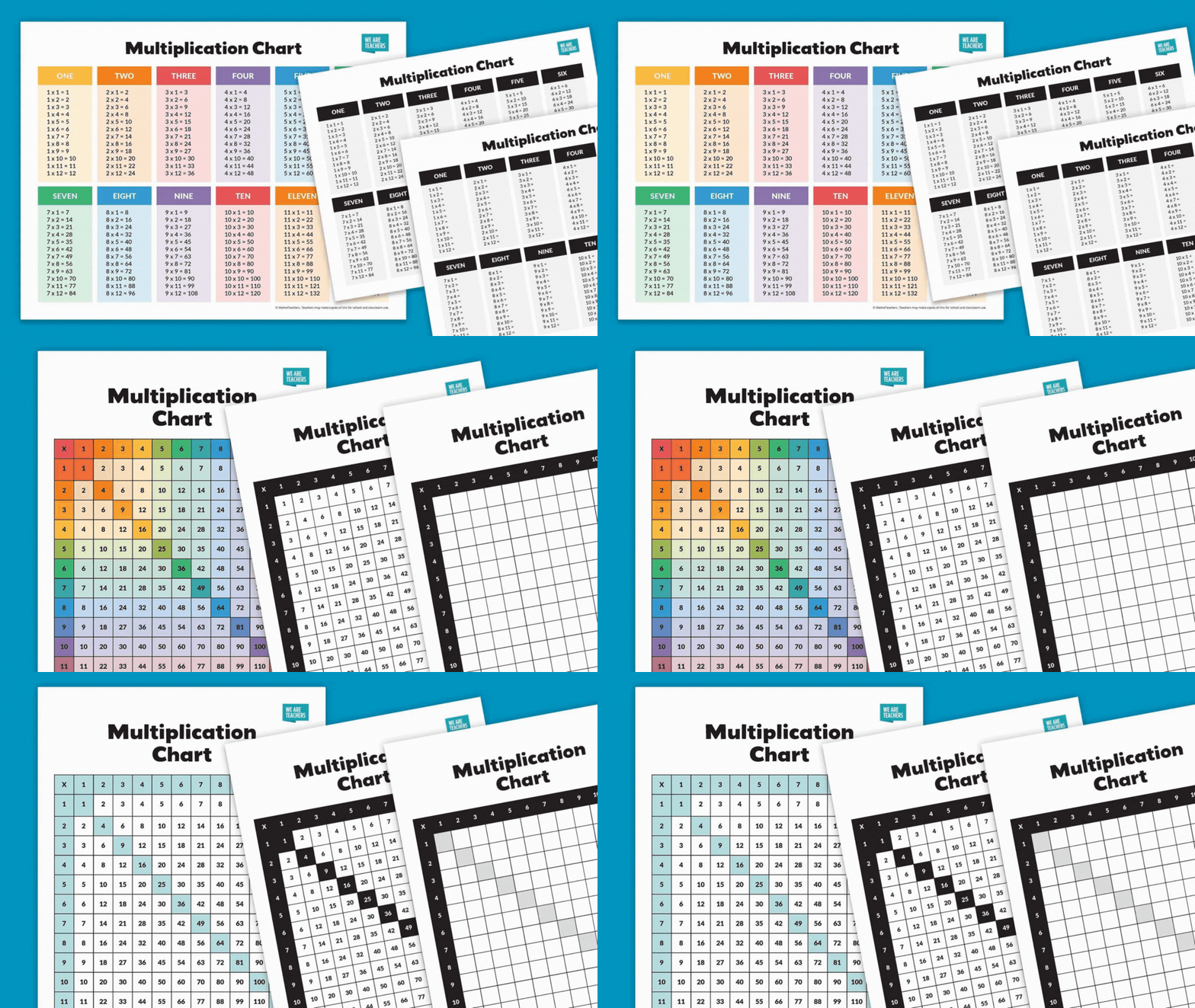
Times Tables Reference Grid
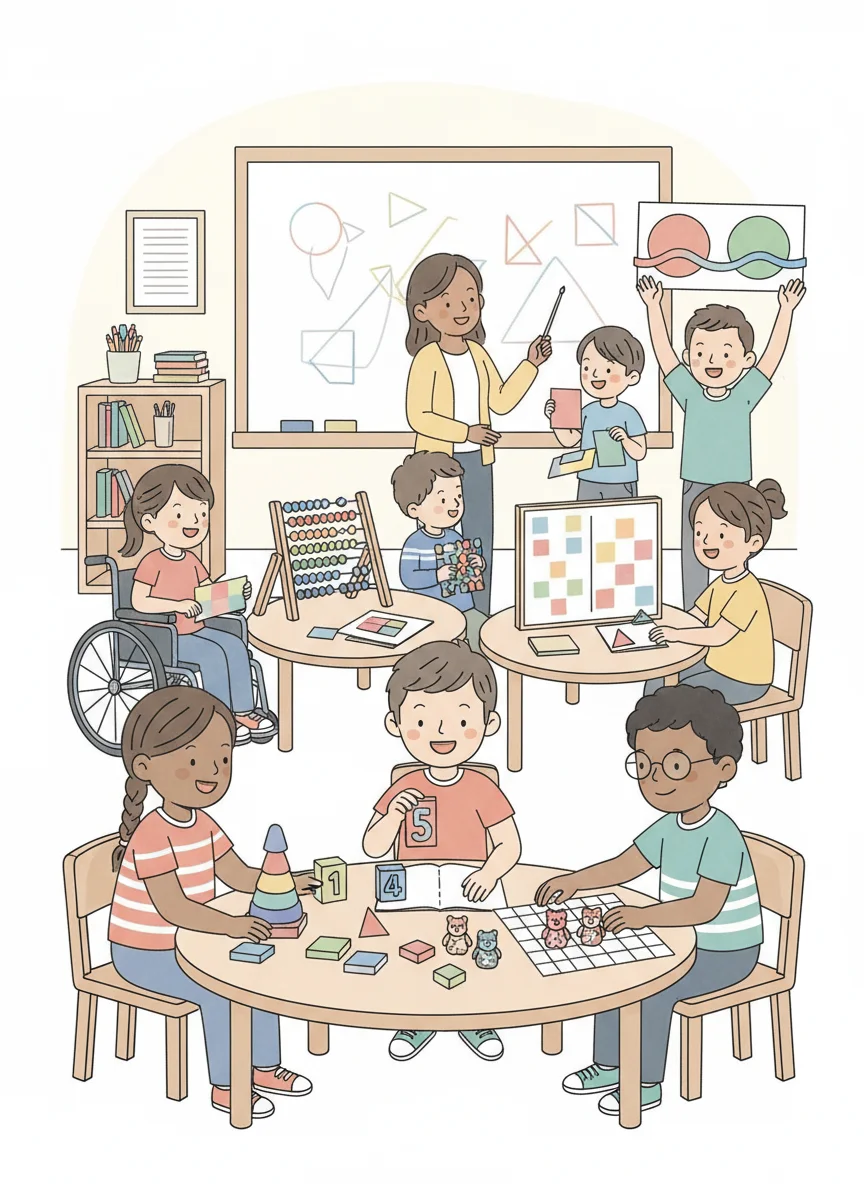
Differentiation Strategies
Struggling learners: Start with tables 1-6, use manipulatives Advanced learners: Add extension problems with missing factors Dyslexic learners: Use colored overlays and verbal responses Allow thinking time and provide visual aids
Extension Challenge
Missing number problems Two-step inverse operations Example: I think of a number, multiply by 8, then divide by 4. The result is 16. What was my number? Create your own inverse problem
Plenary & Next Steps
Quick-fire questions: 5 mixed multiplication and division facts Self-reflection: What did you learn about inverse operations? Practice recommendations for continued improvement Celebrate your progress and achievements today!