Understanding Ratios in Real Life
Year 6 Mathematics Exploring how ratios help us compare quantities Making connections between numbers and the world around us
What is a Ratio?
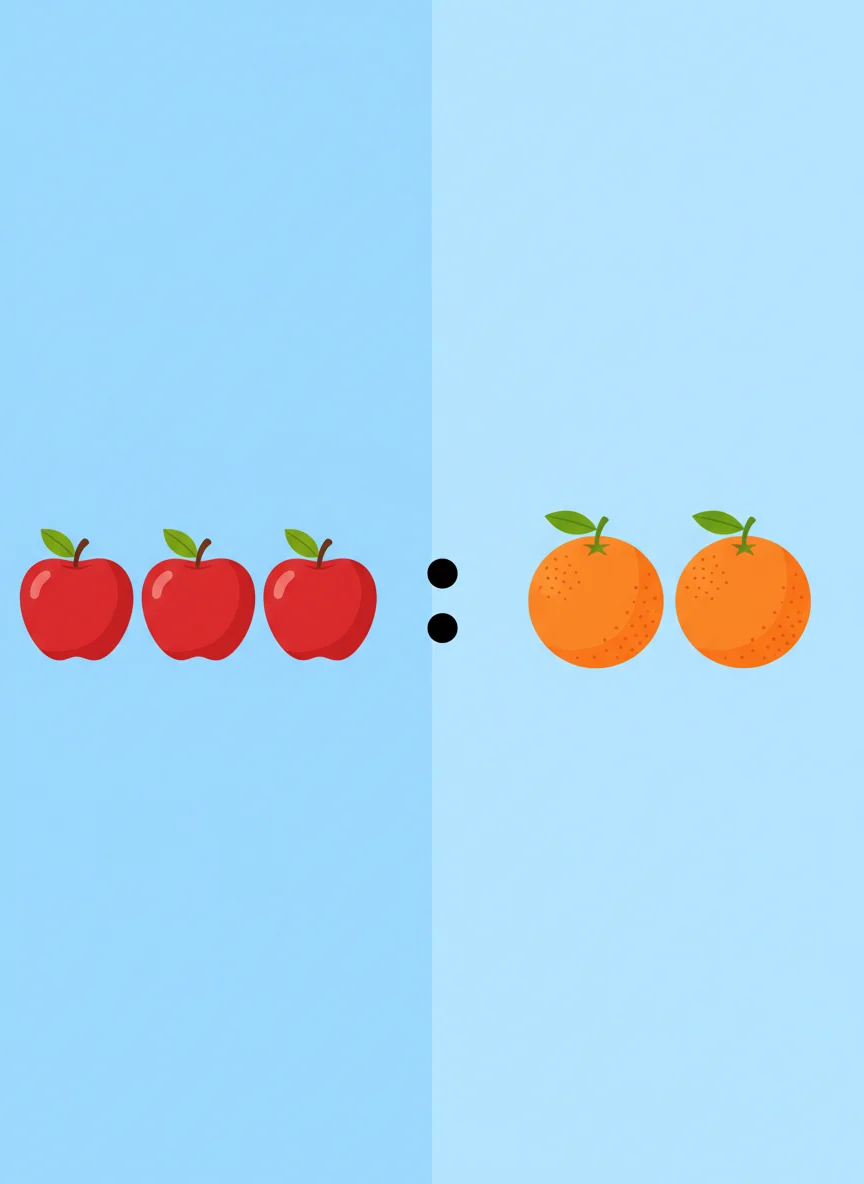
A ratio compares two or more quantities Shows the relationship between different amounts Written using the colon symbol (:) Example: 3 apples to 2 oranges = 3:2
Hands-On Ratio Modeling
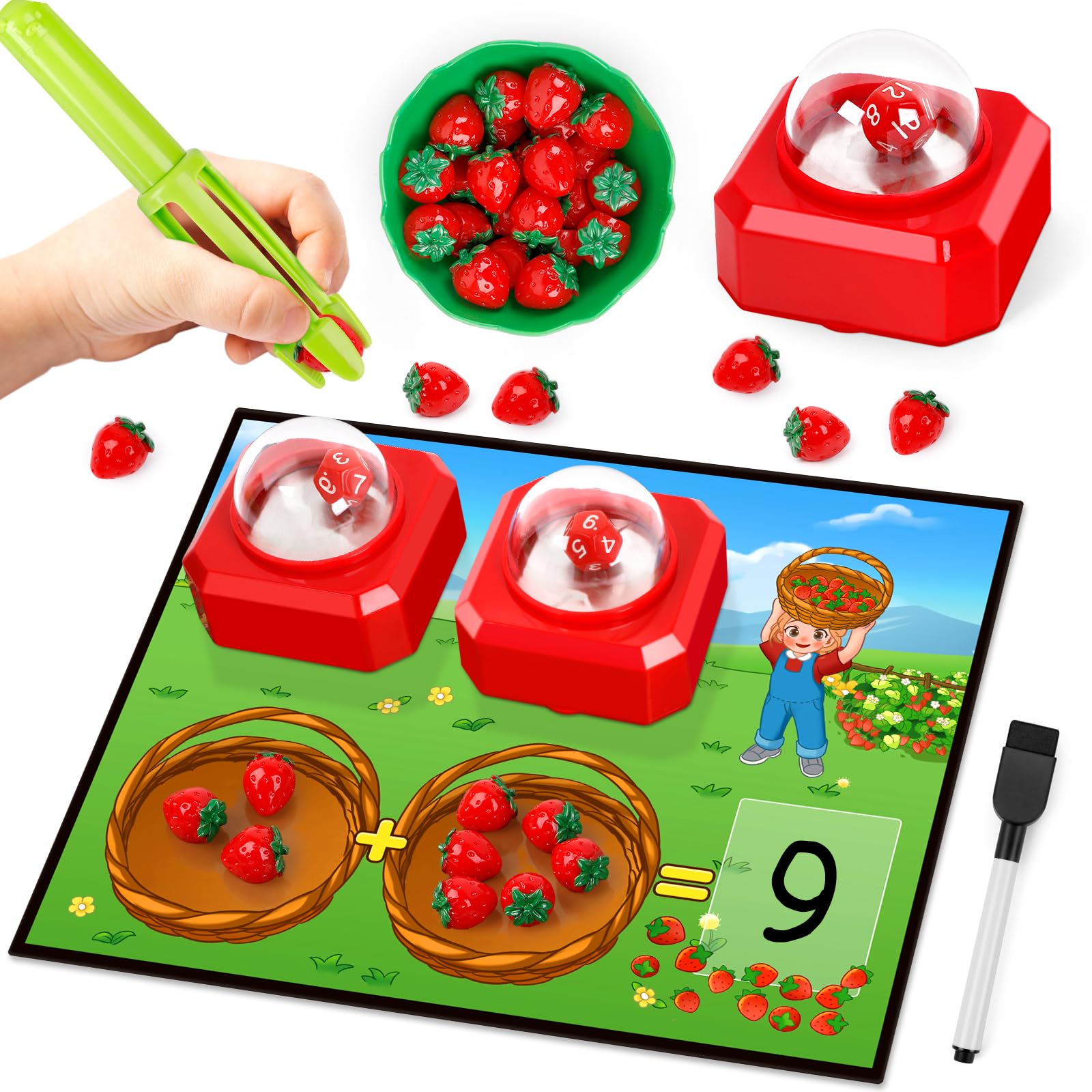
Use colored counters to create ratios Work in groups of 5 students Model the ratio 4:3 using red and blue counters Find a real-life example that matches your ratio
Writing Ratios Correctly
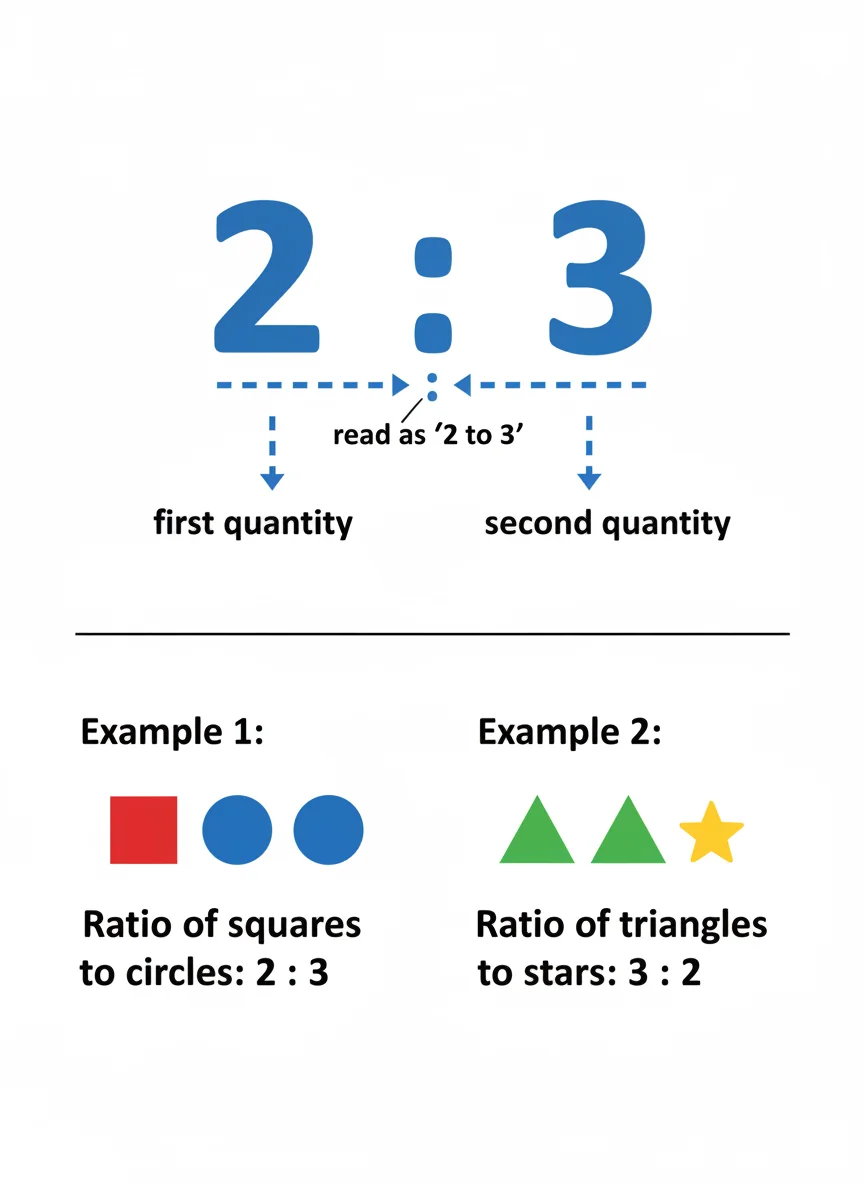
Always use the colon (:) symbol Order matters: 'boys to girls' = boys:girls Can be written as 'for every 2 boys, there are 3 girls' Read from left to right
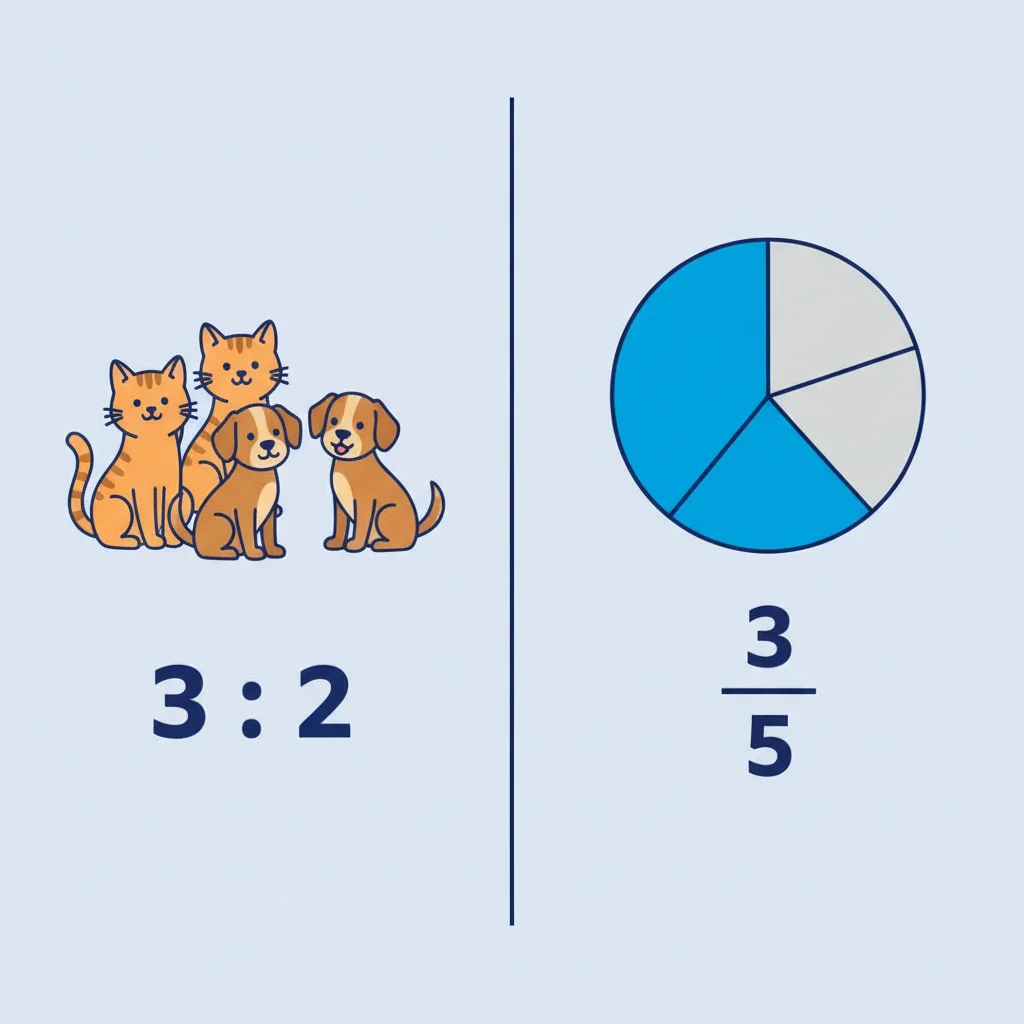
Ratios vs. Fractions
{"left":"Ratios compare two separate quantities\nShow relationships between different things\nExample: 3 cats to 2 dogs = 3:2","right":"Fractions show parts of a whole\nShow how much of something you have\nExample: 3 out of 5 pets are cats = 3/5"}
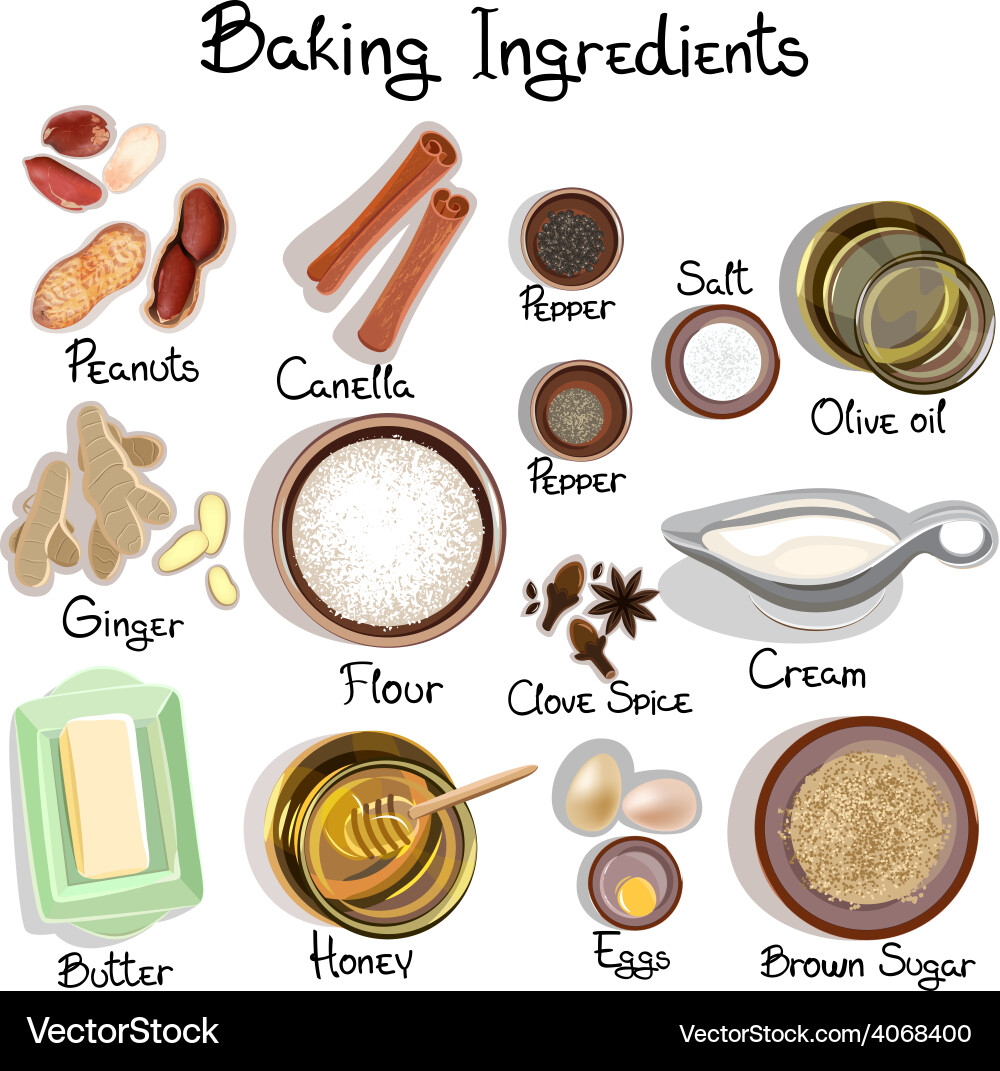
Ratios in Cooking
Recipes use ratios to mix ingredients 2 cups flour : 1 cup sugar (2:1) Doubling a recipe means doubling both parts Helps us scale recipes up or down
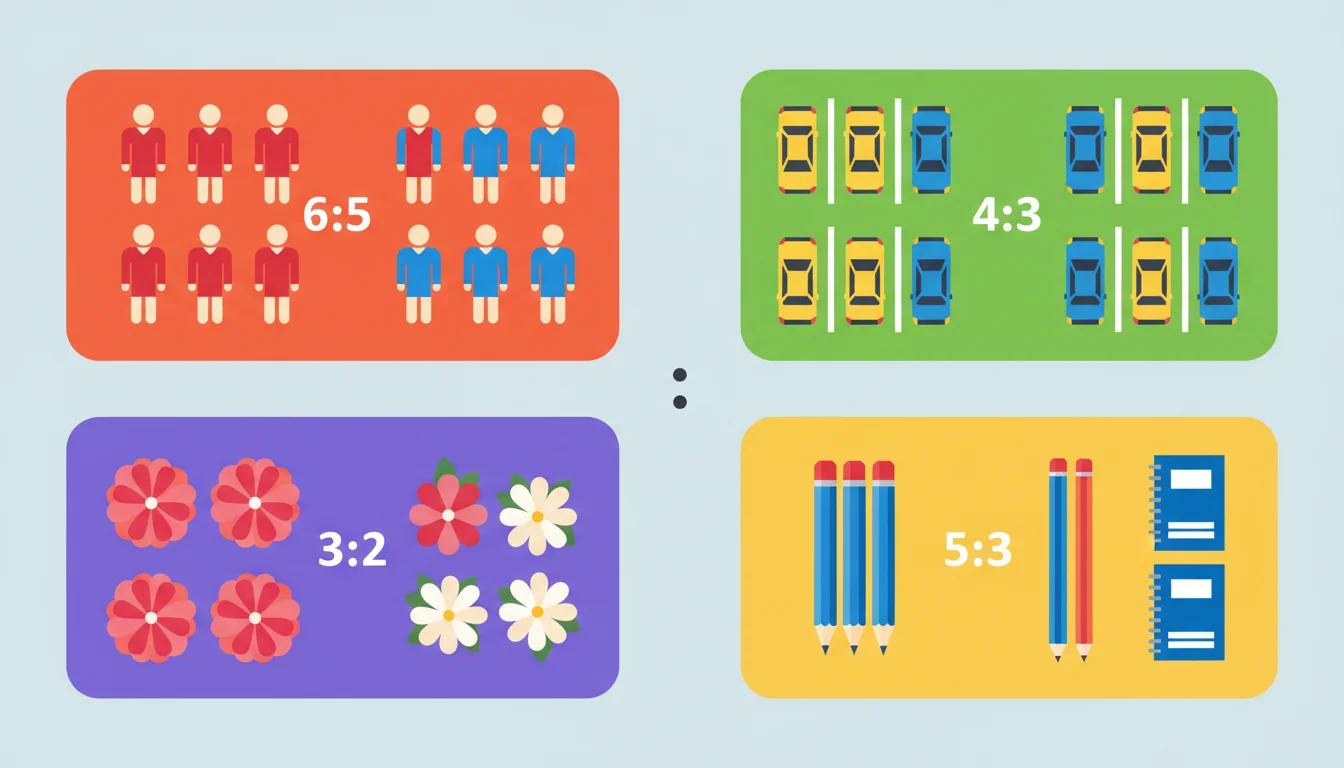
Real-Life Ratio Examples
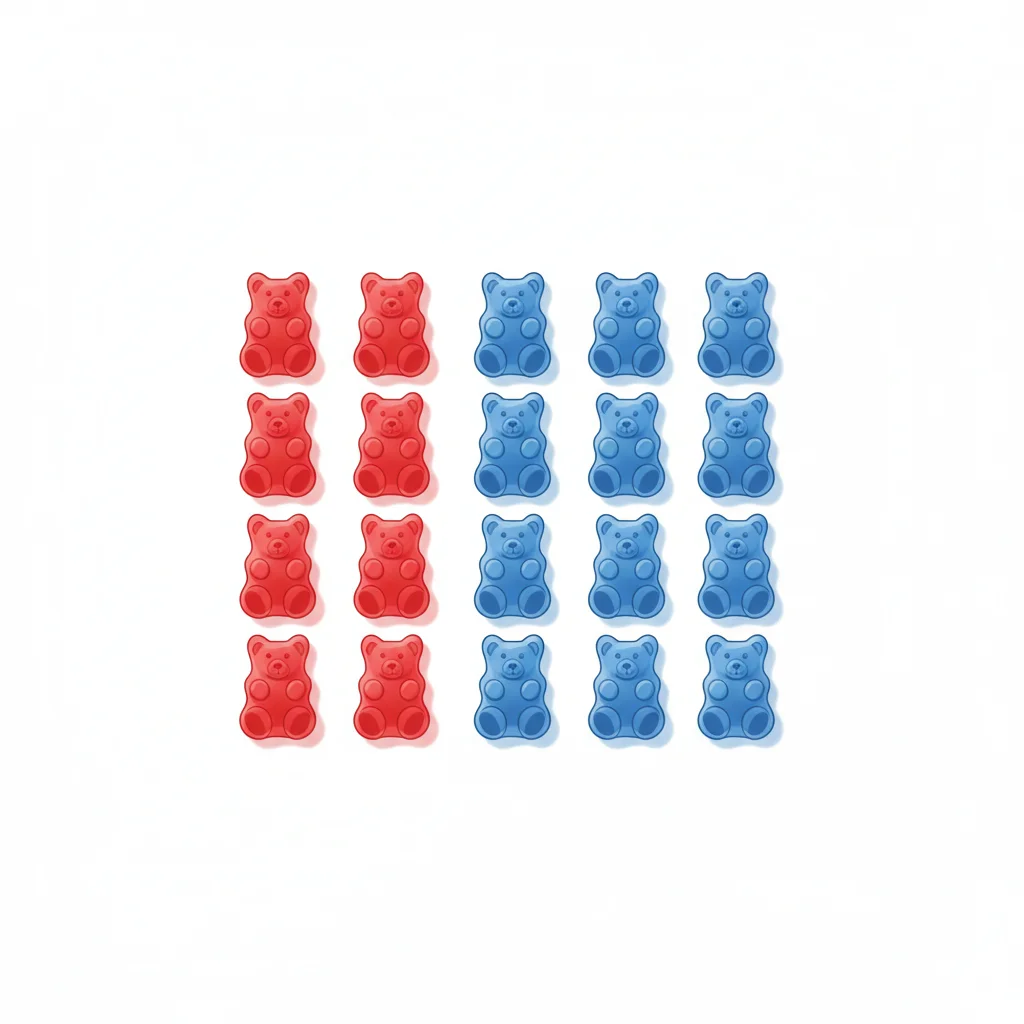
Problem-Solving Challenge
In a bag of sweets, there are 6 red sweets and 9 blue sweets What is the ratio of red sweets to blue sweets? Can you simplify this ratio? How many red sweets would there be if there were 15 blue sweets?
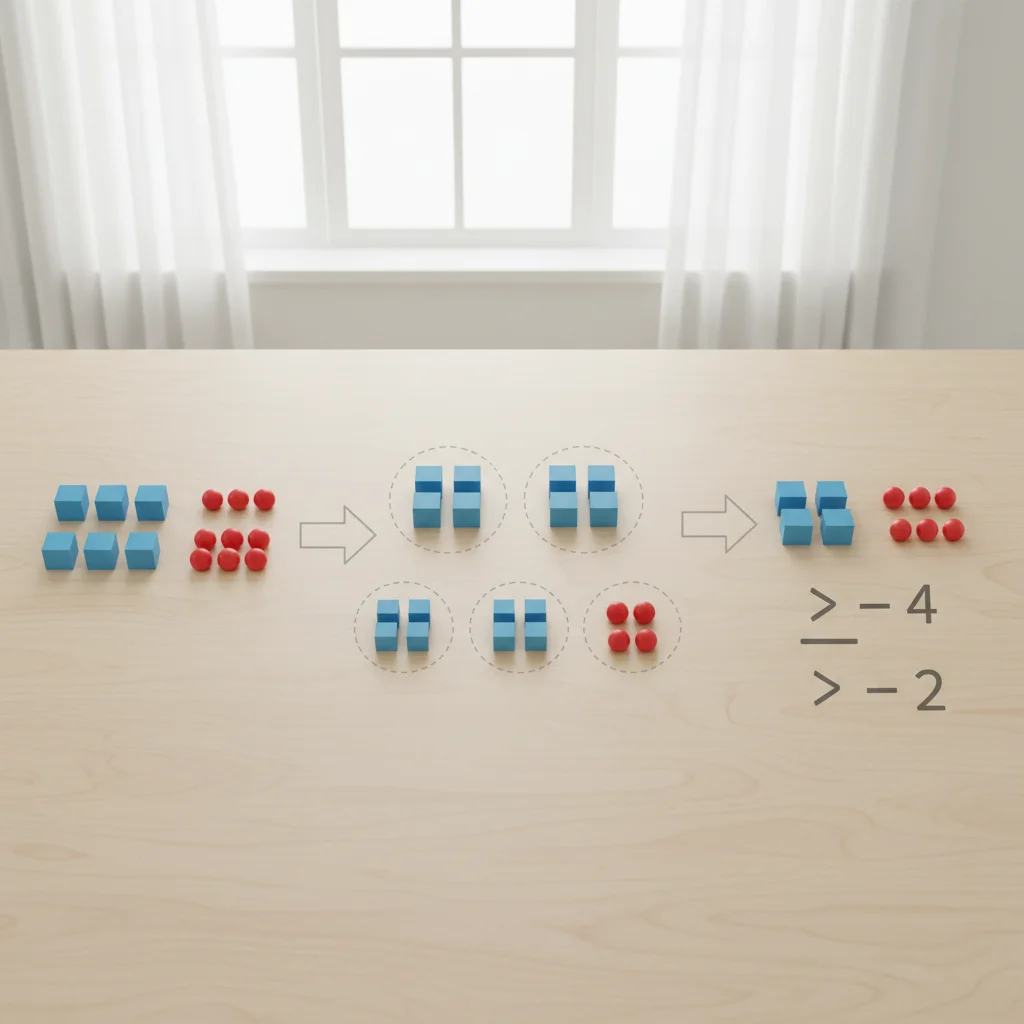
Simplifying Ratios Practice
Find the greatest common factor Divide both numbers by this factor Practice: Simplify 12:8 Answer: 12÷4 = 3, 8÷4 = 2, so 12:8 = 3:2

Key Learning Summary
Ratios compare quantities using the colon (:) symbol Order matters when writing ratios Ratios can be simplified like fractions Ratios help us solve real-world problems Practice makes perfect!