Measuring Reaction Rates
A free science worksheet ready for your classroom. Open in Kuraplan to grab the print-ready PDF, customize it for your students, or generate a fresh version in seconds.

Measuring Reaction Rates
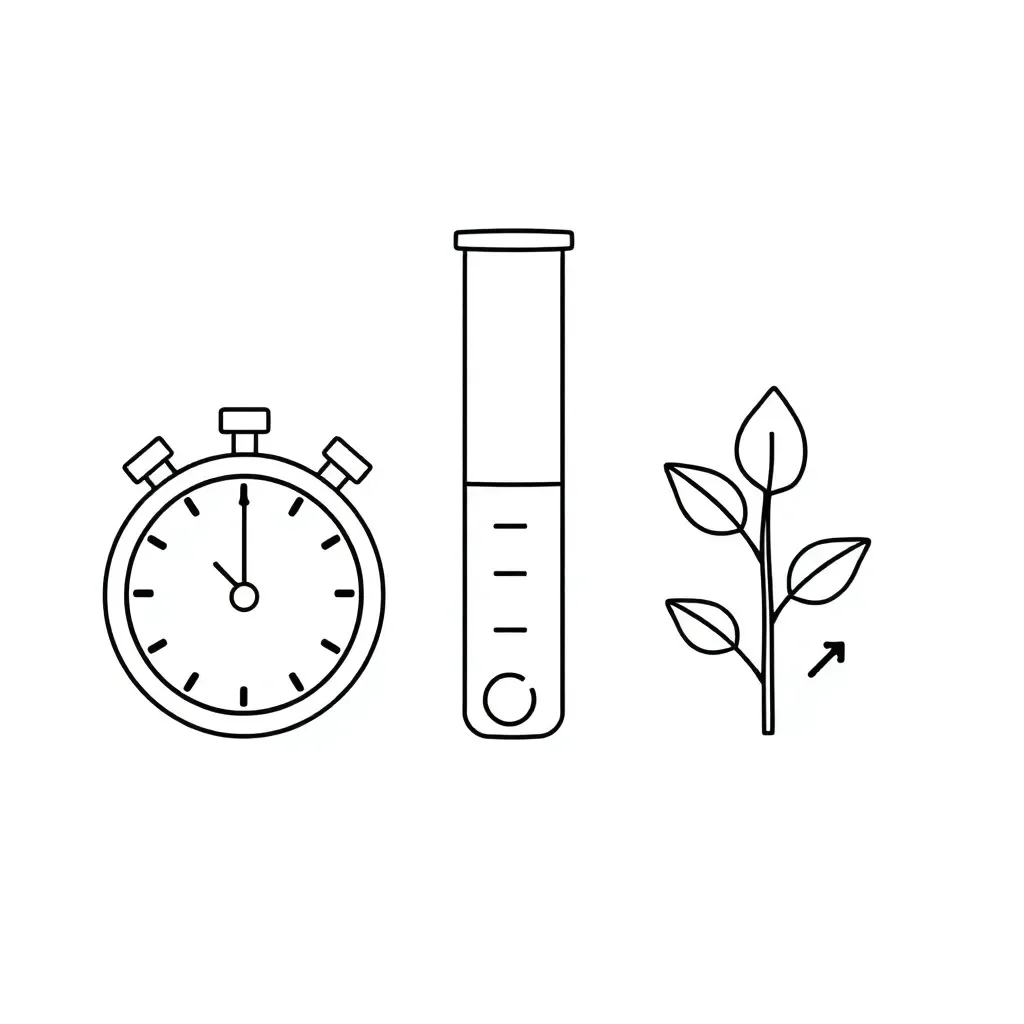
📊 Part 1: Understanding Rate Measurements
Answer: _________________
📈 Part 2: Graph Analysis
Study the data below from a reaction where magnesium ribbon reacts with hydrochloric acid:
Time (min): 0, 1, 2, 3, 4, 5
Gas volume (cm³): 0, 15, 25, 32, 36, 36
Explanation: ________________________________________________
🔬 Part 3: Application and Analysis
Support Notes: Remember that reaction rate depends on how often reactant particles collide with enough energy. Consider what happens to reactant concentration as a reaction progresses.
About This Worksheet
Free in Kuraplan
Sign up free, grab the PDF, and customize it for your class.
Print-Ready
Formatted for standard paper. Clean layout, easy to read.
AI-Generated
Created with Kuraplan's AI, designed for real classroom use.
For Teachers & Parents
Use in classrooms, for homework, tutoring, or homeschool.
Need a custom version of this worksheet?
Kuraplan's AI generates custom worksheets in seconds — differentiated for every learner, aligned to your curriculum.
Generate Custom Worksheets — FreeMore Science Worksheets

Atomic Structure and Bonding Revision
Free
GCSE Chemistry Diagnostic Assessment
Free
Atomic Structure Exploration Worksheet
Free
Atomic Structure Teacher Answers
Free
Foundational Chemistry Concepts
Free
Acids and Alkalis Worksheet
Free
Molecular Structure Exploration
Free