Atomic Structure Teacher Answers
A free science worksheet ready for your classroom. Open in Kuraplan to grab the print-ready PDF, customize it for your students, or generate a fresh version in seconds.

Atomic Structure Teacher Answers
📚 WALT & Success Criteria
WALT: Describe the structure of atoms and identify subatomic particles
Success Criteria:
• All students: Identify protons, neutrons and electrons in atoms
• Most students: Calculate numbers of subatomic particles using atomic and mass numbers
• Some students: Explain how electron arrangement affects chemical properties
🔬 Part 1: Atomic Structure Model (POGIL Activity)
Teacher Answer:
Proton: Charge = +1, Mass = 1, Location = Nucleus
Neutron: Charge = 0, Mass = 1, Location = Nucleus
Electron: Charge = -1, Mass = 1/1836 (negligible), Location = Electron shells
Teacher Answer:
Atomic number = 6 (number of protons)
Mass number = 12
Number of protons = 6
Number of neutrons = 12 - 6 = 6
Number of electrons = 6 (neutral atom)
⚛️ Part 2: Electron Arrangement & Chemical Properties
Teacher Answers:
Sodium (Na, atomic number 11): 2,8,1
Chlorine (Cl, atomic number 17): 2,8,7
Argon (Ar, atomic number 18): 2,8,8
Teacher Answers:
Carbon-14: 6 protons, 8 neutrons, 6 electrons
Uranium-235: 92 protons, 143 neutrons, 92 electrons
Hydrogen-2 (deuterium): 1 proton, 1 neutron, 1 electron
📋 Teacher Notes & Differentiation
Differentiation Strategies:
• Support: Provide periodic table and electron shell diagrams
• Core: Use scaffolded calculations with worked examples
• Extension: Include isotope calculations and ion formation
Common Misconceptions to Address:
• Electrons do not orbit the nucleus like planets
• Mass number is NOT the same as atomic number
• Isotopes have different mass numbers but same atomic number
Assessment Opportunities:
• Peer assessment of electron configurations
• Mini-whiteboards for quick checks
• Exit ticket: "Explain why helium is unreactive"
About This Worksheet
Free in Kuraplan
Sign up free, grab the PDF, and customize it for your class.
Print-Ready
Formatted for standard paper. Clean layout, easy to read.
AI-Generated
Created with Kuraplan's AI, designed for real classroom use.
For Teachers & Parents
Use in classrooms, for homework, tutoring, or homeschool.
Need a custom version of this worksheet?
Kuraplan's AI generates custom worksheets in seconds — differentiated for every learner, aligned to your curriculum.
Generate Custom Worksheets — FreeMore Science Worksheets
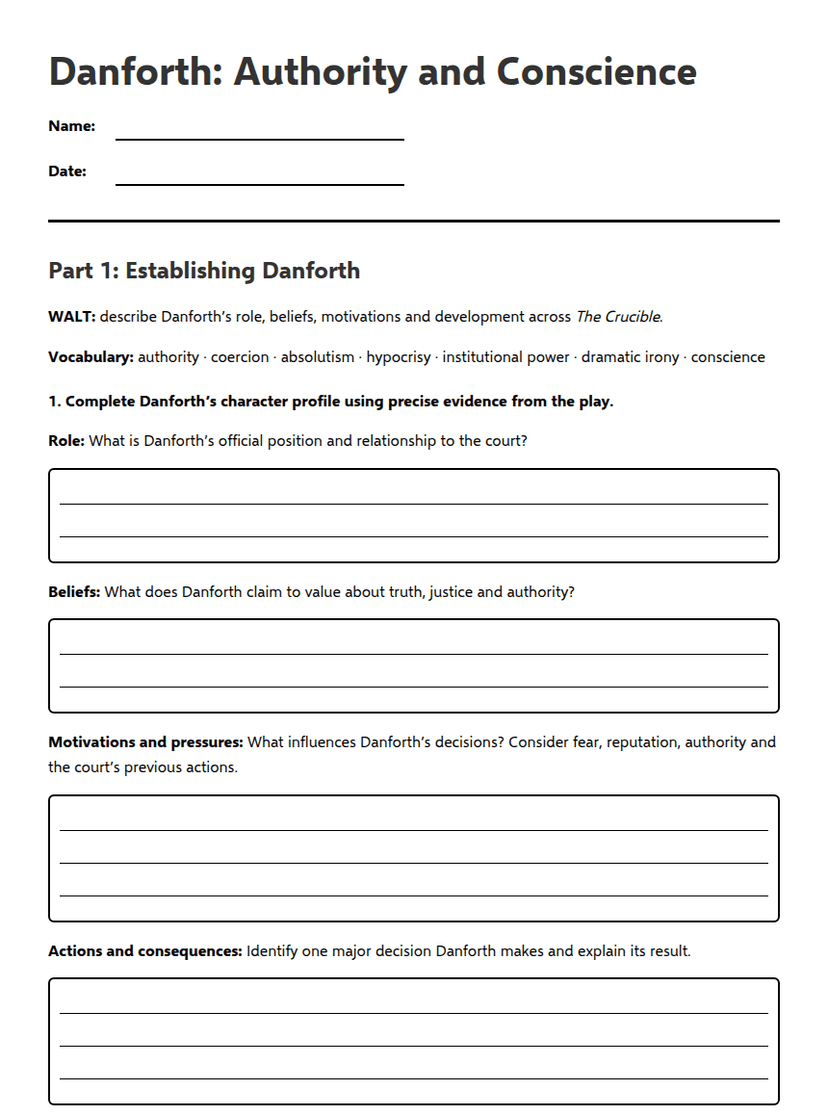
Danforth: Authority and Conscience
Free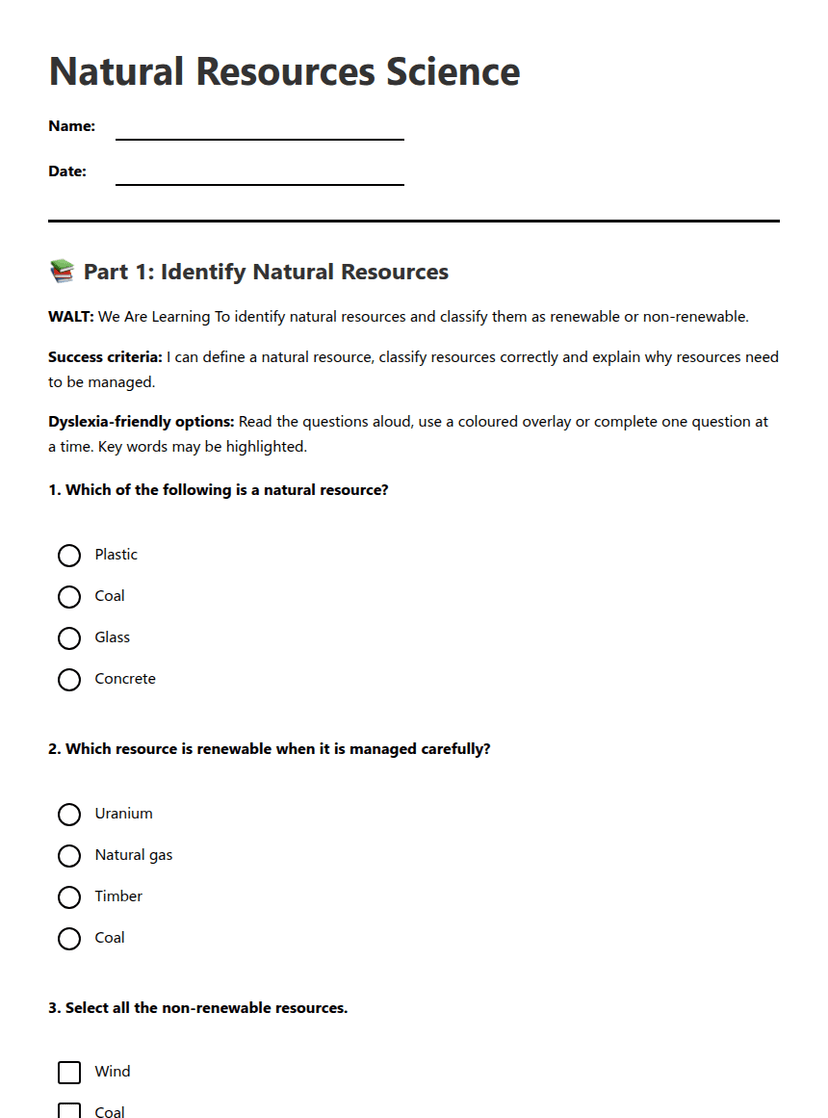
Natural Resources Science
Free
Natural Resources Science
Free
Vitamins, Minerals, and Protein Science
Free
Exploring Science Materials
Free
Waka Buoyancy Science Worksheet
Free
Science Skills Made Simple
Free