Pasifika Migration Reading Comprehension
A free english worksheet ready for your classroom. Open in Kuraplan to grab the print-ready PDF, customize it for your students, or generate a fresh version in seconds.
Pasifika Migration Reading Comprehension
📖 Reading Passage: The Great Pacific Migration
Read the following passage carefully and answer the questions that follow.
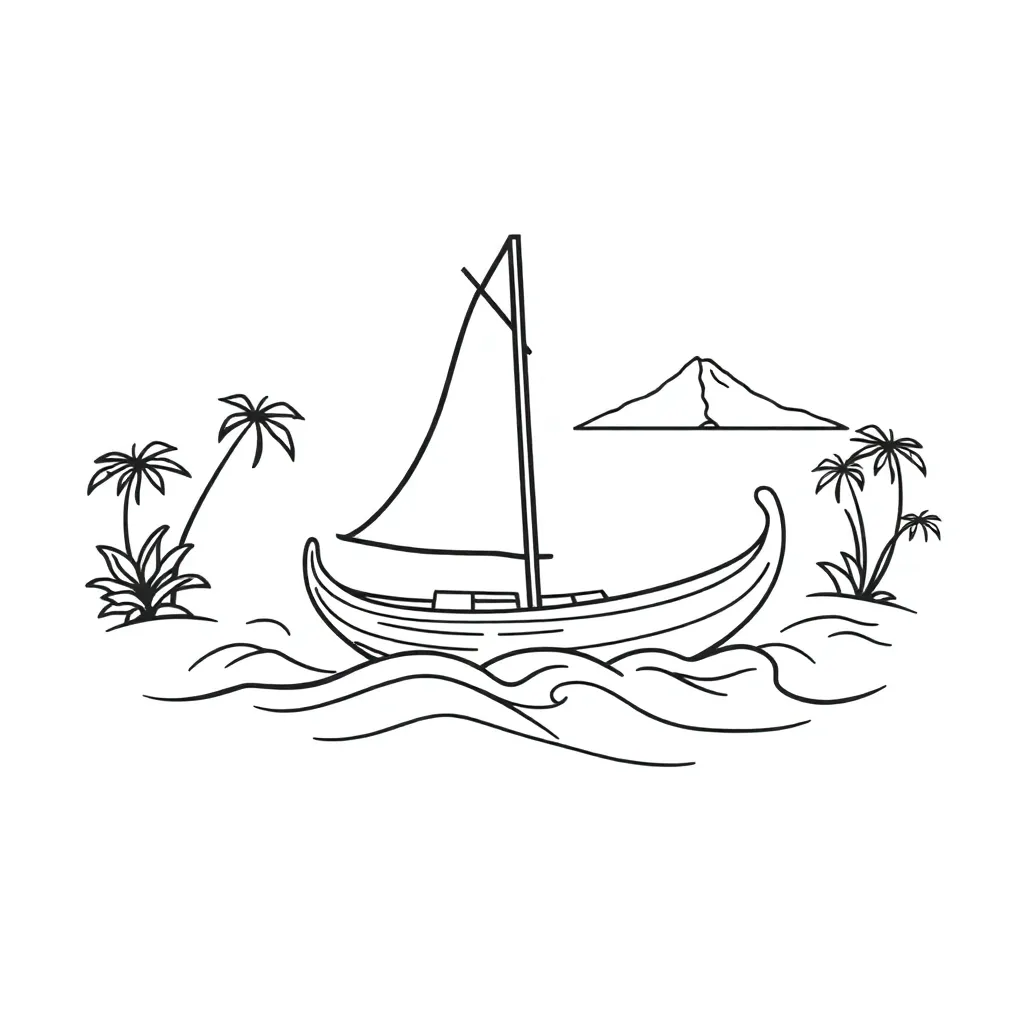
The Pacific Ocean covers one-third of Earth's surface, yet thousands of years ago, brave Polynesian navigators crossed these vast waters in double-hulled canoes called vaka. This remarkable migration, spanning over 3,000 years, represents one of humanity's greatest seafaring achievements.
Beginning around 1000 BCE, Polynesian peoples embarked on epic voyages from their homelands in what is now known as the "Polynesian Triangle" - an area bounded by Hawaiʻi, Easter Island (Rapa Nui), and Aotearoa New Zealand. These skilled navigators used traditional wayfinding techniques, reading the stars, ocean swells, wind patterns, and bird behaviour to guide their journeys across thousands of kilometres of open ocean.
The reasons for migration were varied. Some groups left due to population pressure on small islands, while others sought new resources or fled from conflicts. Climate changes and natural disasters also played a role in encouraging people to seek new homes across the Pacific.
The migration to Aotearoa New Zealand occurred in several waves. The first Polynesian settlers, the ancestors of Māori, arrived between 1200-1300 CE. They brought with them essential crops like kumara (sweet potato), taro, and yam, along with pigs, dogs, and chickens. However, the cooler climate of Aotearoa meant that some tropical plants couldn't survive, forcing these early settlers to adapt their agricultural practices.
In more recent times, the 20th and 21st centuries have seen new waves of Pacific migration to New Zealand. Following World War II, labour shortages in New Zealand led to active recruitment of Pacific Island workers. The 1960s and 1970s saw significant migration from Samoa, Tonga, Fiji, and the Cook Islands. Today, Auckland is home to the largest Pacific population in the world, with over 380,000 Pacific peoples calling New Zealand home.
Modern Pacific migration differs greatly from ancient voyages. While early migrants travelled in family groups seeking permanent new homes, contemporary migration often involves individuals moving for education, employment, or to join family members already established in New Zealand. Despite these differences, the spirit of courage and determination that drove the first Pacific navigators continues to inspire Pacific communities today.
🎯 Part A: Multiple Choice Questions
✅ Part B: Multiple Selection Questions
📝 Part C: Fill in the Blanks
a) The Pacific migration spanned over _____________ years and represents one of humanity's greatest _____________ achievements.
b) Modern Pacific migration began after _____________ when New Zealand experienced _____________ shortages.
c) The 1960s and 1970s saw significant migration from _____________, _____________, _____________, and the _____________.
d) Today, over _____________ Pacific peoples call New Zealand home.
💭 Part D: Short Answer Questions
🔗 Part E: Matching Activity
🎨 Part F: Extended Response
• What preparations you would make
• What navigation techniques you would use
• What supplies and people you would bring
• What challenges you might face
About This Worksheet
Free in Kuraplan
Sign up free, grab the PDF, and customize it for your class.
Print-Ready
Formatted for standard paper. Clean layout, easy to read.
AI-Generated
Created with Kuraplan's AI, designed for real classroom use.
For Teachers & Parents
Use in classrooms, for homework, tutoring, or homeschool.
Need a custom version of this worksheet?
Kuraplan's AI generates custom worksheets in seconds — differentiated for every learner, aligned to your curriculum.
Generate Custom Worksheets — FreeMore English Worksheets
English for Logistics Worksheet
Free
English Support Worksheet
Free
English Evaluation Skills Worksheet
Free
English Prepositions Reference Sheet
Free
Medieval English-French Monarchies
Free
Year 3 English Worksheet
Free
Year 8 English Worksheet
Free