Ages 10–13 · Years 5–8 · History · 6 minutes
The Silk Road Explained: Goods, Ideas and Disease
CHAPTERS
Key terms
- Trade network
- Connected routes and markets through which goods move between traders.
- Caravan
- A group traveling together, using pack animals such as camels or horses to carry loads.
- Oasis
- A place in a desert where water supports life.
- Cultural exchange
- The movement of beliefs, skills and ideas as people meet.
- Sogdians
- A Central Asian people whose merchants built distant trading communities.
Transcript
Imagine holding a piece of silk in Chang'an, a capital of ancient China. Far to the west, someone in Constantinople might pay a fortune for fabric like this. But how could it cross deserts, mountains, and kingdoms without a delivery truck? And what else might travel with it? Follow the silk. We are imagining one piece of cloth, but the places, objects, and connections in this story are real. By the end, that shiny fabric will seem like the least surprising cargo.
First, forget the picture of one giant road. The Silk Road was a network of routes across Asia, reaching the Mediterranean, with sea routes connecting still more places. Its paths changed over centuries. Chang'an, now called Xi'an, was one important eastern center. Constantinople, now called Istanbul, was one important western city. Here's the trap: a line on a map can make this look like one person's trip. Usually, it wasn't. Think of a relay, with goods passed from trader to trader.
Now put yourself beside a caravan: a group traveling together, with camels or horses carrying loads. A desert is not just a big empty shortcut. People and animals need water. Routes connected oases, places where water supports life. Mountain passes narrowed the paths travelers could take. Large caravan inns offered travelers food, shelter, and somewhere to trade. No room service app required. These stopping places helped turn scattered journeys into a working network. Geography shaped where the silk could go.
Next, why silk? A silkworm spins the fiber for its cocoon. People developed ways to turn that fiber into cloth. Silk from China became a prized trade good: beautiful, valuable, and light enough to carry long distances. But don't imagine a camel loaded with nothing except fancy scarves. Traders exchanged spices, glass, precious stones, horses, and many other goods. They moved in different directions. The name Silk Road is catchy, but it leaves most of the shopping list out.
Who kept the relay going? Important traders included people called the Sogdians, from Central Asia. Samarkand was one of their great centers. Sogdian merchants built communities far from home, and many spoke several languages. This skill helped traders connect markets across many stages of a journey. Picture our cloth changing hands at a busy stop. Its next owner may know the next stretch well, without ever seeing the place where the silk began.
But not everything needed a saddlebag. When people met, ideas moved too. Buddhism began in India and spread through Central Asia into China. Monks traveled, texts were translated, and artists adapted images and styles. At Dunhuang, near desert routes in China, the Buddhist temples of the Mogao Caves preserve a record of these connections. Look at the paintings. They're evidence that travelers carried questions about life, beliefs, and ways of seeing the world, as well as things they hoped to sell.
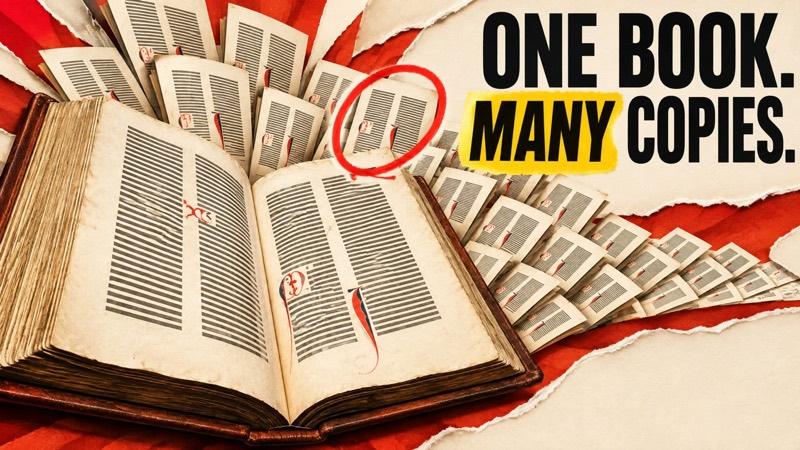
One surviving object makes that connection wonderfully concrete. This copy of the Diamond Sutra, a Buddhist text, was printed in China in the year eight hundred and sixty eight. It was found at Dunhuang. It is the world's earliest surviving dated printed book. Belief, language, paper, and printing meet in one scroll. Skills for making paper and other materials also spread between societies. Quick check: if a traveler teaches someone a new technique, is that trade? It may not be a sale, but it is exchange.
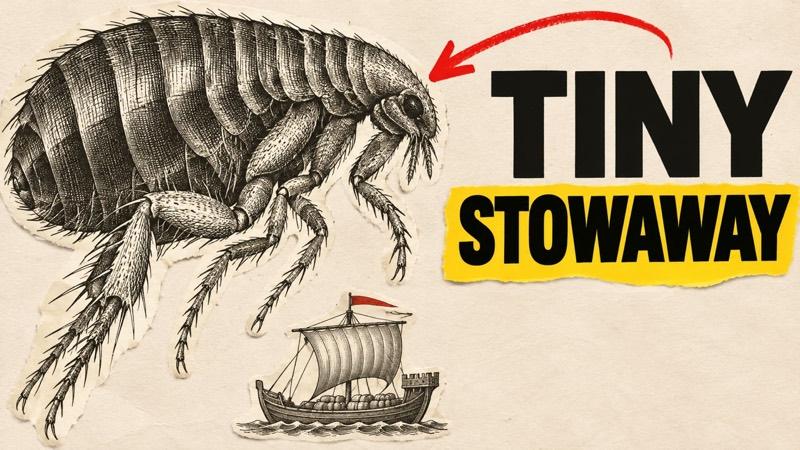
But connections had a dangerous side. Jump forward to the thirteen hundreds. Trade and travel could also spread disease. Scientists found genetic evidence of plague in human remains buried in what is now Kyrgyzstan, dating to the years thirteen thirty eight and thirteen thirty nine. That strain was closely connected to the Black Death. In thirteen forty seven, trade ships carried plague from ports on the Black Sea into the Mediterranean. Researchers cannot follow every step of its journey. Still, the lesson is stark: the networks that carried valuable goods could also help a deadly infection travel.
So, back to our silk. If fabric reached Constantinople, it didn't arrive from an isolated world. It passed through connections built by many people, in many places. In the city, silk was costly and prestigious. Our imagined cloth is just one thread through a much bigger story. The real Silk Roads connected markets, carried beliefs and skills, and sometimes spread danger. Nobody had to travel the whole way for something to change lives at the other end.
Keep four ideas. A network, not one road. Goods changed hands between traders. Beliefs and skills traveled with people. Disease could use those connections too. Useful history phrases are trade network, cultural exchange, and interconnected societies. And one last twist: Silk Road is a modern name, given to these routes long after they developed. The people who made the connections weren't following our label. They were making the next journey, meeting the next person, and passing something on.
Sources
Every fact in the video, and where it comes from.
- 1unesco.org/en/silk-roads/about-silk-roads
- The Silk Roads were interconnected land and sea networks; their routes and importance changed over many centuries.
- Silk is made from fibers produced by silkworms when forming cocoons; silk originated in China and became a valuable export.
- Caravans used camels and horses; caravanserais offered rest, food, safety and opportunities to exchange goods and ideas.
- 2whc.unesco.org/en/list/1442
- Chang’an, now Xi’an, was a Chinese capital and an eastern center of the Silk Roads. Routes crossed deserts and mountains and linked oasis settlements.
- Buddhism spread from India via Central Asia into China; cave temples preserve evidence of this transmission.
- 3education.nationalgeographic.org/resource/silk-road
- Few merchants traveled the entire network; goods passed through middlemen and trading posts.
- 4en.unesco.org/silkroad/publications/silk-roads-brief-history…
- Goods exchanged included silk, spices, horses, gems, glass and ceramics.
- 5sogdians.si.edu/introduction
- Sogdian merchants built trading communities across Asia; many spoke multiple languages, and some translated Buddhist texts.
- 6unctad.org/system/files/official-document/diaeia20096_en.…
- Samarkand was a major Sogdian trading center.
- 7whc.unesco.org/en/list/440
- The Mogao Caves at Dunhuang were a Buddhist center at a Silk Road crossroads.
- 8idp.bl.uk/blog/the-diamond-sutra
- The Diamond Sutra copy dated 868 was found at Dunhuang; it is the world’s earliest dated printed book.
- 9amnh.org/explore/ology/ology-cards/316-silk-road
- Skills for making silk, glass, paper and metal crafts traveled between societies along the Silk Roads.
- Goods moved city to city in a relay, most merchants covering only a few cities.
- 10mpg.de/18778852/0607-evan-origins-of-the-black-death-…
- DNA identifies plague in people buried in present-day Kyrgyzstan in 1338–1339 and links the strain to the Black Death; trade ships carried plague into the Mediterranean in 1347.
- 11doi.org/10.1038/s41586-022-04800-3
- The study supports a Central Asian source, but does not trace each step of plague’s journey to Europe.
- 12vam.ac.uk/info/constantinople-to-istanbul-one-city-two-e…
- Constantinople, now Istanbul, was the Byzantine capital, where silk was a costly prestigious product.
- 13en.unesco.org/silkroad/sites/default/files/knowledge-bank-ar…
- Rich fabrics and jewels reached Constantinople through international exchange.
- 14courier.unesco.org/en/articles/tales-silken-times
- The Silk Road name was applied in the nineteenth century, long after the network developed.
Image and sound credits
- “Western Han Silk” by Gary Todd (CC0) — https://commons.wikimedia.org/wiki/File:Western_Han_Silk.jpg
- “Textiles: silk manufacture in China, gathering the silk threads.” by Unknown, CC BY 4.0 (https://creativecommons.org/licenses/by/4.0) — https://commons.wikimedia.org/wiki/File:Textiles;_silk_manufacture_in_China,_gathering_the_silk_thre_Wellcome_V0024220.jpg
- “Silkworm cocoons” by Fumikas Sagisavas (CC0) — https://commons.wikimedia.org/wiki/File:Silkworm_cocoons.jpg
- “Dust Swirls in the Taklamakan Desert (NESDIS 2013-09-27)” by NOAA (Public domain) — https://commons.wikimedia.org/wiki/File:Dust_Swirls_in_the_Taklamakan_Desert_(NESDIS_2013-09-27).png
- “Mingsha Mountain and Crescent Moon Spring (54532735143)” by xiquinhosilva, CC BY 2.0 (https://creativecommons.org/licenses/by/2.0) — https://commons.wikimedia.org/wiki/File:Mingsha_Mountain_and_Crescent_Moon_Spring_(54532735143).jpg
- “Mingsha Mountain and Crescent Moon Spring” by xiquinhosilva, CC BY 4.0 (https://creativecommons.org/licenses/by/4.0) — https://commons.wikimedia.org/wiki/File:Mingsha_Mountain_and_Crescent_Moon_Spring.jpg
- “Registan - Gusjer” by Gustavo Jeronimo from Aranjuez, Spain, CC BY 2.0 (https://creativecommons.org/licenses/by/2.0) — https://commons.wikimedia.org/wiki/File:Registan_-_Gusjer.jpg
- Diamond Sutra, printed 868, British Library Or.8210/P.2; public domain image via Wikimedia Commons — https://commons.wikimedia.org/wiki/File:Jingangjing.jpg
- Panorama of Constantinople, unknown artist, eighteenth century; public domain — https://commons.wikimedia.org/wiki/File:Panorama_of_Constantinople_-_Google_Art_Project.jpg
- “Diözesanmuseum Bamberg - Gunthertuch 1” by Xenophon, CC BY 4.0 (https://creativecommons.org/licenses/by/4.0) — https://commons.wikimedia.org/wiki/File:Di%C3%B6zesanmuseum_Bamberg_-_Gunthertuch_1.jpg
- “Afrasyab Chinese Embassy, carrying silk and a string of silkworm cocoons” by Thorsten Greve (Public domain) — https://commons.wikimedia.org/wiki/File:Afrasyab_Chinese_Embassy,_carrying_silk_and_a_string_of_silkworm_cocoons.jpg
- “Mogao Cave 156 battle” by unknown painter, late Tang Dyanasty (circa 705–907 A.D.) photographed by 茹遂初 (Ru Suichu) in 1978 (Public domain) — https://commons.wikimedia.org/wiki/File:Mogao_Cave_156_battle.jpg
- “Mogao Caves Exterior And Chambers” by Flickr user: eviltomthai, CC BY 2.0 (https://creativecommons.org/licenses/by/2.0) — https://commons.wikimedia.org/wiki/File:Mogao_Caves_Exterior_And_Chambers.jpeg
- “Alla Kouli Khan caravanserai 02” by Bgag (CC0) — https://commons.wikimedia.org/wiki/File:Alla_Kouli_Khan_caravanserai_02.jpg
- “Caravanserai in desert Dasht-e Lut, Kerman Province, Iran 04” by Erik Albers, CC BY 4.0 (https://creativecommons.org/licenses/by/4.0/) — https://commons.wikimedia.org/w/index.php?curid=44584873
- “Yersinia pestis” by Unknown (Public domain) — https://commons.wikimedia.org/wiki/File:Yersinia_pestis.jpg
- “City wall of Xi'an 51550-Xian (27959363326)” by xiquinhosilva, CC BY 2.0 (https://creativecommons.org/licenses/by/2.0) — https://commons.wikimedia.org/wiki/File:City_wall_of_Xi%27an_51550-Xian_(27959363326).jpg
- “Ak-Baital Pass” by Benoît Vicart (CC0) — https://commons.wikimedia.org/wiki/File:Ak-Baital_Pass.jpg
- “Spices at the market, Ramatuelle, 2004” by DimiTalen (CC0) — https://commons.wikimedia.org/wiki/File:Spices_at_the_market,_Ramatuelle,_2004.jpg
- “Blue ribbed bowl with white trails, front profile - Getty Museum (2003.226)” by J. Paul Getty Museum (CC0) — https://commons.wikimedia.org/wiki/File:Blue_ribbed_bowl_with_white_trails,_front_profile_-_Getty_Museum_(2003.226).jpg
- Map coastlines: Natural Earth, public domain. Selected historical connections drawn schematically; no modern borders asserted.
- Paper textures: ambientCG, CC0.
- Cut sounds: Freesound recordings slide 352914, rustle 353125, whoosh2 60007; CC0.
- Narration: Google Gemini Flash TTS, Kore. Music: studio collage bed.
- Thumbnails: AI-generated with GPT Image 2.6; merchant is fictional.
Teaching this next week?
Kuraplan turns this topic into a lesson plan, slides and a worksheet for your class in about a minute.
Plan a lesson on this topic