Let's ditch the bubble sheets for a moment.
At its core, a performance-based assessment (PBA) answers one simple question: can a student actually apply what they’ve learned to a real-world task? Think of it like a driving test—the written exam shows they know the rules, but the road test proves they can actually drive.
Moving Beyond the Bubble Sheet to Authentic Learning
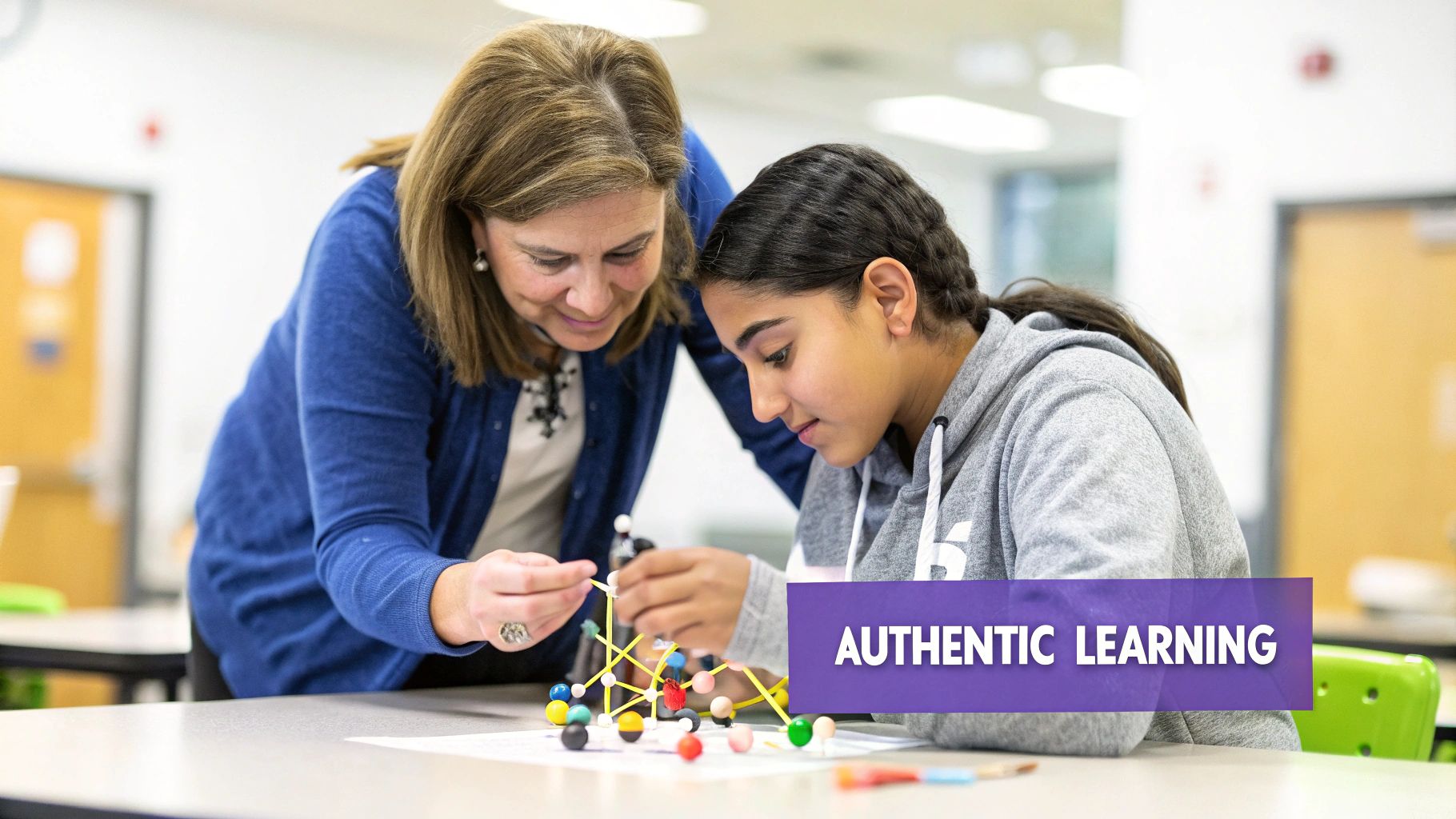
For years, we’ve relied on multiple-choice tests to gauge student knowledge. While useful, they often measure memorization rather than true understanding. Performance-based assessments flip the script by asking students to do the subject.
This means instead of just circling an answer, students are actively engaged in tasks that mirror what professionals do. They might design a science experiment, debate a historical issue, or build a portfolio of their best writing.
From Remembering to Doing
The fundamental shift is from passive recall to active application. Traditional tests ask, "Do you remember this fact?" Performance-based assessments ask, "What can you do with what you know?" This approach provides a much richer, more accurate picture of a student's abilities.
This hands-on method values the process as much as the final product. It helps us see a student's critical thinking, problem-solving, and creativity in action—skills that are essential for success long after they leave our classrooms.
By focusing on application, we move from a culture of "test-taking" to a culture of genuine inquiry and creation. It’s about celebrating what students can create and achieve, not just what they can remember for a test.
What Makes Them Different?
So, how do performance-based assessments really stack up against the tests we're all used to? The differences are clear and impactful for both teachers and students.
- Focus on Process: Unlike a single-answer test, PBAs allow you to observe a student's thought process, problem-solving strategies, and how they handle challenges along the way.
- Real-World Relevance: Tasks are designed to be authentic, connecting classroom learning to tangible, real-world scenarios that make the material more meaningful for students.
- Higher-Order Thinking: These assessments demand more than just memorization. They require students to analyze, evaluate, and create, pushing them toward deeper comprehension.
As we move beyond traditional testing, many educators are exploring concepts like gamification in education to make learning more interactive and task-oriented. This aligns perfectly with the hands-on nature of performance assessments.
Performance-Based vs Traditional Assessments at a Glance
To really see the contrast, let's break it down side-by-side. This table highlights how differently these two approaches measure student learning.
| Feature | Traditional Assessments (e.g. Multiple-Choice) | Performance-Based Assessments (e.g. Projects, Portfolios) |
|---|---|---|
| What It Measures | Knowledge recall, memorization | Application of skills, critical thinking, process |
| Student's Role | Passive; selects a pre-existing answer | Active; constructs a response or creates a product |
| Task Authenticity | Often abstract or decontextualized | High; mimics real-world tasks and challenges |
| Cognitive Demand | Lower-order thinking (remembering, understanding) | Higher-order thinking (analyzing, creating, evaluating) |
| Feedback Focus | Typically on the final score or correct/incorrect answers | On the process, skill development, and final product |
This side-by-side view makes it clear: while traditional tests have their place for checking factual knowledge, performance-based assessments are where we see learning in action. They give us a truer sense of what our students can actually do.
Why Performance Based Assessments Transform Student Learning
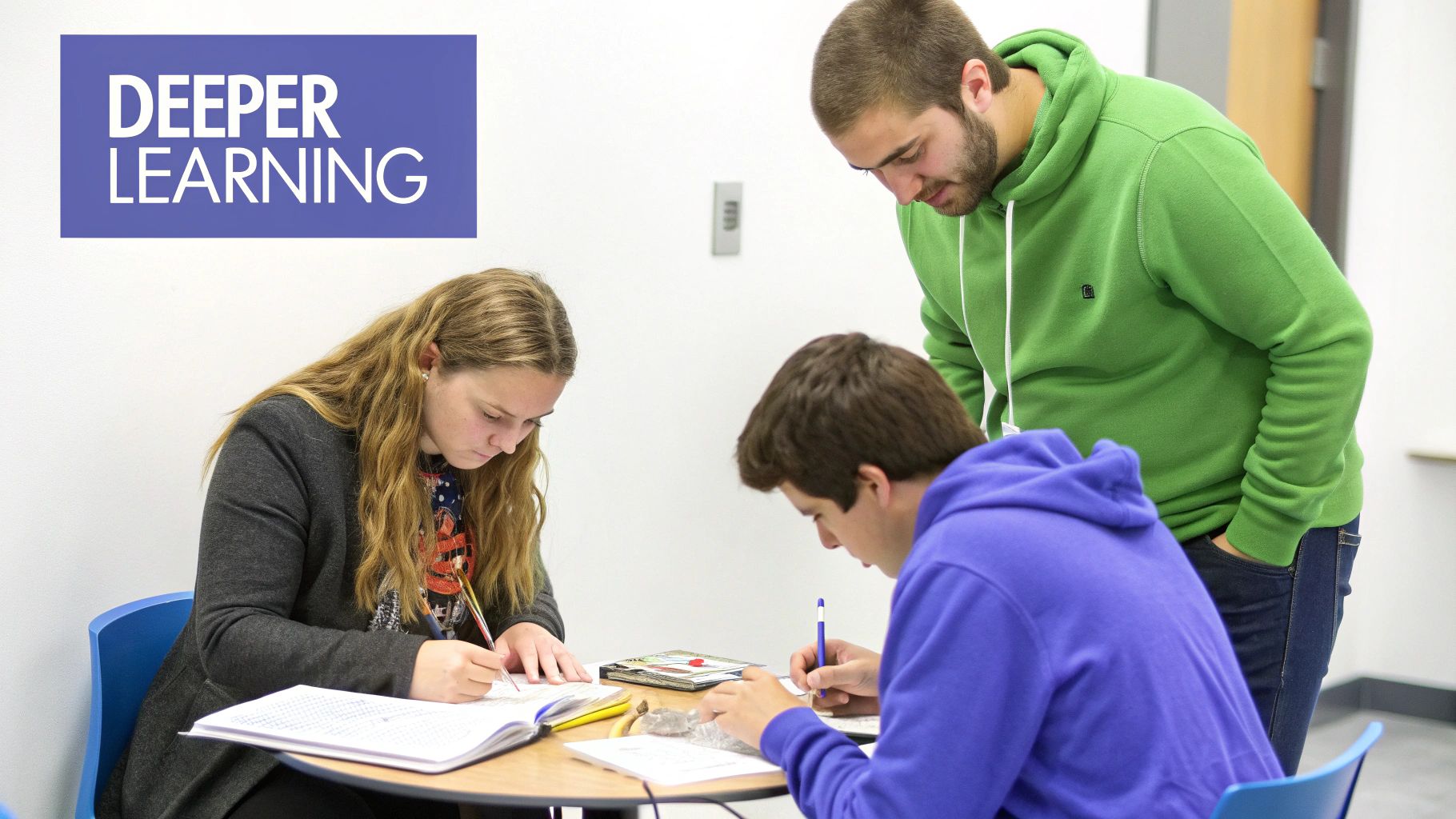
So, what makes this approach such a game-changer in the classroom? It’s all about the shift from asking students to remember information to challenging them to actually use it. Performance-based assessments are a fantastic way to reignite student engagement by connecting abstract concepts to real, hands-on tasks.
When students are asked to build, design, or solve something tangible, the learning sticks. They develop a much deeper, more lasting understanding because they’ve wrestled with the material and applied it themselves. This simple change moves learning from a passive activity to an active one.
Beyond a Single Test Score
For teachers, this shift provides a clearer, more complete picture of what each student can do. You get to see their thought processes, their creativity, and their grit when faced with a challenge—qualities a multiple-choice test could never capture.
This richer insight helps you understand not just what a student knows, but how they know it. It lets you pinpoint specific strengths and areas for growth, making your feedback and instruction far more targeted and effective.
The real power of performance-based assessments is that they value the process, not just the final answer. We get to celebrate how students think, collaborate, and create.
A huge benefit here is the reduction in test anxiety. Instead of a single high-stakes exam, learning is assessed through projects and tasks that feel more like authentic work. This builds confidence and helps students focus on growth rather than a fear of failure.
Research backs this up, showing this approach can lead to better outcomes with less mental strain. For instance, a 2010 study found that novice learners using performance-based criteria achieved higher test scores with significantly less mental effort than those using traditional methods. You can read the full research about these findings to see the data for yourself.
Building Skills for the Future
Perhaps most importantly, performance-based assessments build the crucial 21st-century skills that prepare students for life beyond the classroom. These tasks naturally encourage:
- Collaboration: Many projects require students to work together, negotiate roles, and communicate effectively to reach a common goal.
- Creativity: Open-ended tasks give students the freedom to innovate and approach problems from their own unique perspectives.
- Critical Thinking: Students have to analyze information, weigh their options, and justify their decisions, moving far beyond simple recall.
- Communication: Whether it's a presentation, a written report, or a multimedia project, students learn to articulate their ideas clearly and persuasively.
By building these competencies into our assessments, we aren't just measuring academic knowledge; we're actively cultivating the skills students need to succeed in college, careers, and their communities.
Of course, supporting students' holistic development goes beyond just academic assessments. You might find it helpful to explore other valuable educational resources for K-8 teachers that focus on this.
Bringing Performance Based Assessments to Life in Your Classroom
Theory is great, but what does a performance-based assessment actually look like on a Tuesday morning? It’s far more flexible—and simpler—than you might think. Let's move from the abstract to the concrete with a few examples you can adapt for any classroom.
The whole point is to design tasks where students show what they know instead of just telling you. This approach makes learning stick, and it gives you a much richer picture of their understanding. It’s all about creating those "aha!" moments because the work feels real and has a purpose.
Elementary Science: A Simple Machine Challenge
Imagine you've just read a story where a character gets stuck. Instead of a bubble-in worksheet, you issue a design challenge.
- Learning Objective: Students will demonstrate their understanding of simple machines (levers, pulleys, inclined planes) by designing a helpful device.
- Student Task: In small groups, students use everyday materials like cardboard, string, and rulers to build a machine that helps the storybook character. They then present their creation and explain how it works.
- Rubric Focus: You’re not just grading whether the machine "works." The rubric would focus on their ability to identify the type of simple machine they used, explain their design choices, and work together as a team.
Middle School History: A Living Museum
History class comes alive when students can literally step into the past. Forget the standard test on historical figures—create an interactive "living museum" instead.
- Learning Objective: Students will analyze the contributions and perspectives of a key historical figure from a specific era.
- Student Task: Each student researches a historical figure and prepares a short monologue from that person's point of view. On "museum day," they dress in character and present their monologues to classmates or parents who tour the "exhibits."
- Rubric Focus: Evaluation would center on historical accuracy, the depth of their character analysis, and the clarity of their presentation.
This transforms a history lesson into an empathetic, memorable experience. Students connect with the past on a personal level, moving beyond dates and names to understand motivations and impact.
High School English: A Digital Writing Portfolio
For older students, a portfolio is a fantastic way to showcase growth over time. It’s an authentic task that mirrors what professional writers and creatives actually do.
- Learning Objective: Students will curate and reflect on their writing, demonstrating growth in argumentation, style, and revision.
- Student Task: Throughout the semester, students select their best pieces—essays, poems, short stories—for a digital portfolio. The most important part is a reflective essay where they analyze their own progress, identify strengths, and set goals for the future.
This type of assessment is deeply personal and builds metacognition. It puts students in the driver's seat of their own learning journey.
Of course, the heart of any great performance-based assessment is a clear and fair rubric. A well-designed rubric tells students exactly what success looks like and makes your grading consistent and transparent. To make this part easier, a quality rubric creator for teachers can be a lifesaver, especially when you're just getting started. Tools like Kuraplan can help you build detailed, standards-aligned rubrics in a fraction of the time.
How to Design Your Own Performance Based Assessments
Ready to build your own performance-based assessments? The good news is the process is more intuitive than you might think. It all boils down to a simple but powerful idea used by the best curriculum designers out there: backward design.
Instead of kicking things off with a fun activity and hoping it leads to learning, we start with the end in mind.
Think of it like building a bridge. You wouldn't just start laying down planks and hope you eventually land on the other side. You'd start by knowing exactly where you need to end up. In teaching, that destination is your learning standard. By locking in on the specific skill or concept you want students to master, you can design a task that directly measures it. This simple shift ensures your assessment is a meaningful measure of student learning—not just busy work.
Want to go deeper on this? Check out our detailed guide on backward design lesson planning.
Start with Your Standards
First things first: what, exactly, do you need students to know and be able to do? Pull up your state or district standards.
Let's say a standard is about analyzing an author's use of literary devices to develop a theme. A multiple-choice test might ask students to define "metaphor," but a performance task demands that they actually show they can analyze how it works in a real text.
Once you’ve got your standard, you can dream up an engaging task that sparks a little curiosity. Instead of another five-paragraph essay, maybe students could create a short video essay, produce a podcast episode, or design a visual mind map that deconstructs the author's techniques. The key is making the task feel authentic while allowing for a bit of student choice.
This infographic gives a quick look at how you might design tasks across different subjects.
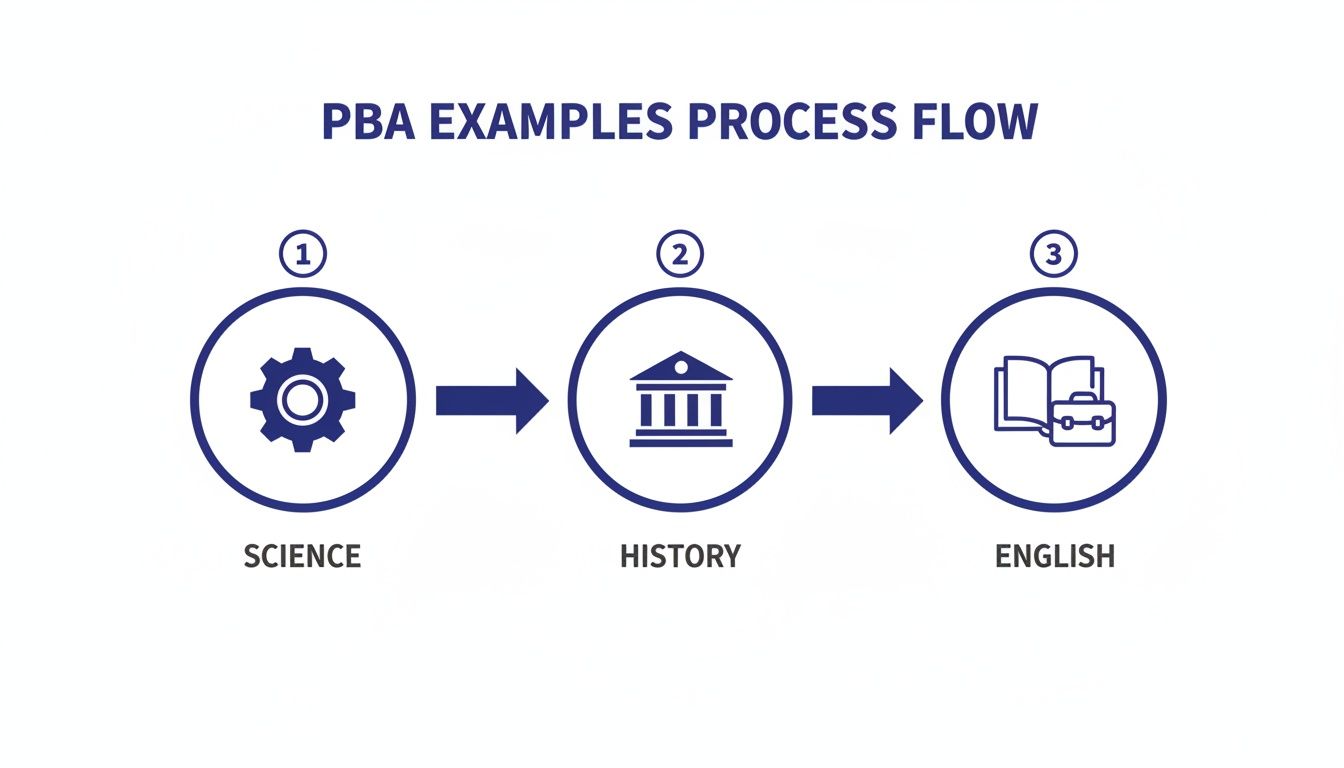
As you can see, it doesn't matter what subject you teach. The goal is always to move from abstract theory to a tangible student creation that truly demonstrates mastery.
Crafting a Clear and Fair Rubric
The rubric is the absolute cornerstone of any good performance-based assessment. Think of it as your contract with students—it clearly lays out what success looks like from the get-go. A vague rubric is just a recipe for confusion and frustration, both for you and your students.
A well-crafted rubric isn’t just a grading tool; it’s a teaching tool. It gives students a clear roadmap for success and empowers them to self-assess their work as they go.
Here are a few tips for building rubrics that actually work:
- Use Student-Friendly Language: Ditch the academic jargon. Write criteria that students can actually understand and use as a personal checklist.
- Focus on Skills, Not Just Completion: Instead of a checkbox for "Includes three metaphors," a stronger criterion would be "Effectively analyzes how metaphors contribute to the theme."
- Keep It Focused: Limit your rubric to 3-5 essential criteria. Trying to grade every little thing at once just dilutes your feedback and overwhelms students.
This is where smart tools can be a total game-changer. AI platforms like Kuraplan, for example, can generate standards-aligned tasks and detailed rubrics in just a few minutes. This seriously streamlines the design process, saving you hours of paperwork so you can get back to what you do best—teaching.
The importance of getting teachers involved in creating these tools is gaining traction nationally. A 2023 WestEd report found that states prioritizing locally developed PBAs and teacher-created rubrics saw much higher educator buy-in. States that provided resources and training for this co-creation process noted it leads to "more valid and reliable results." You can learn more about these state-level findings and see how teacher collaboration is shaping the future of assessment.
Using Assessment Data to Drive Real Instruction
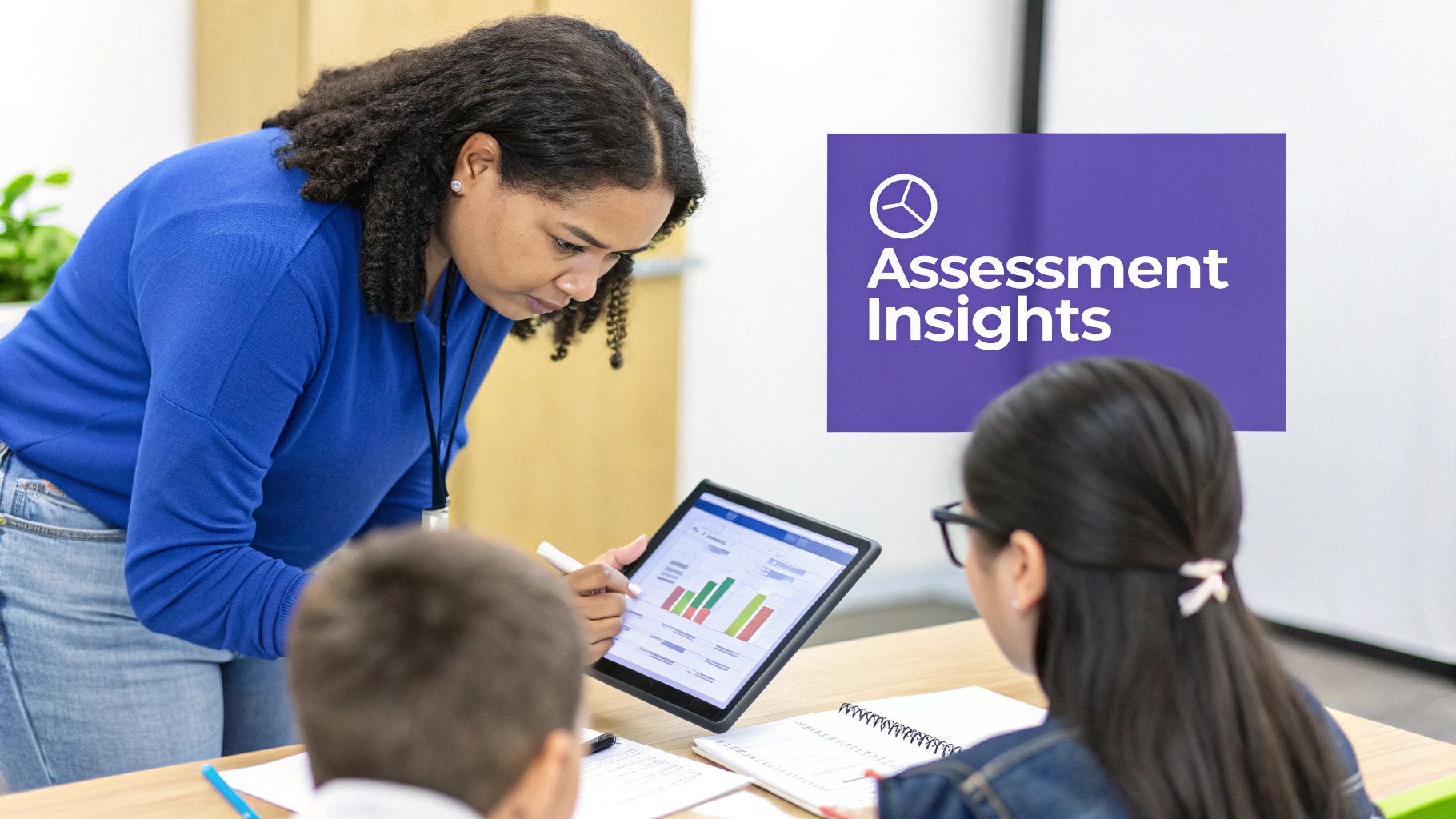
Performance-based assessments are so much more than a final grade. Think of them as diagnostic tools that give you a real window into your students' learning.
Unlike a simple score on a multiple-choice test, the data you get from projects, presentations, and portfolios reveals the how and why behind their work. You get to see their thought processes, pinpoint common misconceptions, and spot each student's unique strengths.
It's the difference between knowing a student got a C and understanding why—they’re a brilliant creative thinker but struggle to organize their evidence. That’s information you can actually work with.
Turning Insights into Action
So, what do you do with all this rich data? This is where the magic happens. You use it to create a feedback loop: assess, analyze what you see, and adapt your teaching on the fly. It shifts your role from just a grader to an instructional strategist.
When you notice a handful of students hitting the same roadblock in a project, that’s your signal to reteach the concept in a new way. If one student is flying ahead, the assessment data gives you the insight you need to create a meaningful extension activity—not just busy work.
This is also a great time to explore other assessment strategies. For example, the data from a big project might show you where to sprinkle in some new formative assessment examples during your next unit to catch those misunderstandings before they snowball.
Differentiating with Purpose
This data-driven approach is the secret to real differentiation. It lets you tailor your support with precision, meeting every student exactly where they are.
Instead of making assumptions about student needs, performance-based assessment data gives you concrete evidence to guide your instructional decisions. It’s about being responsive, not just reactive.
With clear insights, you can create flexible groups, provide targeted scaffolds, or offer choices that empower students to own their learning. For a group struggling with research, you might offer a graphic organizer. For another, you might challenge them with a new digital presentation tool.
Creating a Student-Centered Culture
The impact of using this data goes beyond individual students—it can shape a more responsive and collaborative school culture.
A study connected to Stanford's Linked Learning initiative found that 90% of principals and 77% of teachers rated PBAs as highly useful for evaluating school effectiveness. Even more telling, 40% of teachers actually shifted their instruction toward more cooperative work and problem-solving after using them. These assessments push entire schools toward higher-order thinking. You can discover more about these findings and see the broader impact for yourself.
When teachers look at this kind of data together, they can identify trends across classrooms, share strategies that work, and build a stronger instructional vision. An AI-powered tool like Kuraplan can also help by generating standards-aligned tasks and rubrics, making it easier to gather consistent data that truly reflects student mastery and informs your next move.
Your Performance Based Assessment Questions Answered
Even with all their benefits, I get it—shifting to performance-based assessments brings up some real, practical questions. It's a different way of thinking about what we do in the classroom. Let's walk through some of the most common hurdles teachers face so you can feel confident making the switch.
A lot of educators ask if this approach is truly fair. After all, with open-ended tasks, how can you possibly grade everyone objectively? The secret isn’t making every project identical, but in making the goalposts crystal clear from the very beginning.
How Do You Grade These Assessments Fairly Without Bias?
The absolute key to fair, unbiased grading is a solid rubric. Think of it as a contract with your students—it lays out exactly what success looks like before they even start.
When you create clear, objective criteria ahead of time, every student is measured against the same high standard, no matter how they decide to tackle the project. This shifts grading from a gut feeling to a transparent, defensible process.
A strong rubric is your best friend. It provides a clear, consistent framework for evaluation that minimizes personal bias and shows students exactly where they need to improve.
Another game-changing strategy is to grade collaboratively. Getting together with your grade-level team or department to score a few sample projects can work wonders. This process, often called calibration, helps everyone get on the same page with expectations and leads to far more consistent grading across classrooms.
Aren't These Assessments Too Time-Consuming to Manage?
This is probably the biggest—and most valid—concern. And yes, at first, performance-based assessments can feel like a lot to juggle. The trick is to plan smart, not just work harder.
Instead of treating a project as one giant task due at the end, break it down. Build in smaller, more manageable milestones with regular check-ins. Dedicating class time for peer feedback not only lightens your grading load but also teaches students crucial project management skills along the way.
This is also where modern tools can be a lifesaver. AI-powered teacher platforms like Kuraplan can seriously cut down your prep time. Imagine generating high-quality, standards-aligned tasks and detailed rubrics in just a few minutes. That frees you up to do what you do best—guide your students.
How Do I Align PBAs with State Standards?
Making sure your creative, hands-on projects still check all the right boxes with district and state standards is non-negotiable. This is where the power of backward design comes in.
Always start with the standard. Once you know exactly what learning goal you need to hit, you can design an assessment that directly measures that skill. For example, if the standard is about analyzing historical evidence, a project where students create a museum exhibit is a perfect fit.
Technology can also help automate this. Many platforms can help you find and map engaging tasks directly to your specific curriculum standards. This ensures you’re meeting all the requirements while still creating the kind of authentic learning that gets students genuinely excited.
Ready to reclaim your planning time and create incredible learning experiences? Kuraplan is your AI-powered partner for building standards-aligned lessons, assessments, and rubrics in minutes. Join over 30,000 teachers and see how easy it can be to design engaging, performance-based instruction. Start planning smarter today.