ScienceFreePrintable
Aqueous Acids and Bases
A free science worksheet ready for your classroom. Open in Kuraplan to grab the print-ready PDF, customize it for your students, or generate a fresh version in seconds.
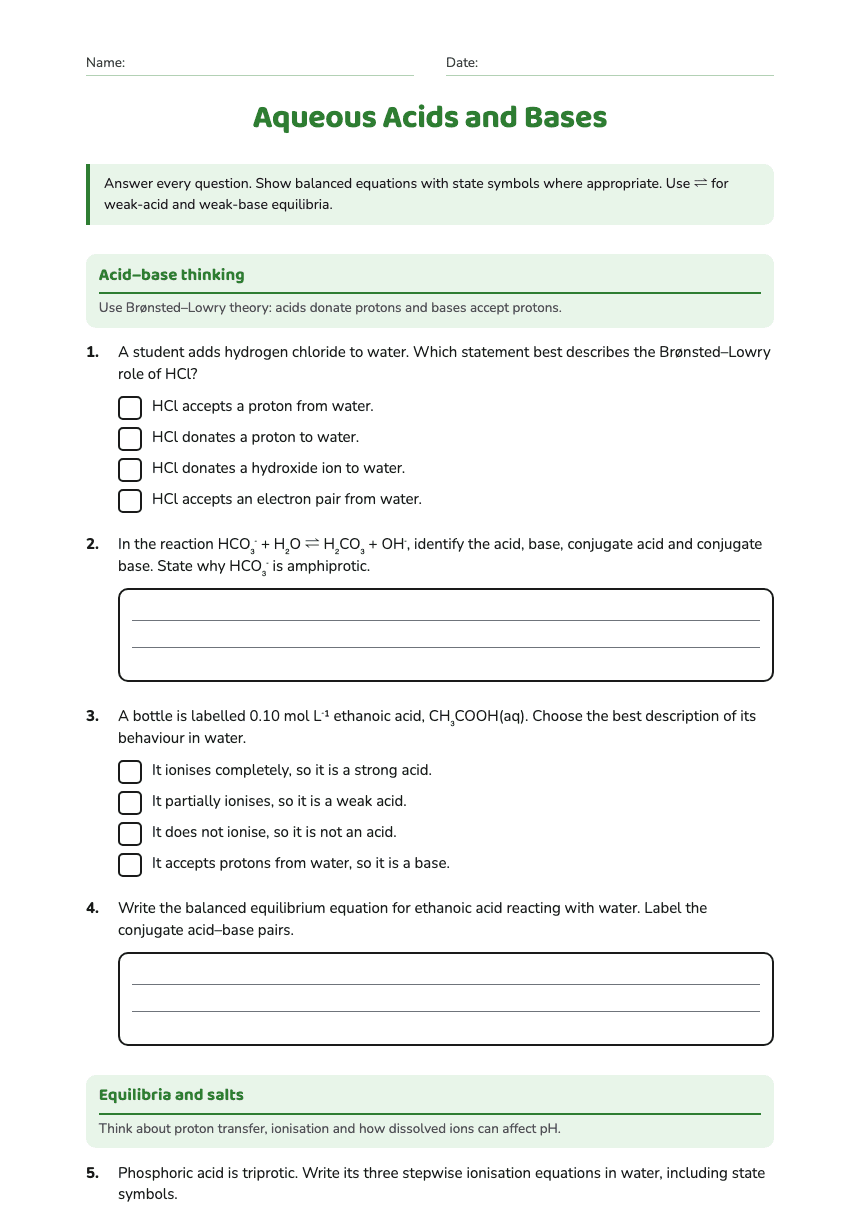
Name:Date:
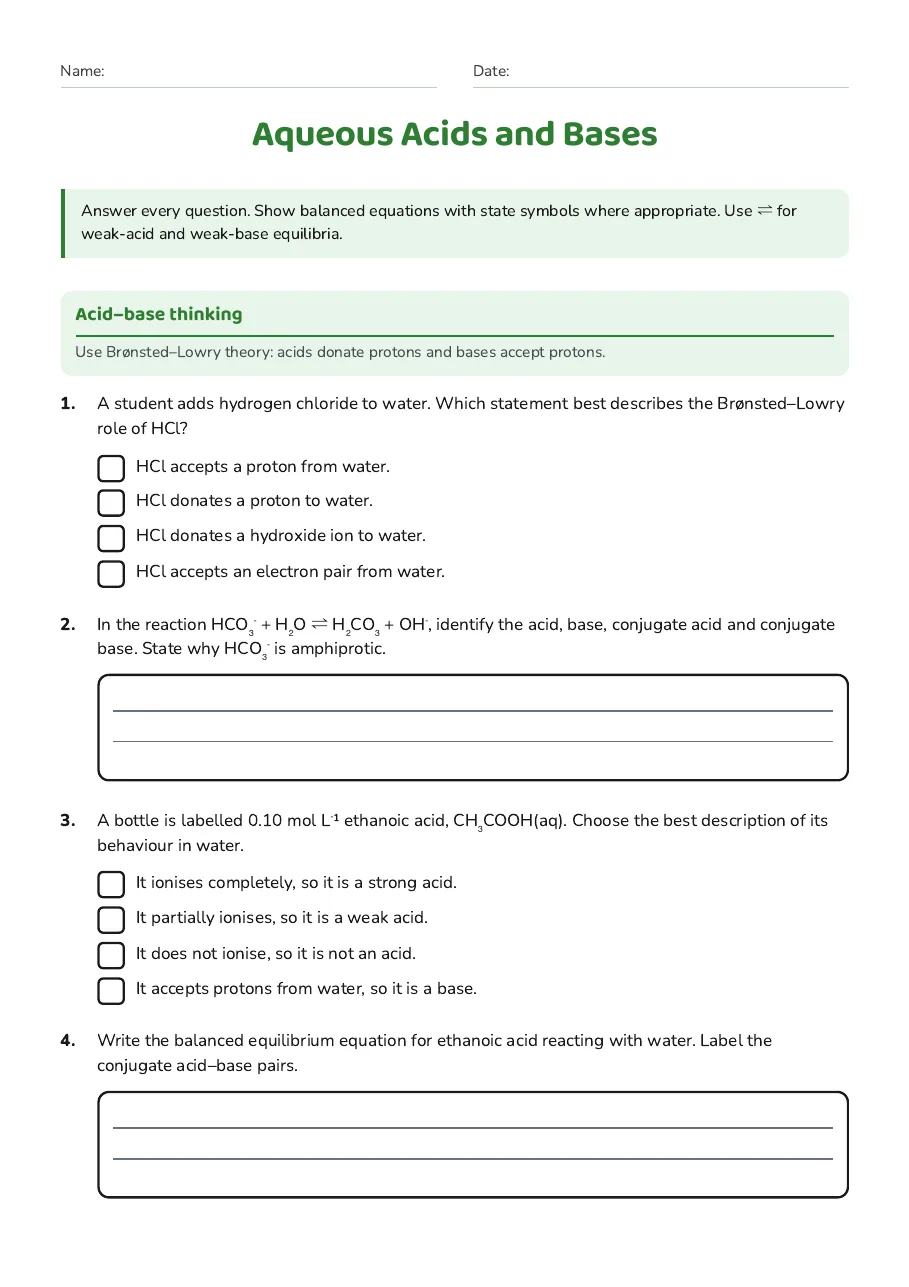
Aqueous Acids and Bases
Answer every question. Show balanced equations with state symbols where appropriate. Use ⇌ for weak-acid and weak-base equilibria.
Acid–base thinking
Use Brønsted–Lowry theory: acids donate protons and bases accept protons.
1.A student adds hydrogen chloride to water. Which statement best describes the Brønsted–Lowry role of HCl?
- HCl accepts a proton from water.
- HCl donates a proton to water.
- HCl donates a hydroxide ion to water.
- HCl accepts an electron pair from water.
2.In the reaction HCO₃⁻ + H₂O ⇌ H₂CO₃ + OH⁻, identify the acid, base, conjugate acid and conjugate base. State why HCO₃⁻ is amphiprotic.
3.A bottle is labelled 0.10 mol L⁻¹ ethanoic acid, CH₃COOH(aq). Choose the best description of its behaviour in water.
- It ionises completely, so it is a strong acid.
- It partially ionises, so it is a weak acid.
- It does not ionise, so it is not an acid.
- It accepts protons from water, so it is a base.
4.Write the balanced equilibrium equation for ethanoic acid reacting with water. Label the conjugate acid–base pairs.
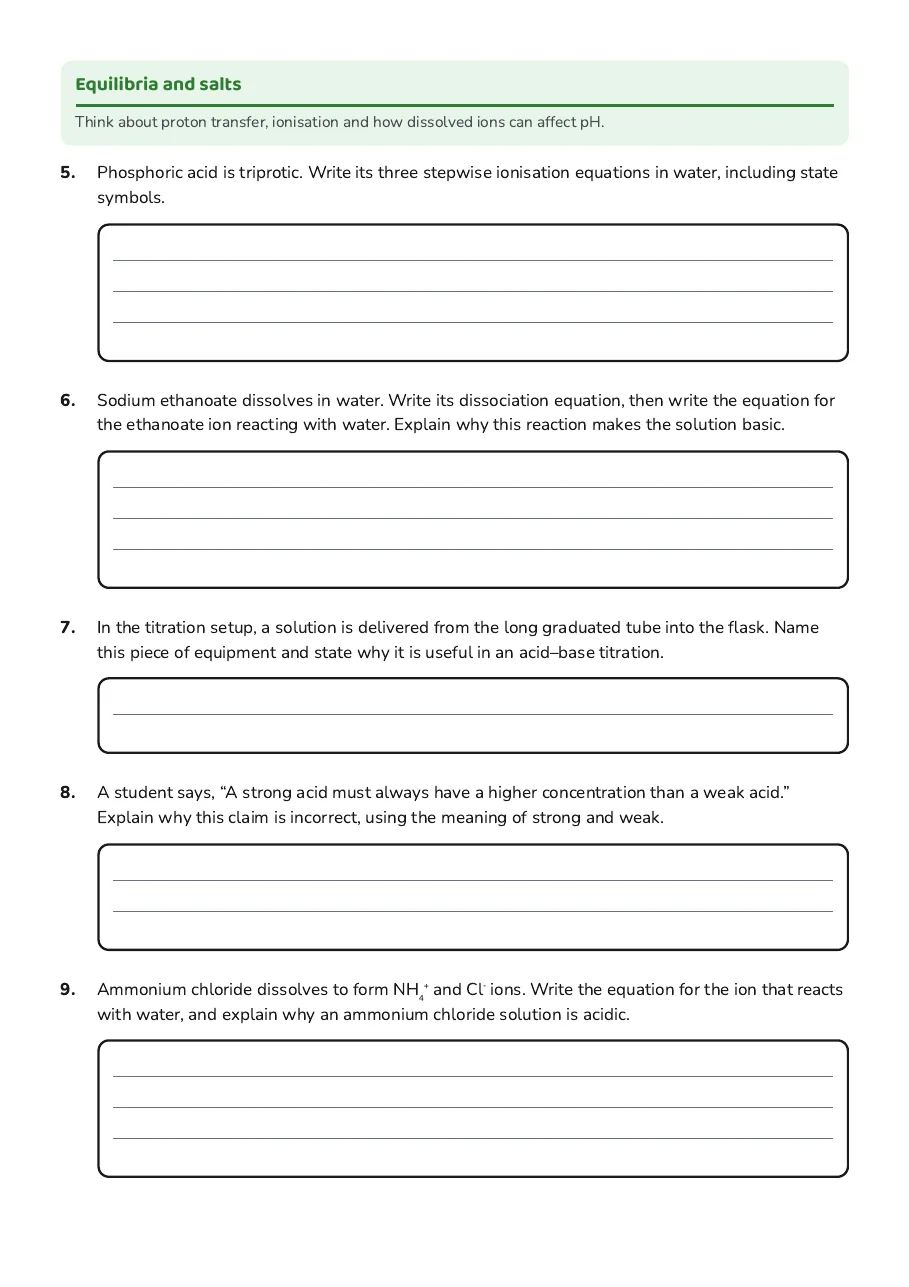
Equilibria and salts
Think about proton transfer, ionisation and how dissolved ions can affect pH.
5.Phosphoric acid is triprotic. Write its three stepwise ionisation equations in water, including state symbols.
6.Sodium ethanoate dissolves in water. Write its dissociation equation, then write the equation for the ethanoate ion reacting with water. Explain why this reaction makes the solution basic.
7.In the titration setup, a solution is delivered from the long graduated tube into the flask. Name this piece of equipment and state why it is useful in an acid–base titration.
8.A student says, “A strong acid must always have a higher concentration than a weak acid.” Explain why this claim is incorrect, using the meaning of strong and weak.
9.Ammonium chloride dissolves to form NH₄⁺ and Cl⁻ ions. Write the equation for the ion that reacts with water, and explain why an ammonium chloride solution is acidic.
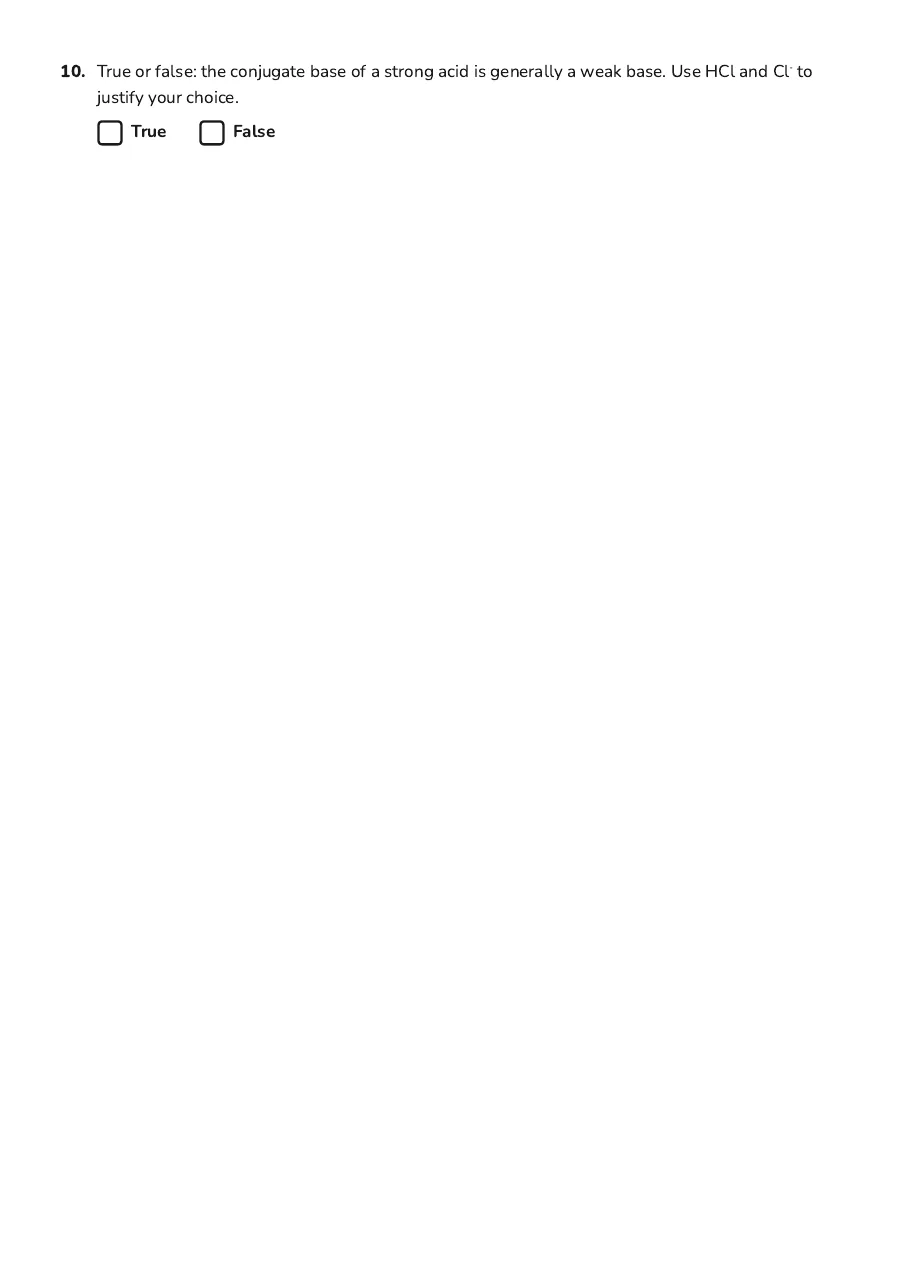
10.True or false: the conjugate base of a strong acid is generally a weak base. Use HCl and Cl⁻ to justify your choice.
TrueFalse
3 printable pages
Page 1
Page 2
Page 3
About This Worksheet
Free in Kuraplan
Sign up free, grab the PDF, and customize it for your class.
Print-Ready
Formatted for standard paper. Clean layout, easy to read.
AI-Generated
Created with Kuraplan's AI, designed for real classroom use.
For Teachers & Parents
Use in classrooms, for homework, tutoring, or homeschool.
Need a custom version of this worksheet?
Kuraplan's AI generates custom worksheets in seconds — differentiated for every learner, aligned to your curriculum.
Generate Custom Worksheets — Free No credit card Curriculum-aligned Under 60 seconds
More Science Worksheets
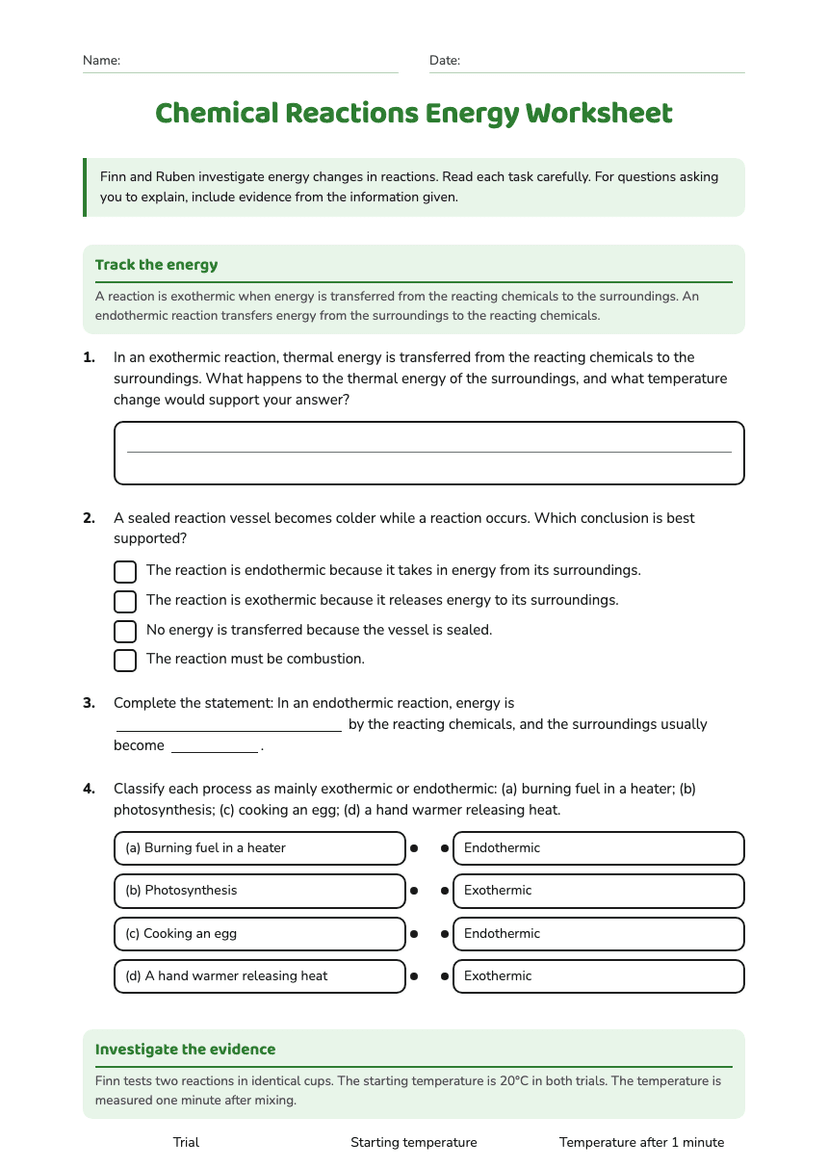
Chemical Reactions Energy Worksheet
Free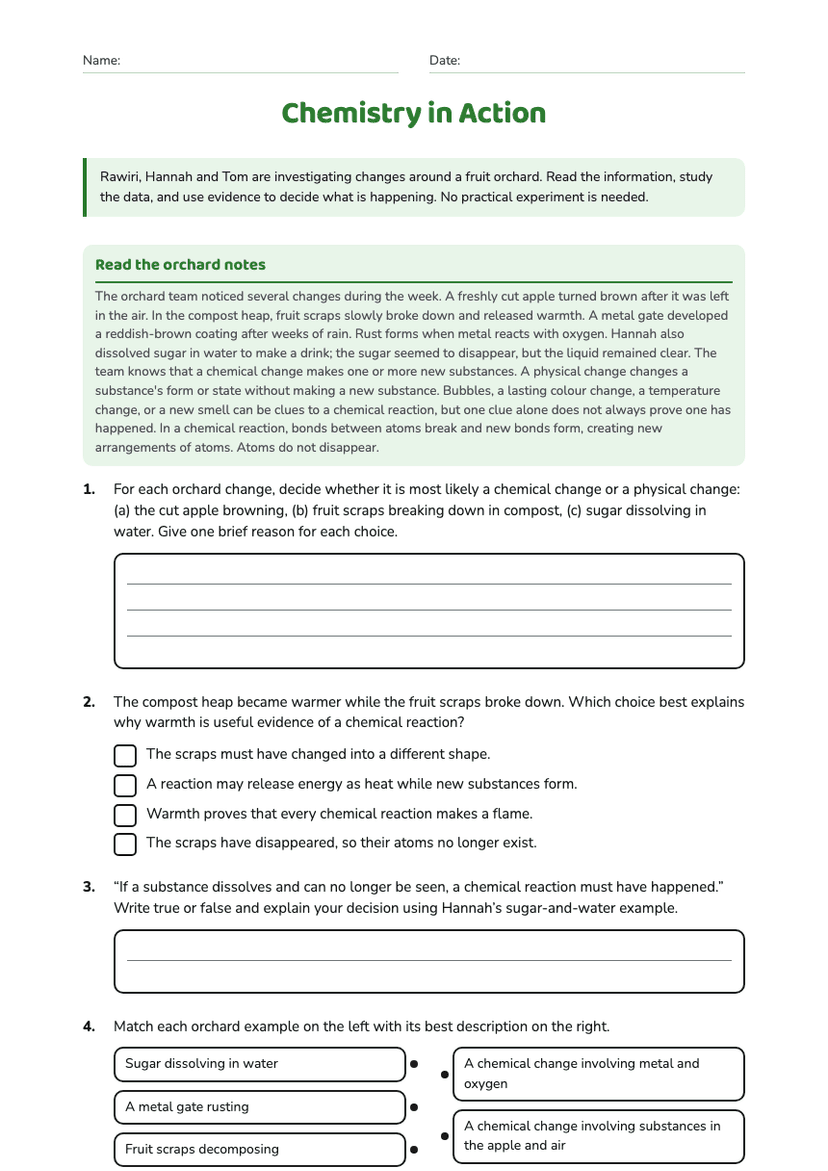
Year 7
Chemistry in Action
Free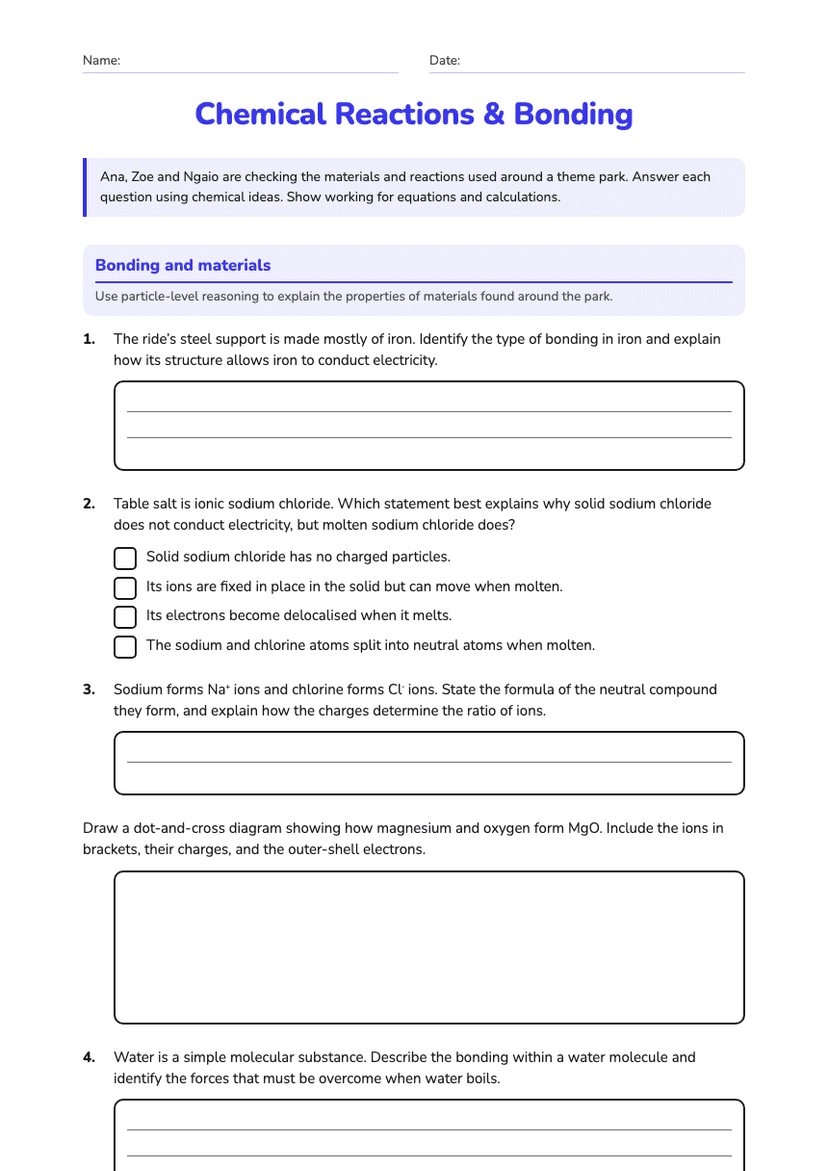
Year 11
Chemical Reactions & Bonding
Free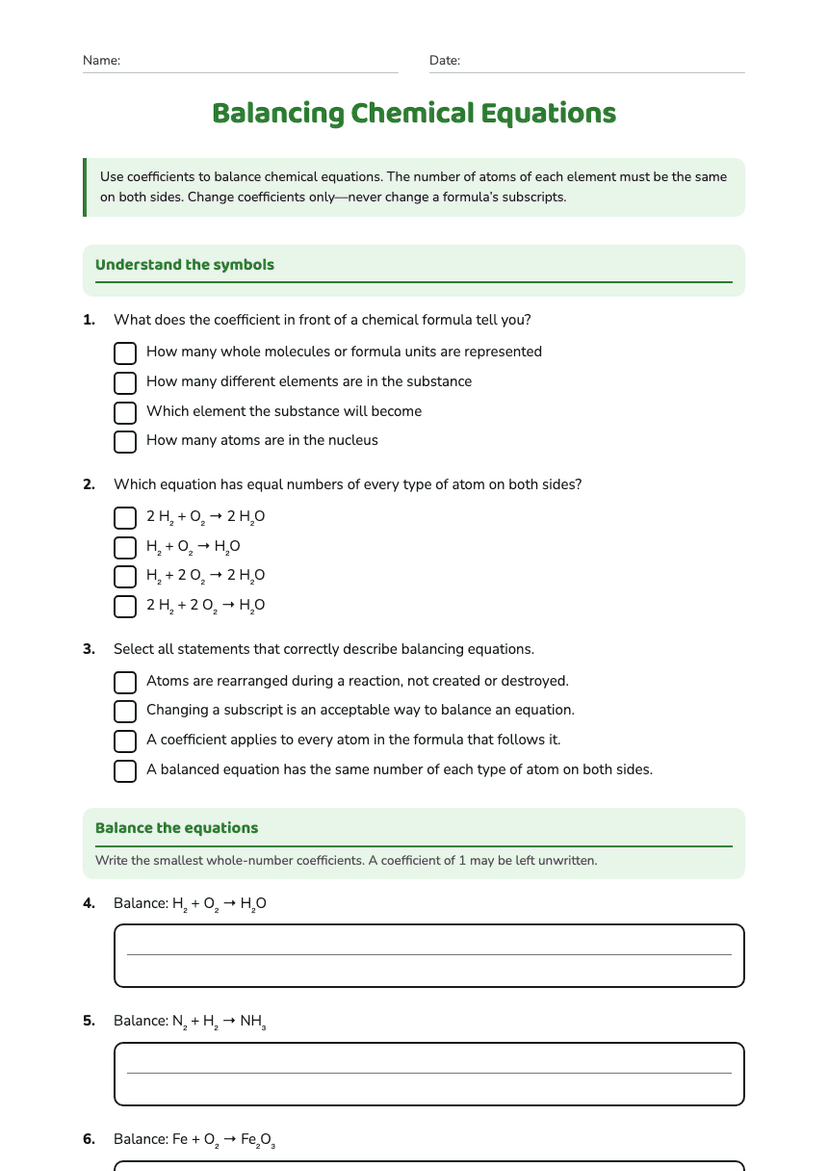
Year 7–8
Balancing Chemical Equations
Free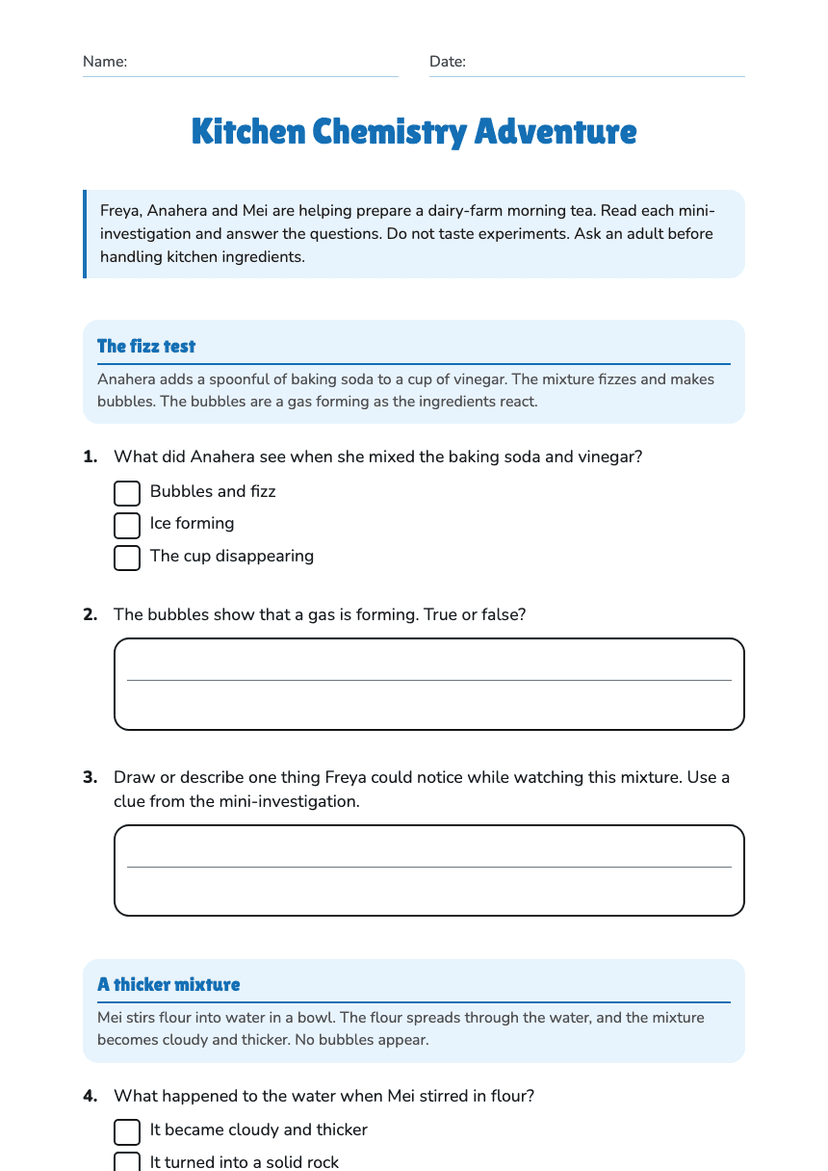
Year 2
Kitchen Chemistry Adventure
Free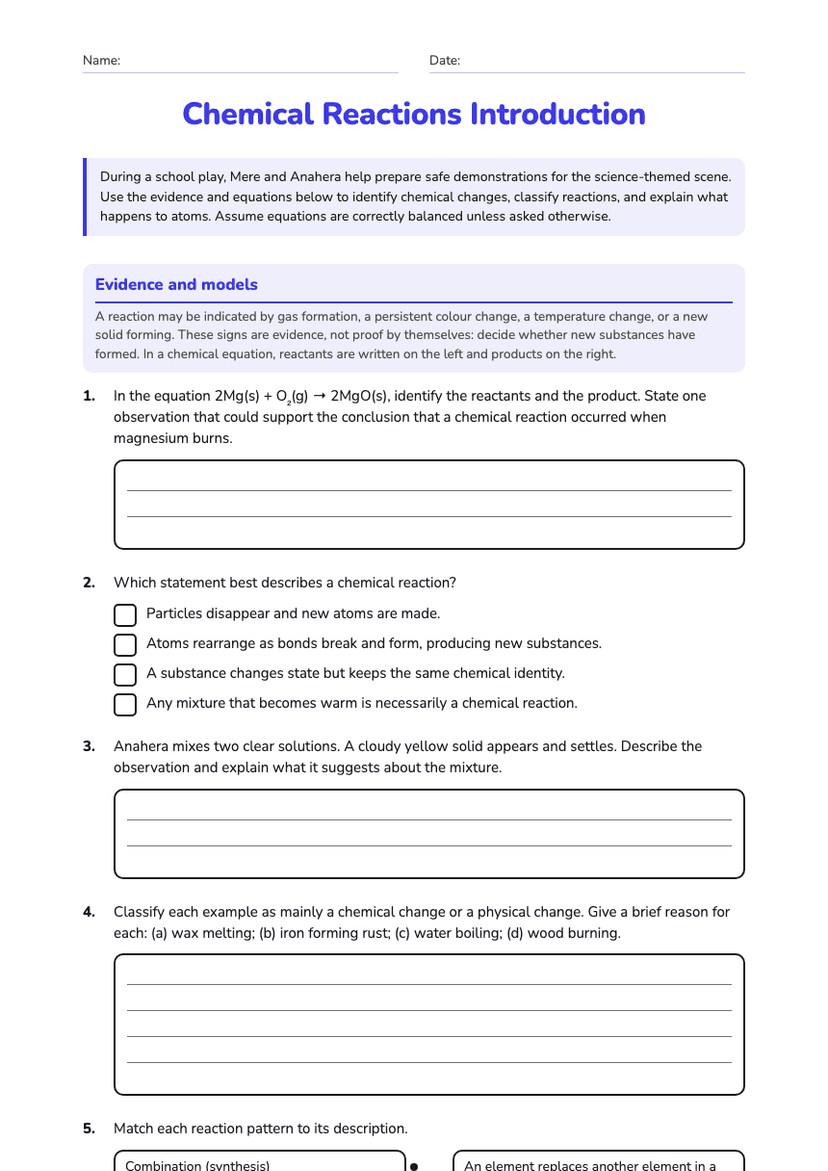
Year 11
Chemical Reactions Introduction
Free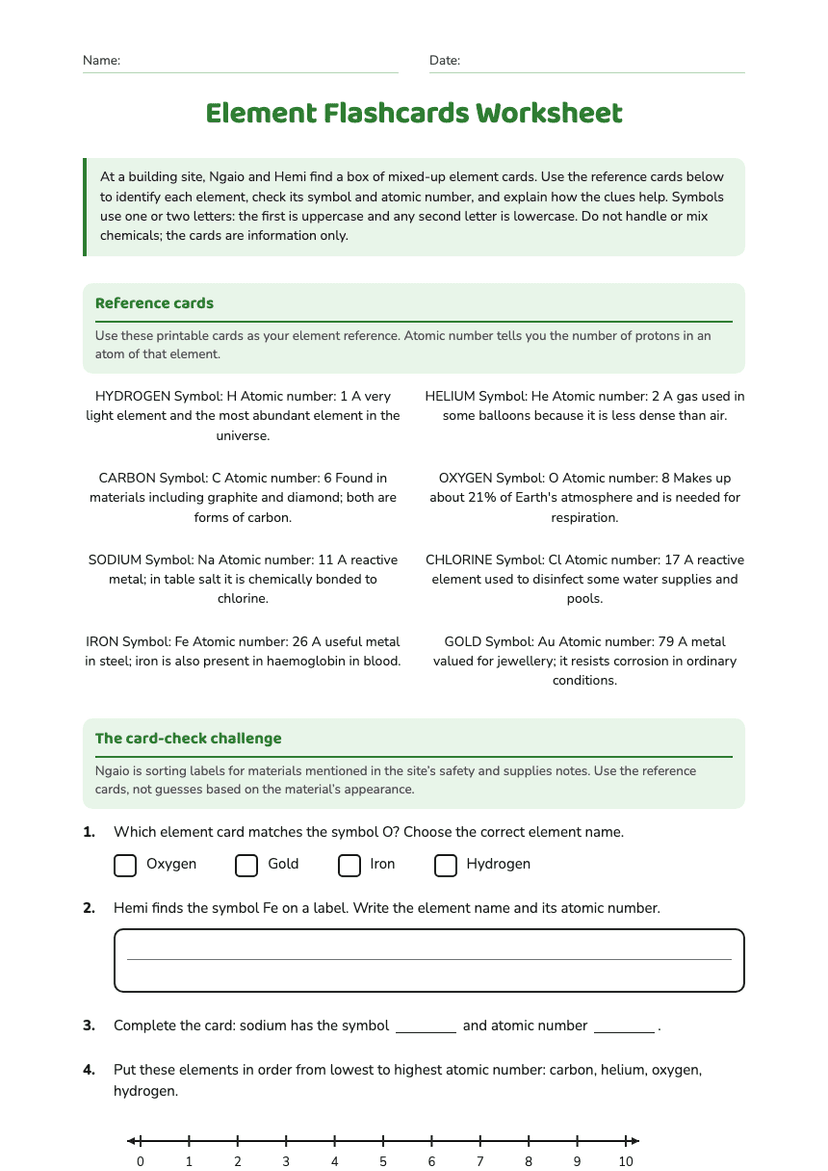
Year 9
Element Flashcards Worksheet
Free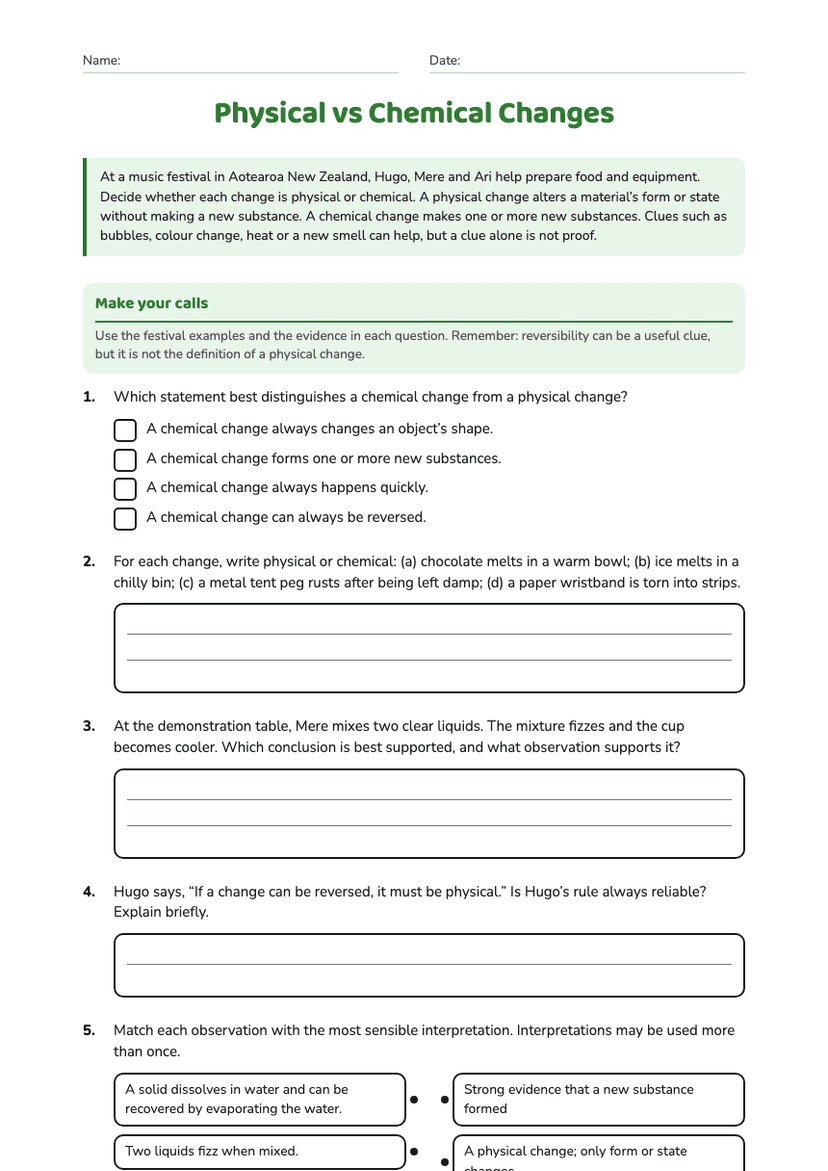
Year 7–8