Bread Sensory Investigation
A free science worksheet ready for your classroom. Open in Kuraplan to grab the print-ready PDF, customize it for your students, or generate a fresh version in seconds.
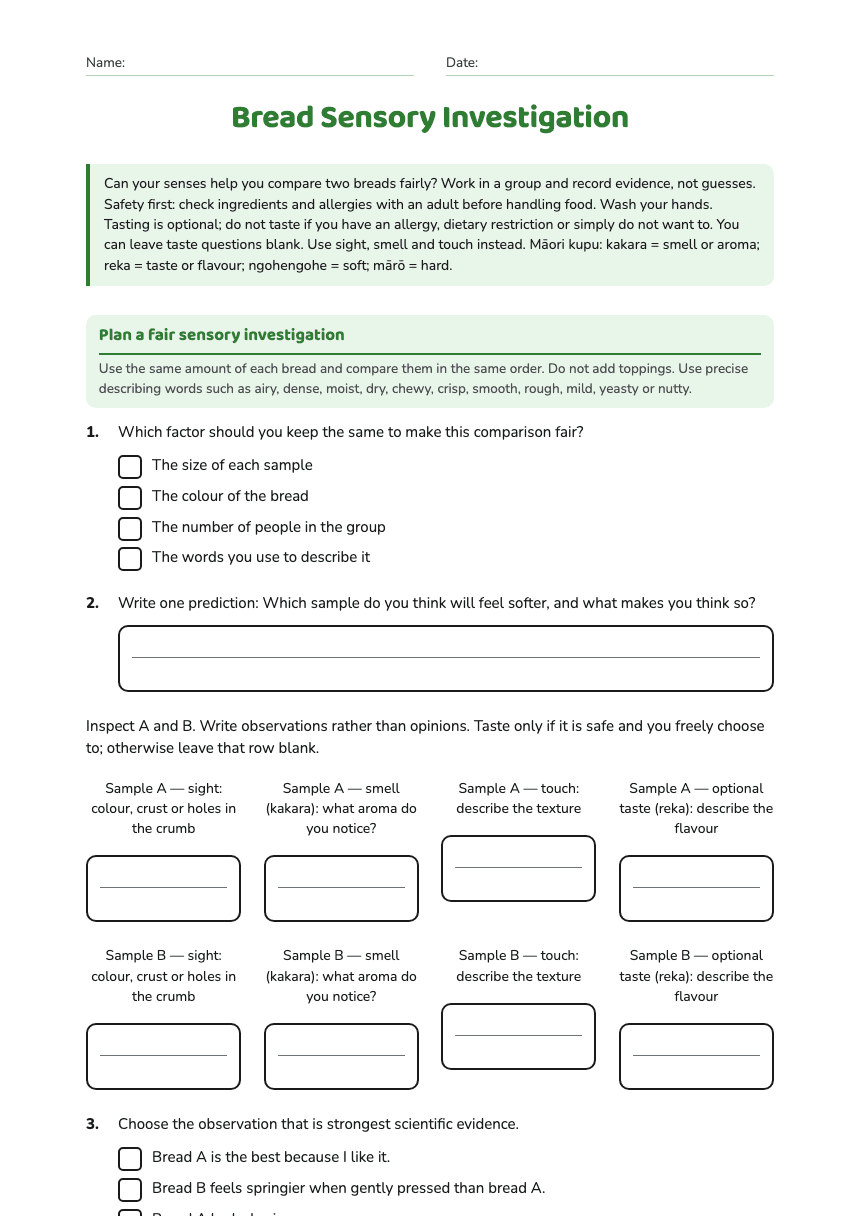
Bread Sensory Investigation
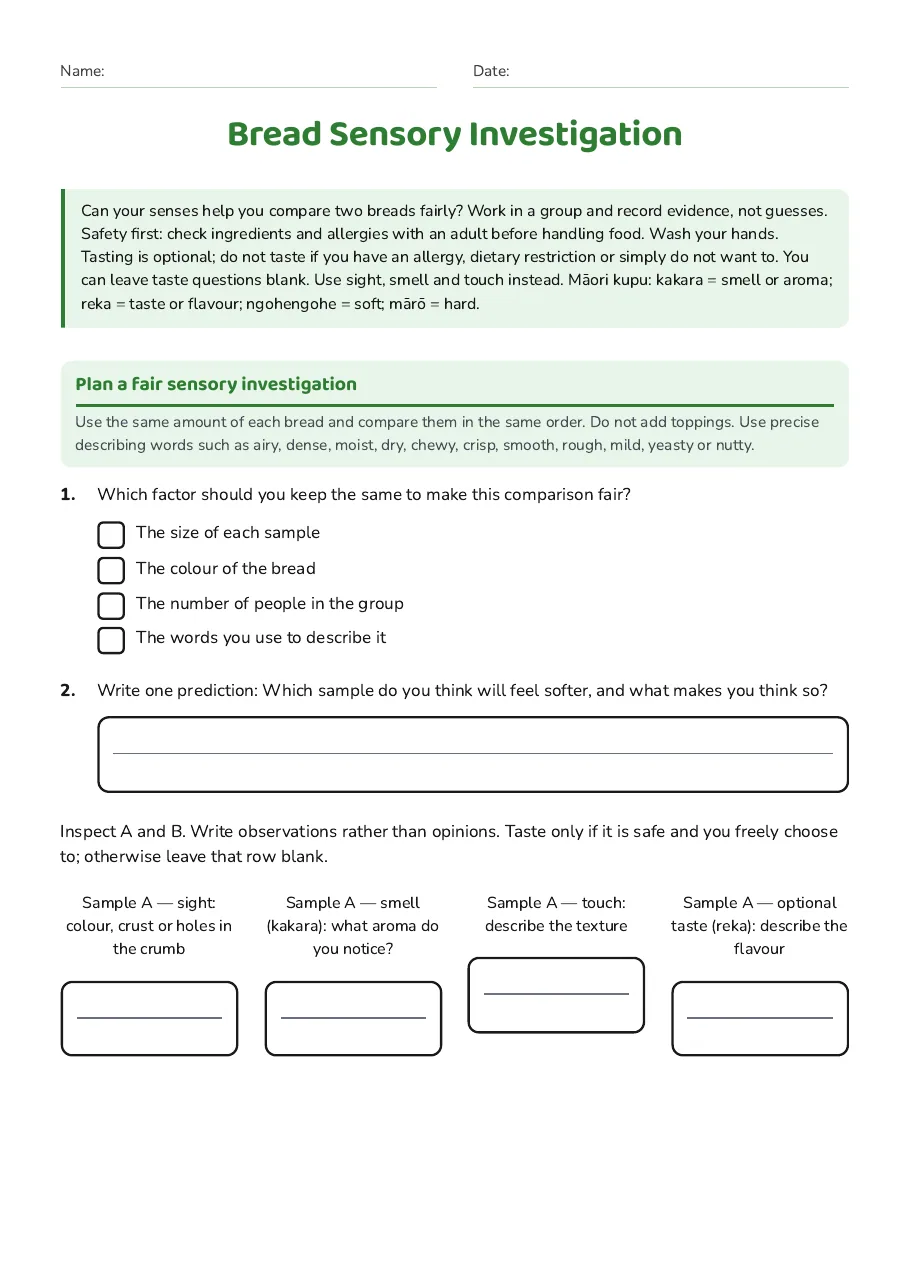
Plan a fair sensory investigation
Use the same amount of each bread and compare them in the same order. Do not add toppings. Use precise describing words such as airy, dense, moist, dry, chewy, crisp, smooth, rough, mild, yeasty or nutty.
- The size of each sample
- The colour of the bread
- The number of people in the group
- The words you use to describe it
Sample A — sight: colour, crust or holes in the crumb
Sample A — smell (kakara): what aroma do you notice?
Sample A — touch: describe the texture
Sample A — optional taste (reka): describe the flavour
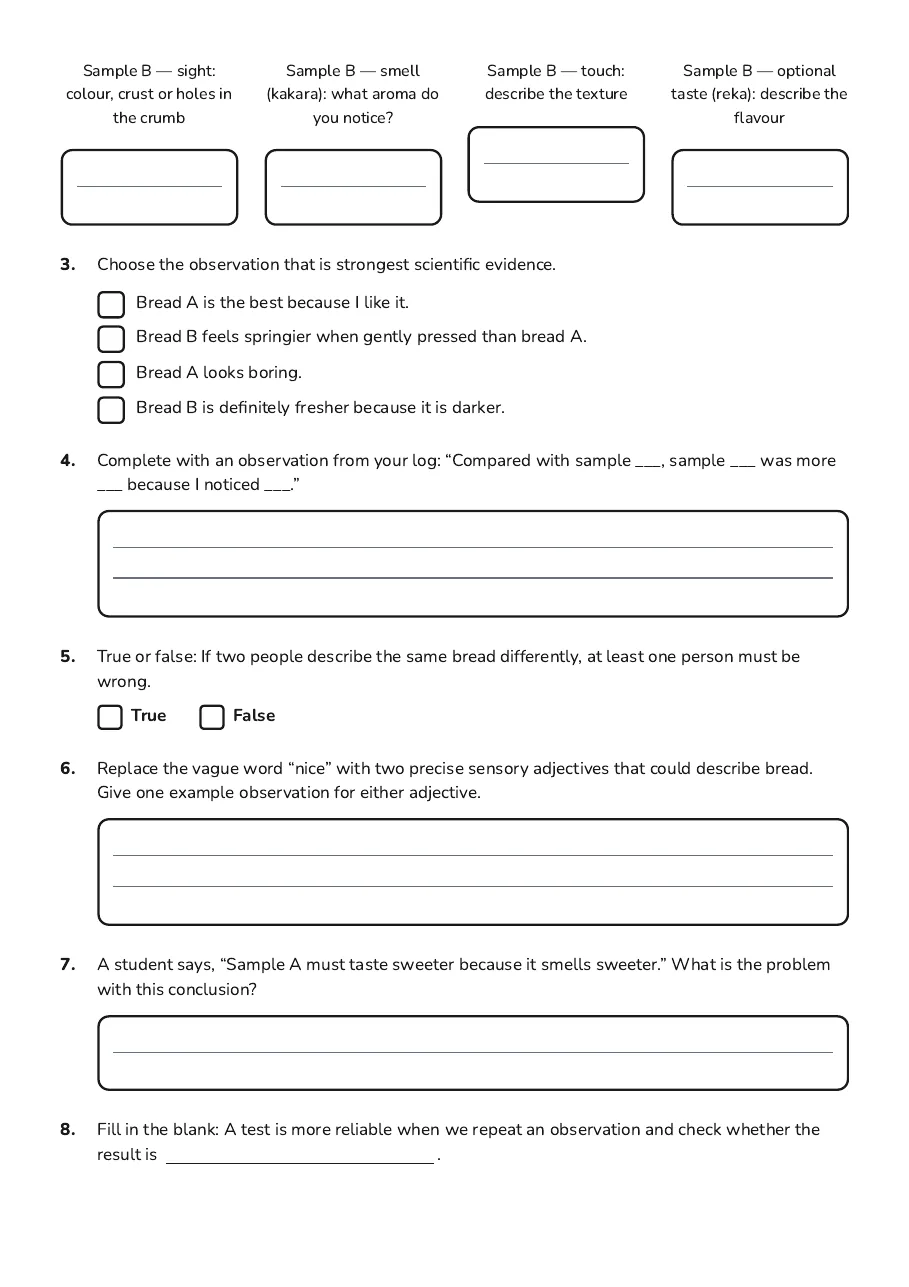
Sample B — sight: colour, crust or holes in the crumb
Sample B — smell (kakara): what aroma do you notice?
Sample B — touch: describe the texture
Sample B — optional taste (reka): describe the flavour
- Bread A is the best because I like it.
- Bread B feels springier when gently pressed than bread A.
- Bread A looks boring.
- Bread B is definitely fresher because it is darker.
3 printable pages
Page 1
Page 2

Page 3
About This Worksheet
Free in Kuraplan
Sign up free, grab the PDF, and customize it for your class.
Print-Ready
Formatted for standard paper. Clean layout, easy to read.
AI-Generated
Created with Kuraplan's AI, designed for real classroom use.
For Teachers & Parents
Use in classrooms, for homework, tutoring, or homeschool.
Need a custom version of this worksheet?
Kuraplan's AI generates custom worksheets in seconds — differentiated for every learner, aligned to your curriculum.
Generate Custom Worksheets — FreeMore Science Worksheets
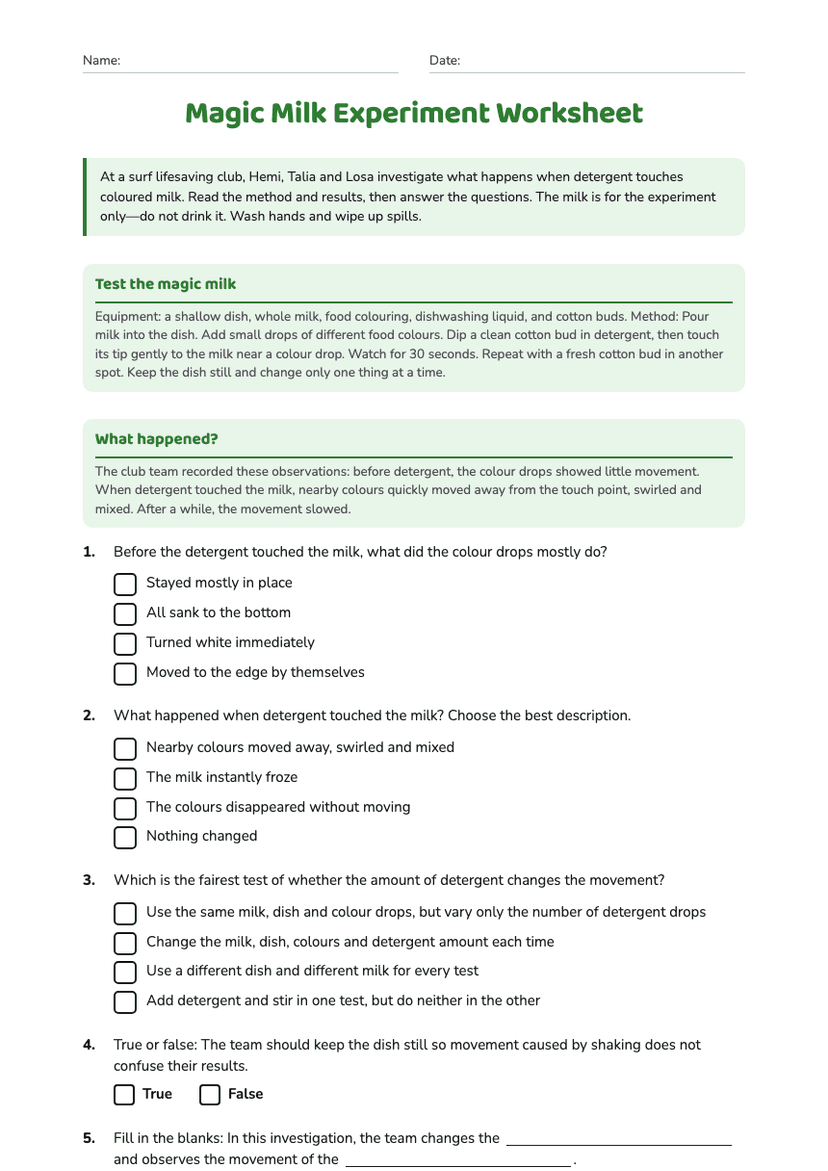
Magic Milk Experiment Worksheet
Free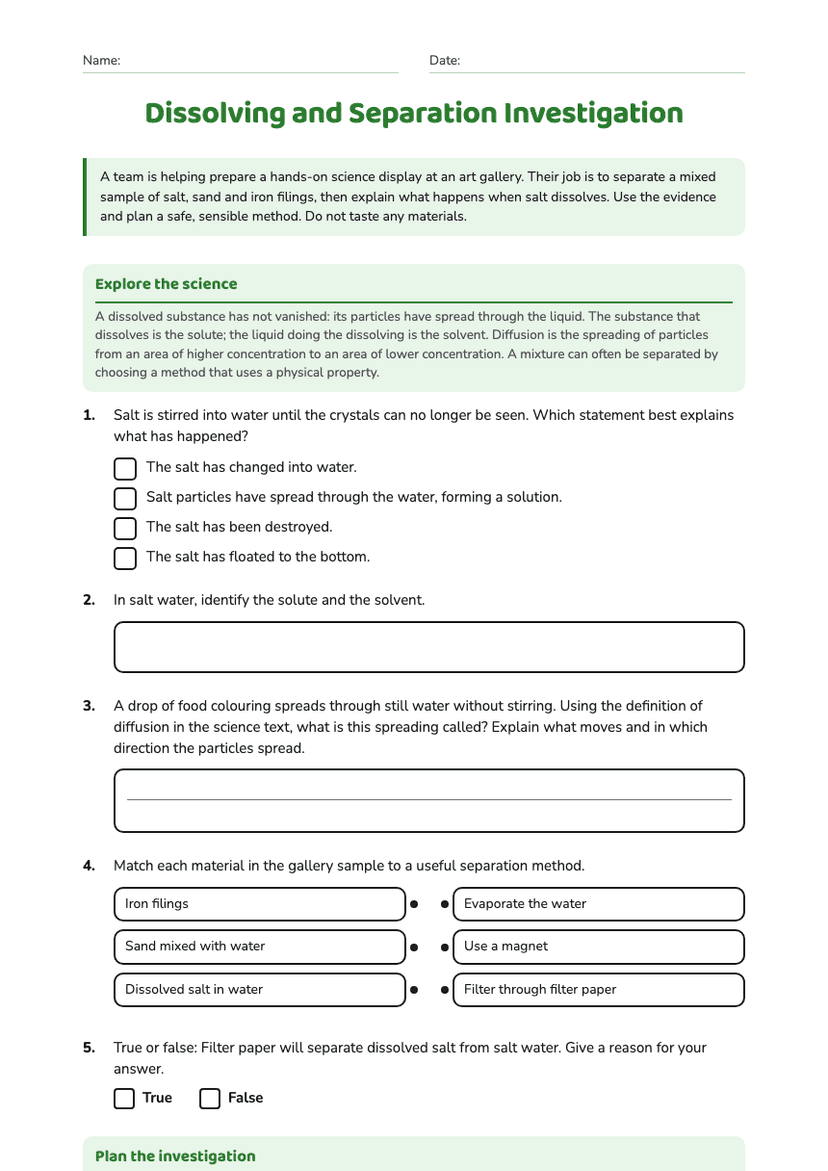
Dissolving and Separation Investigation
Free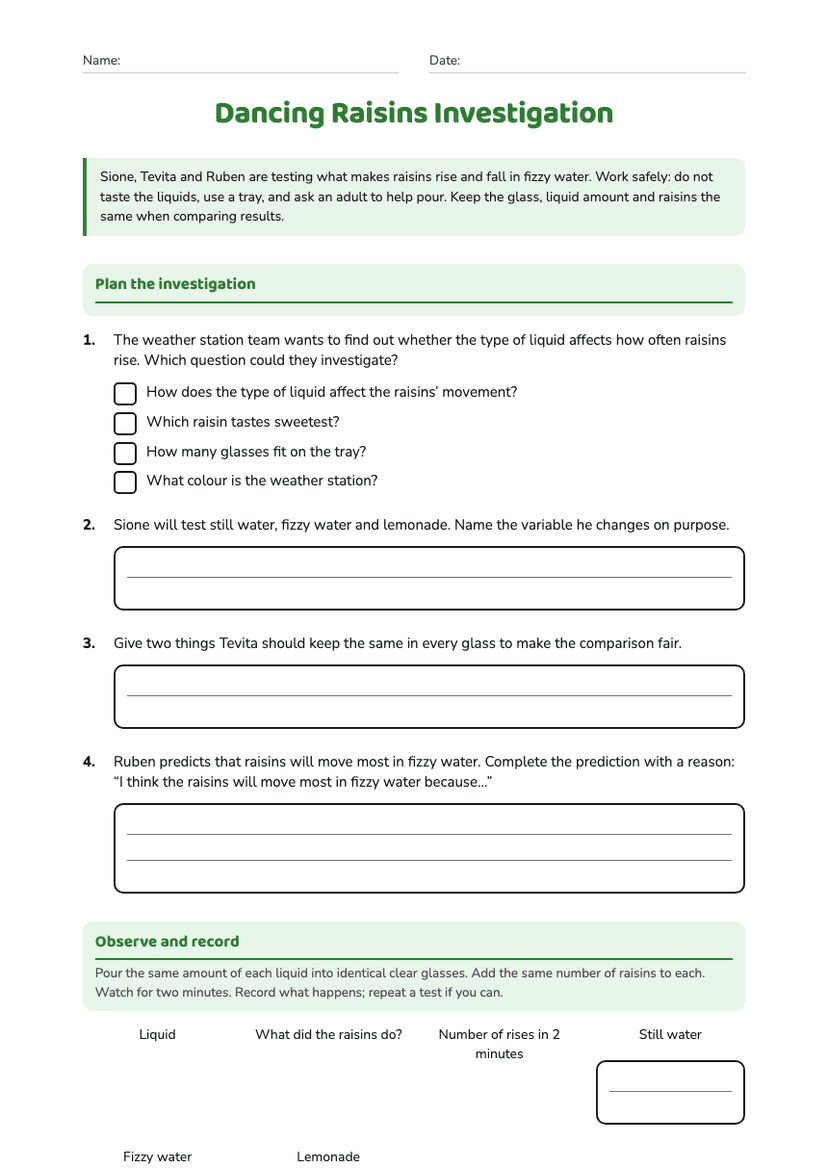
Dancing Raisins Investigation
Free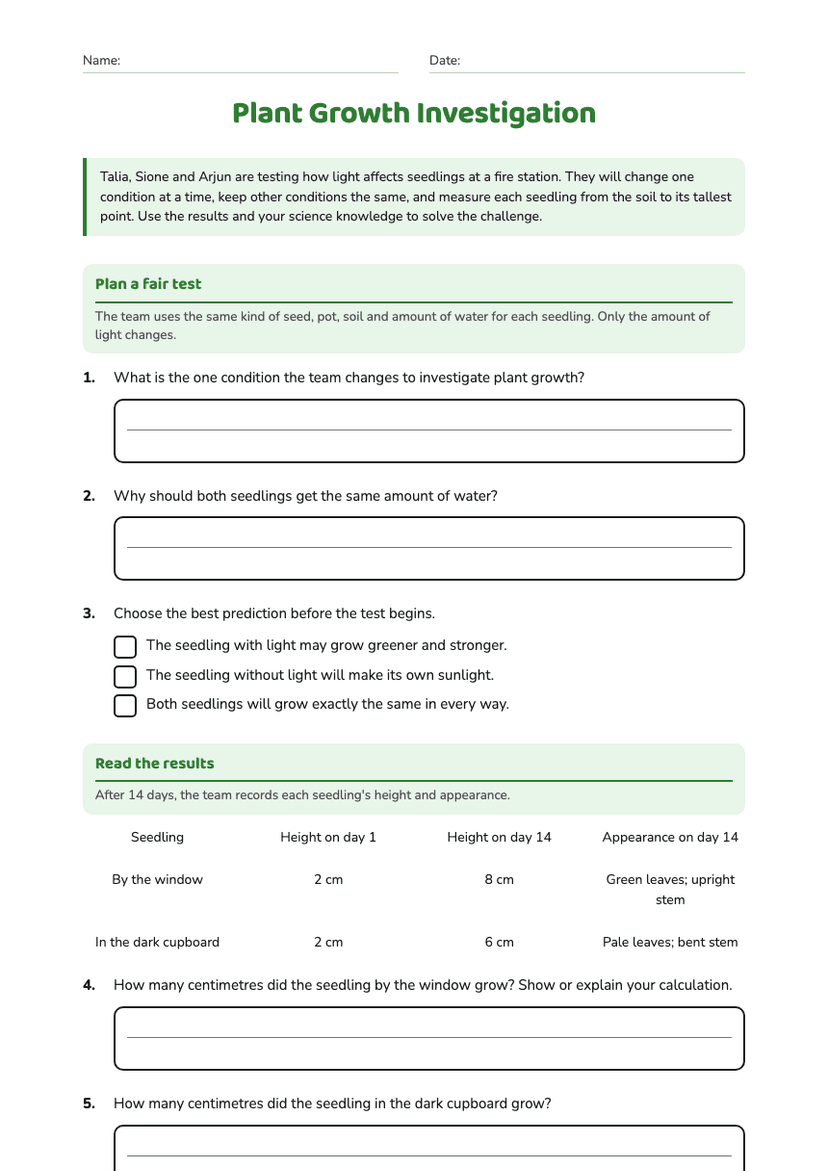
Plant Growth Investigation
Free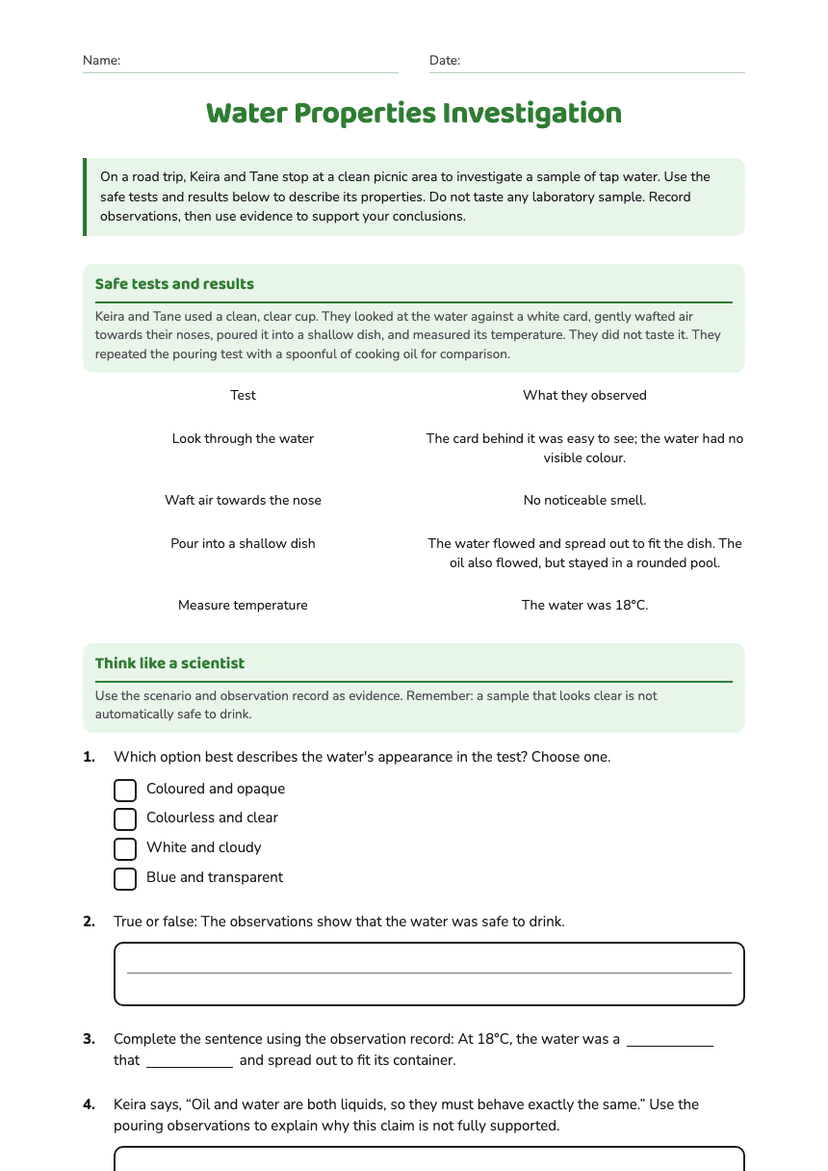
Water Properties Investigation
Free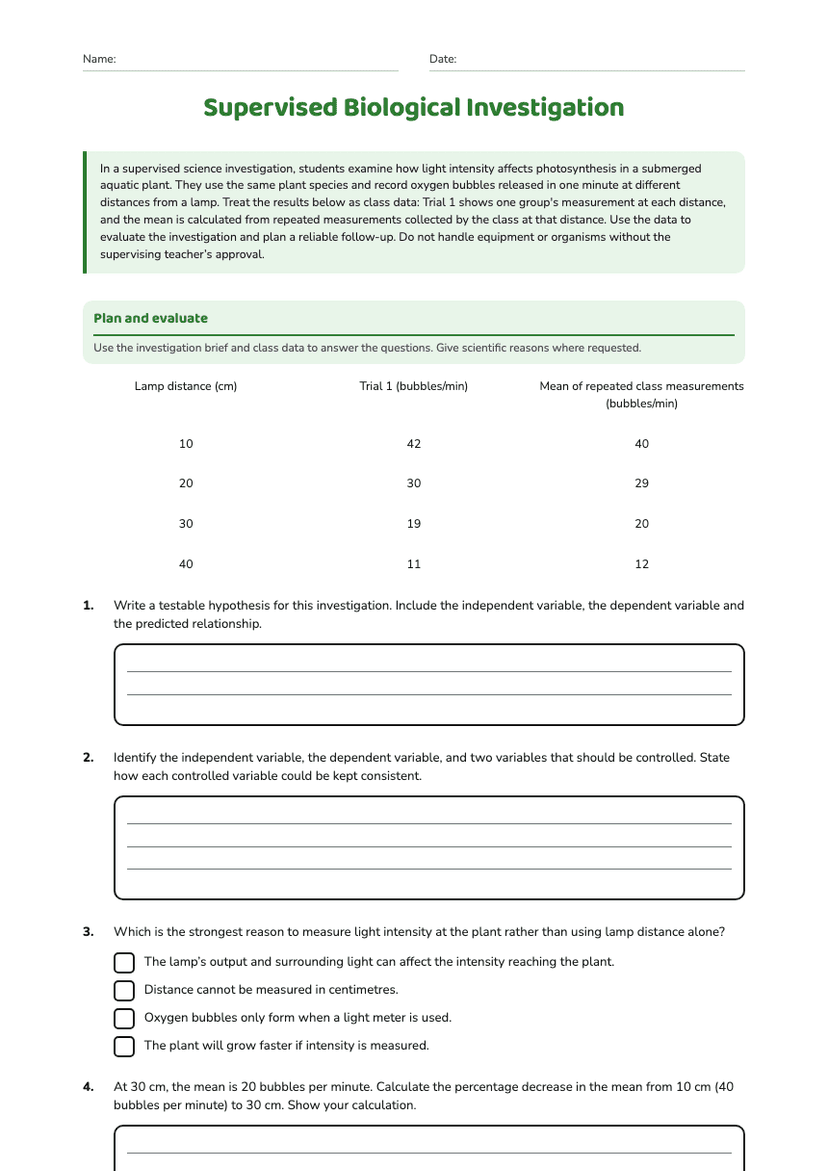
Supervised Biological Investigation
Free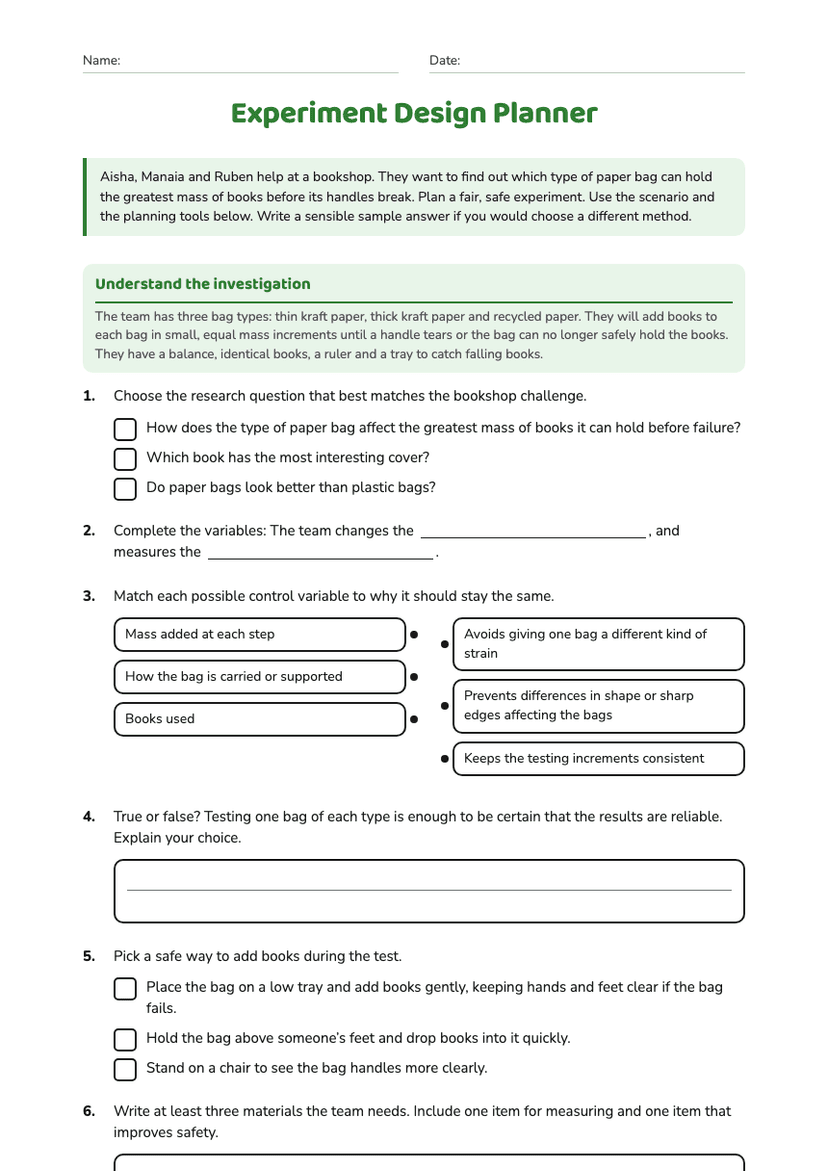
Experiment Design Planner
Free