Colour Change Investigation Worksheet
A free science worksheet ready for your classroom. Open in Kuraplan to grab the print-ready PDF, customize it for your students, or generate a fresh version in seconds.
Colour Change Investigation Worksheet
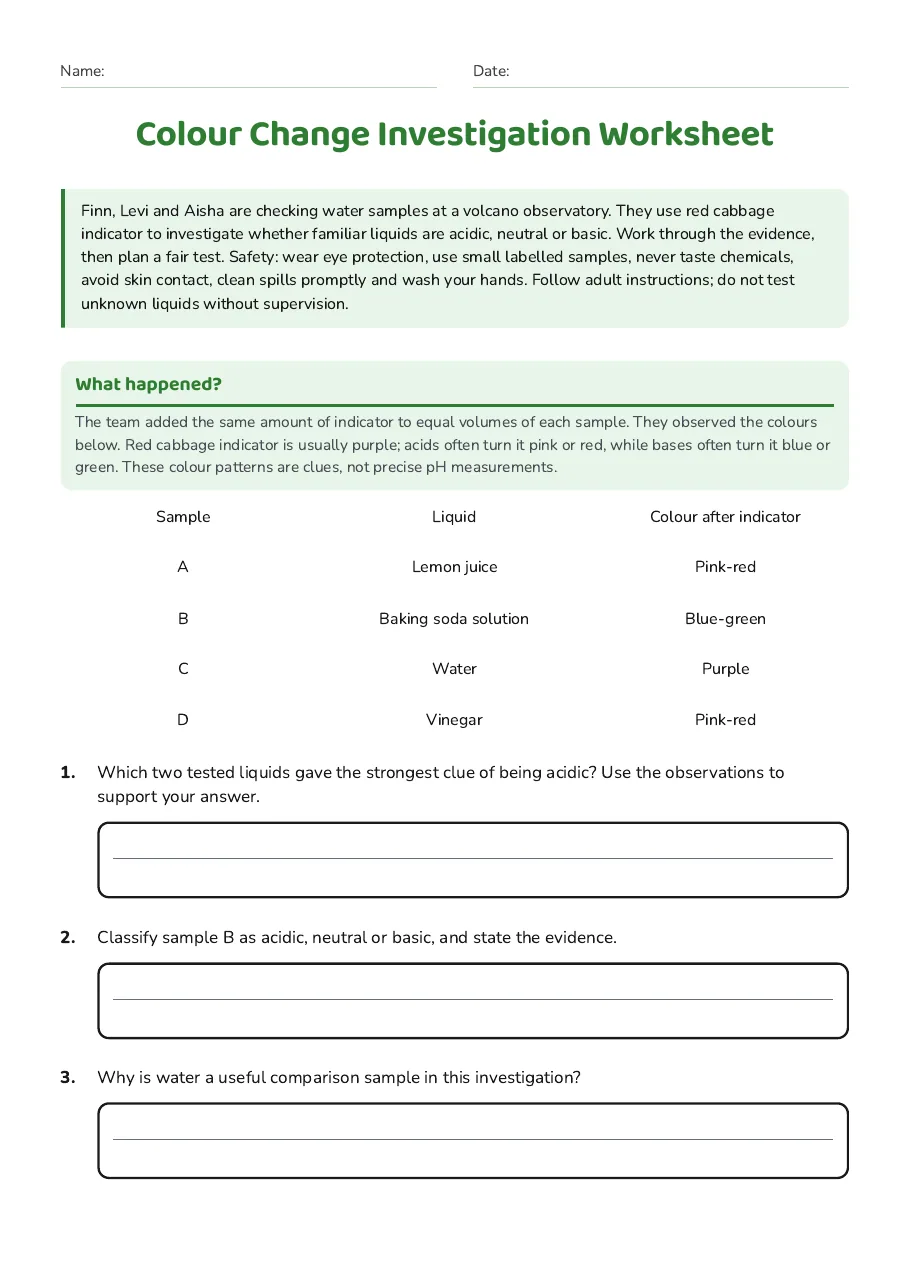
What happened?
The team added the same amount of indicator to equal volumes of each sample. They observed the colours below. Red cabbage indicator is usually purple; acids often turn it pink or red, while bases often turn it blue or green. These colour patterns are clues, not precise pH measurements.
Sample
Liquid
Colour after indicator
A
Lemon juice
Pink-red
B
Baking soda solution
Blue-green
C
Water
Purple
D
Vinegar
Pink-red
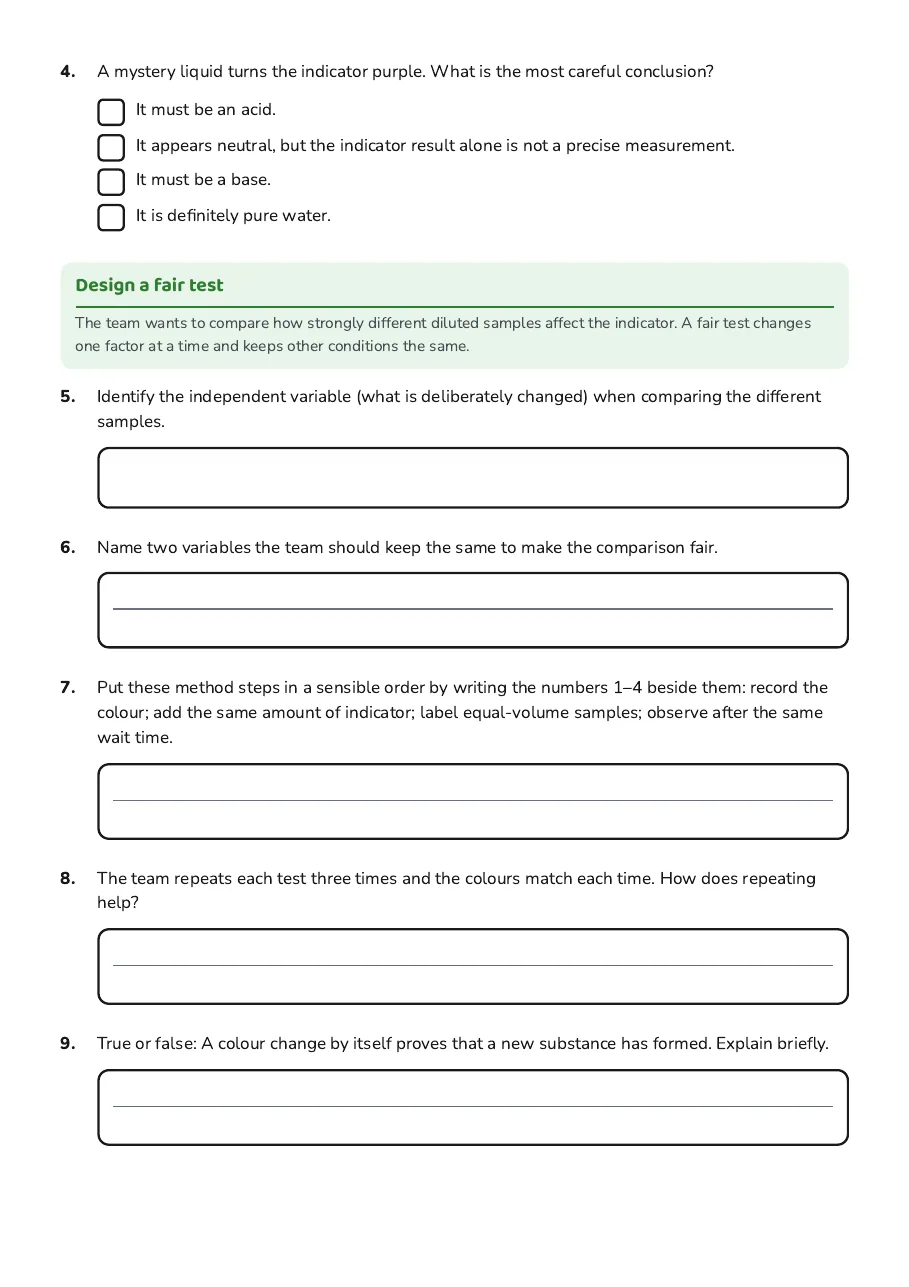
- It must be an acid.
- It appears neutral, but the indicator result alone is not a precise measurement.
- It must be a base.
- It is definitely pure water.
Design a fair test
The team wants to compare how strongly different diluted samples affect the indicator. A fair test changes one factor at a time and keeps other conditions the same.
3 printable pages
Page 1
Page 2

Page 3
About This Worksheet
Free in Kuraplan
Sign up free, grab the PDF, and customize it for your class.
Print-Ready
Formatted for standard paper. Clean layout, easy to read.
AI-Generated
Created with Kuraplan's AI, designed for real classroom use.
For Teachers & Parents
Use in classrooms, for homework, tutoring, or homeschool.
Need a custom version of this worksheet?
Kuraplan's AI generates custom worksheets in seconds — differentiated for every learner, aligned to your curriculum.
Generate Custom Worksheets — FreeMore Science Worksheets
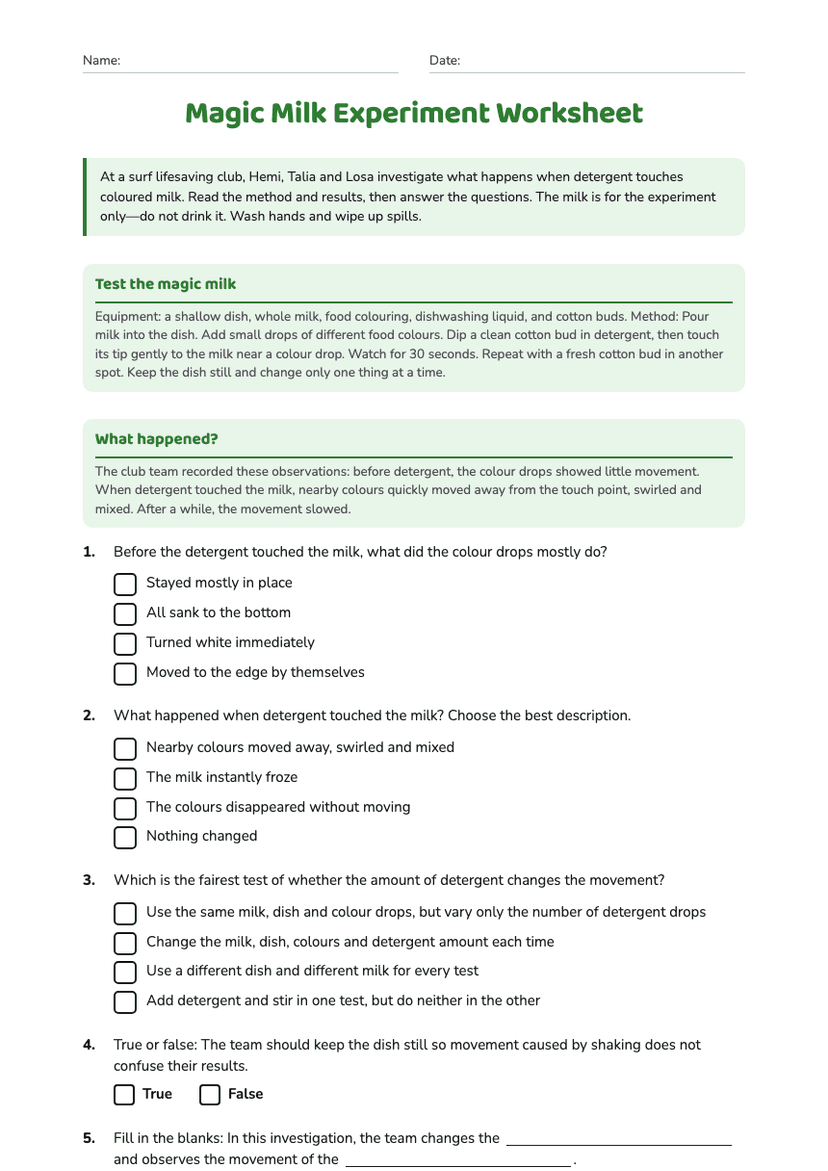
Magic Milk Experiment Worksheet
Free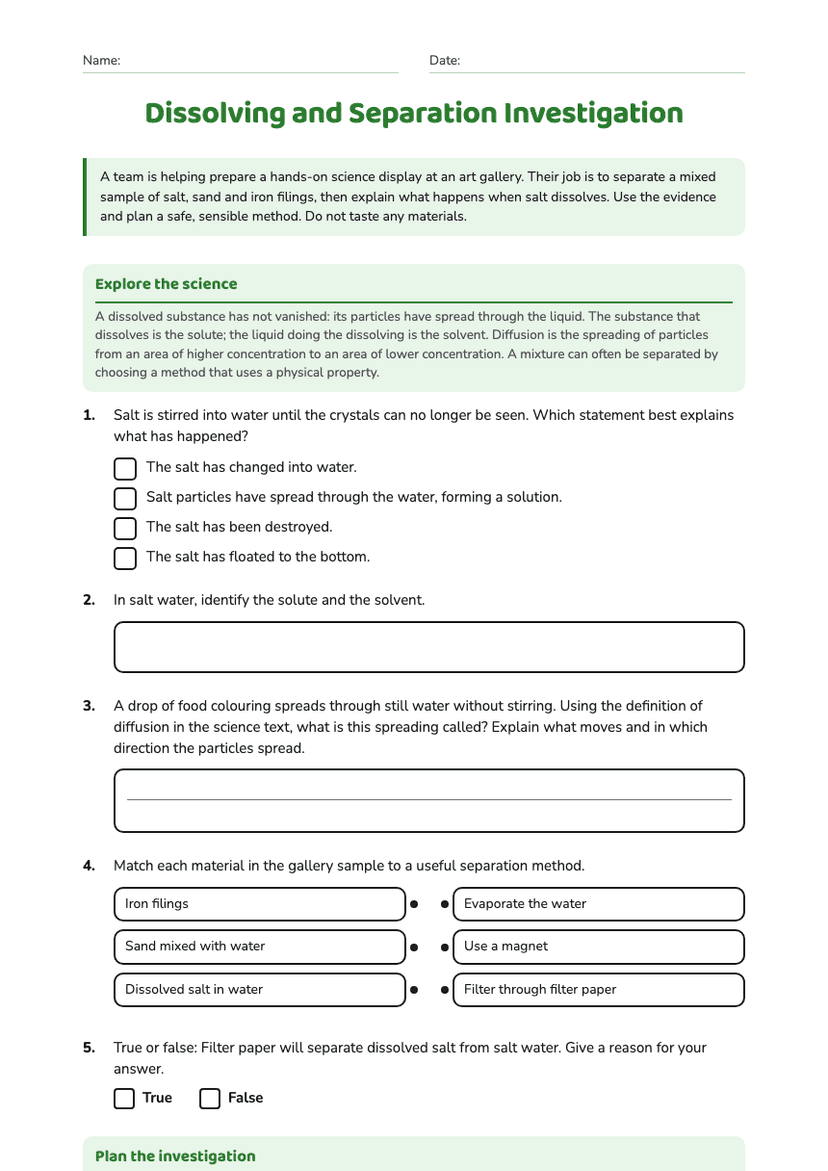
Dissolving and Separation Investigation
Free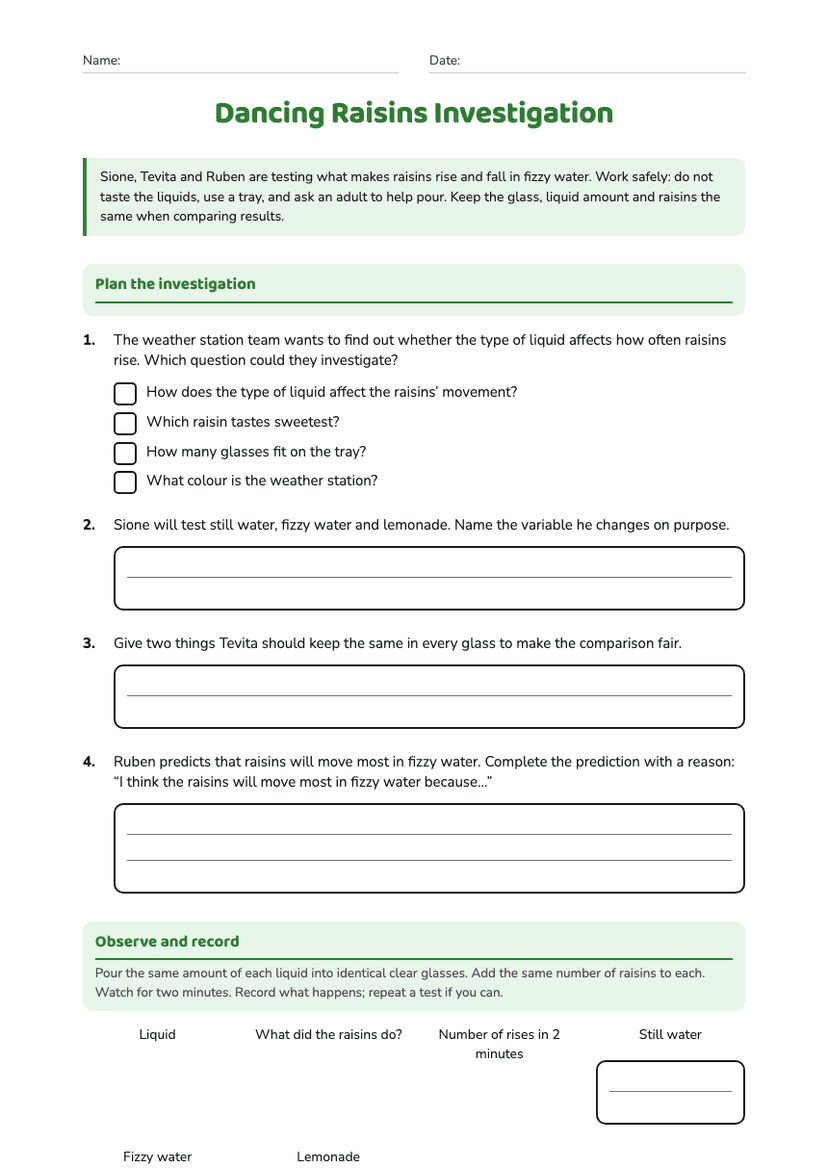
Dancing Raisins Investigation
Free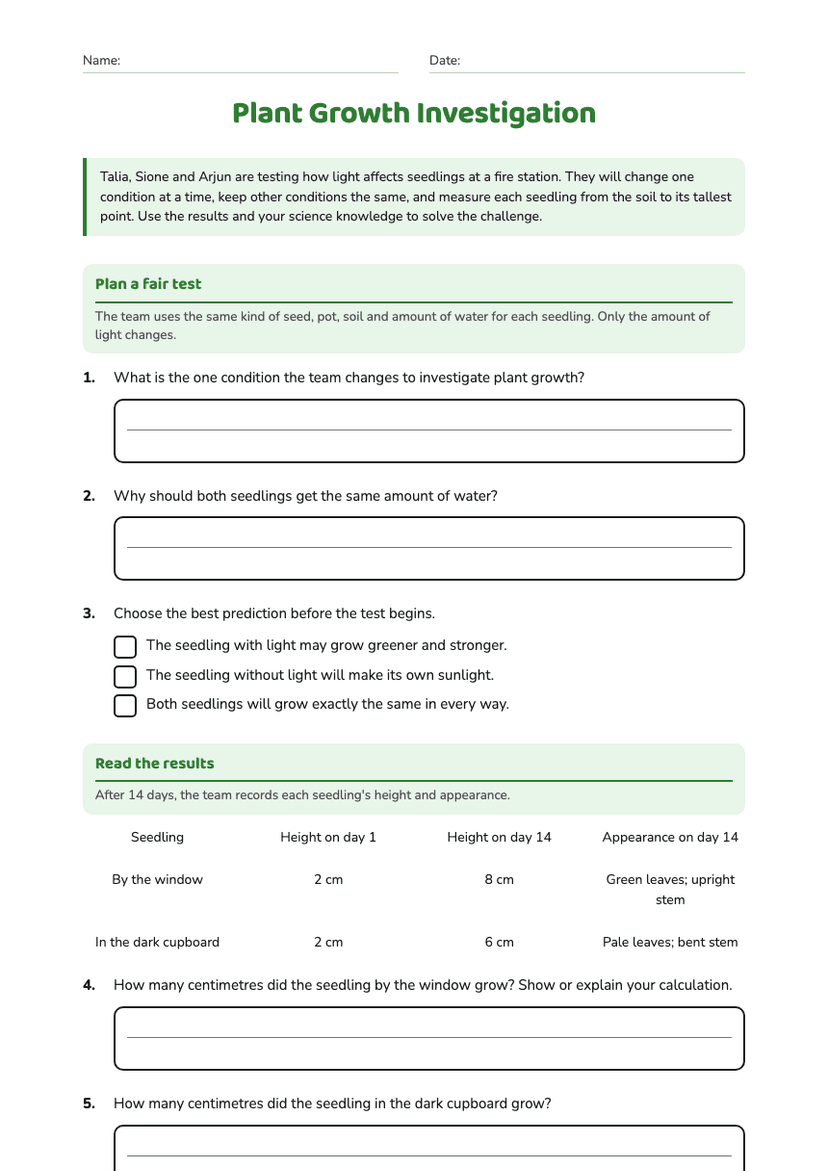
Plant Growth Investigation
Free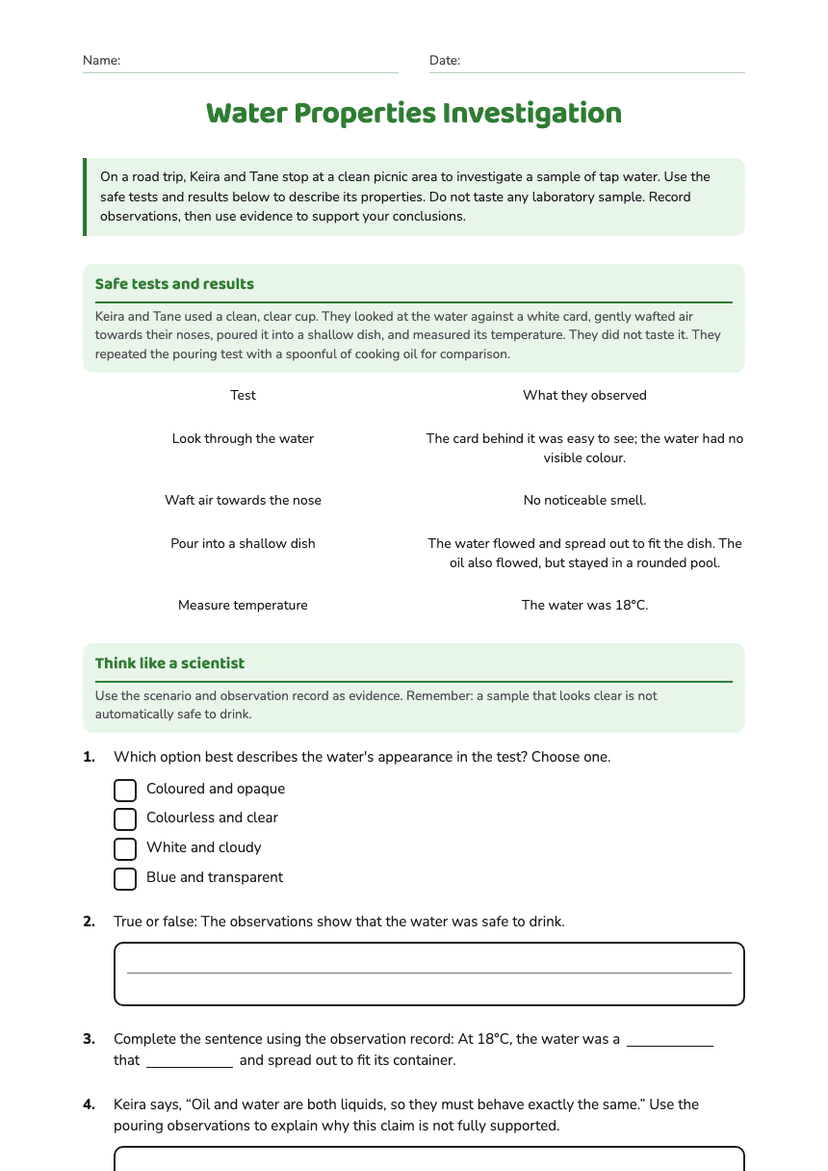
Water Properties Investigation
Free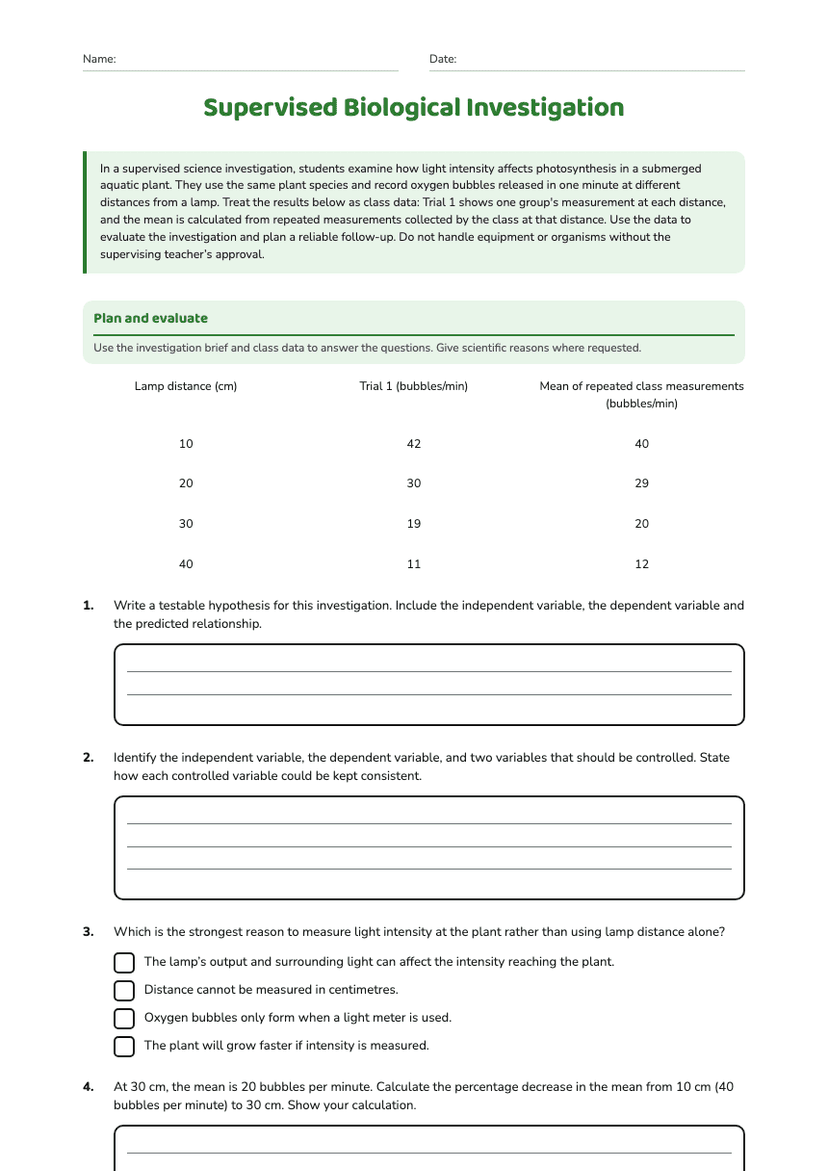
Supervised Biological Investigation
Free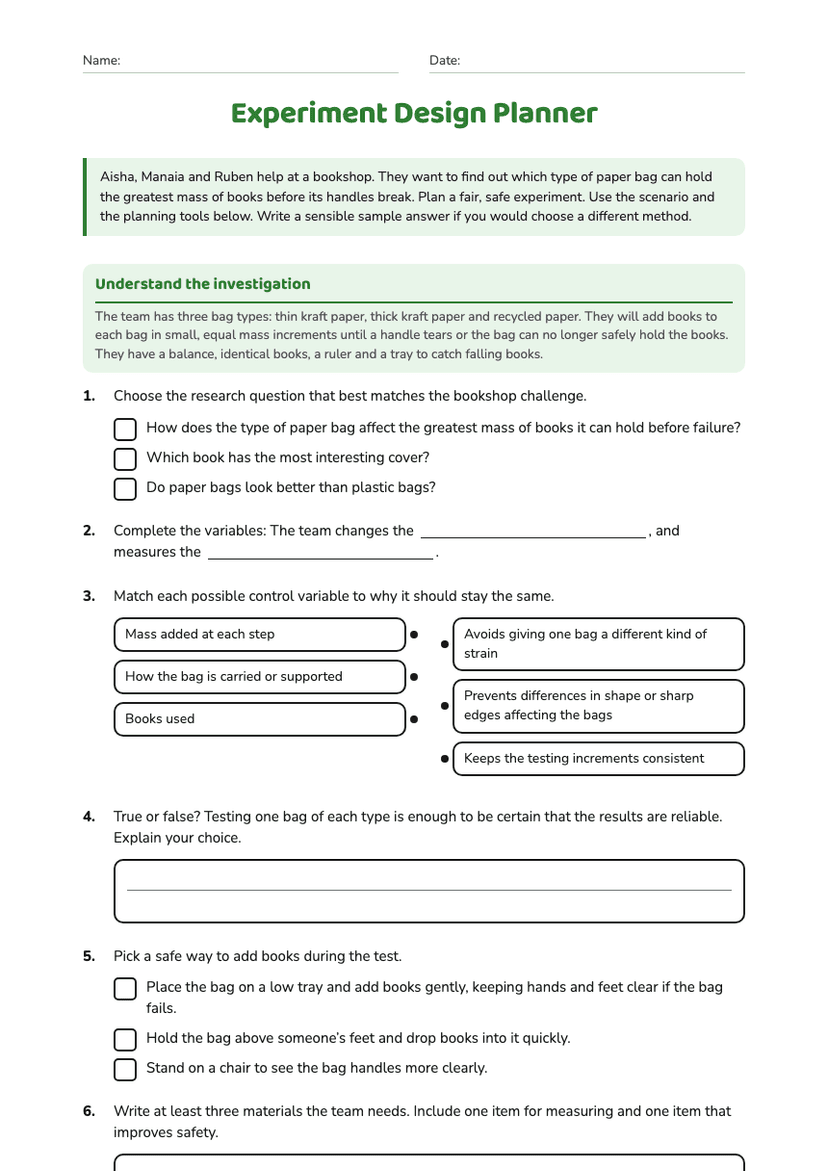
Experiment Design Planner
Free