ScienceFreePrintable
Environmental Detective Case Studies
A free science worksheet ready for your classroom. Open in Kuraplan to grab the print-ready PDF, customize it for your students, or generate a fresh version in seconds.
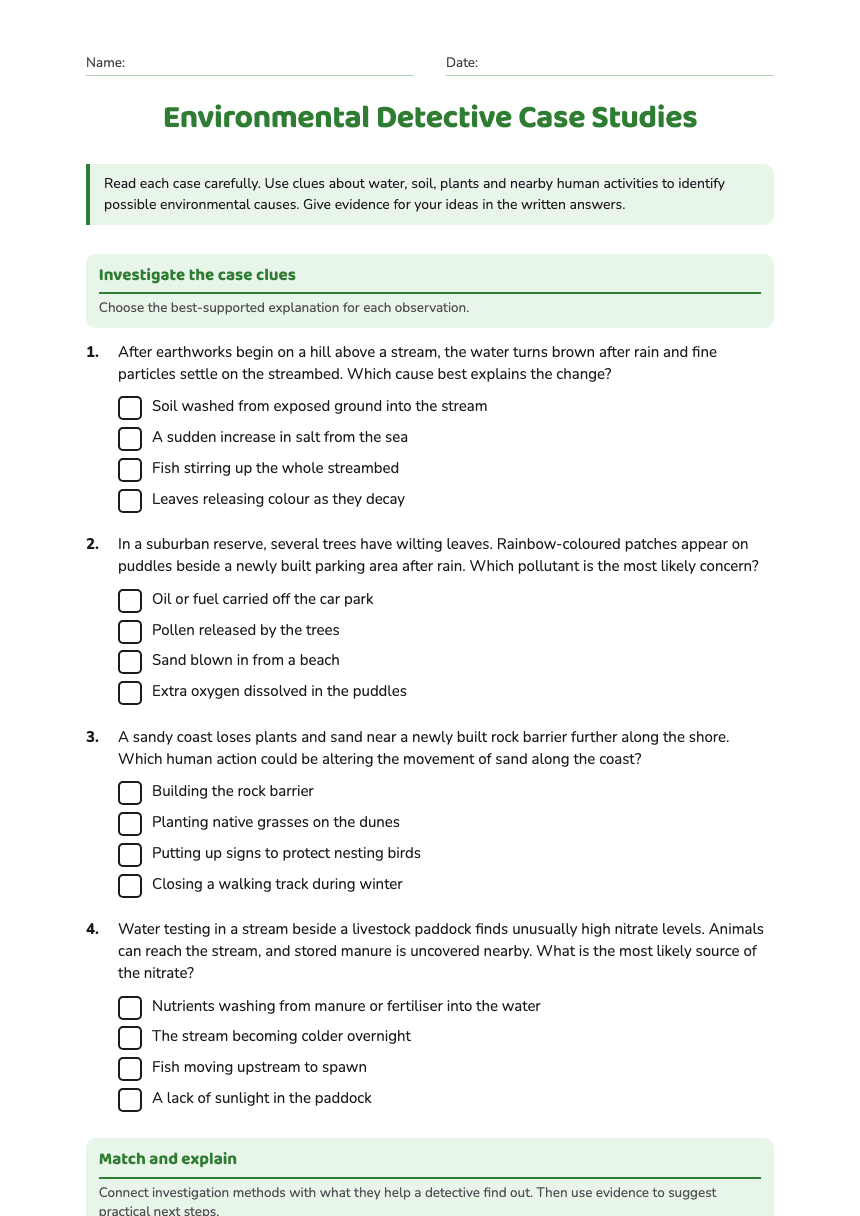
Name:Date:
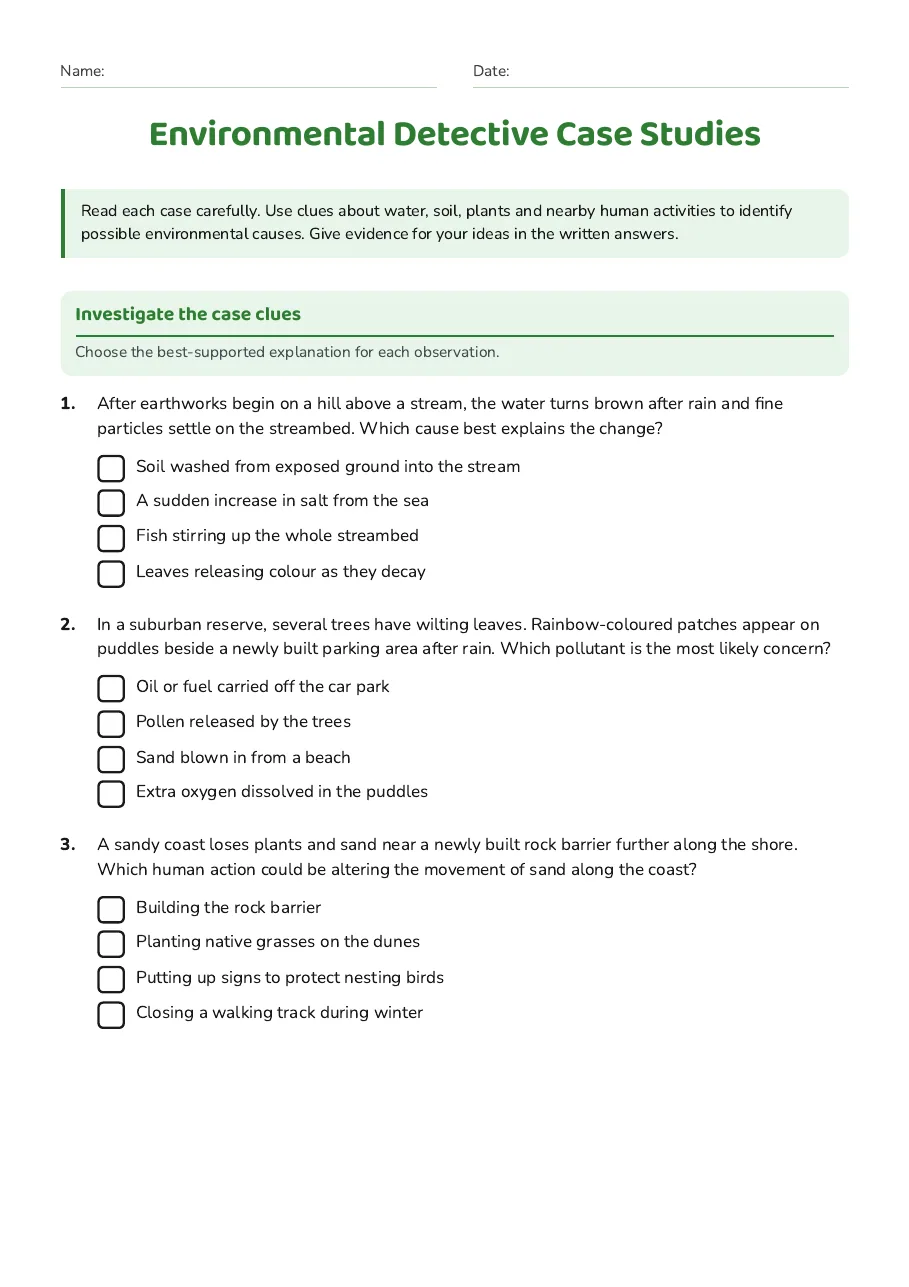
Environmental Detective Case Studies
Read each case carefully. Use clues about water, soil, plants and nearby human activities to identify possible environmental causes. Give evidence for your ideas in the written answers.
Investigate the case clues
Choose the best-supported explanation for each observation.
1.After earthworks begin on a hill above a stream, the water turns brown after rain and fine particles settle on the streambed. Which cause best explains the change?
- Soil washed from exposed ground into the stream
- A sudden increase in salt from the sea
- Fish stirring up the whole streambed
- Leaves releasing colour as they decay
2.In a suburban reserve, several trees have wilting leaves. Rainbow-coloured patches appear on puddles beside a newly built parking area after rain. Which pollutant is the most likely concern?
- Oil or fuel carried off the car park
- Pollen released by the trees
- Sand blown in from a beach
- Extra oxygen dissolved in the puddles
3.A sandy coast loses plants and sand near a newly built rock barrier further along the shore. Which human action could be altering the movement of sand along the coast?
- Building the rock barrier
- Planting native grasses on the dunes
- Putting up signs to protect nesting birds
- Closing a walking track during winter
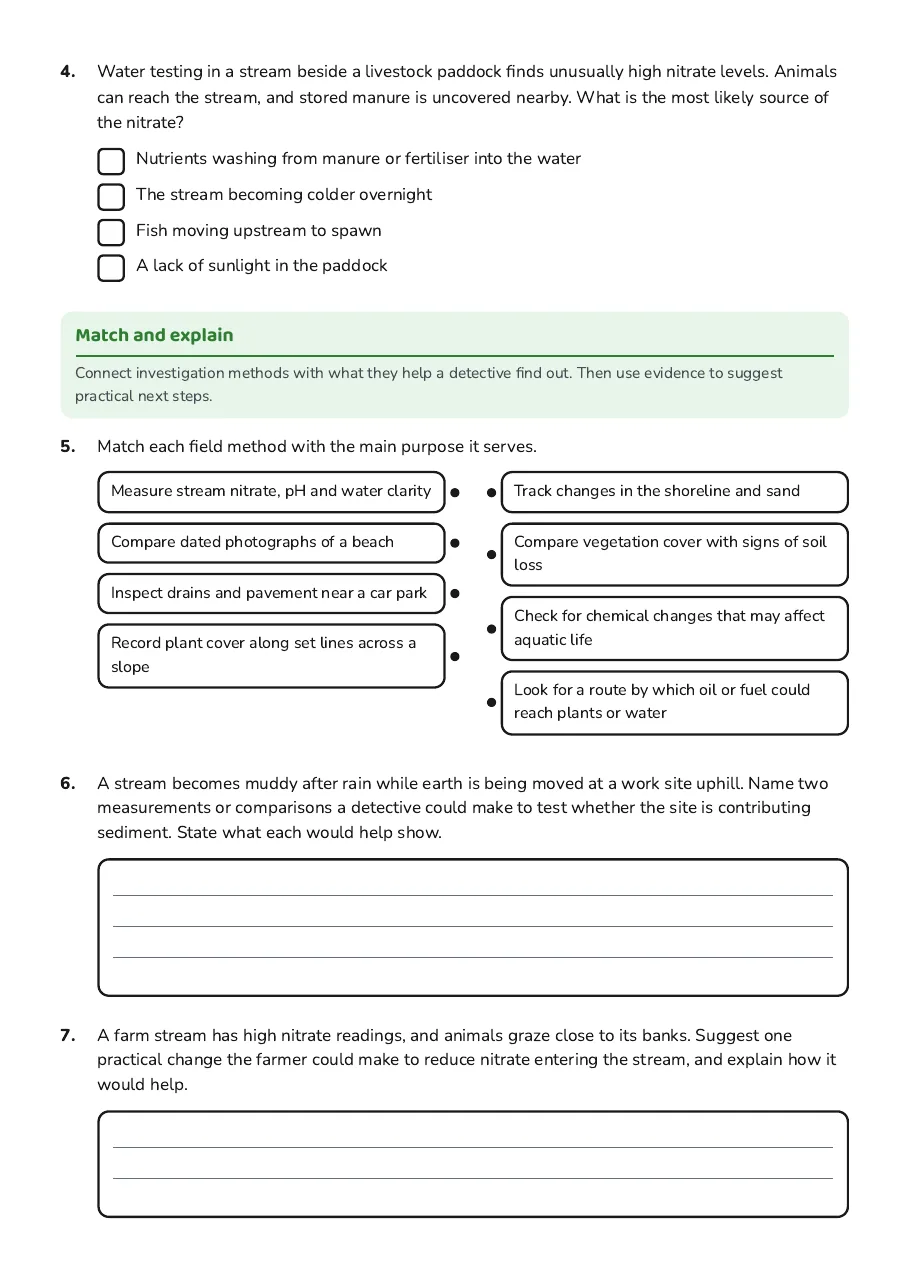
4.Water testing in a stream beside a livestock paddock finds unusually high nitrate levels. Animals can reach the stream, and stored manure is uncovered nearby. What is the most likely source of the nitrate?
- Nutrients washing from manure or fertiliser into the water
- The stream becoming colder overnight
- Fish moving upstream to spawn
- A lack of sunlight in the paddock
Match and explain
Connect investigation methods with what they help a detective find out. Then use evidence to suggest practical next steps.
5.Match each field method with the main purpose it serves.
- Measure stream nitrate, pH and water clarity
- Compare dated photographs of a beach
- Inspect drains and pavement near a car park
- Record plant cover along set lines across a slope
- Track changes in the shoreline and sand
- Compare vegetation cover with signs of soil loss
- Check for chemical changes that may affect aquatic life
- Look for a route by which oil or fuel could reach plants or water
6.A stream becomes muddy after rain while earth is being moved at a work site uphill. Name two measurements or comparisons a detective could make to test whether the site is contributing sediment. State what each would help show.
7.A farm stream has high nitrate readings, and animals graze close to its banks. Suggest one practical change the farmer could make to reduce nitrate entering the stream, and explain how it would help.
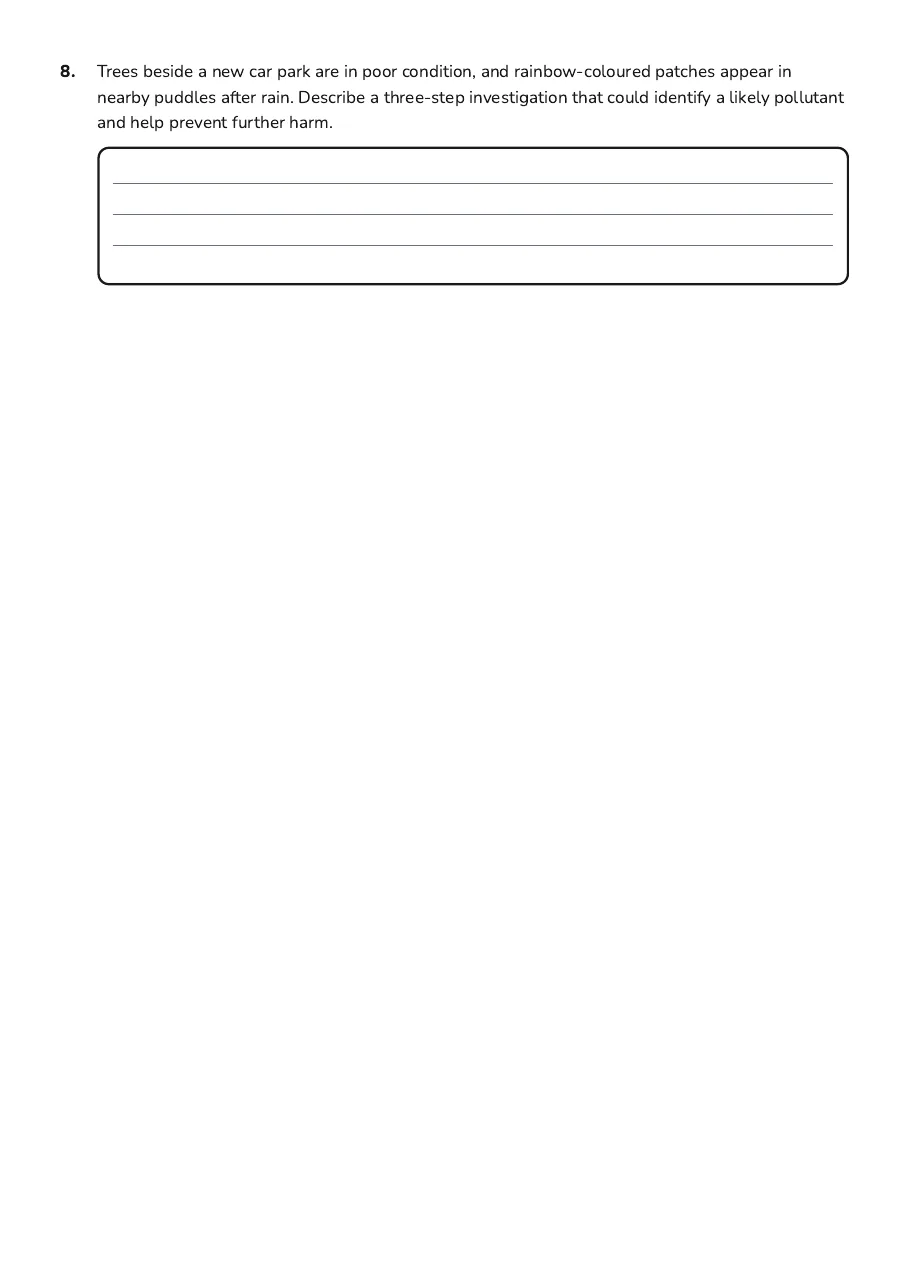
8.Trees beside a new car park are in poor condition, and rainbow-coloured patches appear in nearby puddles after rain. Describe a three-step investigation that could identify a likely pollutant and help prevent further harm.
3 printable pages
Page 1
Page 2
Page 3
About This Worksheet
Free in Kuraplan
Sign up free, grab the PDF, and customize it for your class.
Print-Ready
Formatted for standard paper. Clean layout, easy to read.
AI-Generated
Created with Kuraplan's AI, designed for real classroom use.
For Teachers & Parents
Use in classrooms, for homework, tutoring, or homeschool.
Need a custom version of this worksheet?
Kuraplan's AI generates custom worksheets in seconds — differentiated for every learner, aligned to your curriculum.
Generate Custom Worksheets — Free No credit card Curriculum-aligned Under 60 seconds
More Science Worksheets
Year 1–5
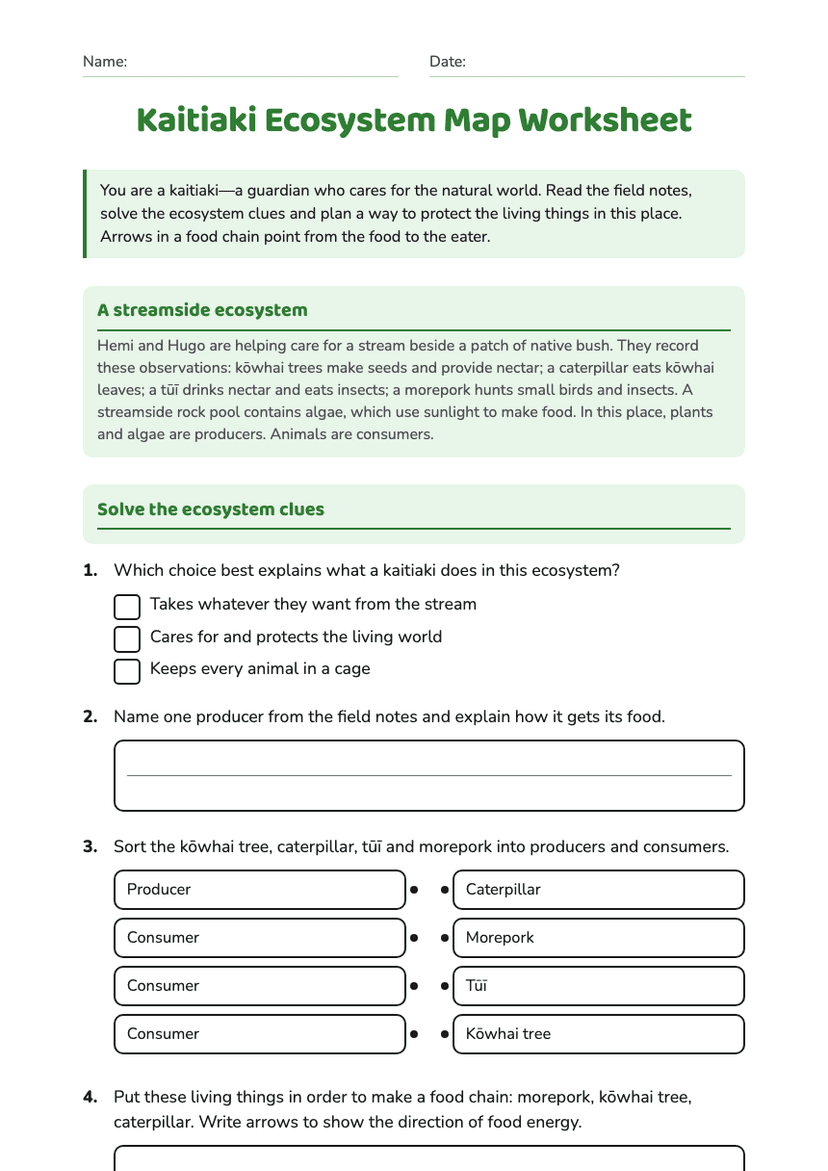
Kaitiaki Ecosystem Map Worksheet
Free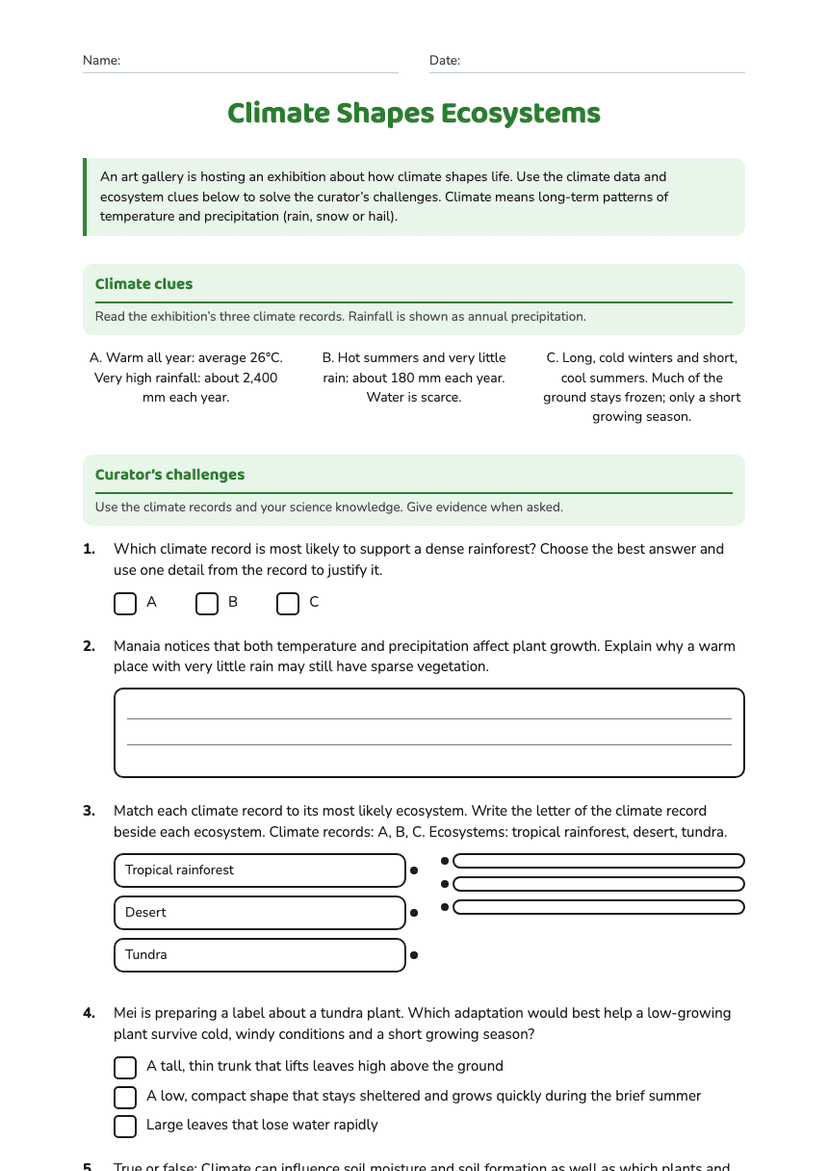
Year 7–8
Climate Shapes Ecosystems
Free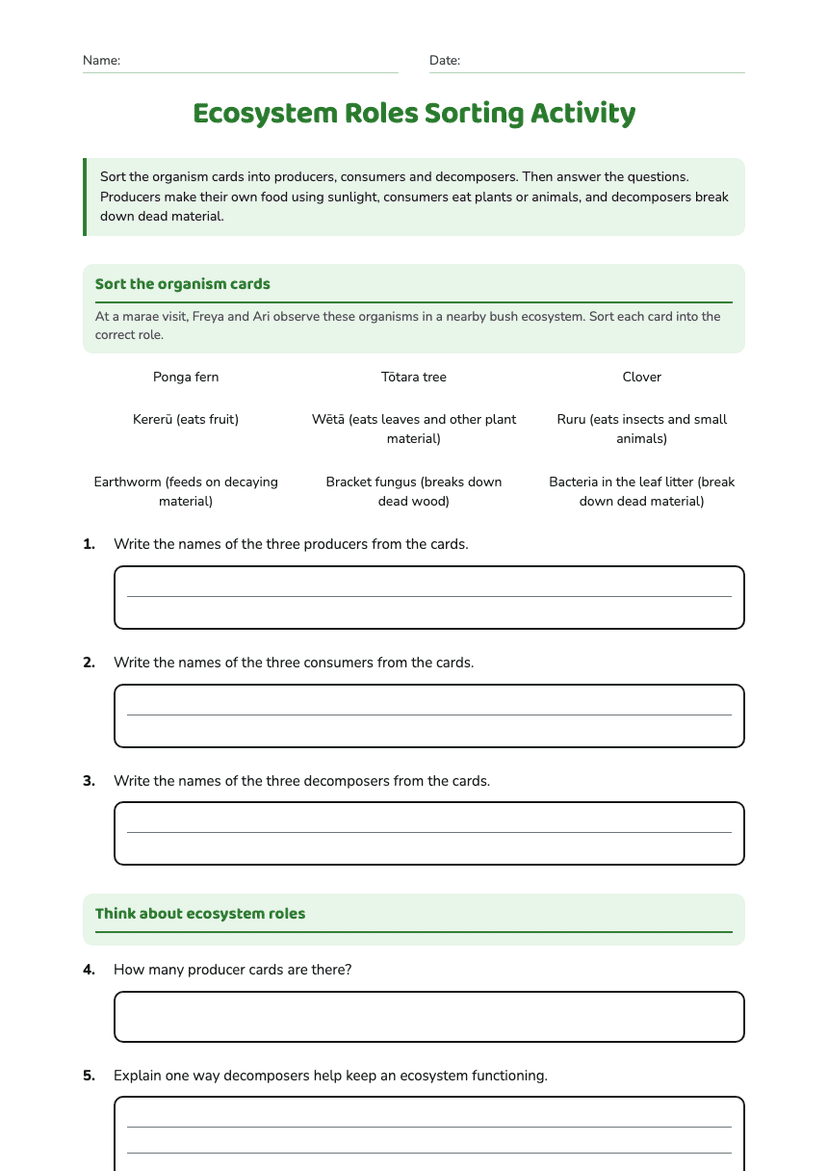
Year 6
Ecosystem Roles Sorting Activity
Free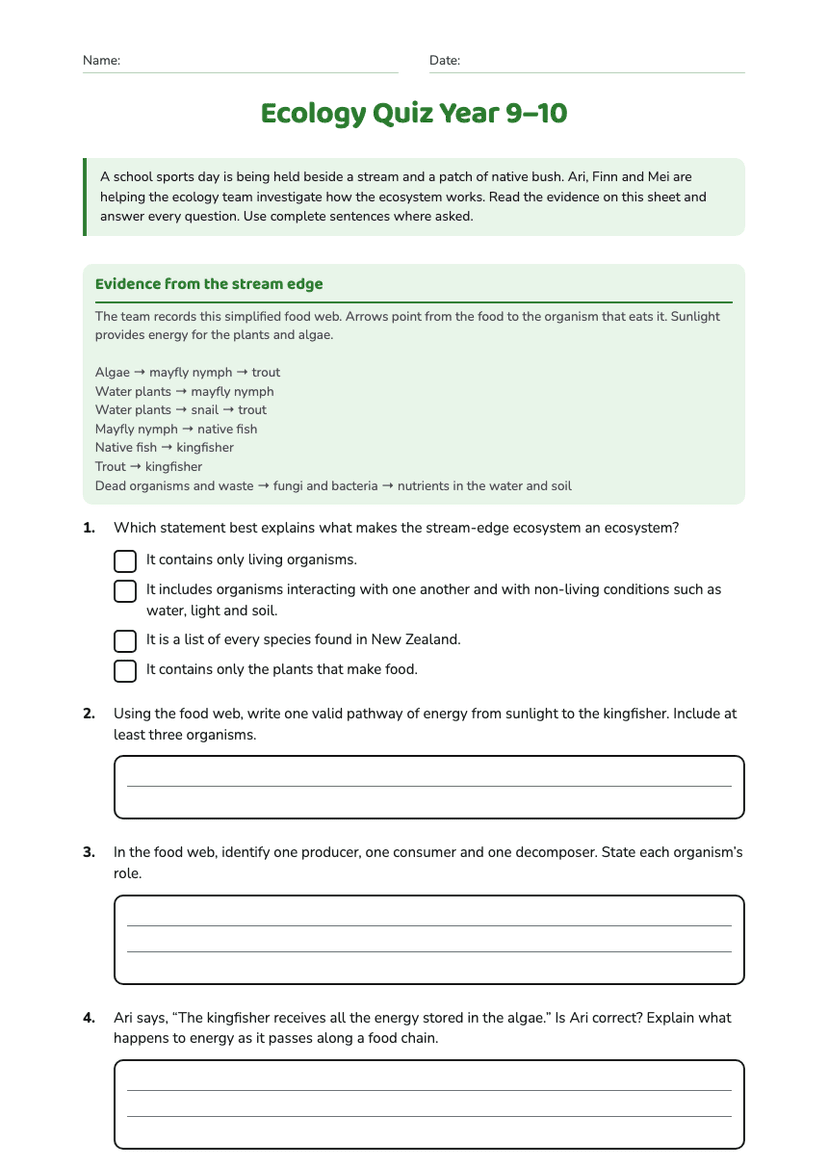
Ecology Quiz Year 9–10
Free
Year 10
Environmental Rights and Responsibilities
Free
Year 10
Environmental Impact Analysis Worksheet
Free
Marine Environment Impacts Worksheet
Free
Year 2