Functional Anatomy and Movement Analysis
A free pe worksheet ready for your classroom. Open in Kuraplan to grab the print-ready PDF, customize it for your students, or generate a fresh version in seconds.
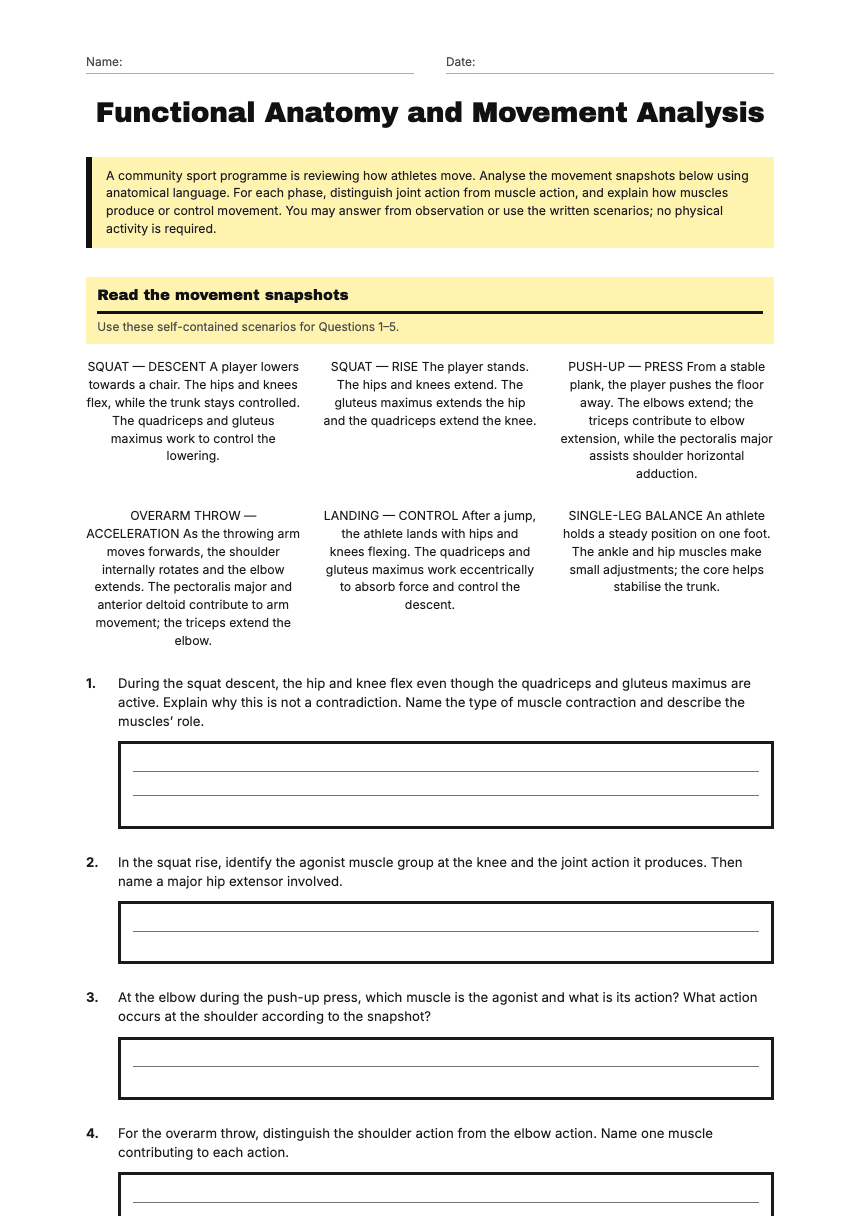
Functional Anatomy and Movement Analysis
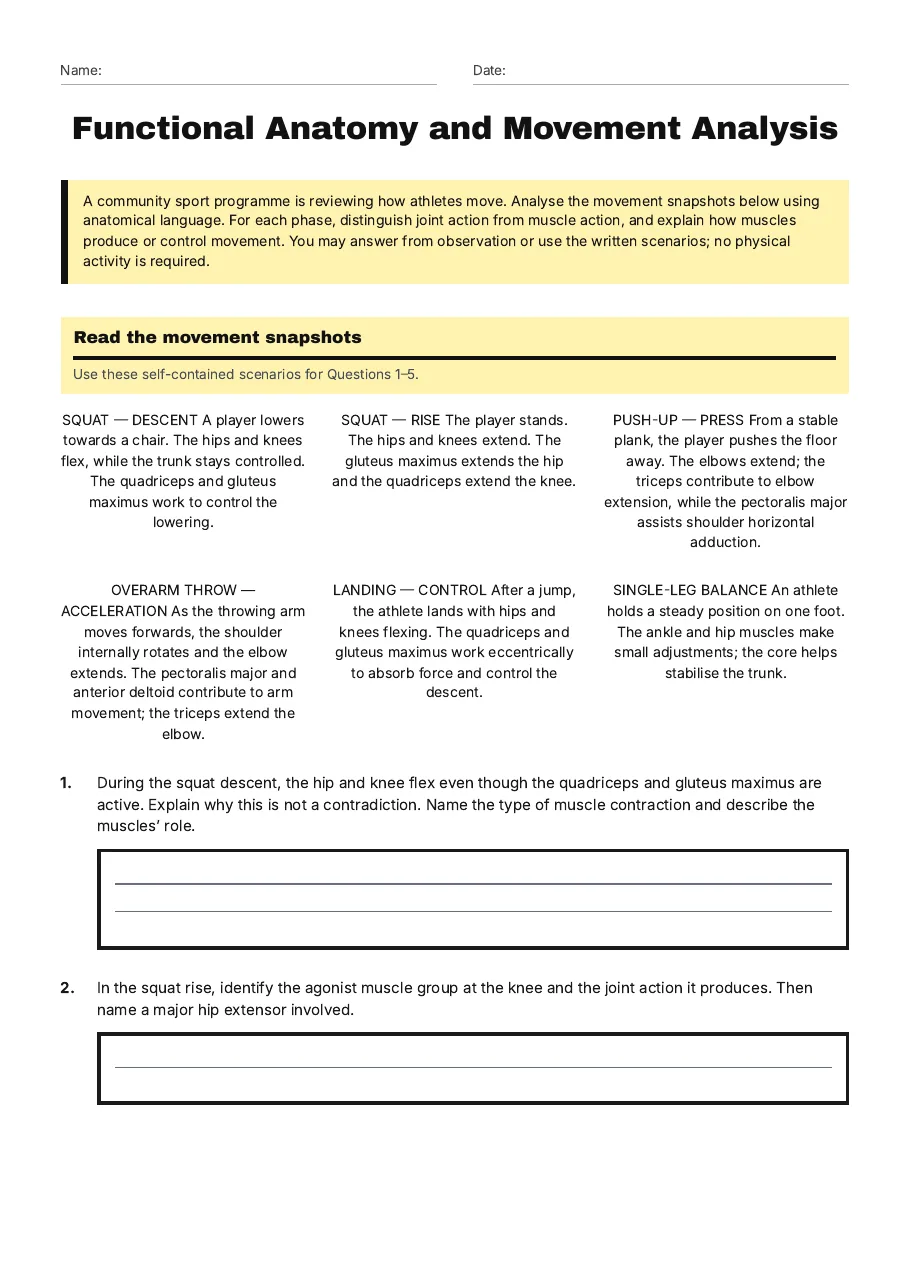
Read the movement snapshots
Use these self-contained scenarios for Questions 1–5.
SQUAT — DESCENT A player lowers towards a chair. The hips and knees flex, while the trunk stays controlled. The quadriceps and gluteus maximus work to control the lowering.
SQUAT — RISE The player stands. The hips and knees extend. The gluteus maximus extends the hip and the quadriceps extend the knee.
PUSH-UP — PRESS From a stable plank, the player pushes the floor away. The elbows extend; the triceps contribute to elbow extension, while the pectoralis major assists shoulder horizontal adduction.
OVERARM THROW — ACCELERATION As the throwing arm moves forwards, the shoulder internally rotates and the elbow extends. The pectoralis major and anterior deltoid contribute to arm movement; the triceps extend the elbow.
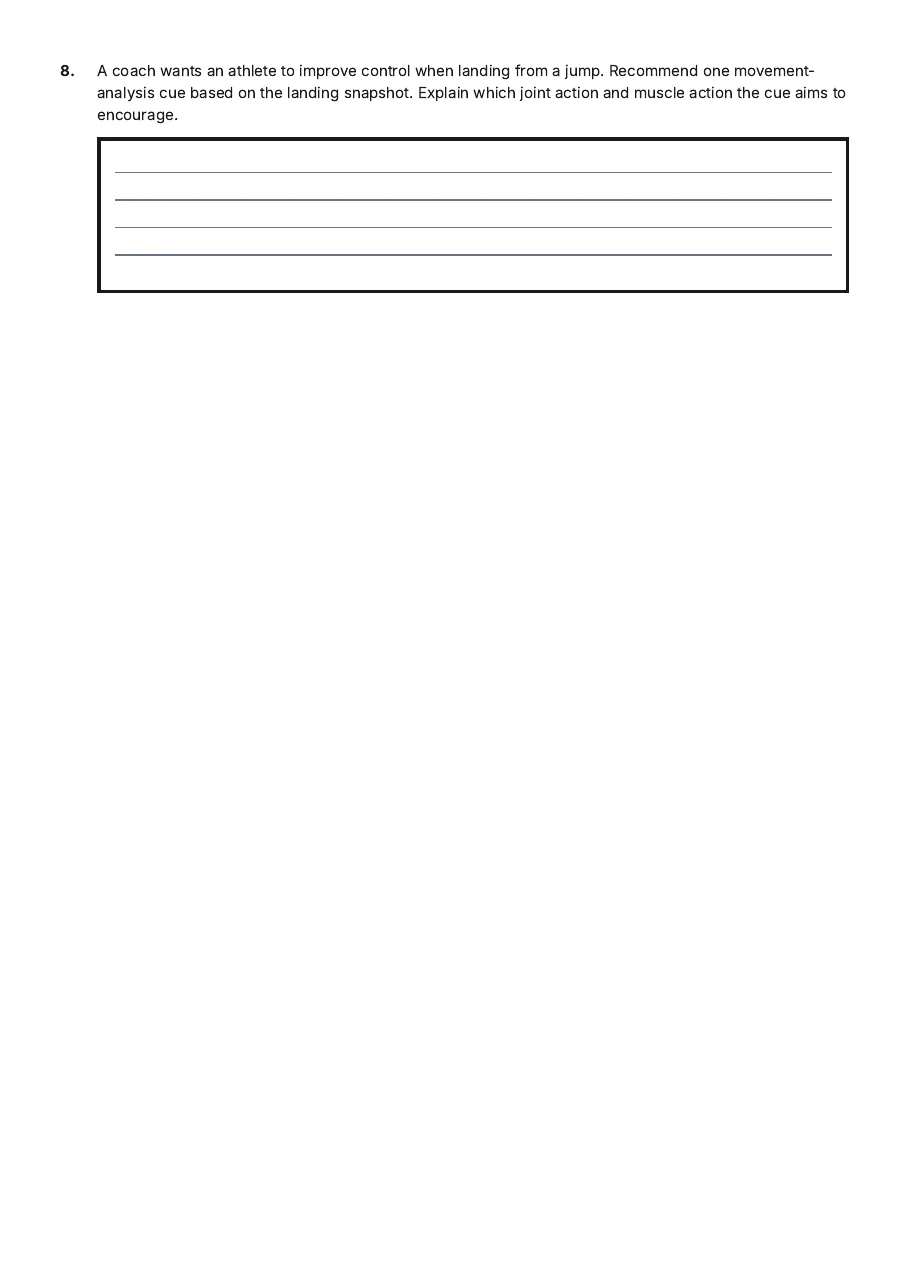
LANDING — CONTROL After a jump, the athlete lands with hips and knees flexing. The quadriceps and gluteus maximus work eccentrically to absorb force and control the descent.
SINGLE-LEG BALANCE An athlete holds a steady position on one foot. The ankle and hip muscles make small adjustments; the core helps stabilise the trunk.
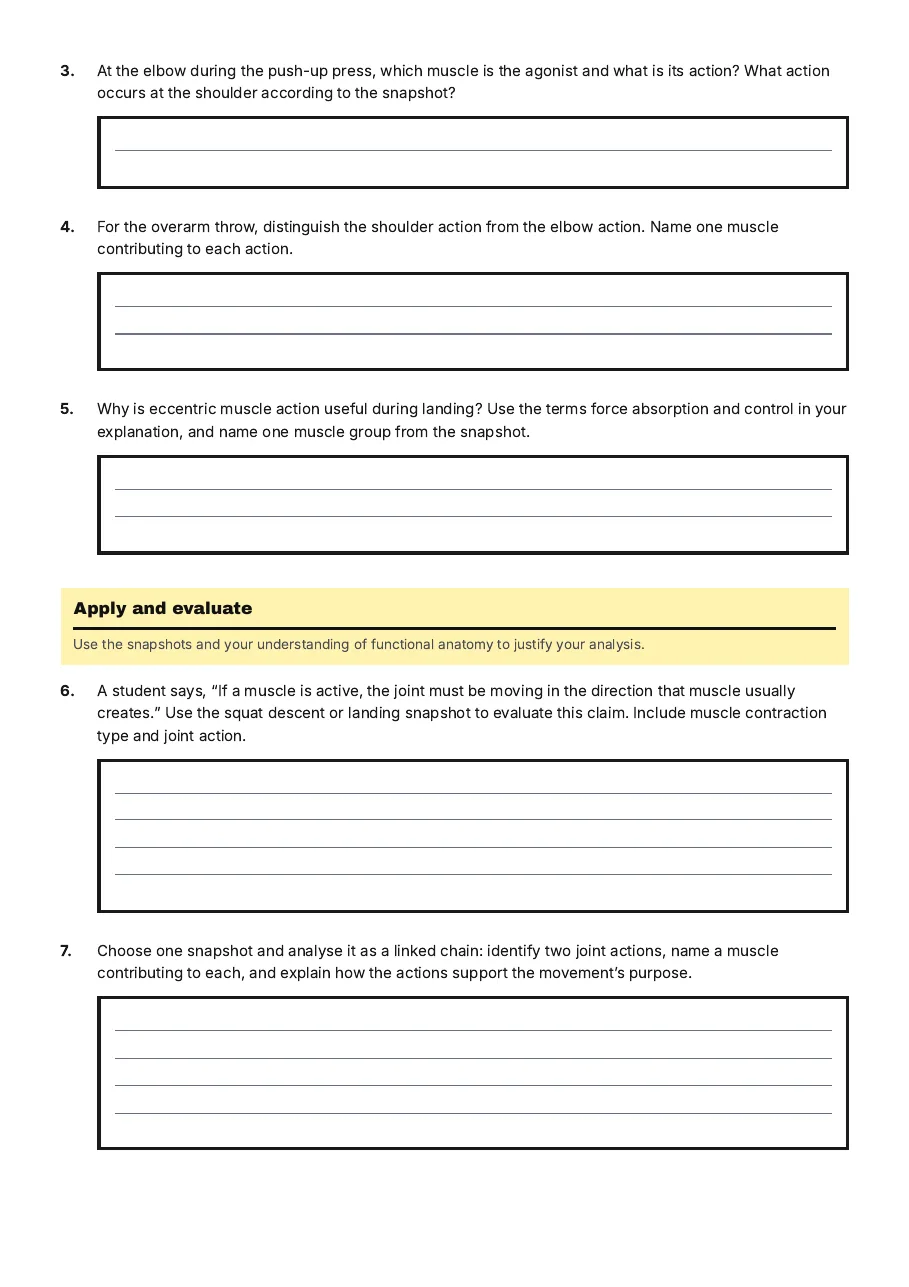
Apply and evaluate
Use the snapshots and your understanding of functional anatomy to justify your analysis.
3 printable pages
Page 1
Page 2
Page 3
About This Worksheet
Free in Kuraplan
Sign up free, grab the PDF, and customize it for your class.
Print-Ready
Formatted for standard paper. Clean layout, easy to read.
AI-Generated
Created with Kuraplan's AI, designed for real classroom use.
For Teachers & Parents
Use in classrooms, for homework, tutoring, or homeschool.
Need a custom version of this worksheet?
Kuraplan's AI generates custom worksheets in seconds — differentiated for every learner, aligned to your curriculum.
Generate Custom Worksheets — FreeMore PE Worksheets
Physical Education: Movement & Equipment
Free
Sociocultural Factors in Climbing
Free
Movement Skills Relay Challenge
Free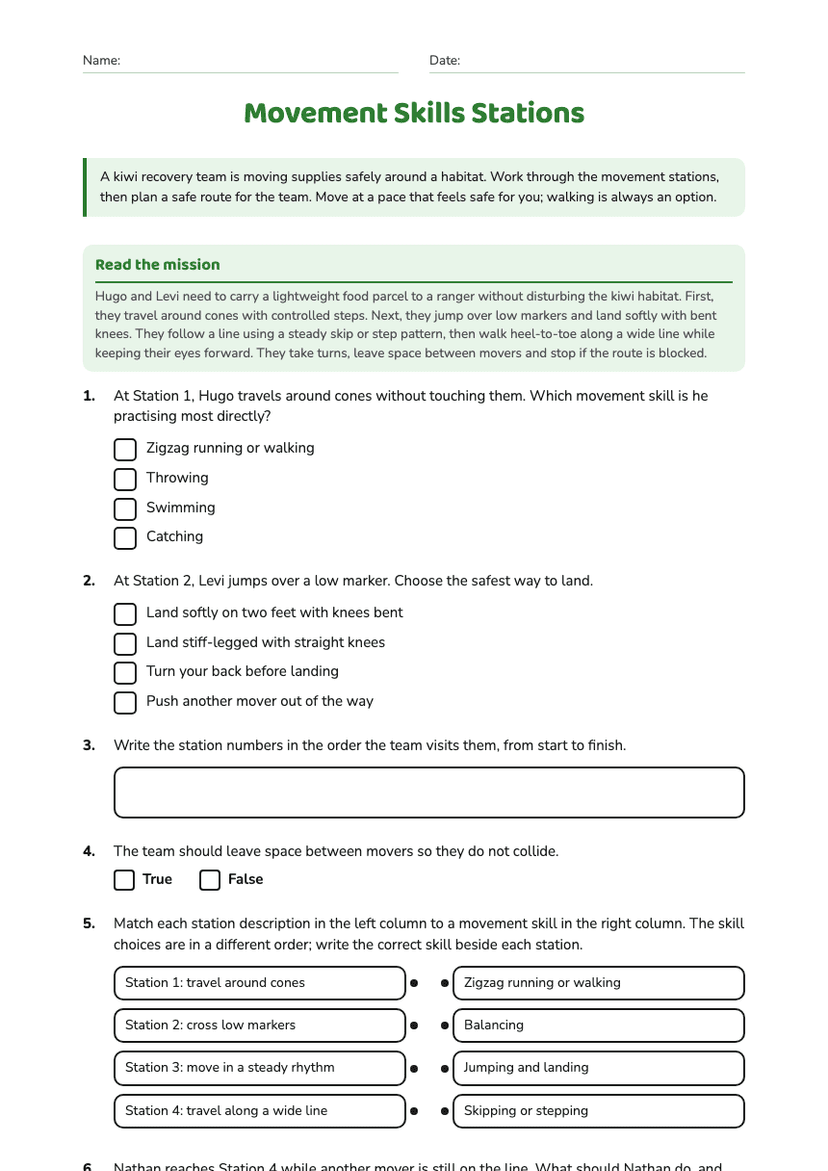
Movement Skills Stations
Free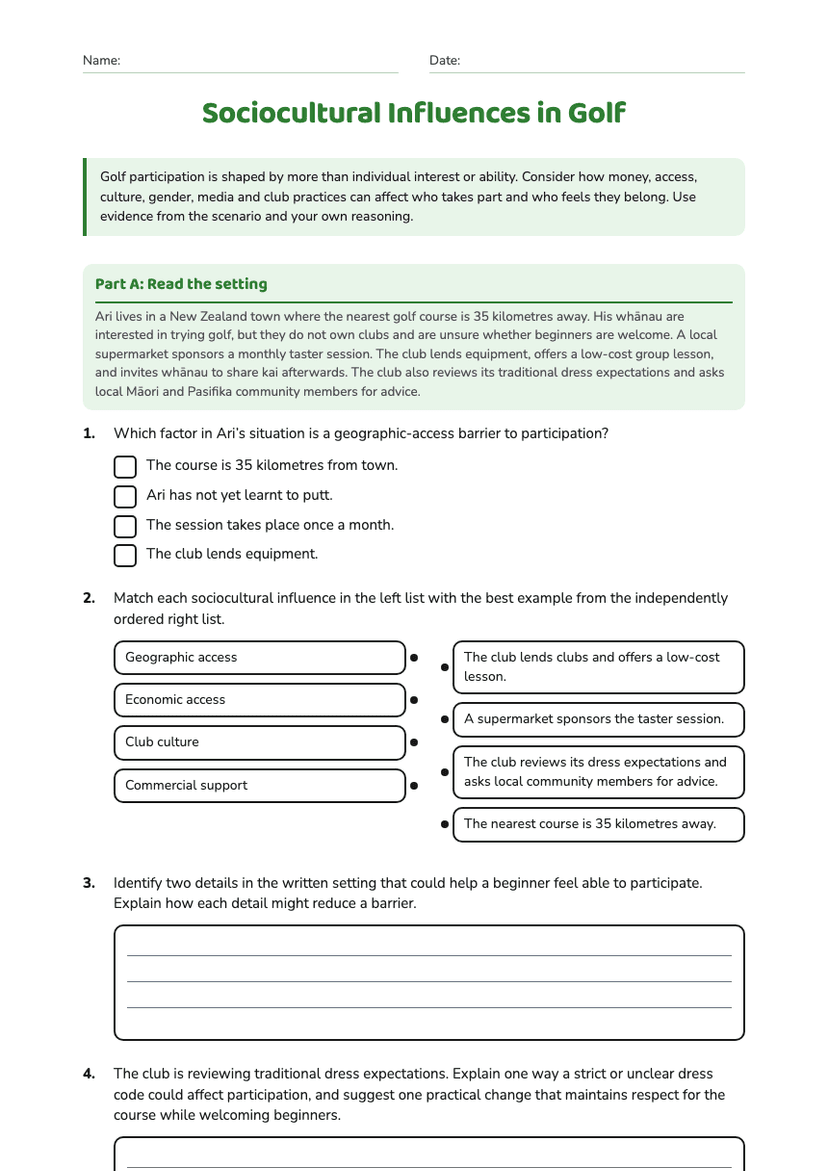
Sociocultural Influences in Golf
Free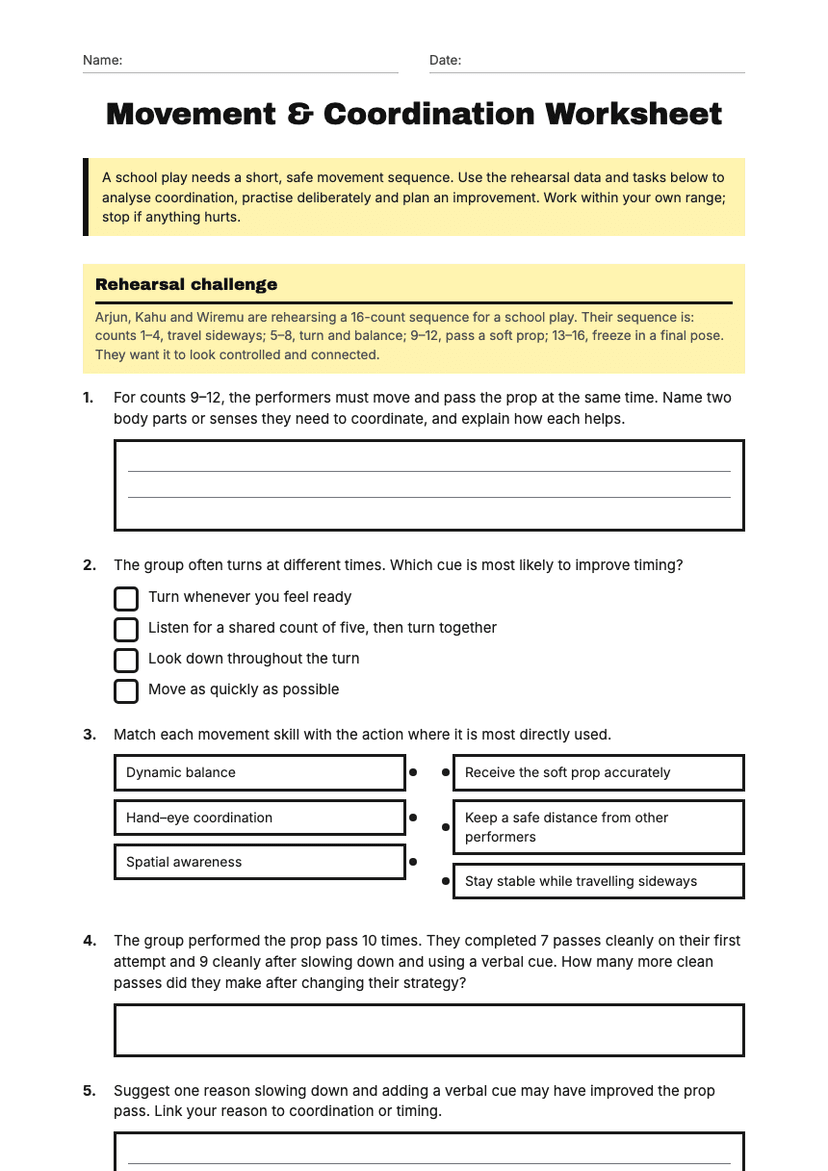
Movement & Coordination Worksheet
Free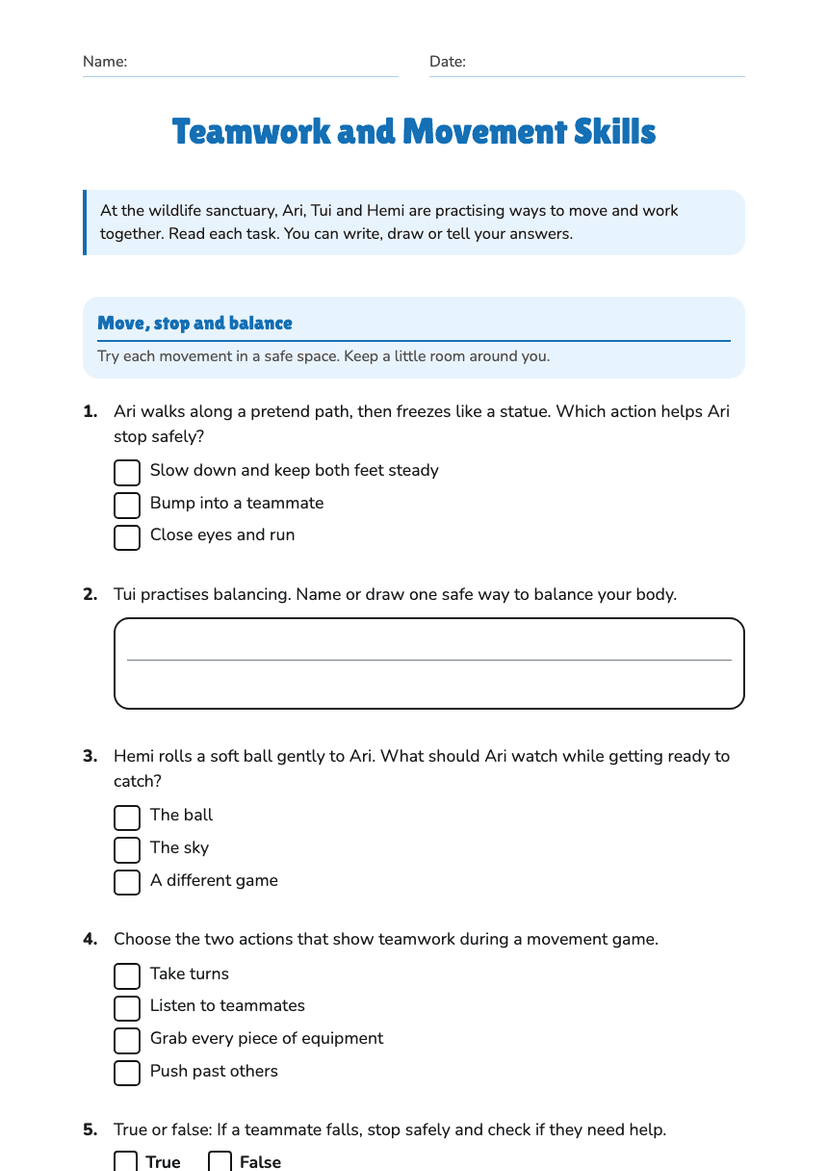
Teamwork and Movement Skills
Free