Hula Hoop Skill Improvement
A free pe worksheet ready for your classroom. Open in Kuraplan to grab the print-ready PDF, customize it for your students, or generate a fresh version in seconds.
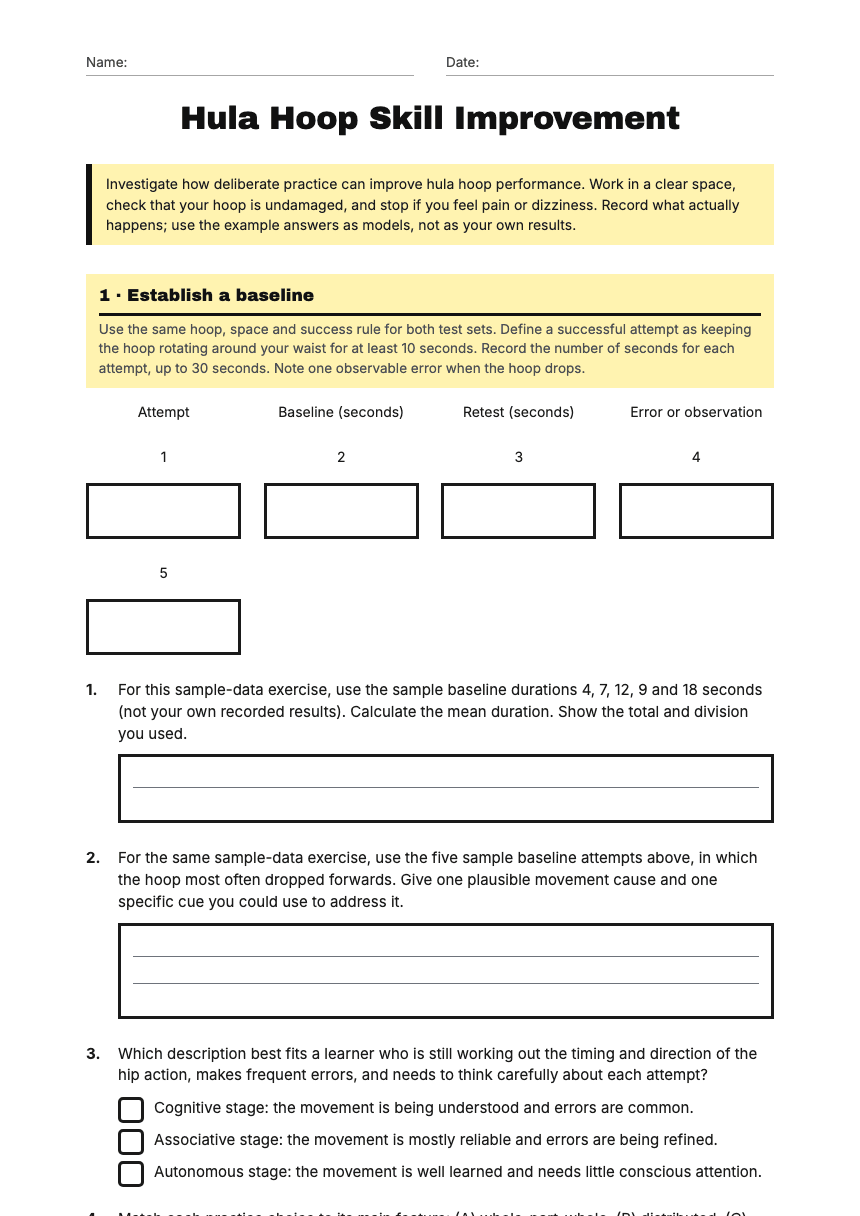
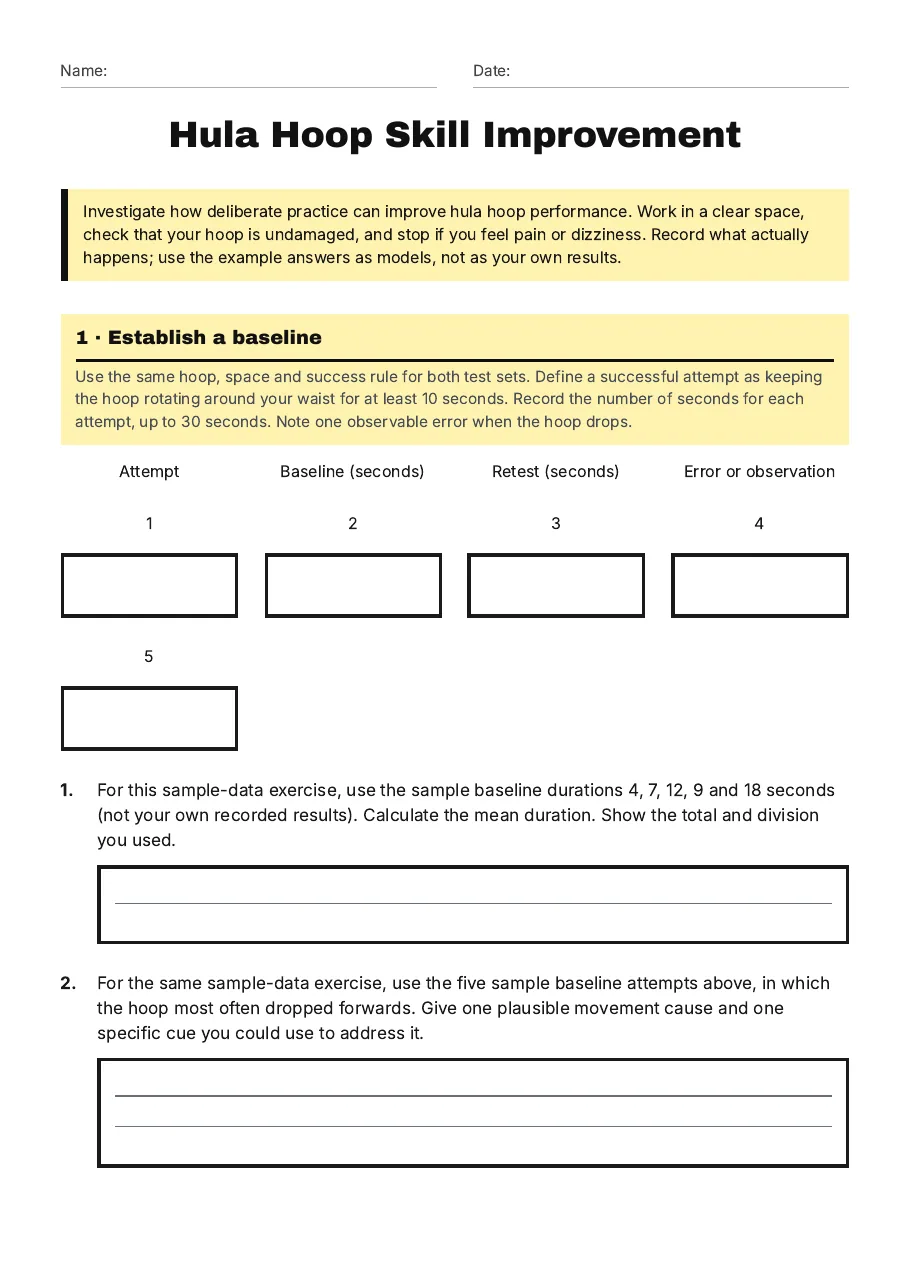
Hula Hoop Skill Improvement
1 · Establish a baseline
Use the same hoop, space and success rule for both test sets. Define a successful attempt as keeping the hoop rotating around your waist for at least 10 seconds. Record the number of seconds for each attempt, up to 30 seconds. Note one observable error when the hoop drops.
Attempt
Baseline (seconds)
Retest (seconds)
Error or observation
1
2
3
4
5
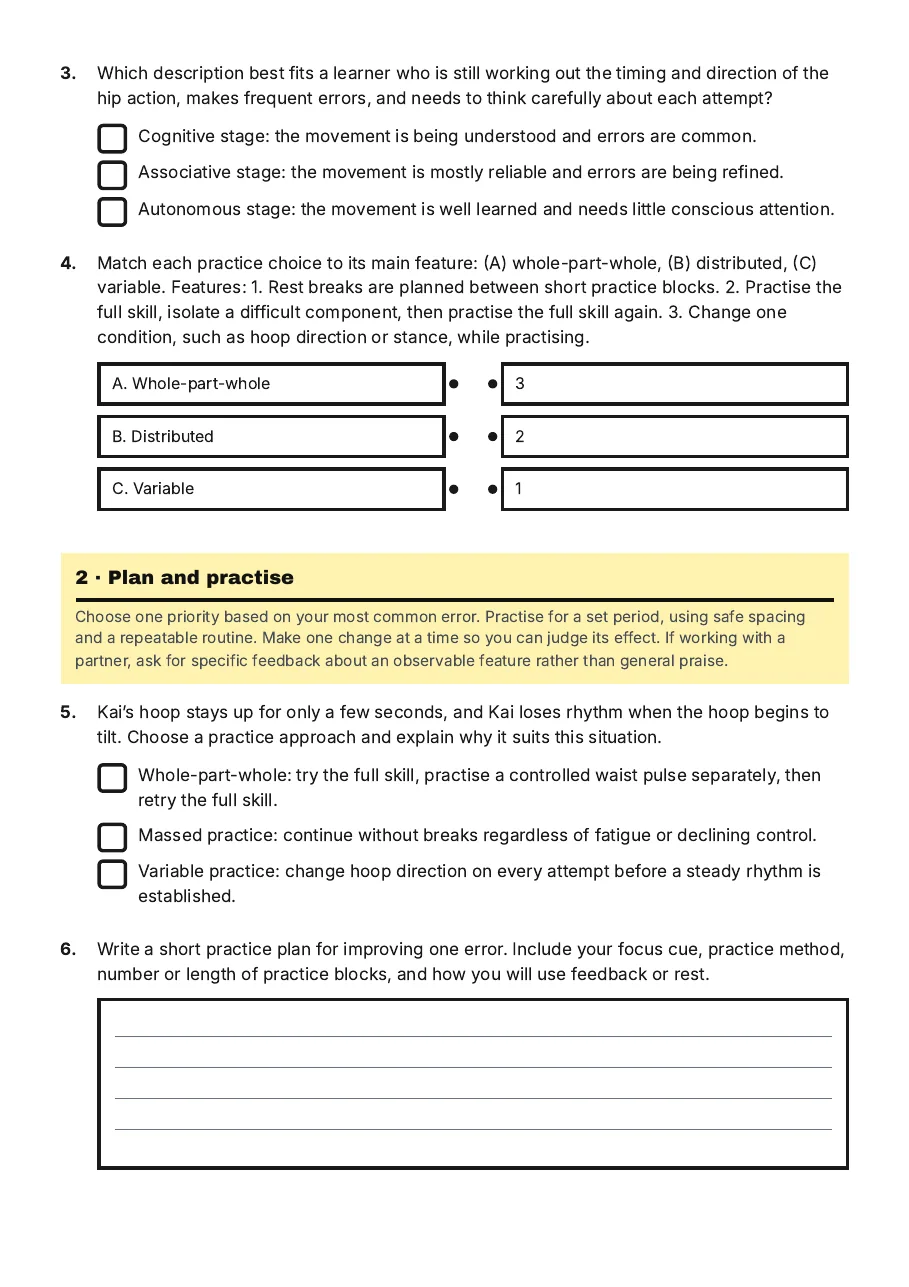
- Cognitive stage: the movement is being understood and errors are common.
- Associative stage: the movement is mostly reliable and errors are being refined.
- Autonomous stage: the movement is well learned and needs little conscious attention.
- A. Whole-part-whole
- B. Distributed
- C. Variable
- 3
- 2
- 1
2 · Plan and practise
Choose one priority based on your most common error. Practise for a set period, using safe spacing and a repeatable routine. Make one change at a time so you can judge its effect. If working with a partner, ask for specific feedback about an observable feature rather than general praise.
- Whole-part-whole: try the full skill, practise a controlled waist pulse separately, then retry the full skill.
- Massed practice: continue without breaks regardless of fatigue or declining control.
- Variable practice: change hoop direction on every attempt before a steady rhythm is established.
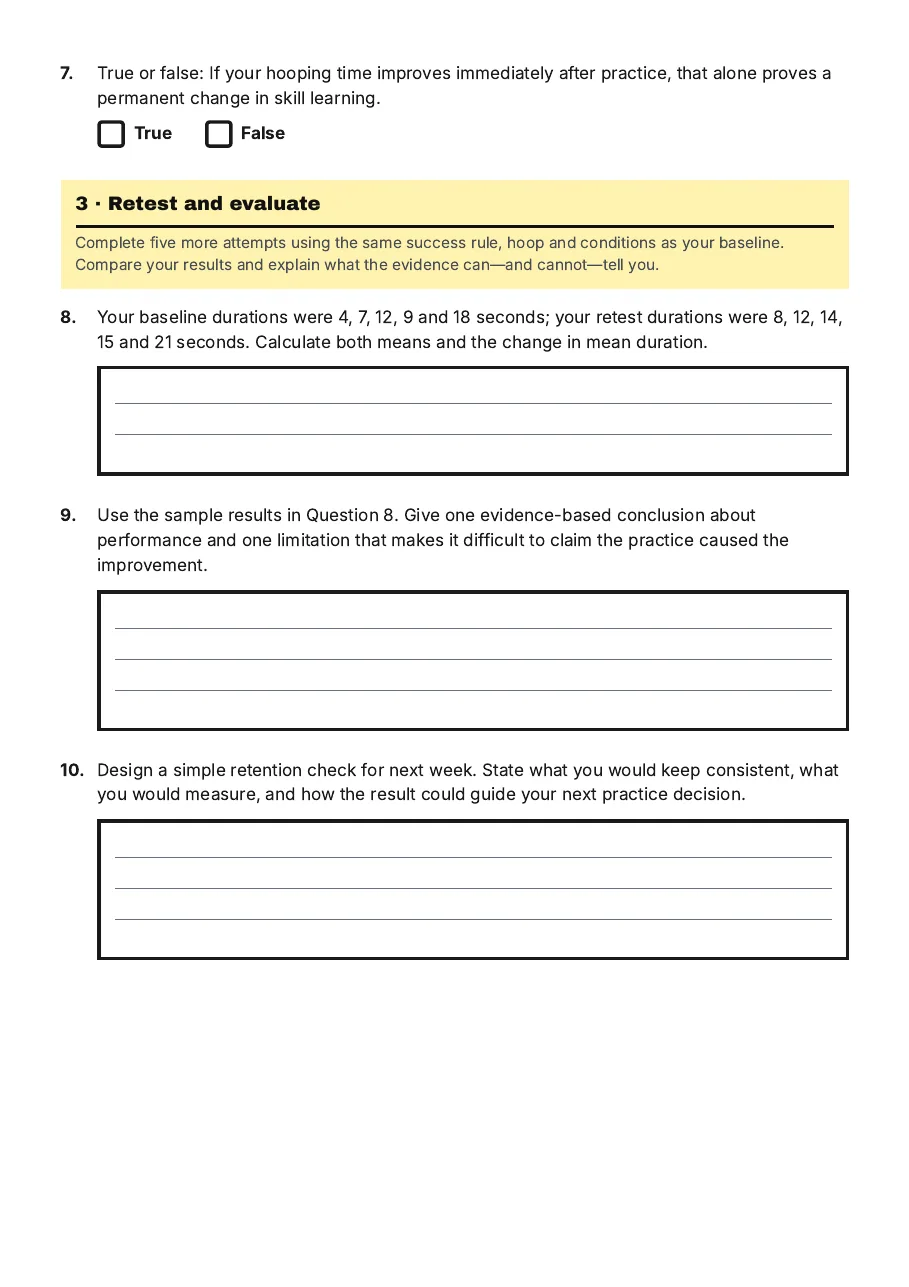
3 · Retest and evaluate
Complete five more attempts using the same success rule, hoop and conditions as your baseline. Compare your results and explain what the evidence can—and cannot—tell you.
3 printable pages
Page 1
Page 2
Page 3
About This Worksheet
Free in Kuraplan
Sign up free, grab the PDF, and customize it for your class.
Print-Ready
Formatted for standard paper. Clean layout, easy to read.
AI-Generated
Created with Kuraplan's AI, designed for real classroom use.
For Teachers & Parents
Use in classrooms, for homework, tutoring, or homeschool.
Need a custom version of this worksheet?
Kuraplan's AI generates custom worksheets in seconds — differentiated for every learner, aligned to your curriculum.
Generate Custom Worksheets — FreeMore PE Worksheets
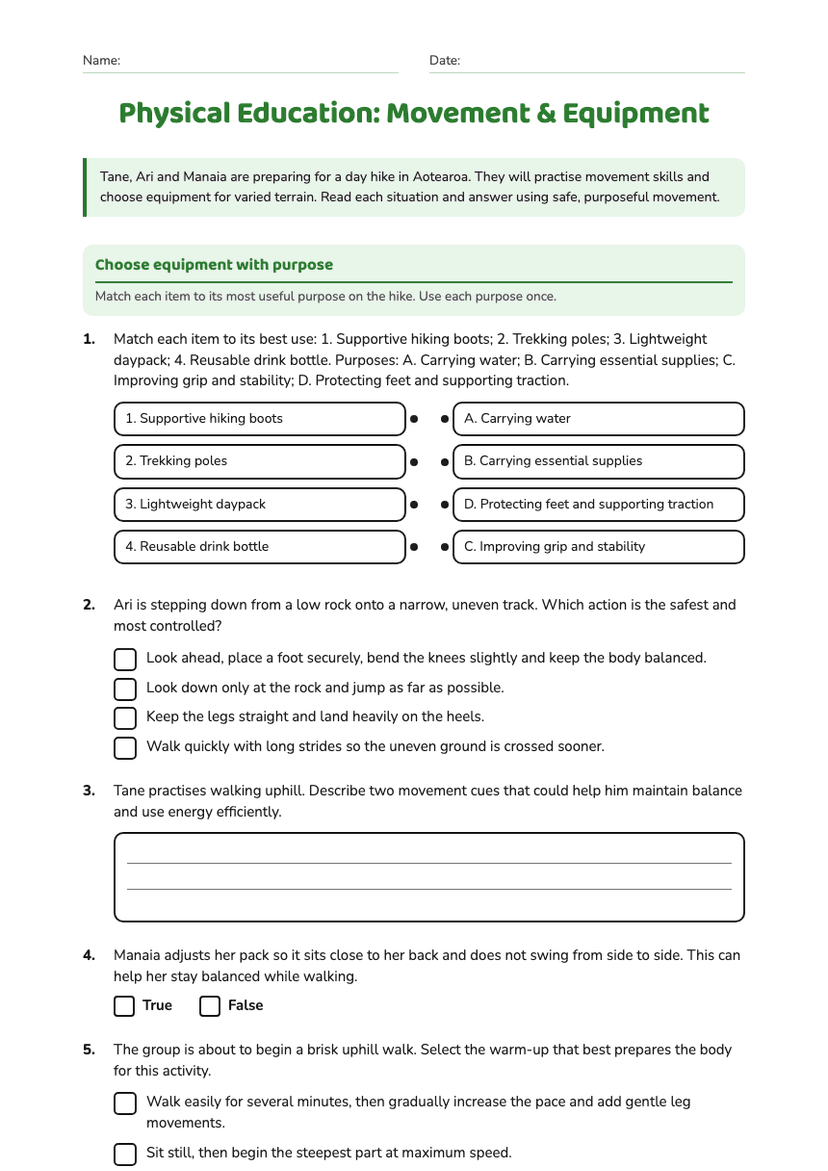
Physical Education: Movement & Equipment
Free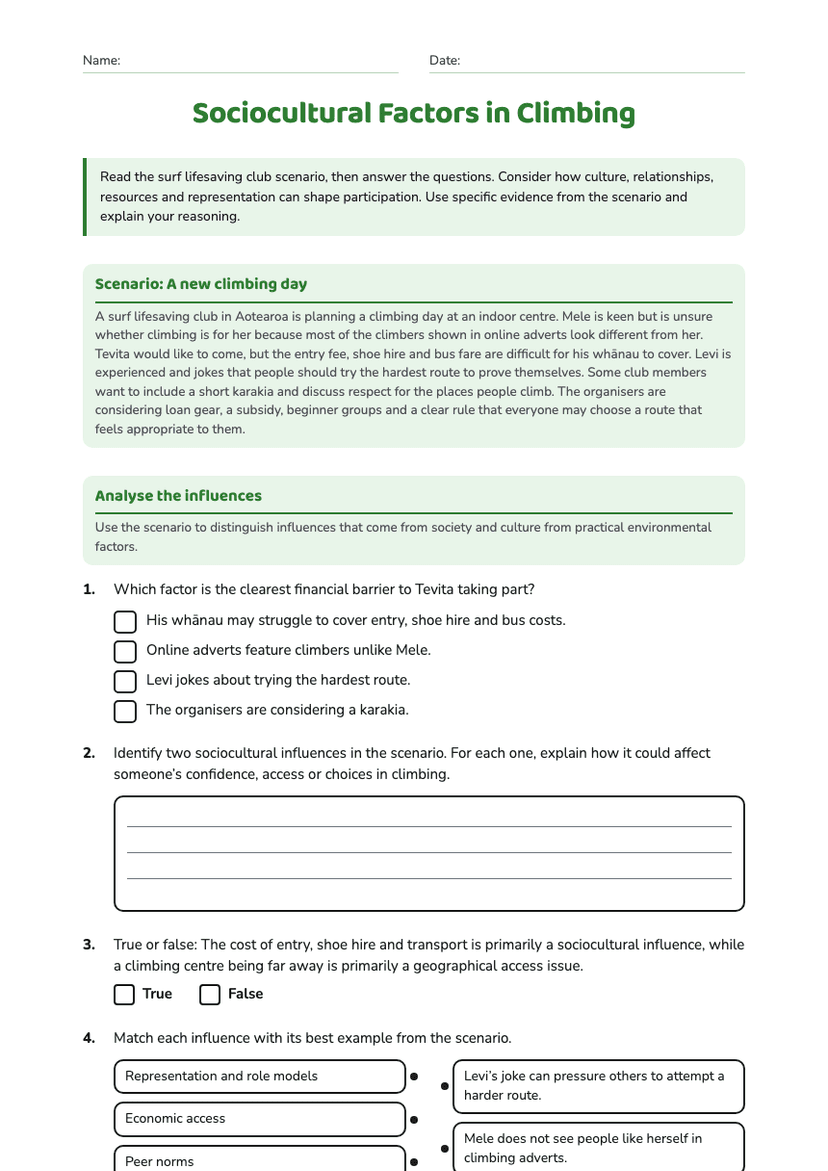
Sociocultural Factors in Climbing
Free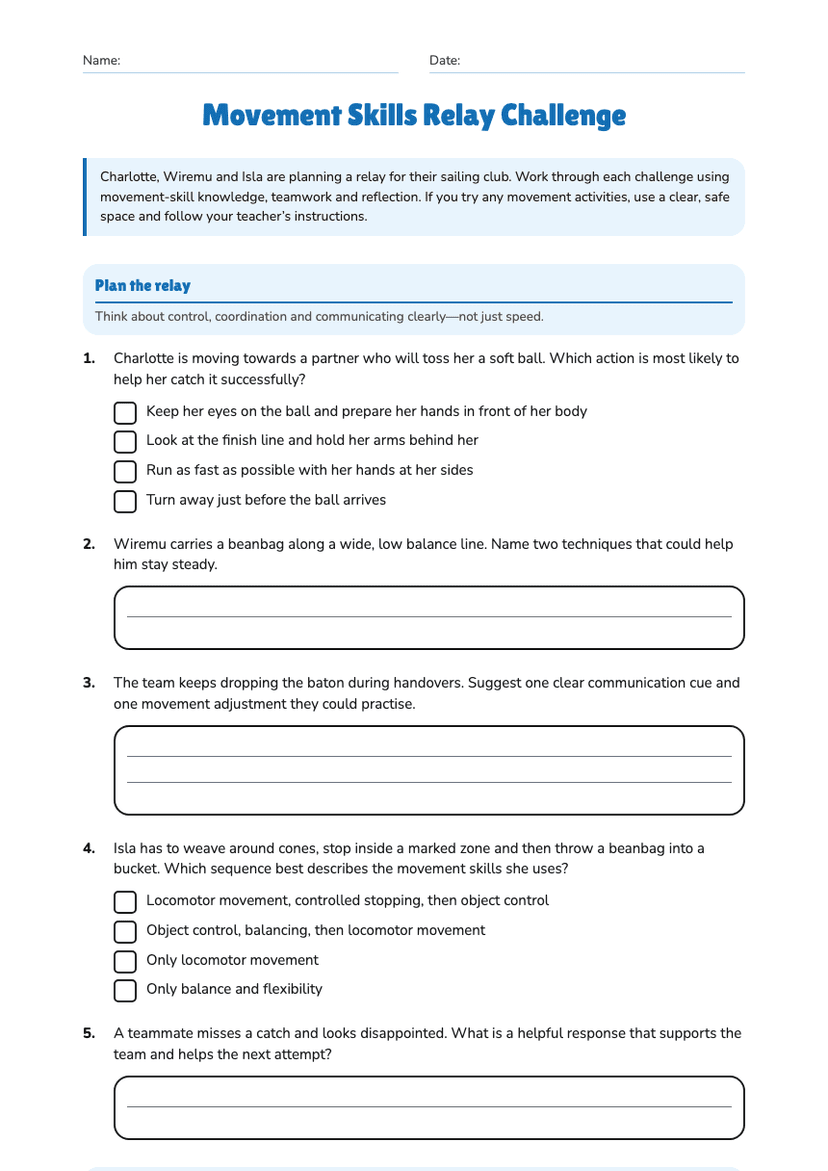
Movement Skills Relay Challenge
Free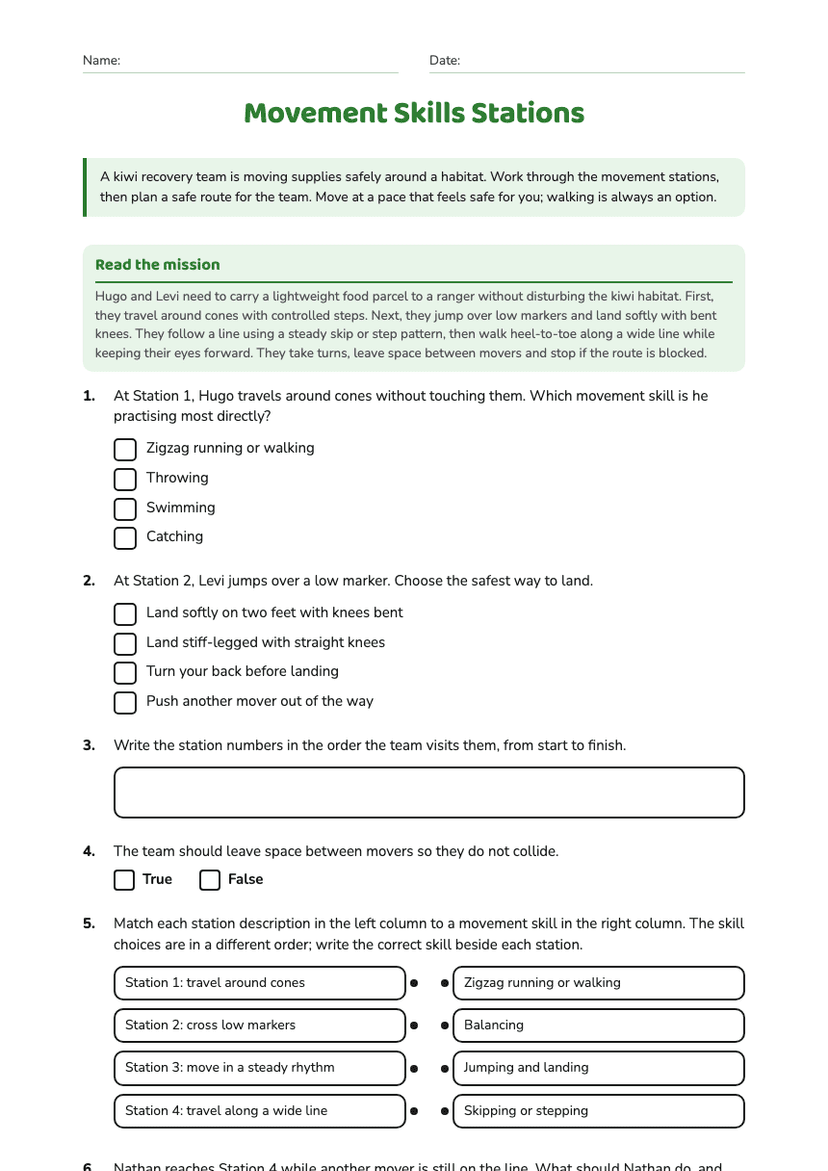
Movement Skills Stations
Free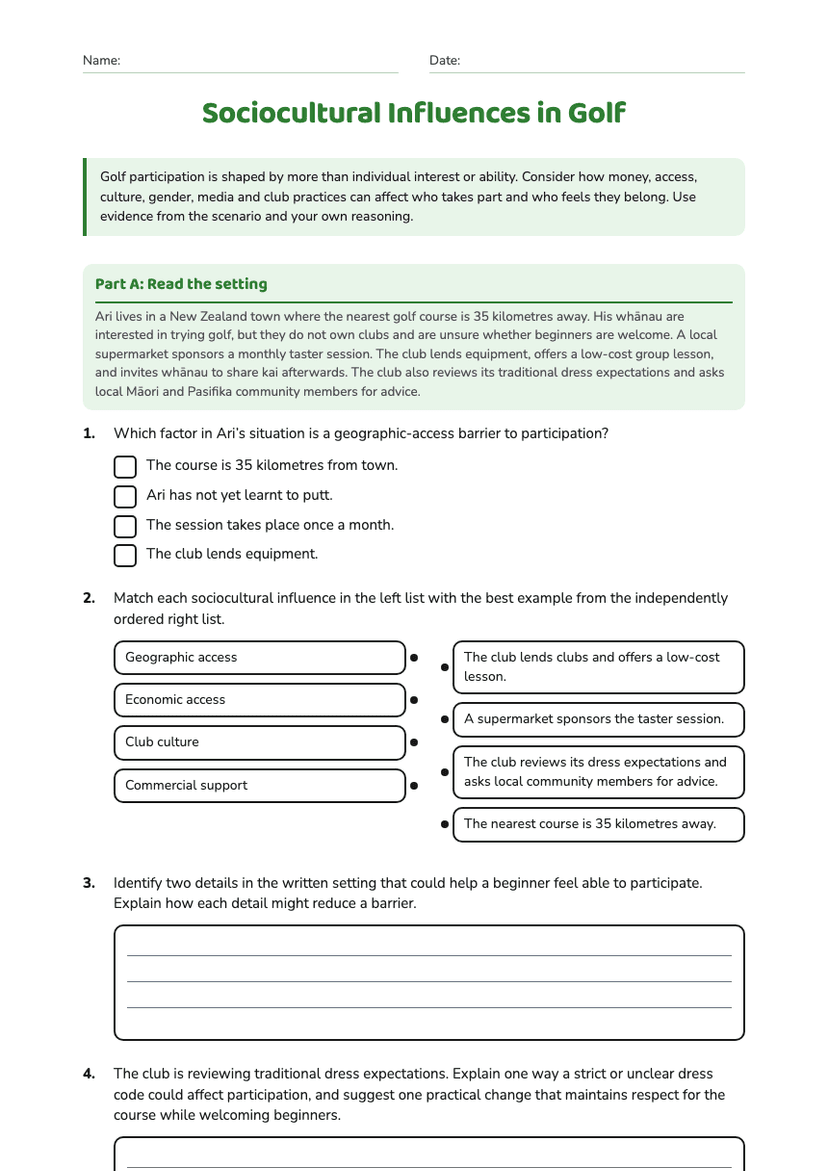
Sociocultural Influences in Golf
Free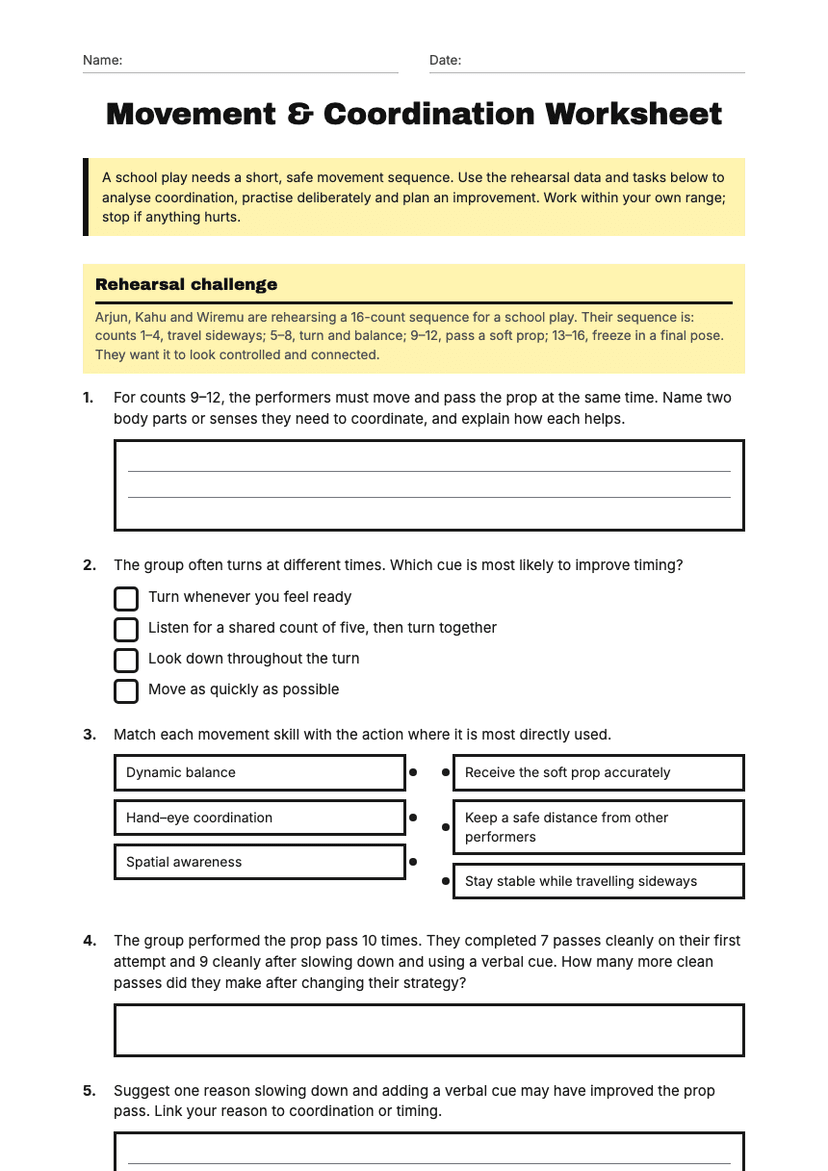
Movement & Coordination Worksheet
Free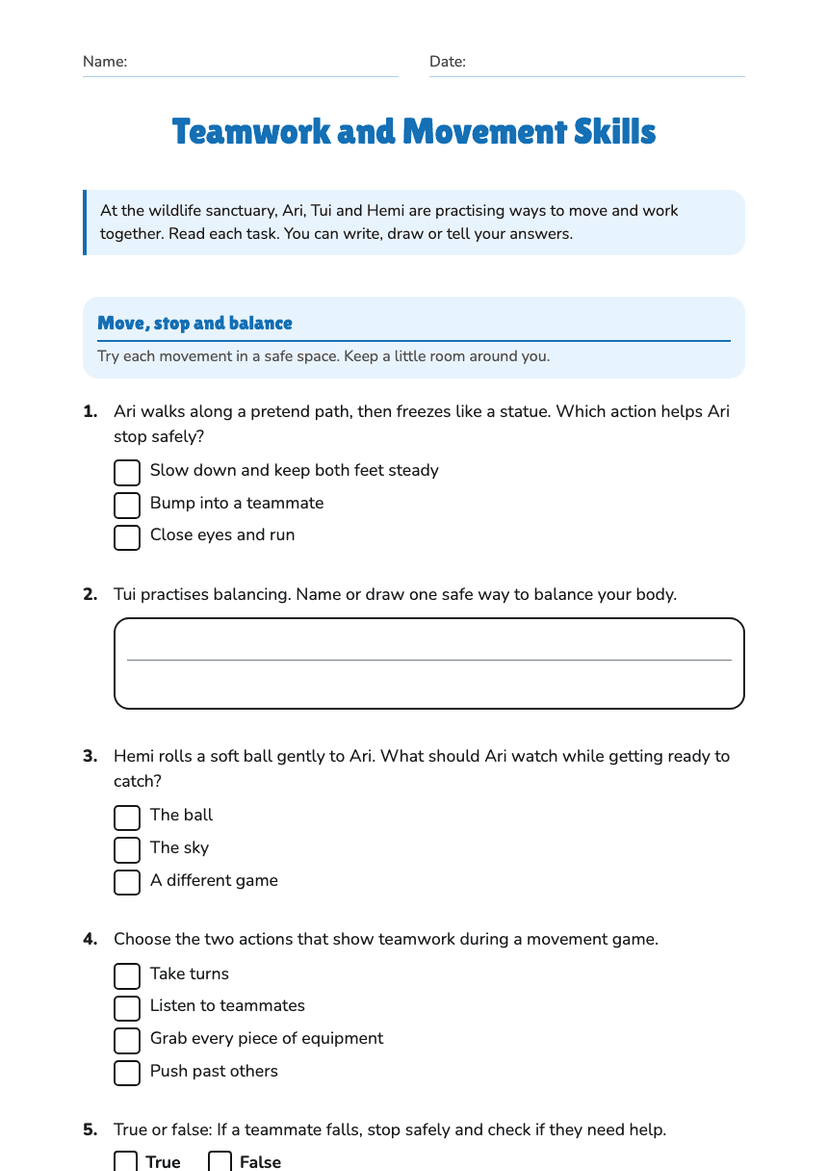
Teamwork and Movement Skills
Free