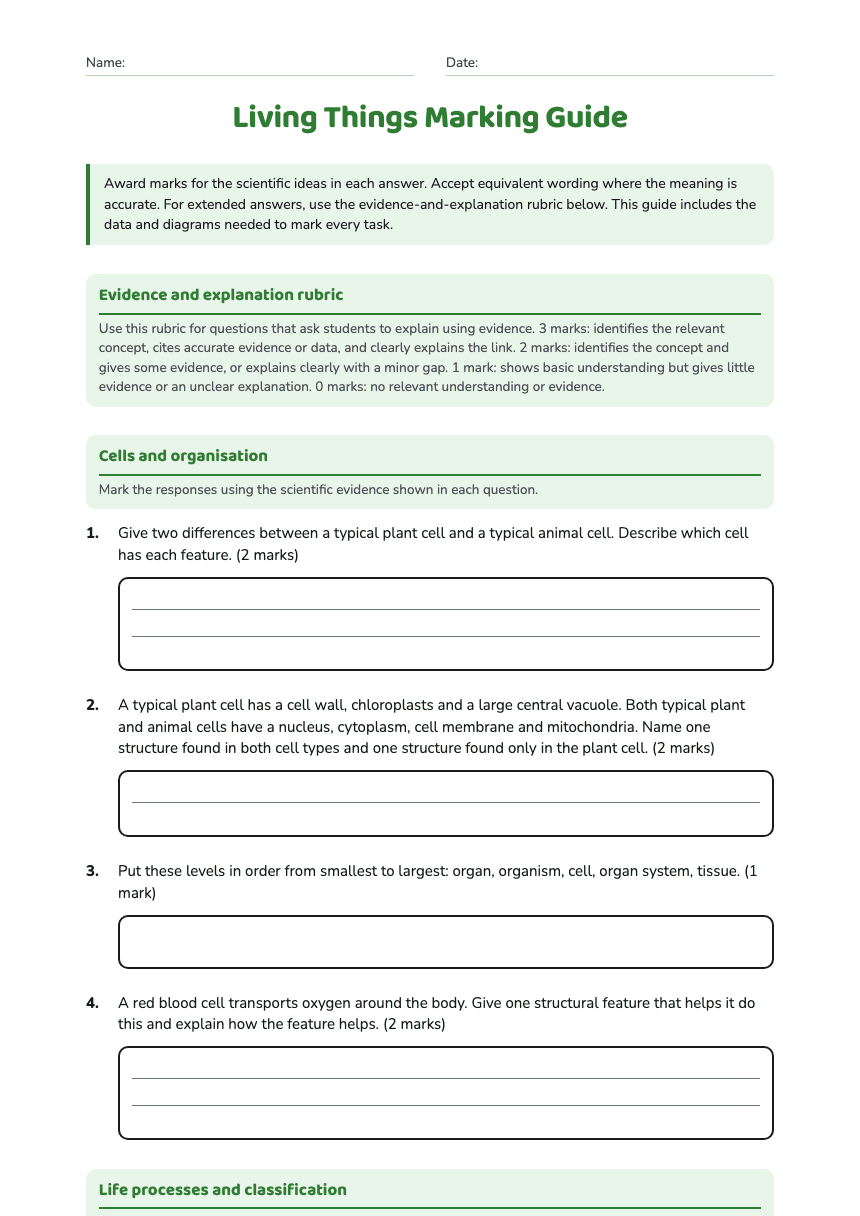
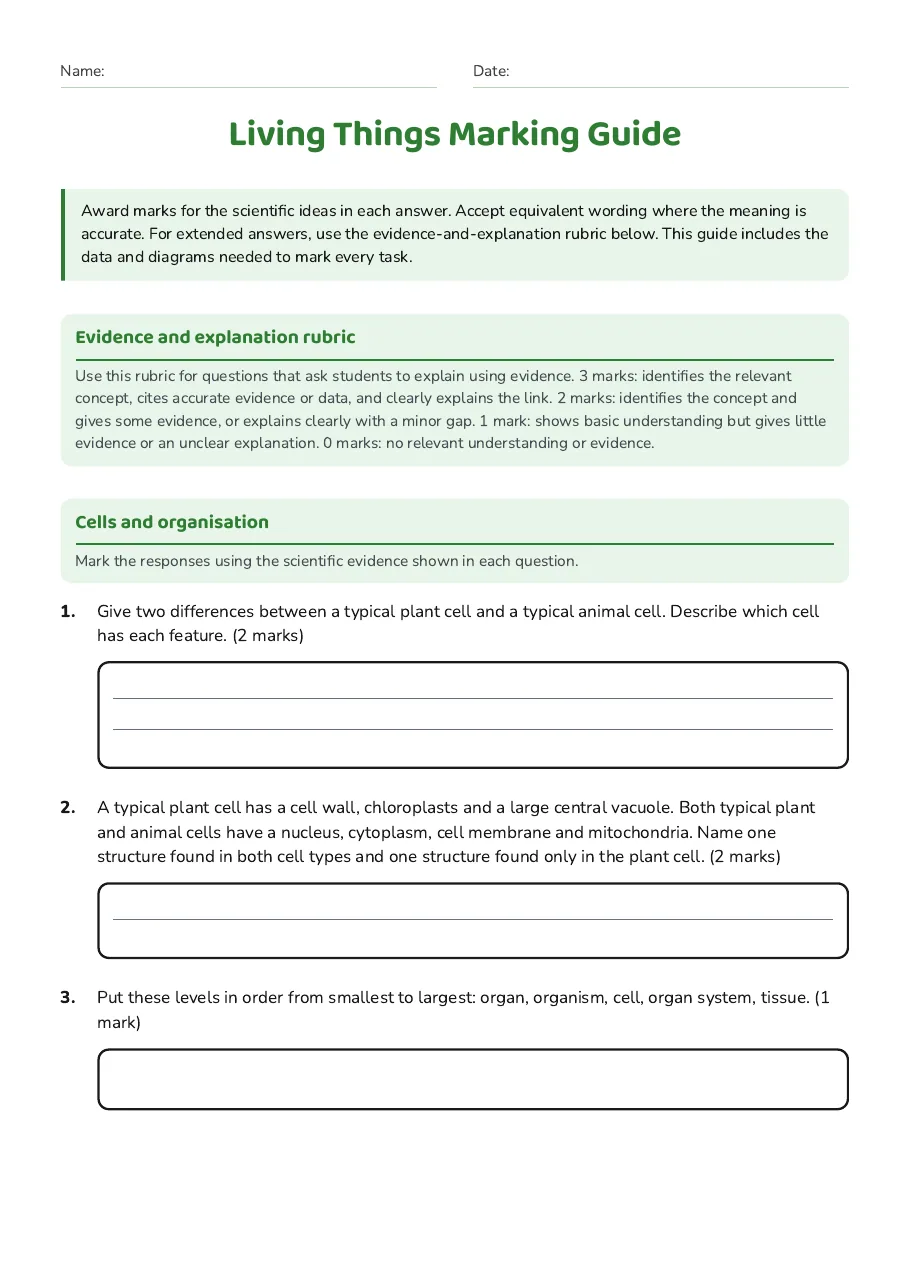
Living Things Marking Guide
A free science worksheet ready for your classroom. Open in Kuraplan to grab the print-ready PDF, customize it for your students, or generate a fresh version in seconds.
Living Things Marking Guide
Evidence and explanation rubric
Use this rubric for questions that ask students to explain using evidence. 3 marks: identifies the relevant concept, cites accurate evidence or data, and clearly explains the link. 2 marks: identifies the concept and gives some evidence, or explains clearly with a minor gap. 1 mark: shows basic understanding but gives little evidence or an unclear explanation. 0 marks: no relevant understanding or evidence.
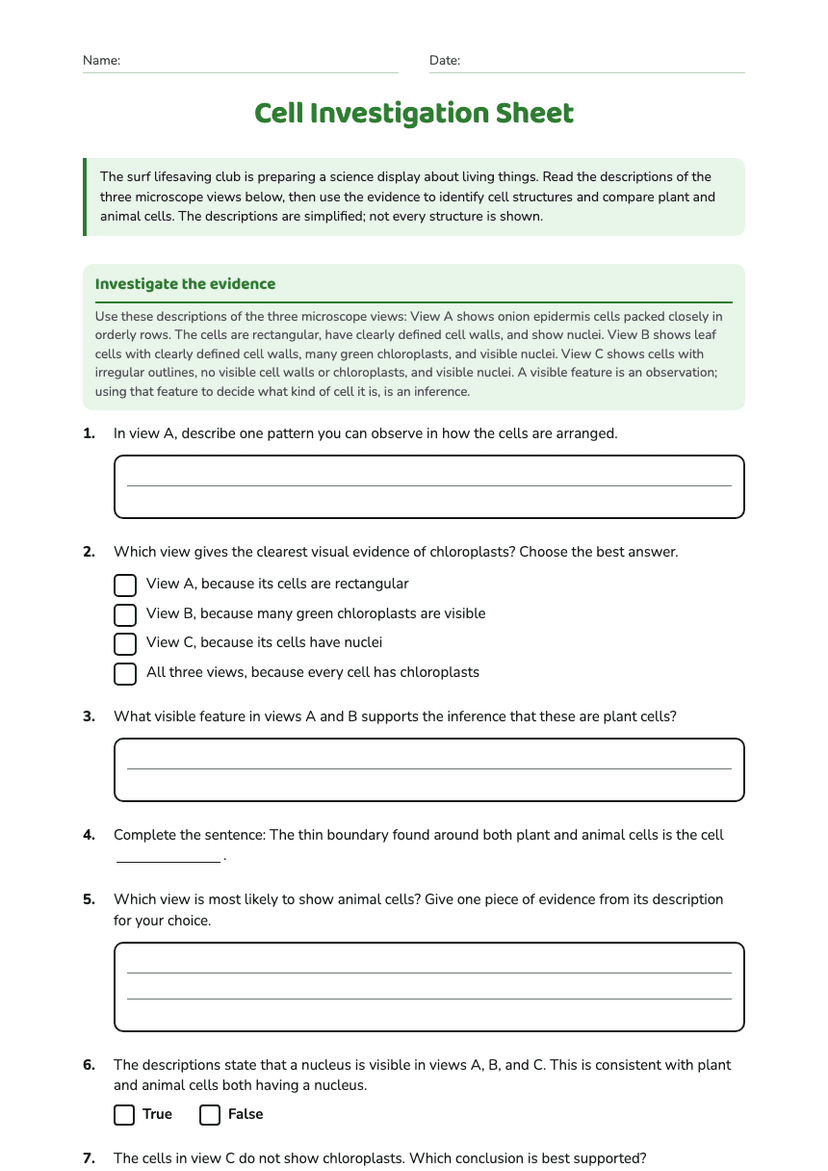
Cells and organisation
Mark the responses using the scientific evidence shown in each question.
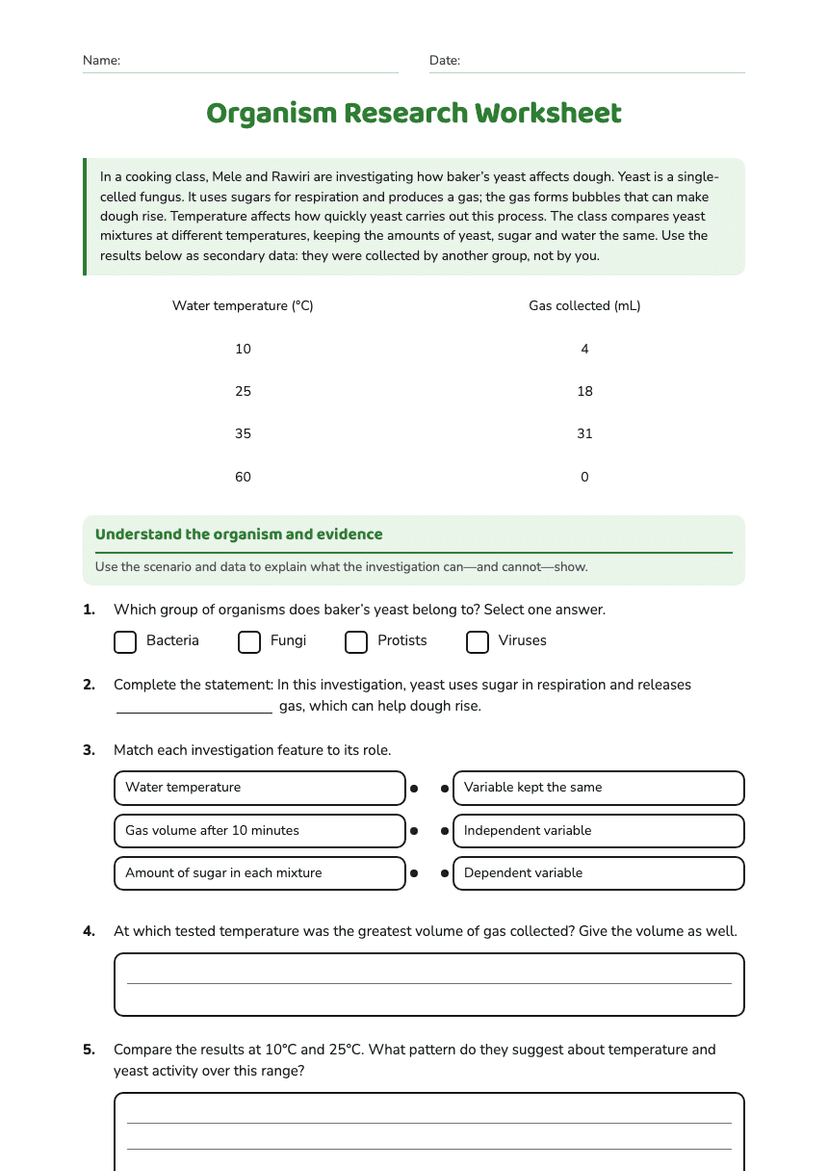
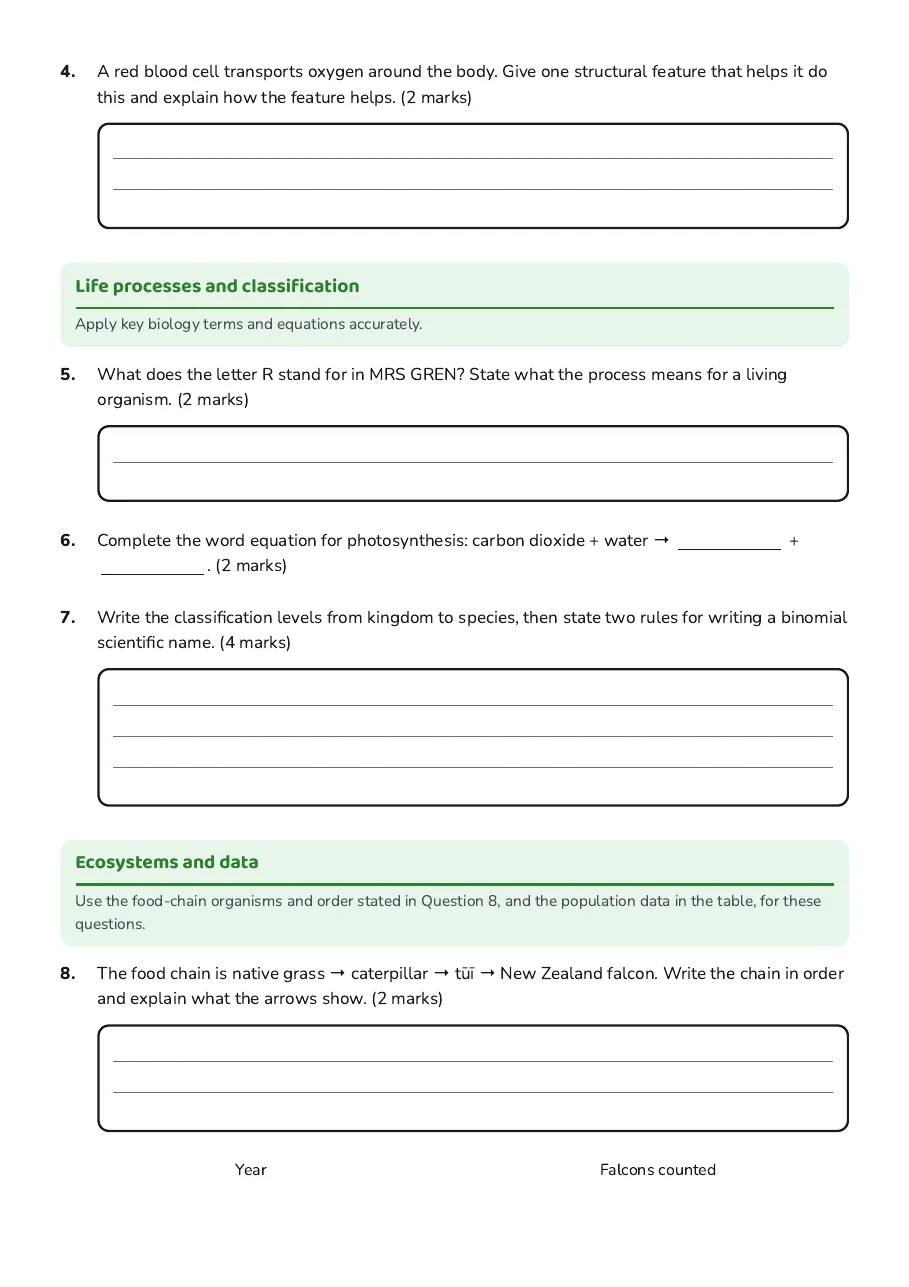
Life processes and classification
Apply key biology terms and equations accurately.
Ecosystems and data
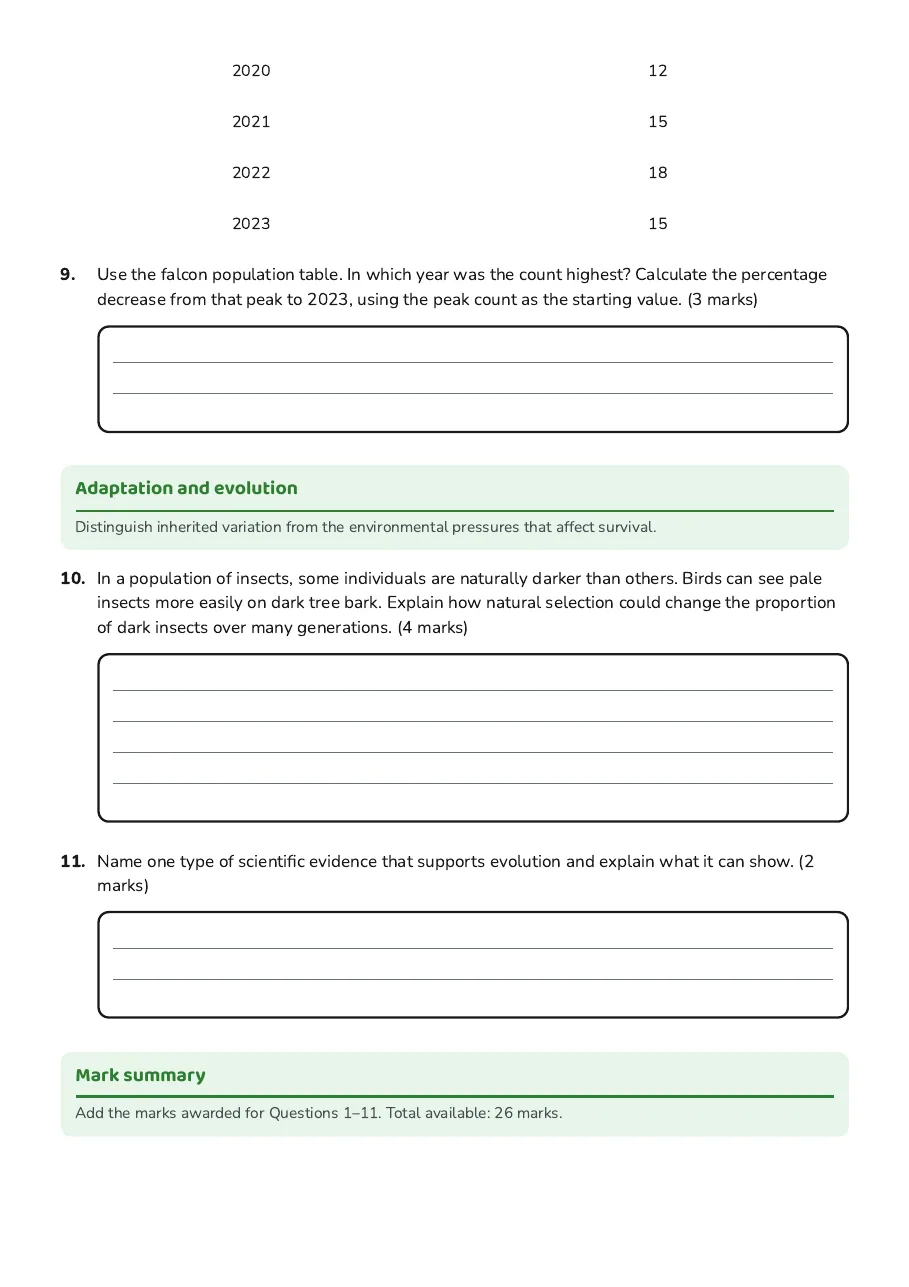
Use the food-chain organisms and order stated in Question 8, and the population data in the table, for these questions.
Year
Falcons counted
2020
12
2021
15
2022
18
2023
15
Adaptation and evolution
Distinguish inherited variation from the environmental pressures that affect survival.
Mark summary
Add the marks awarded for Questions 1–11. Total available: 26 marks.
3 printable pages
Page 1
Page 2
Page 3
About This Worksheet
Free in Kuraplan
Sign up free, grab the PDF, and customize it for your class.
Print-Ready
Formatted for standard paper. Clean layout, easy to read.
AI-Generated
Created with Kuraplan's AI, designed for real classroom use.
For Teachers & Parents
Use in classrooms, for homework, tutoring, or homeschool.
Need a custom version of this worksheet?
Kuraplan's AI generates custom worksheets in seconds — differentiated for every learner, aligned to your curriculum.
Generate Custom Worksheets — Free