NZ Outdoor Weather Preparation
A free pe worksheet ready for your classroom. Open in Kuraplan to grab the print-ready PDF, customize it for your students, or generate a fresh version in seconds.
NZ Outdoor Weather Preparation
Part 1: Weather Information and Interpretation
Chosen outdoor activity: ____________________________
Location and date: ____________________________ Start time: __________
Use current information from official sources such as MetService, DOC, local councils, harbourmasters, or regional river and alpine services. Do not rely on this worksheet as a current forecast.
Part 2: Applying Weather Information to Decisions
Route or area: _________________________________________________
Weather factor to monitor: ____________________ Possible effect: ____________________
Clothing and equipment needed: _________________________________________________
Alternative route, activity or finish time: _________________________________________
Part 3: Evidence Checklist, Self-Assessment and Teacher Guide
Student evidence checklist: Tick each item when completed.
I identified reliable, current NZ weather information sources. I explained relevant forecast terms, symbols, observations and warnings. I interpreted weather information for my chosen activity and location. I considered route, timing, clothing, equipment and group capability. I identified hazards, changing conditions and possible consequences. I made and justified go, no-go, postponement or route-change decisions. I described communication, recording and emergency actions. I completed a practical analysis using a current official source.One skill I need to improve: _________________________________________________
Answer Guide and Teacher Marking Schedule
1. Accept current official and relevant sources, such as MetService forecasts and watches or warnings, DOC track information, local council updates, river conditions, or maritime information. The student explains reliability and relevance.
2. A = official advice about dangerous conditions; B = how far a person can see; C = movement of waves across open water; D = the period covered by the forecast.
3. Indicative answers include strong or gusting wind, heavy rain, poor visibility, snow risk, and tide timing. Accept any three with a sensible effect on safety or planning.
4. All options except the clothing-brand statement.
5. Responses should connect forecast factors to a specific route, timing, clothing, equipment and alternative plan. Examples include waterproof layers, warm clothing, map and compass, communication equipment, an earlier finish, or a lower-risk route.
6. A sufficient response makes a clear no-go, postponement or modification decision and refers to the warning, wind, rain, route exposure, group ability and safety consequences.
7. Immediate actions may include stopping, regrouping, checking the map and location, moving to safe shelter, avoiding the river, and contacting the leader. A longer-term decision may be turning back, changing route or ending the activity.
8. A sufficient response includes a pre-activity briefing, an identified responsible person, an itinerary or trip record, updates to a trusted contact, written or electronic records of decisions, and an emergency message containing location, situation, group numbers, hazards and assistance required.
9. Award sufficient evidence when the student uses a current official source, accurately records relevant conditions, identifies hazards and changes, makes a justified decision, and explains appropriate controls, communication and monitoring.
Overall judgement: Evidence is sufficient when the student demonstrates practical understanding across all checklist areas, applies information to the chosen activity, and gives safety decisions that are logical, clearly communicated and supported by weather evidence.
Teacher verification: Evidence sighted:
Yes NoTeacher comment:
Teacher name and signature: __________________________________ Date: ____/____/________
About This Worksheet
Free in Kuraplan
Sign up free, grab the PDF, and customize it for your class.
Print-Ready
Formatted for standard paper. Clean layout, easy to read.
AI-Generated
Created with Kuraplan's AI, designed for real classroom use.
For Teachers & Parents
Use in classrooms, for homework, tutoring, or homeschool.
Need a custom version of this worksheet?
Kuraplan's AI generates custom worksheets in seconds — differentiated for every learner, aligned to your curriculum.
Generate Custom Worksheets — FreeMore PE Worksheets
Taha Tinana Wellbeing
Free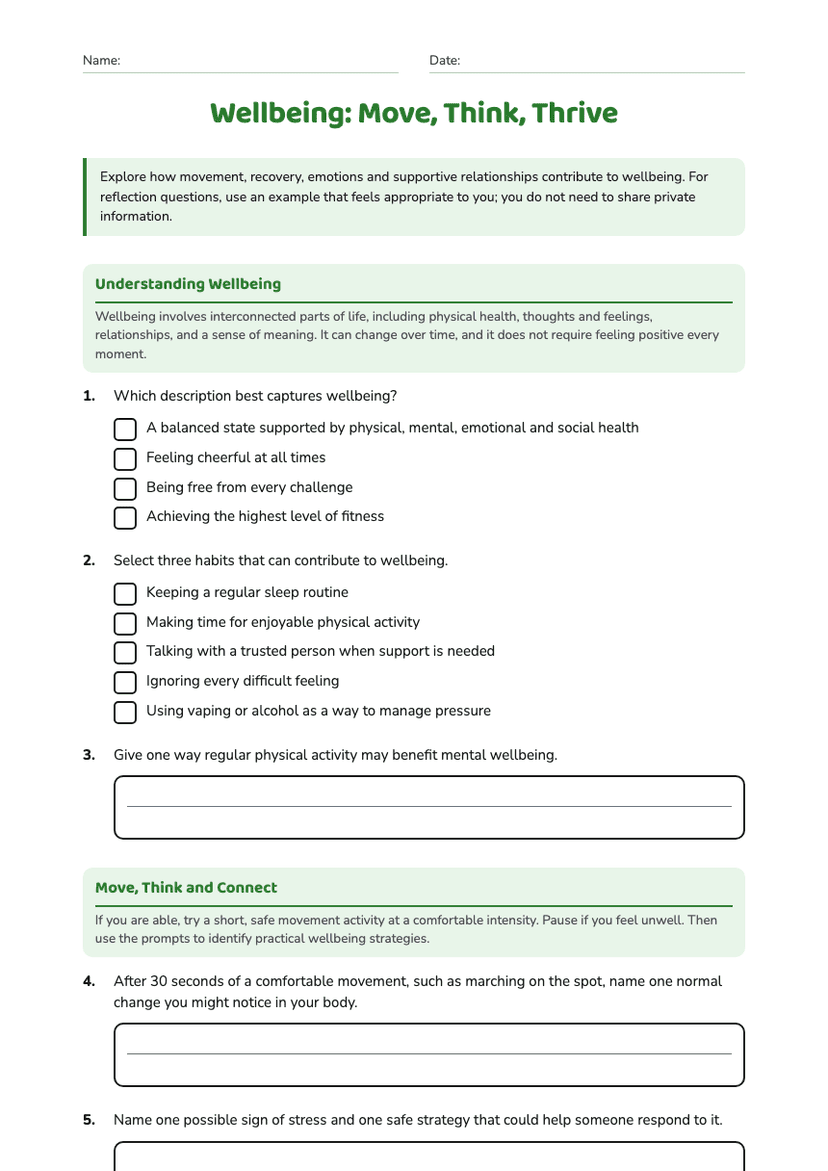
Wellbeing: Move, Think, Thrive
Free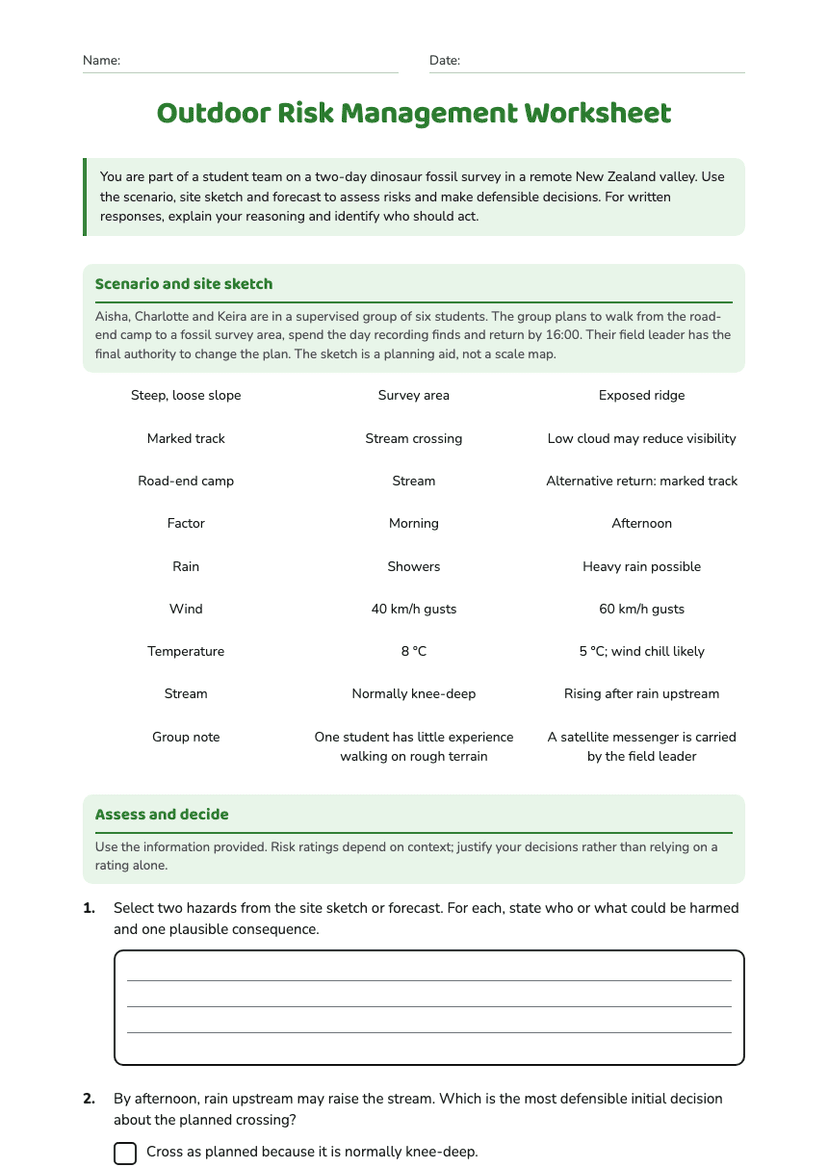
Outdoor Risk Management Worksheet
Free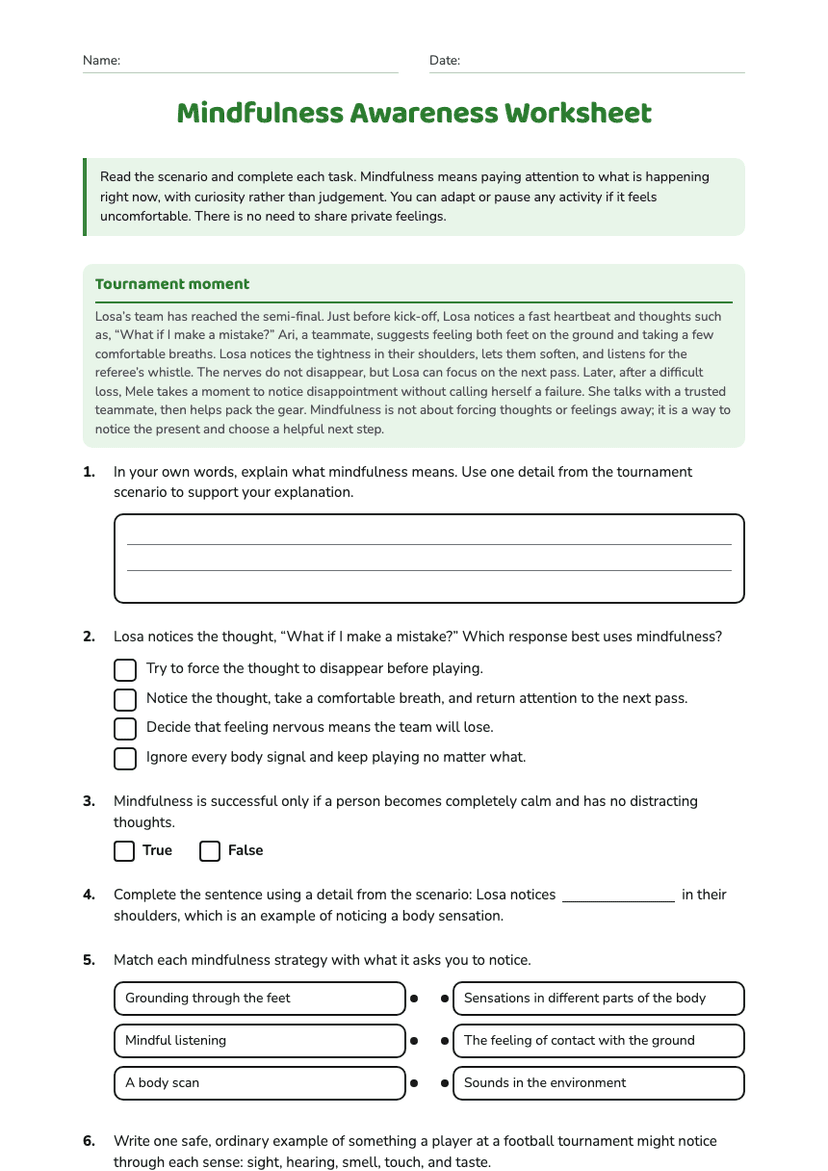
Mindfulness Awareness Worksheet
Free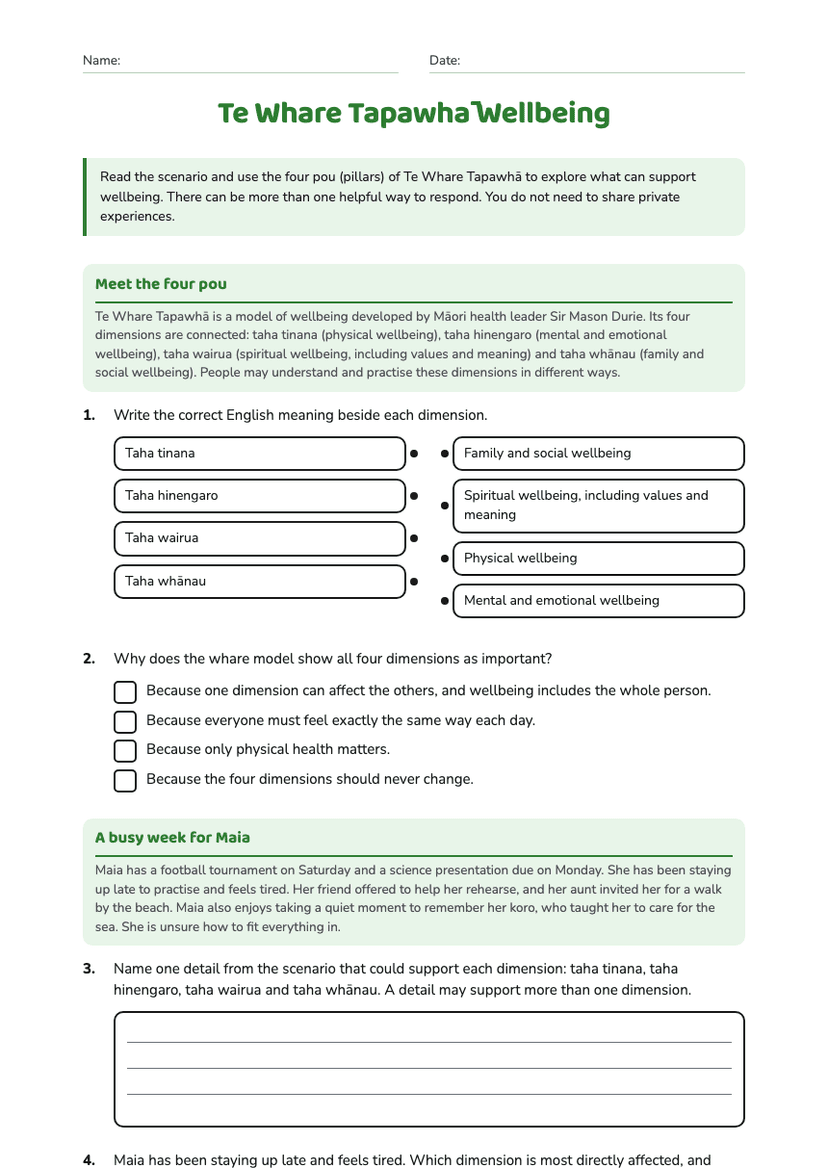
Te Whare Tapawhā Wellbeing
Free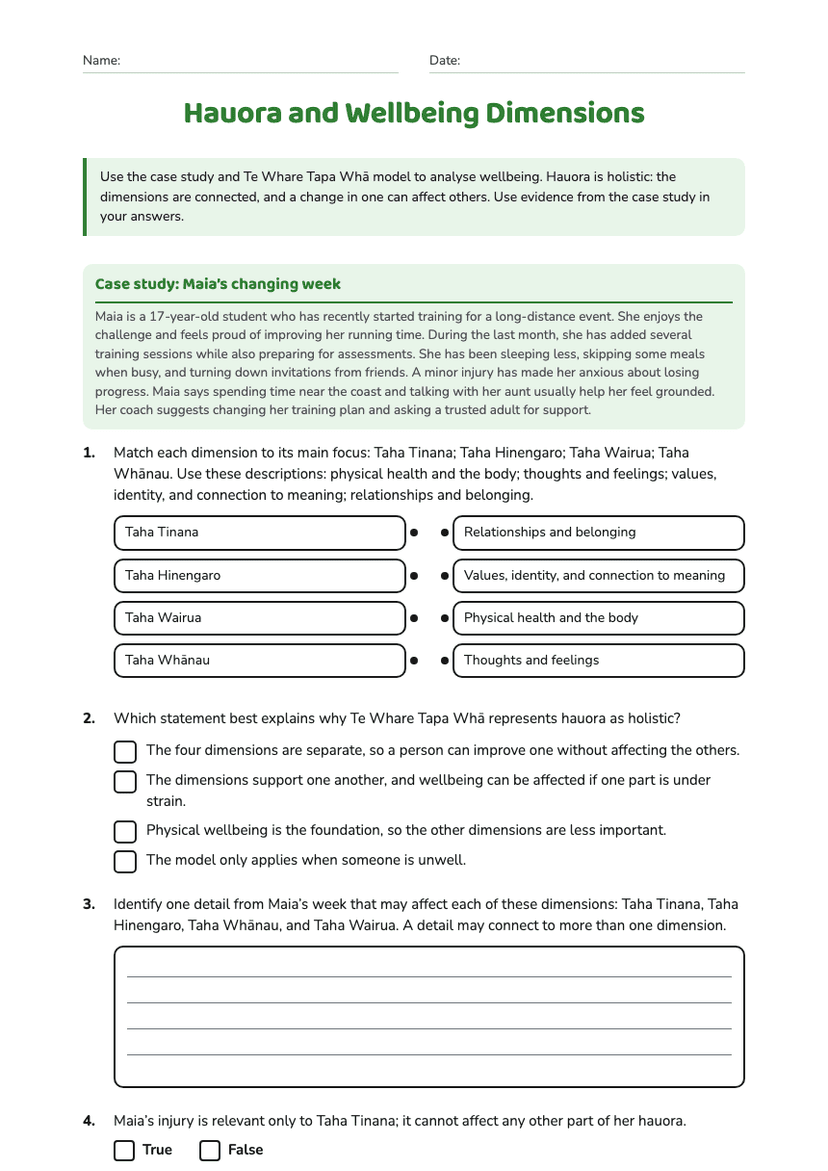
Hauora and Wellbeing Dimensions
Free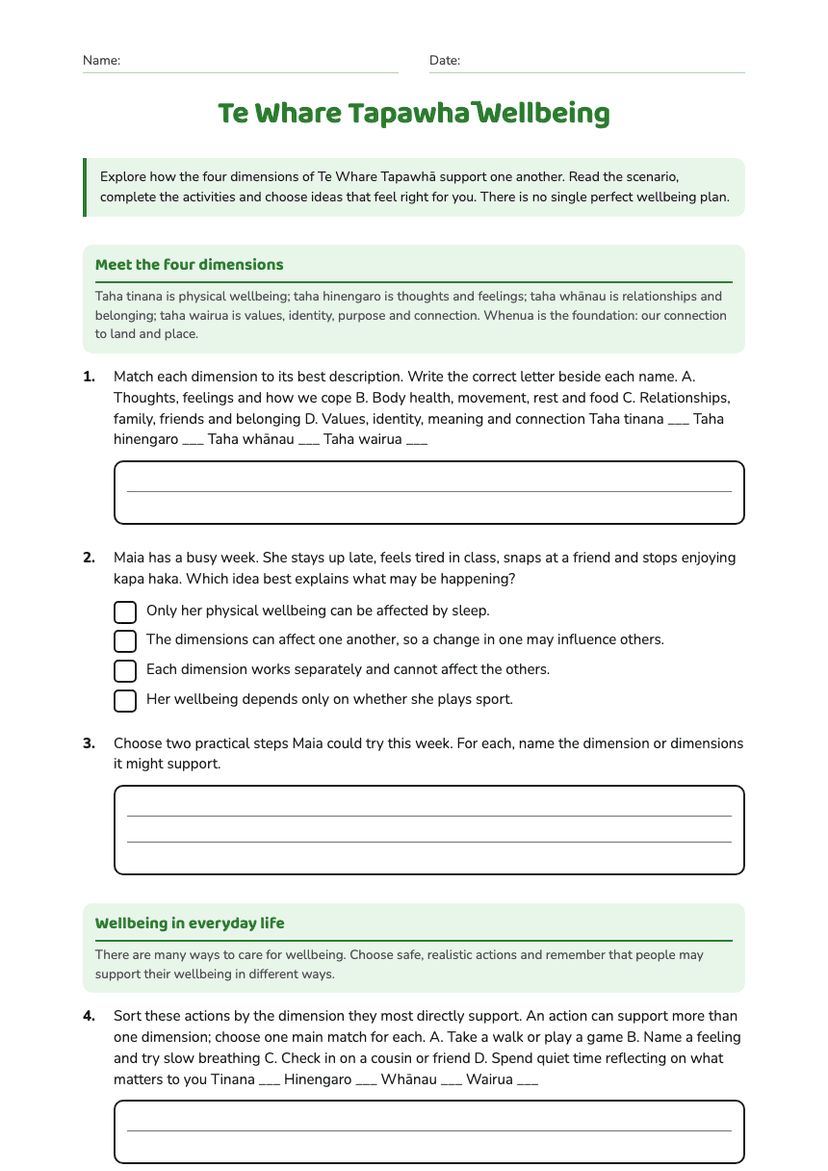
Te Whare Tapawhā Wellbeing
Free