PEFreePrintable

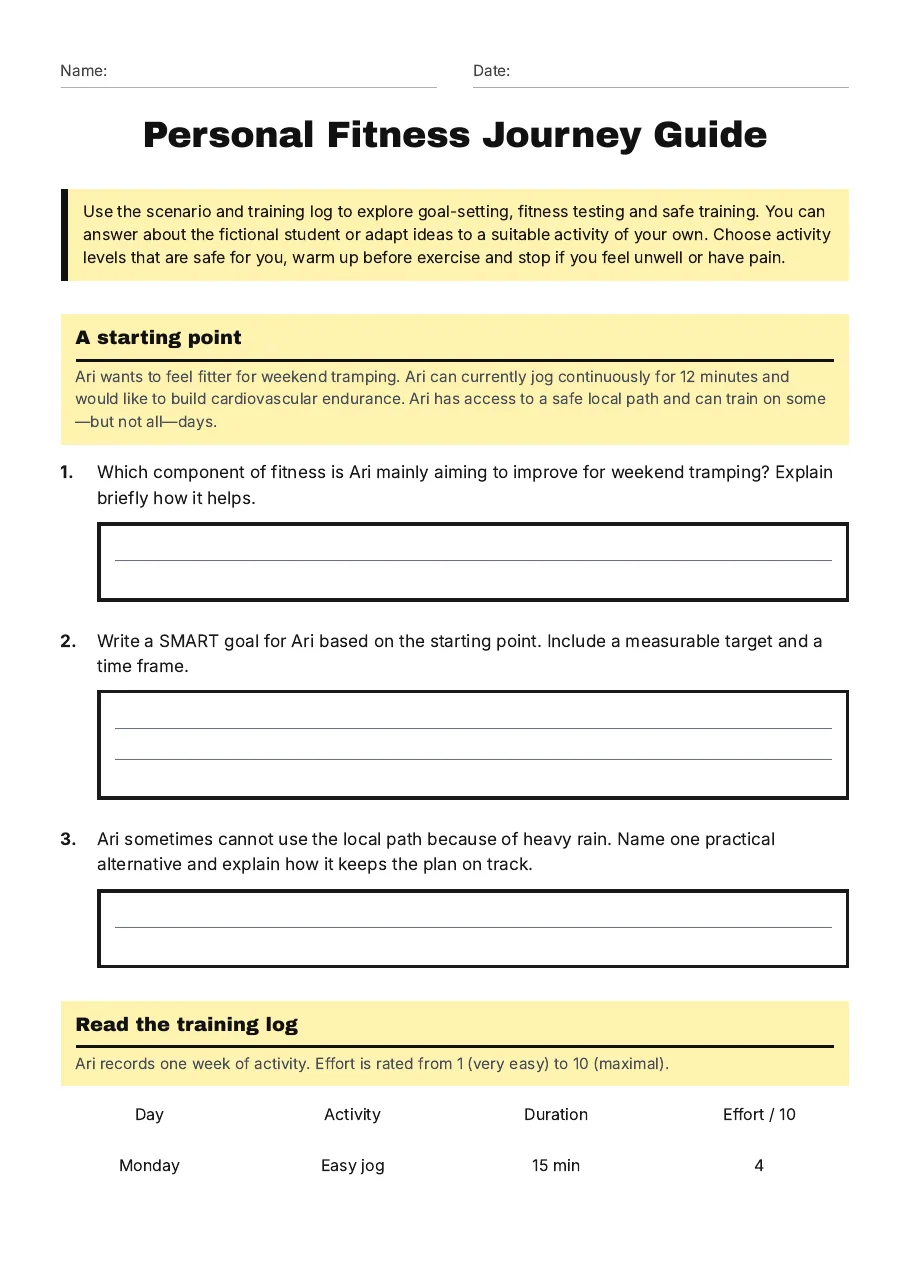
Personal Fitness Journey Guide

A free pe worksheet ready for your classroom. Open in Kuraplan to grab the print-ready PDF, customize it for your students, or generate a fresh version in seconds.
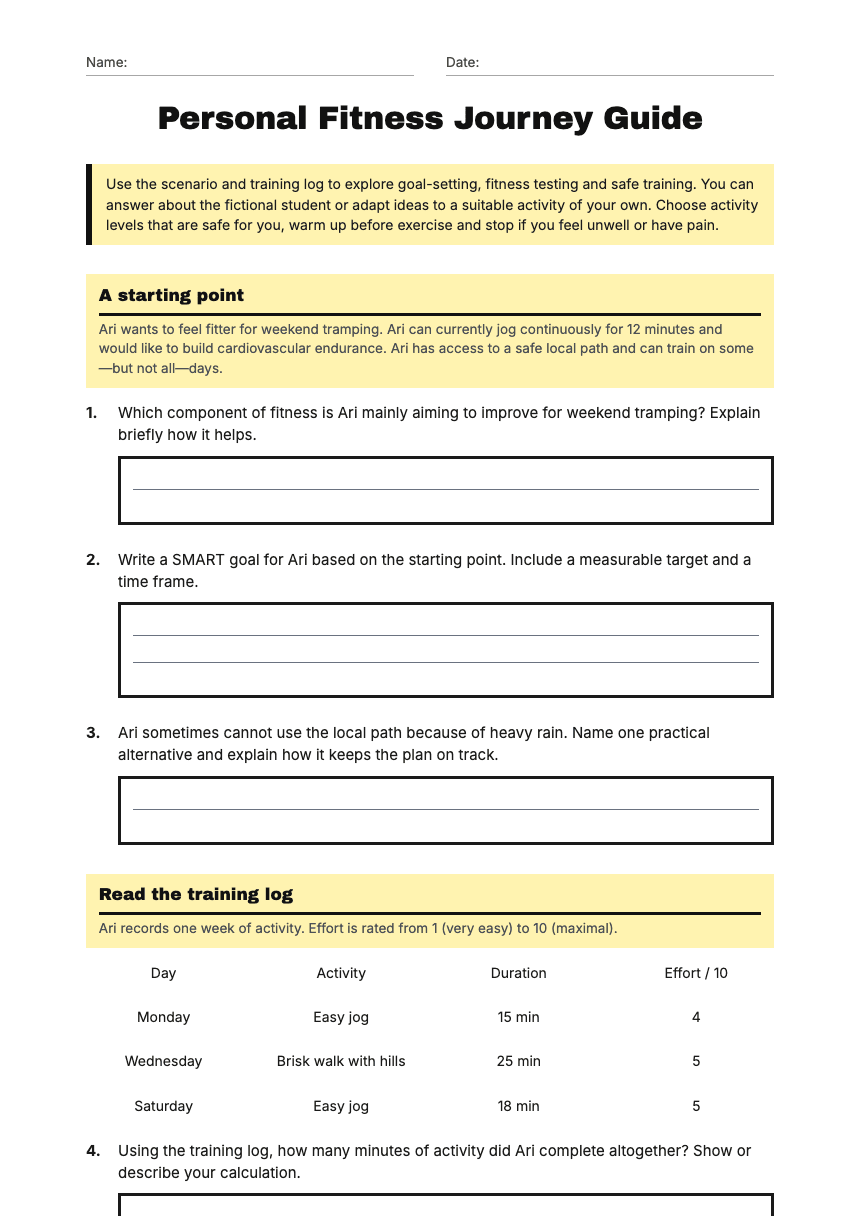
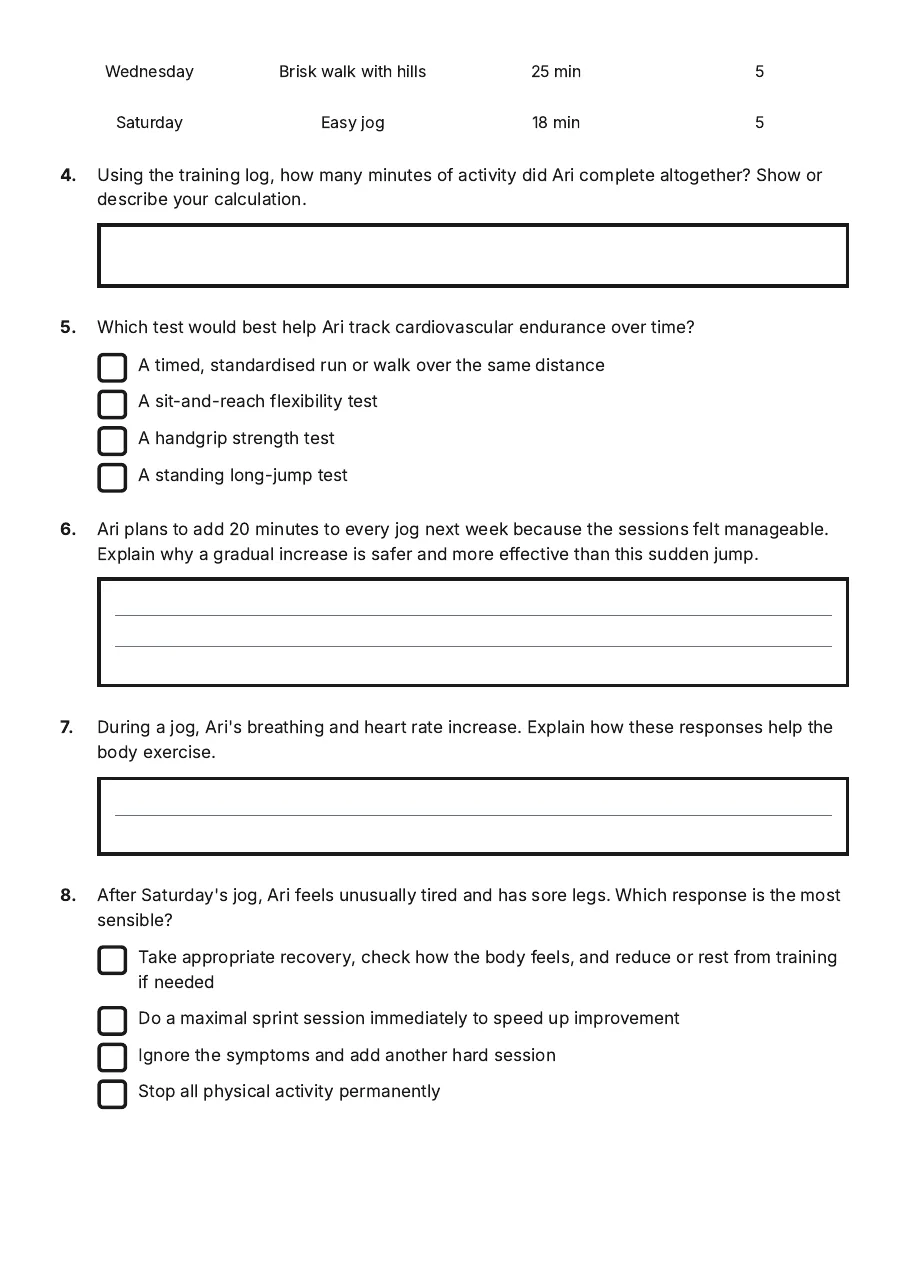
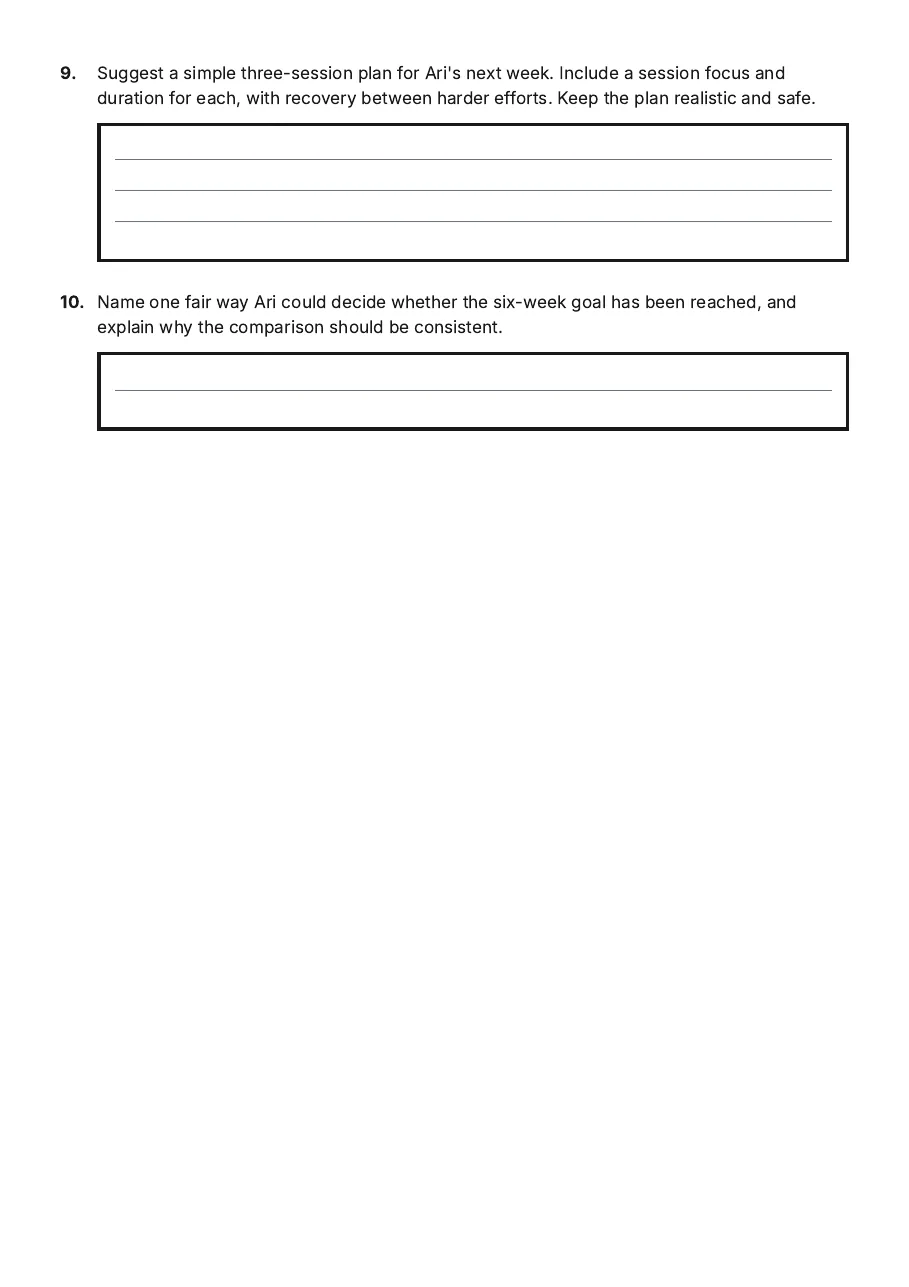
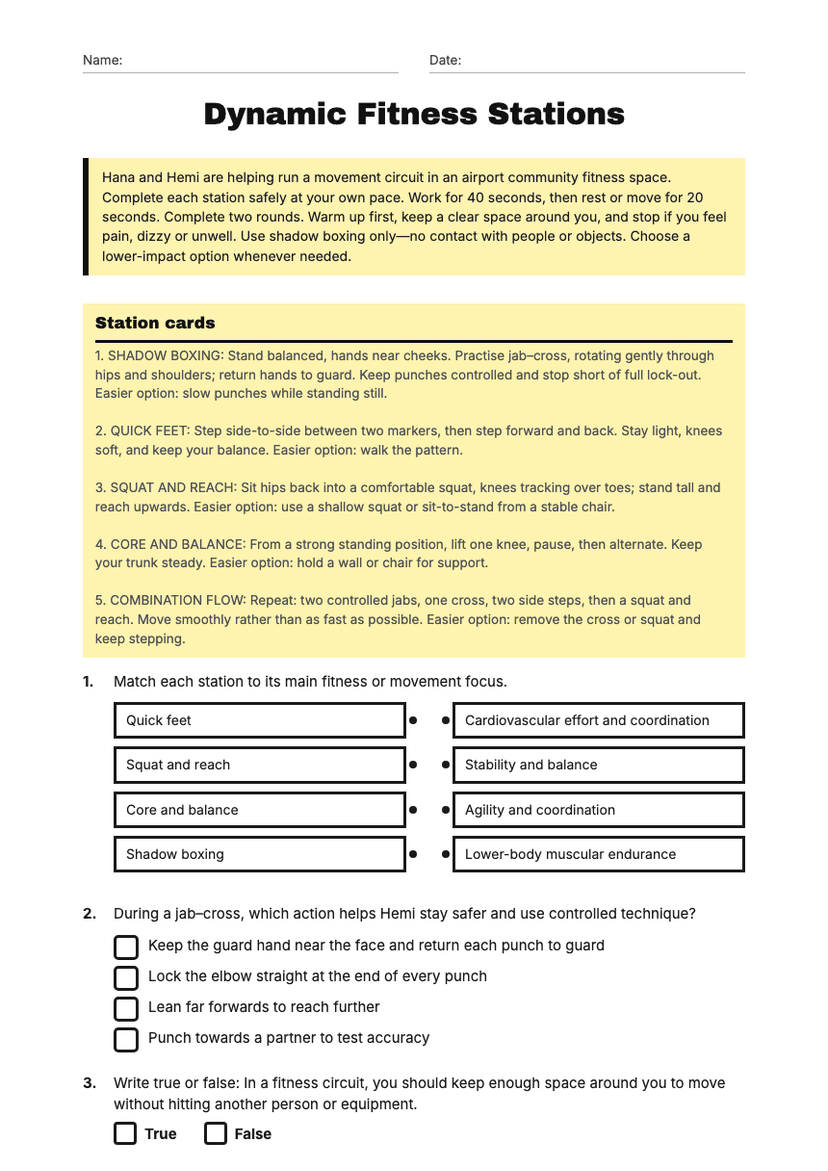
Personal Fitness Journey Guide worksheet preview

Personal Fitness Journey Guide

Worksheet illustration

📘 Lesson 1: Goal Setting

WALT: We are learning to set clear, achievable fitness goals and plan steps to reach them.

Success criteria: I can write a long-term and short-term goal, make a SMART goal, and identify barriers with strategies to overcome them.

Differentiation: Offer sentence starters for learners who need structure; allow spoken responses recorded for those with writing difficulties.

Dyslexia-friendly: Use clear fonts, short lines, bold key words and colour-coded steps (teacher to provide).

1. Write one long-term fitness goal and one short-term fitness goal (be specific):
2. Turn your short-term goal into a SMART goal (Specific, Measurable, Achievable, Relevant, Time-bound):
3. Identify one possible barrier to your goal and one strategy you will use to overcome it:

🏃 Lesson 2: Fitness Tests & Basic Physiology

WALT: We are learning how to test fitness components and understand basic physiological responses to training.

Success criteria: I can select appropriate tests for fitness components, record baseline results, calculate simple targets and describe a physiological adaptation.

Differentiation: Provide simplified test instructions or extension challenges as needed; allow pair-work for data collection.

Dyslexia-friendly: Read test instructions aloud, provide a checklist and clear spacing for recording results.

4. Which test primarily measures cardiovascular endurance?

Beep (multi-stage) test

Sit-and-reach test

Handgrip dynamometer

Vertical jump

5. Check all components of fitness commonly assessed by a 12-minute/Cooper-style test:

Cardiovascular endurance

Muscular strength

Flexibility

Speed

Muscular endurance

6. Record your baseline results (write numbers): 20 m sprint time: ____ s | Beep test level: ____
7. Target calculation: If your 20 m sprint is 4.50 s and you aim to improve by 5%, what is your new target time (s)? Show working:
8. Briefly explain one physiological adaptation from regular cardiovascular training (e.g., effect on heart, lungs or blood):

🧭 Reflection, Planning & Extension

WALT: We are learning to plan weekly training, reflect on progress and extend training for greater gains.

Success criteria: I can write a 3-session weekly plan, reflect honestly on progress, and create a progressive extension plan if ready.

Differentiation & Dyslexia-friendly: Provide template grids for planning, allow voice notes for reflection, and colour-code session types (teacher option).

9. Plan three training sessions this week to improve your chosen component. For each session list: focus, duration (mins) and intensity (low/med/high):
10. Extension (advanced learners): Outline a progressive 6-week plan in 3 short points and name one measurable way to assess improvement:
11. Self-assessment: Tick statements that apply this week:

I completed the planned sessions

I improved at least one test result

I adjusted my plan based on how I felt or feedback

About This Worksheet

Free in Kuraplan

Sign up free, grab the PDF, and customize it for your class.

Print-Ready

Formatted for standard paper. Clean layout, easy to read.

AI-Generated

Created with Kuraplan's AI, designed for real classroom use.

For Teachers & Parents

Use in classrooms, for homework, tutoring, or homeschool.

Need a custom version of this worksheet?

Kuraplan's AI generates custom worksheets in seconds — differentiated for every learner, aligned to your curriculum.

Generate Custom Worksheets — Free
No credit card Curriculum-aligned Under 60 seconds

Explore more free resources