PEFreePrintable
Socio-Cultural Influences on Movement
A free pe worksheet ready for your classroom. Open in Kuraplan to grab the print-ready PDF, customize it for your students, or generate a fresh version in seconds.
Name:Date:
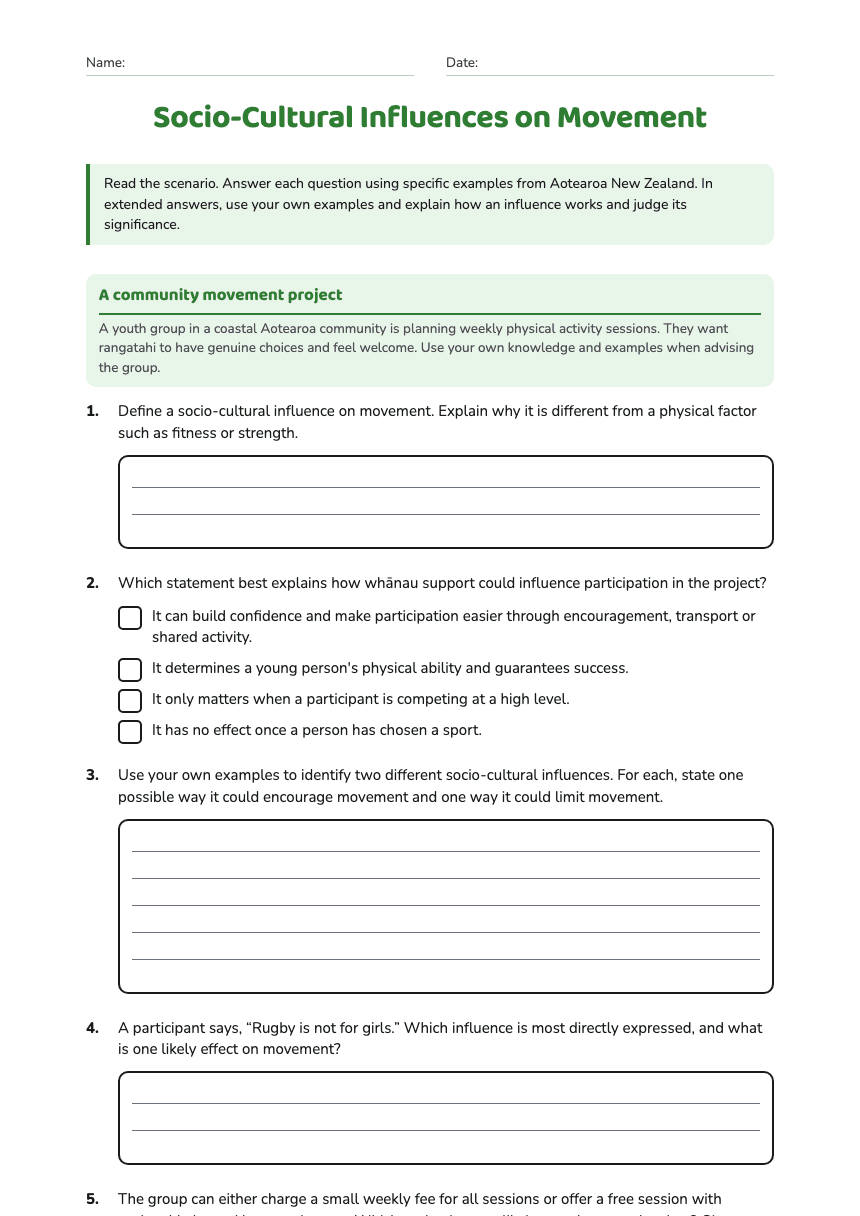
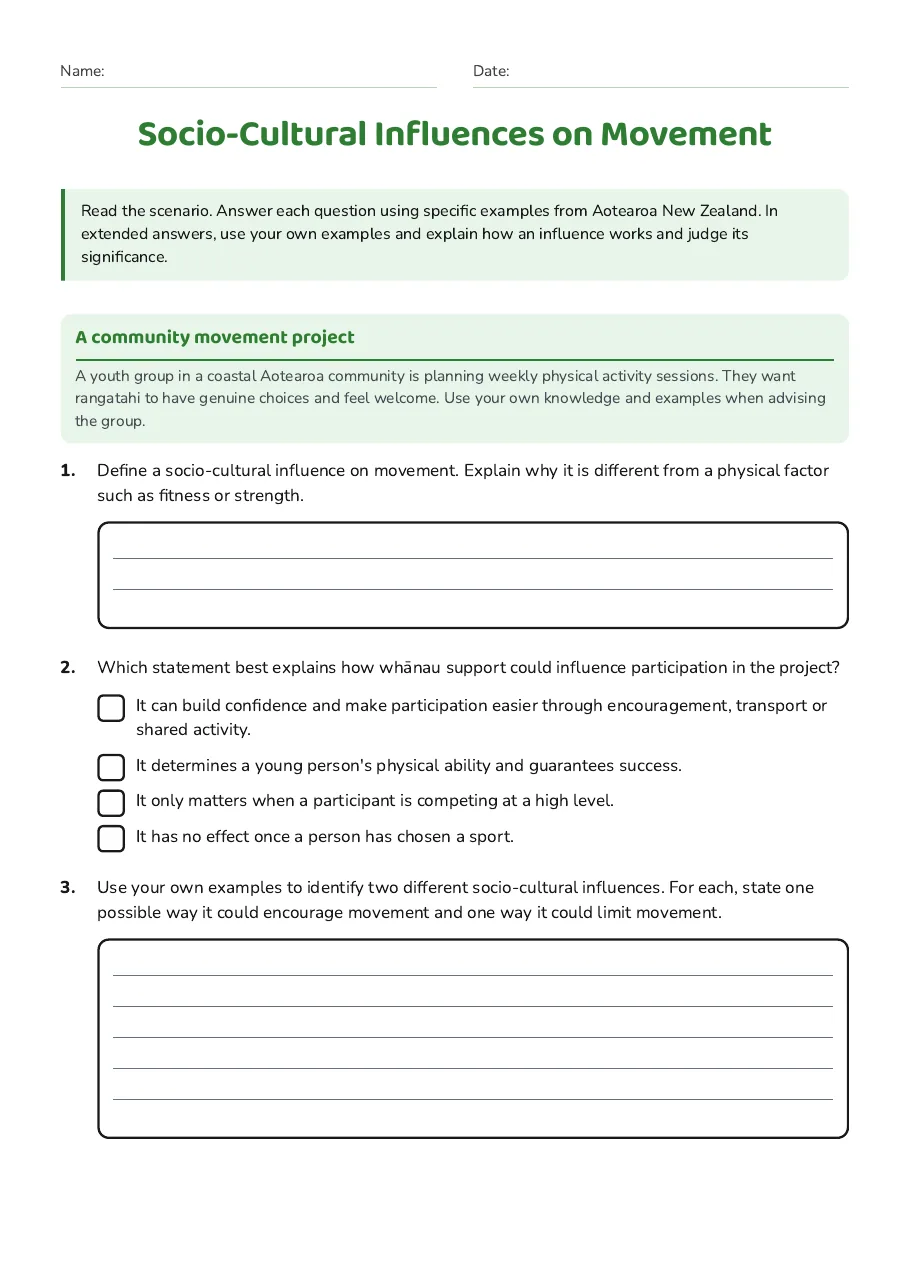
Socio-Cultural Influences on Movement
Read the scenario. Answer each question using specific examples from Aotearoa New Zealand. In extended answers, use your own examples and explain how an influence works and judge its significance.
A community movement project
A youth group in a coastal Aotearoa community is planning weekly physical activity sessions. They want rangatahi to have genuine choices and feel welcome. Use your own knowledge and examples when advising the group.
1.Define a socio-cultural influence on movement. Explain why it is different from a physical factor such as fitness or strength.
2.Which statement best explains how whānau support could influence participation in the project?
- It can build confidence and make participation easier through encouragement, transport or shared activity.
- It determines a young person's physical ability and guarantees success.
- It only matters when a participant is competing at a high level.
- It has no effect once a person has chosen a sport.
3.Use your own examples to identify two different socio-cultural influences. For each, state one possible way it could encourage movement and one way it could limit movement.
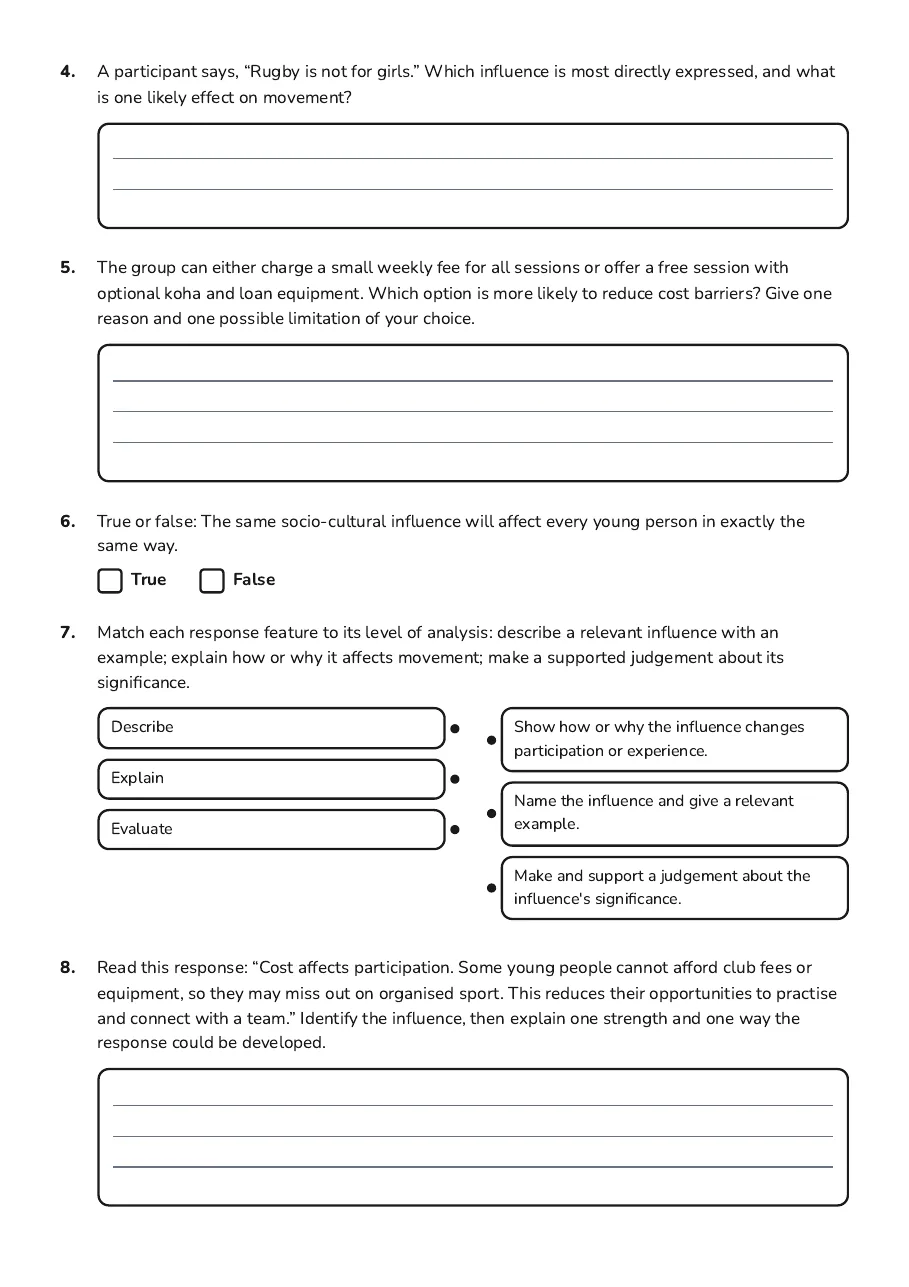
4.A participant says, “Rugby is not for girls.” Which influence is most directly expressed, and what is one likely effect on movement?
5.The group can either charge a small weekly fee for all sessions or offer a free session with optional koha and loan equipment. Which option is more likely to reduce cost barriers? Give one reason and one possible limitation of your choice.
6.True or false: The same socio-cultural influence will affect every young person in exactly the same way.
TrueFalse
7.Match each response feature to its level of analysis: describe a relevant influence with an example; explain how or why it affects movement; make a supported judgement about its significance.
- Describe
- Explain
- Evaluate
- Show how or why the influence changes participation or experience.
- Name the influence and give a relevant example.
- Make and support a judgement about the influence's significance.
8.Read this response: “Cost affects participation. Some young people cannot afford club fees or equipment, so they may miss out on organised sport. This reduces their opportunities to practise and connect with a team.” Identify the influence, then explain one strength and one way the response could be developed.
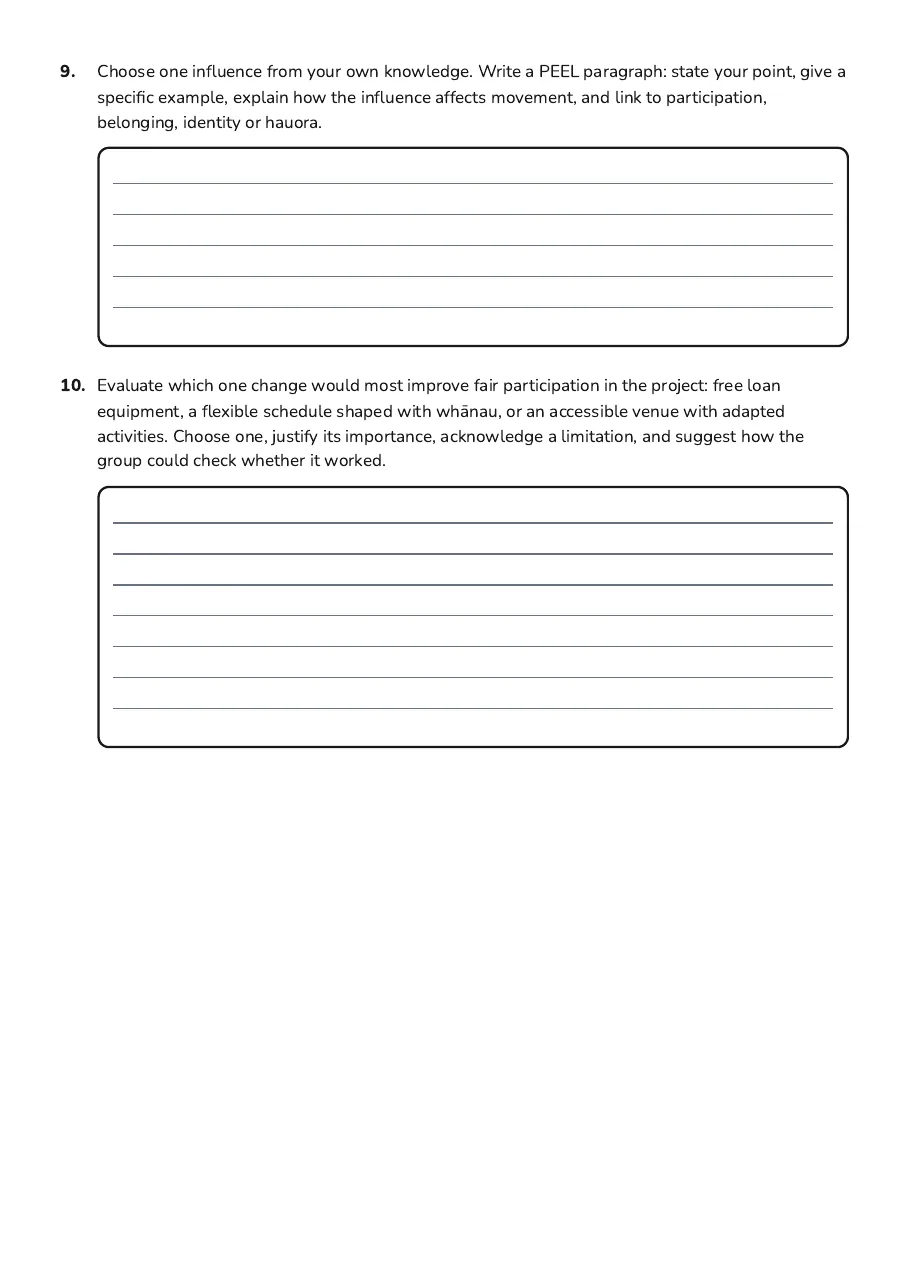
9.Choose one influence from your own knowledge. Write a PEEL paragraph: state your point, give a specific example, explain how the influence affects movement, and link to participation, belonging, identity or hauora.
10.Evaluate which one change would most improve fair participation in the project: free loan equipment, a flexible schedule shaped with whānau, or an accessible venue with adapted activities. Choose one, justify its importance, acknowledge a limitation, and suggest how the group could check whether it worked.
3 printable pages
Page 1
Page 2
Page 3
About This Worksheet
Free in Kuraplan
Sign up free, grab the PDF, and customize it for your class.
Print-Ready
Formatted for standard paper. Clean layout, easy to read.
AI-Generated
Created with Kuraplan's AI, designed for real classroom use.
For Teachers & Parents
Use in classrooms, for homework, tutoring, or homeschool.
Need a custom version of this worksheet?
Kuraplan's AI generates custom worksheets in seconds — differentiated for every learner, aligned to your curriculum.
Generate Custom Worksheets — Free No credit card Curriculum-aligned Under 60 seconds
More PE Worksheets
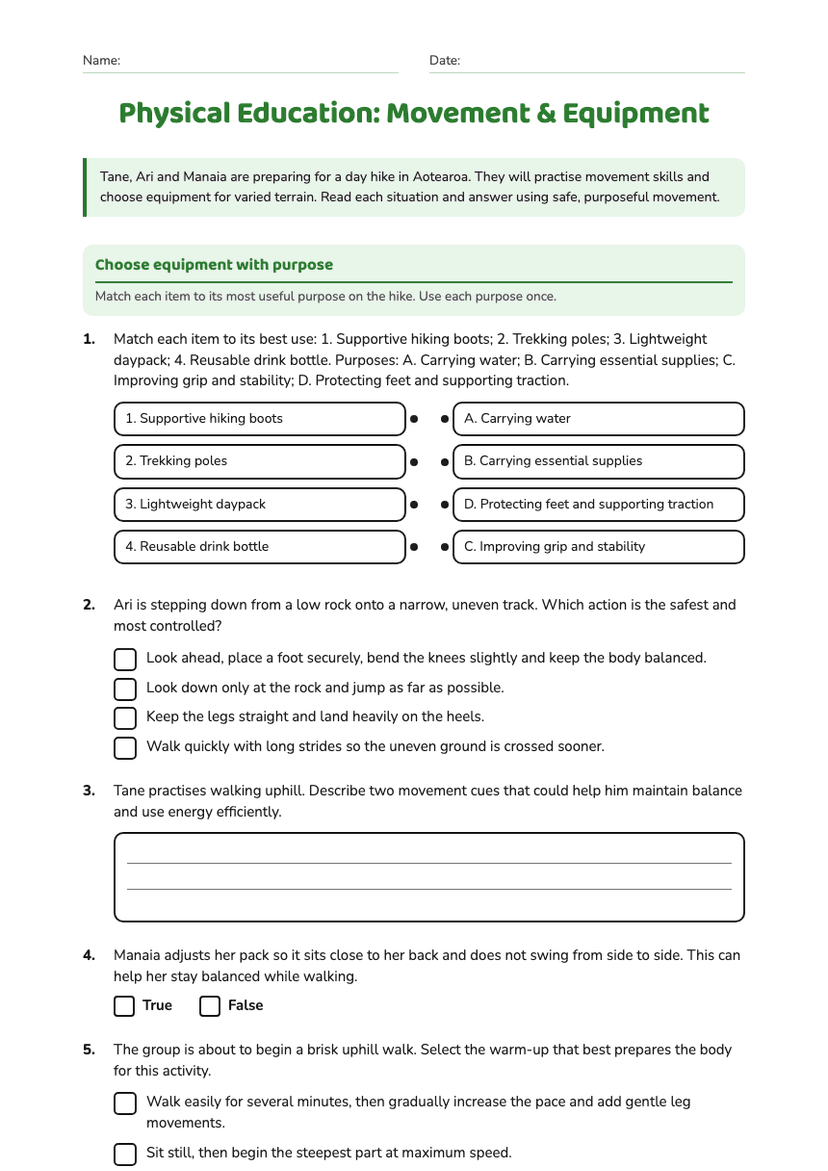
Year 10
Physical Education: Movement & Equipment
Free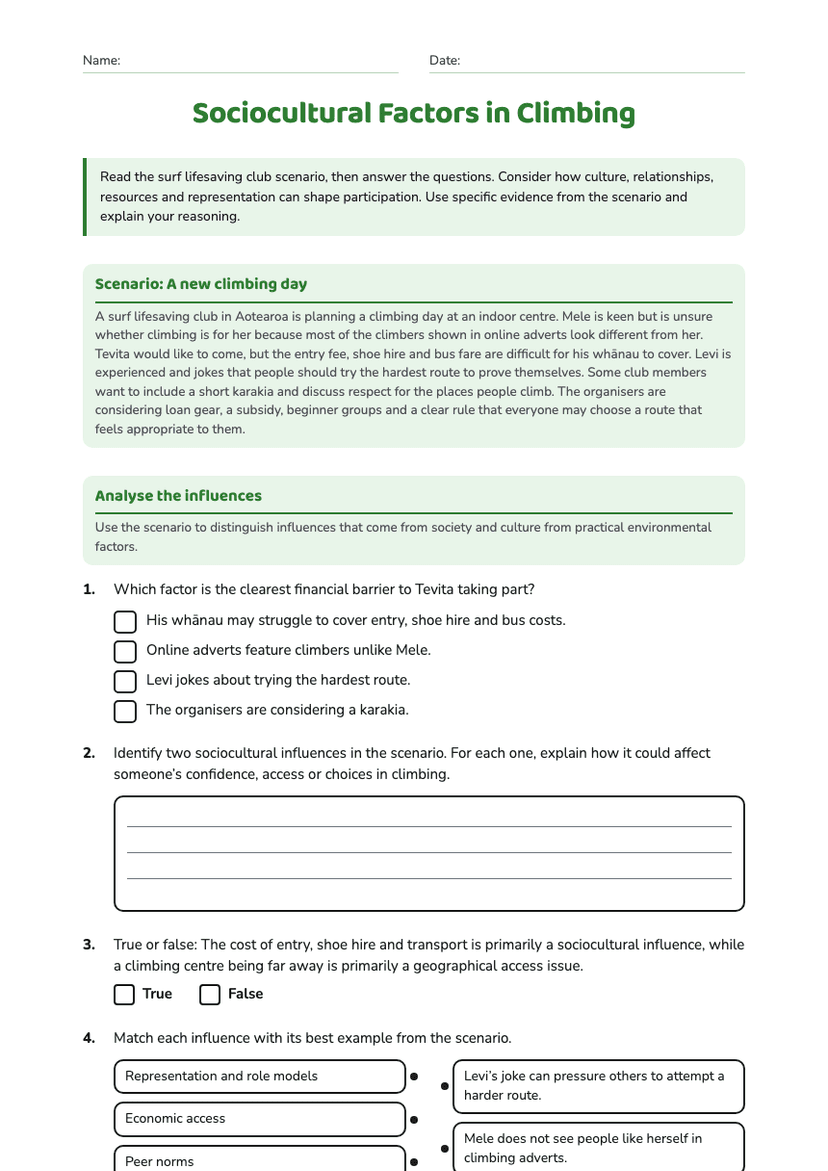
Year 11
Sociocultural Factors in Climbing
Free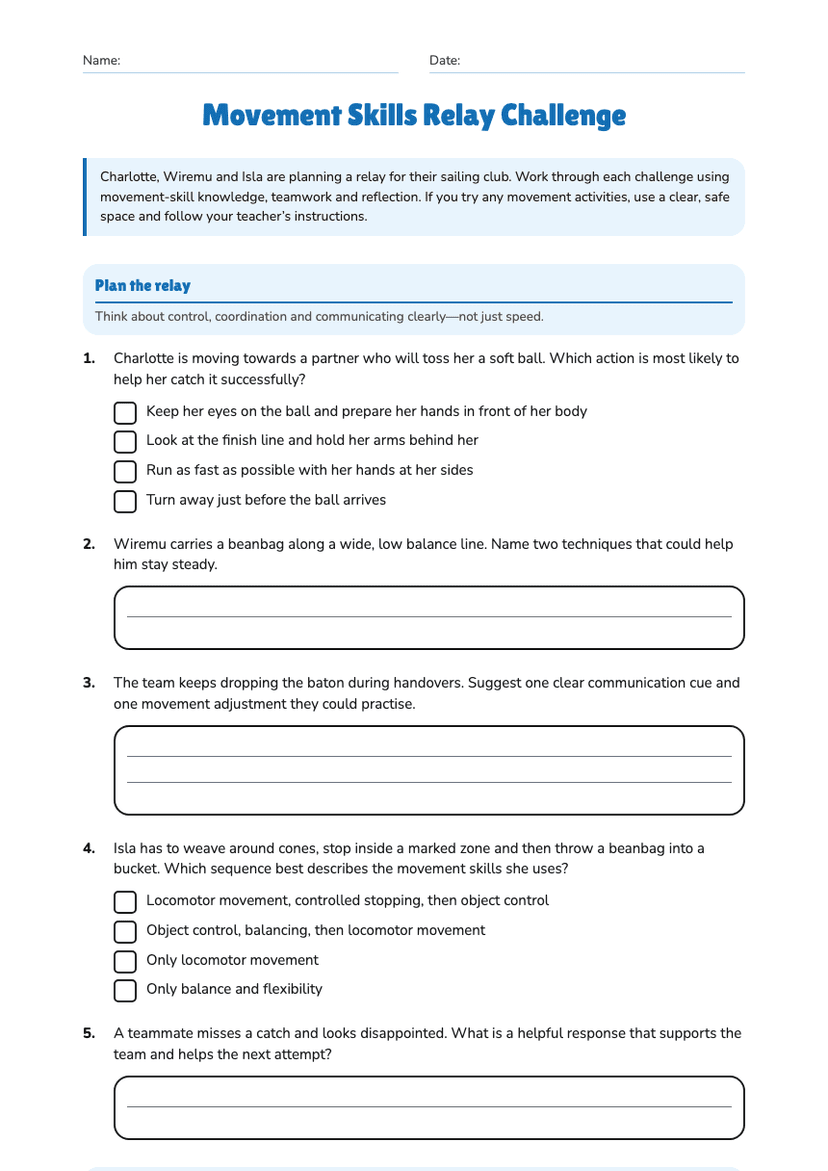
Year 5–8
Movement Skills Relay Challenge
Free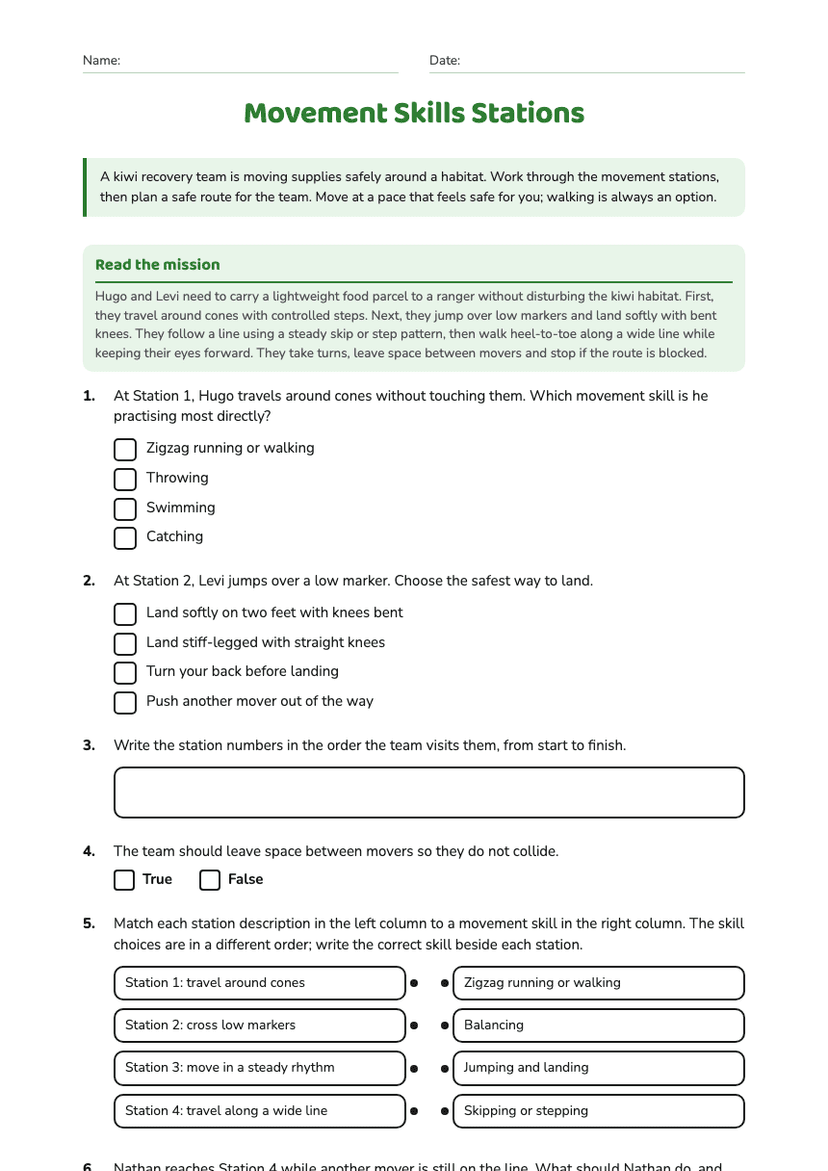
Movement Skills Stations
Free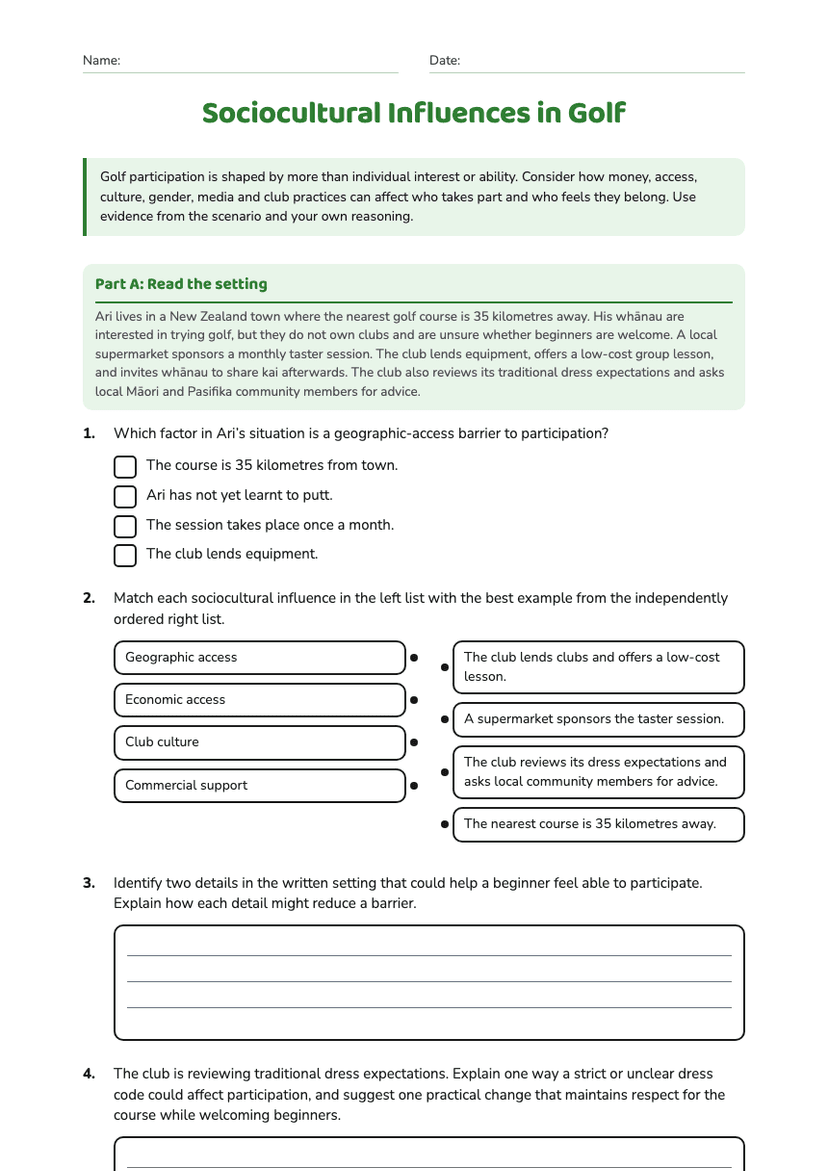
Year 11
Sociocultural Influences in Golf
Free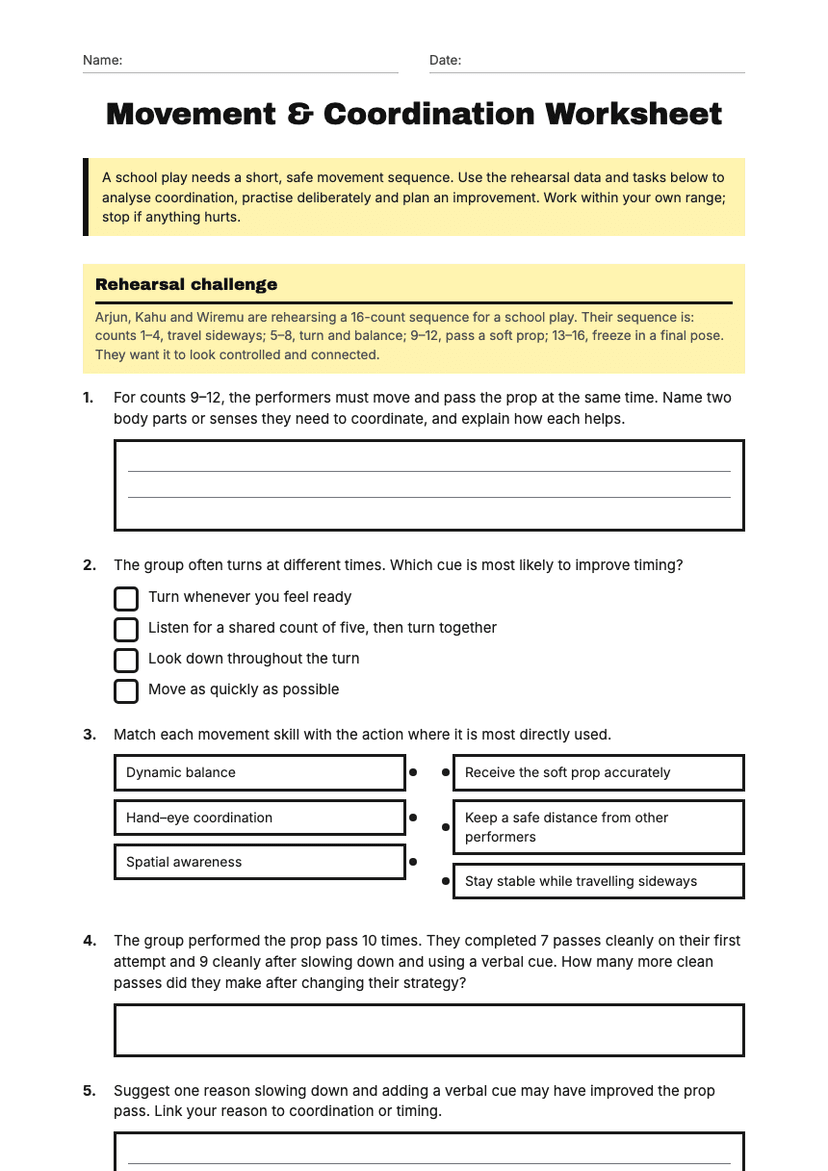
Year 11
Movement & Coordination Worksheet
Free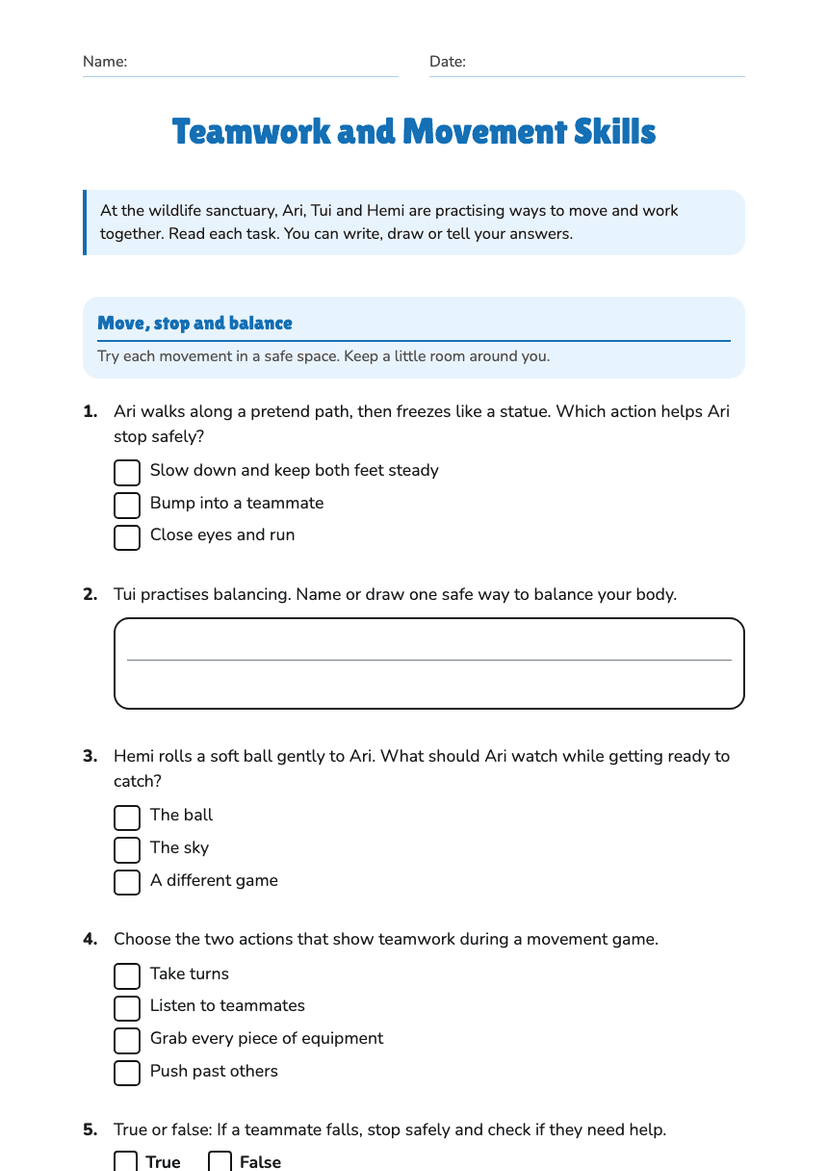
Year 0–1
Teamwork and Movement Skills
Free
Year 9