States of Matter Worksheet
A free science worksheet ready for your classroom. Open in Kuraplan to grab the print-ready PDF, customize it for your students, or generate a fresh version in seconds.
States of Matter Worksheet
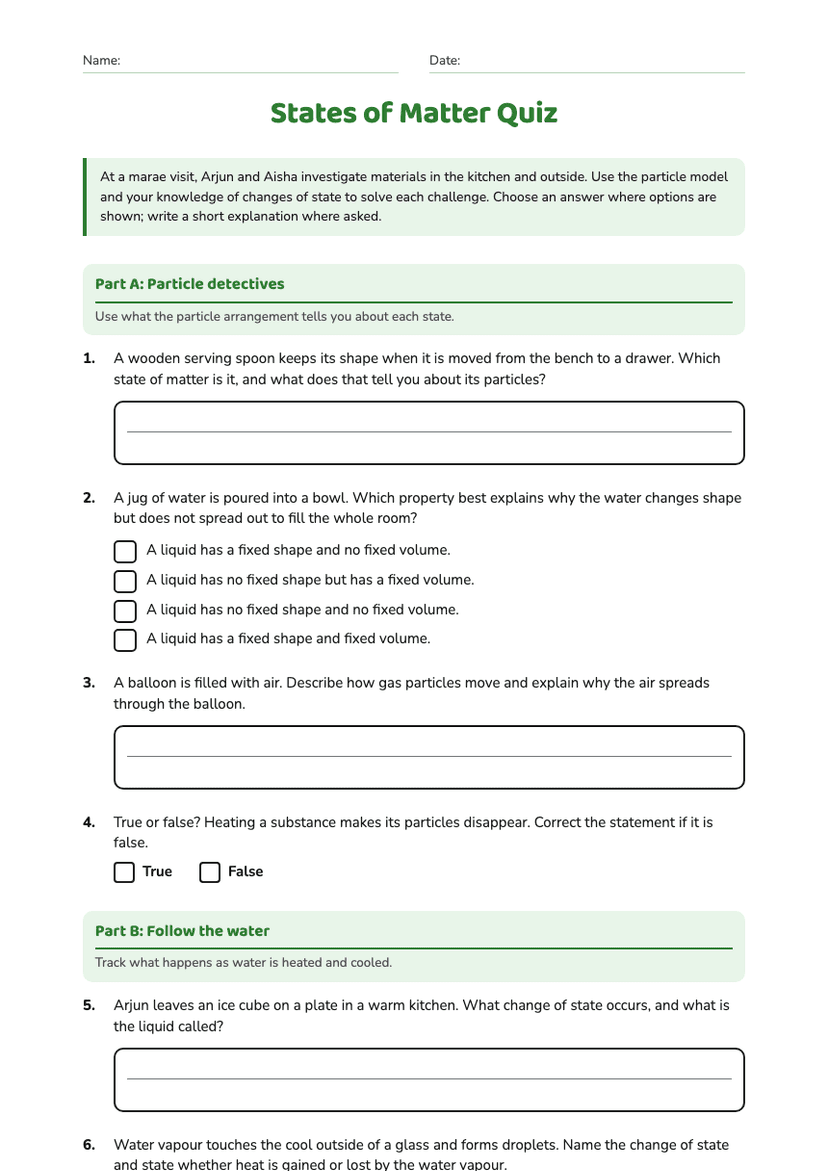
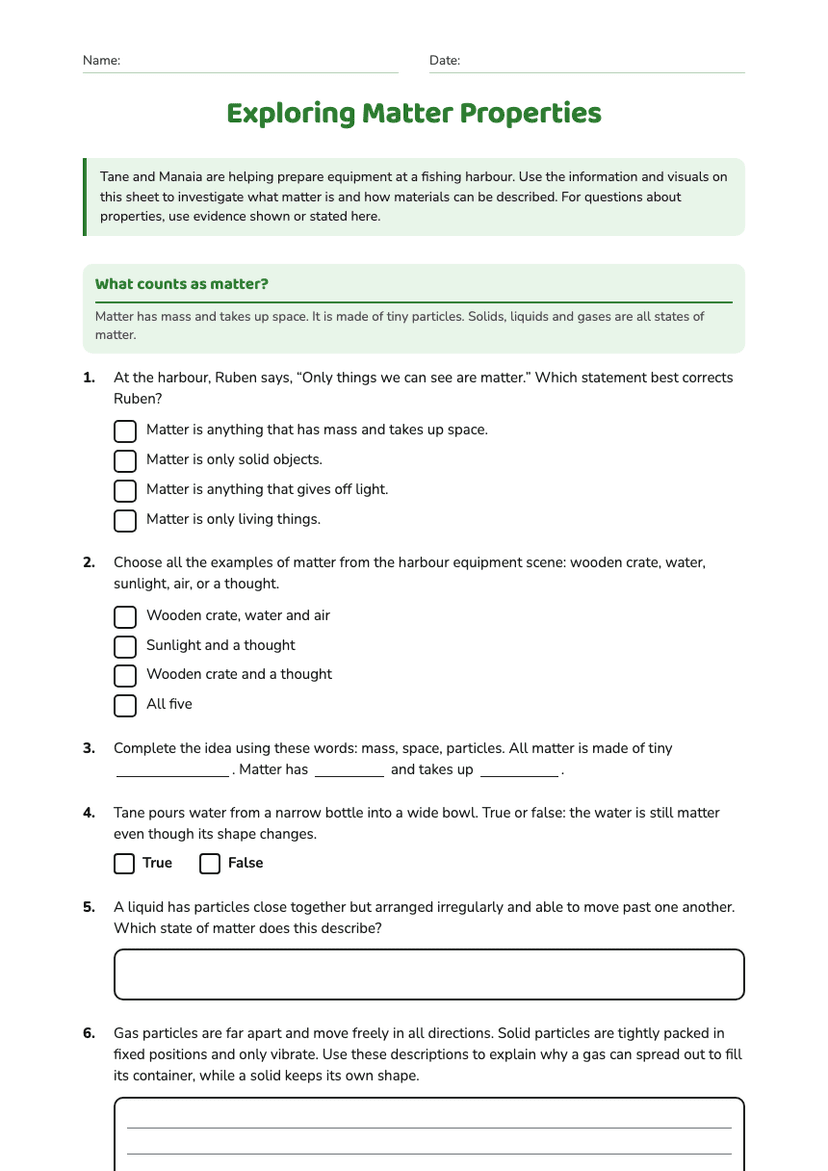
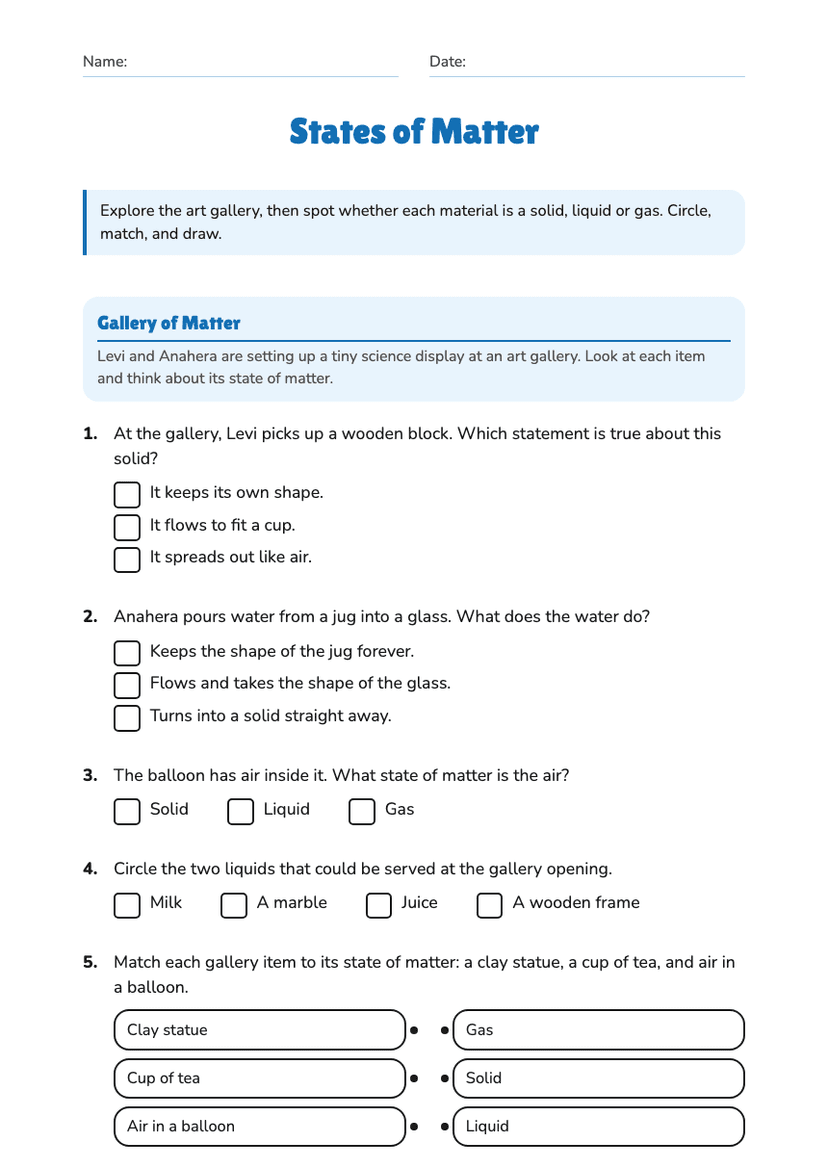
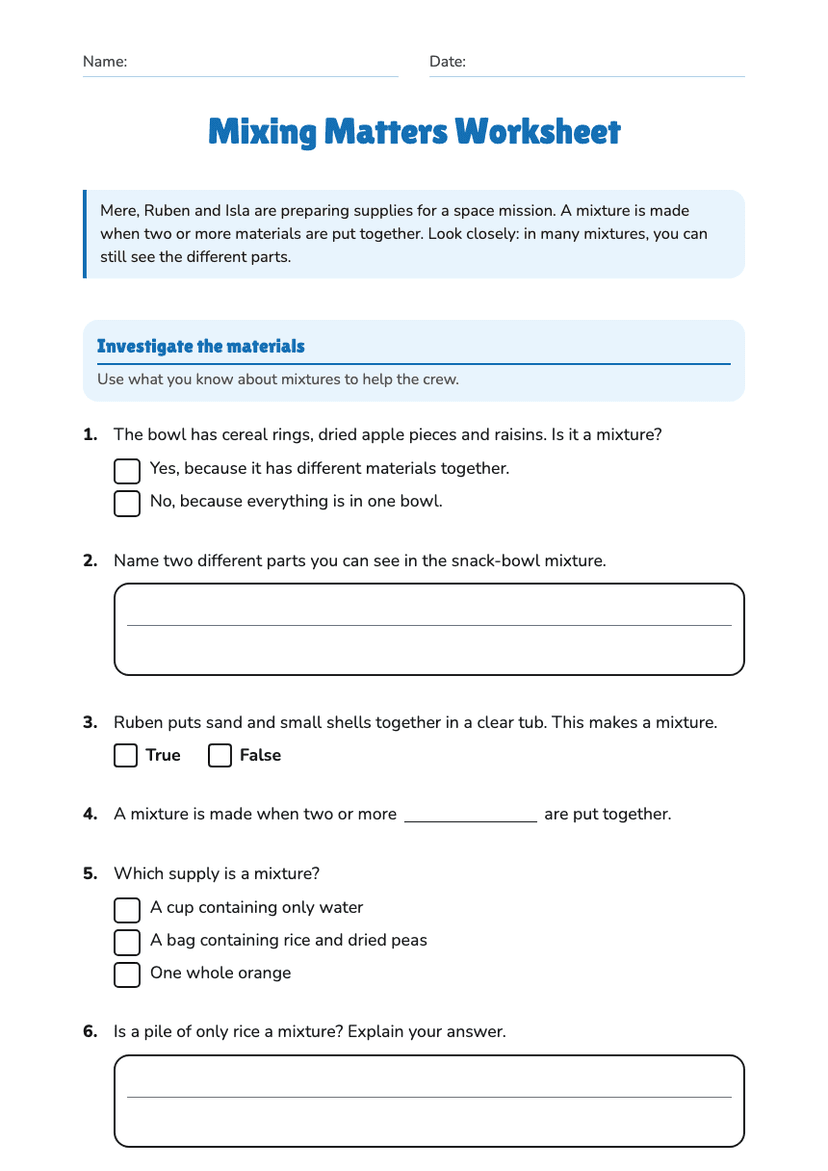
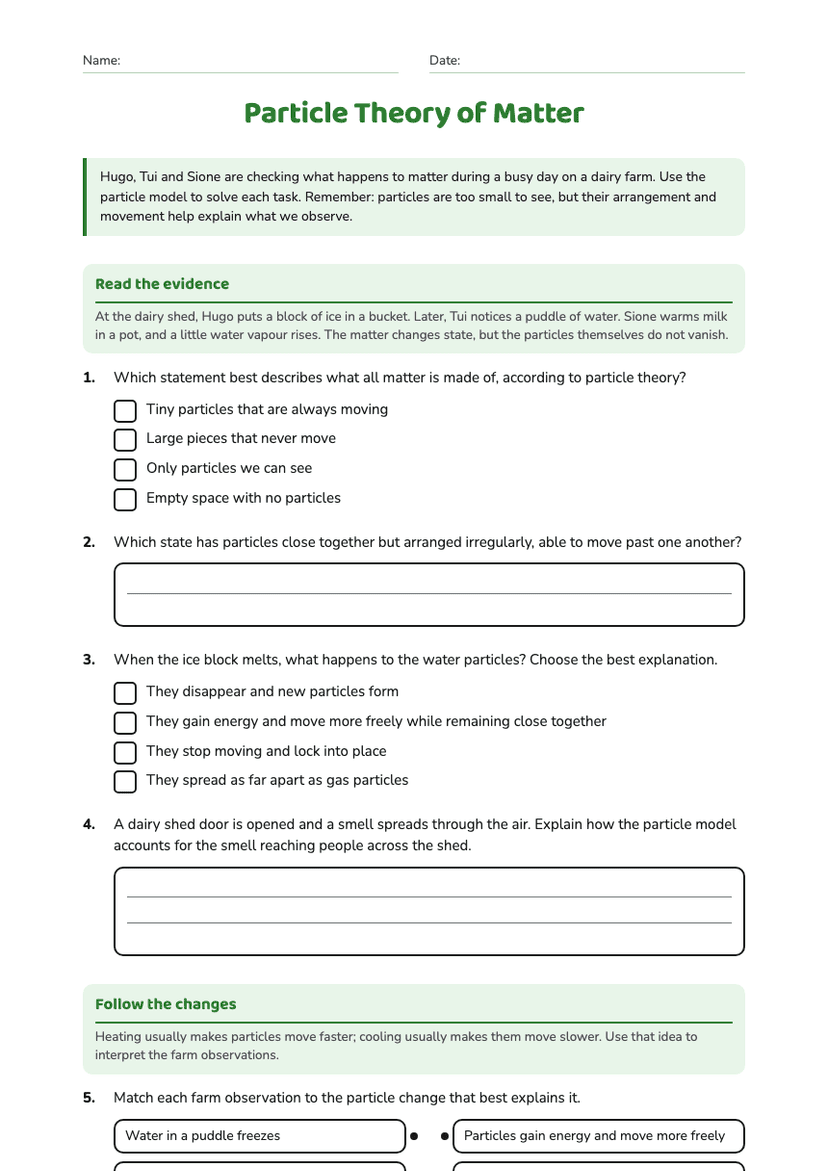
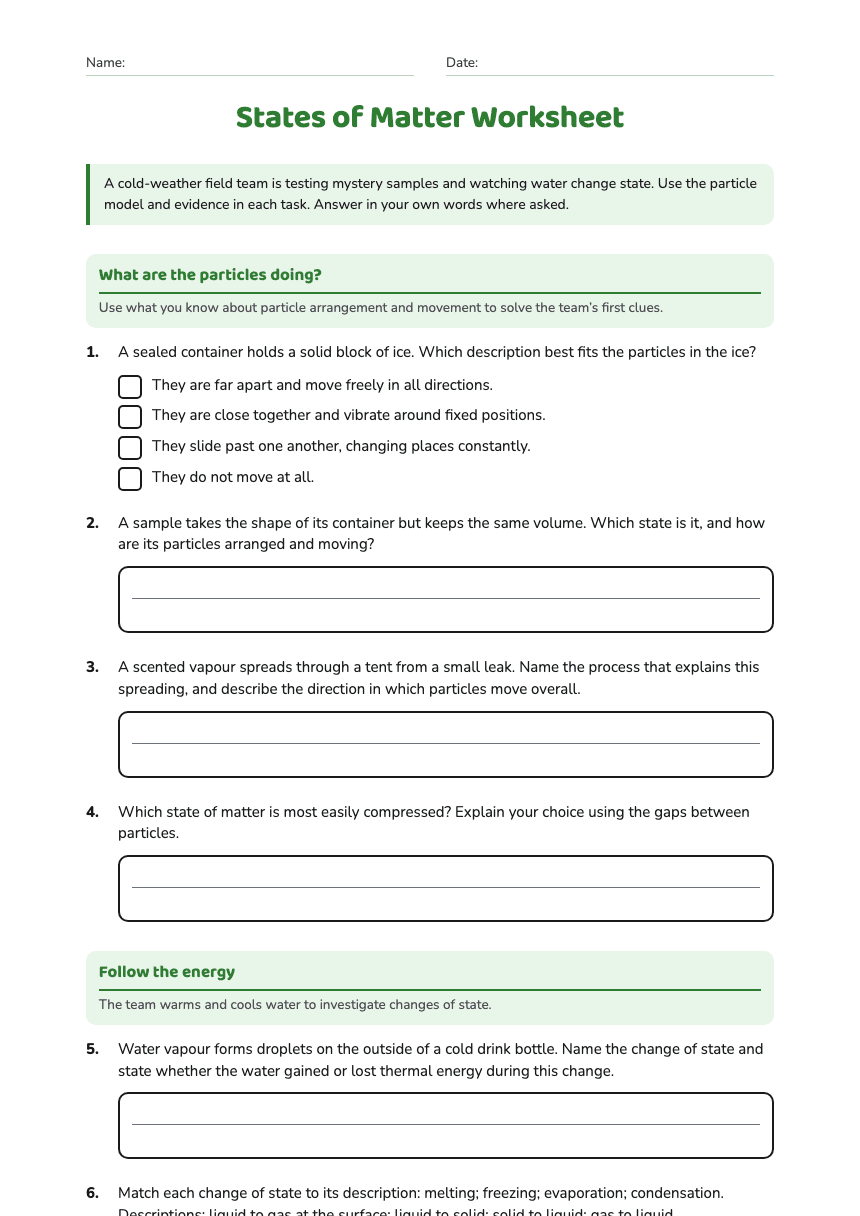
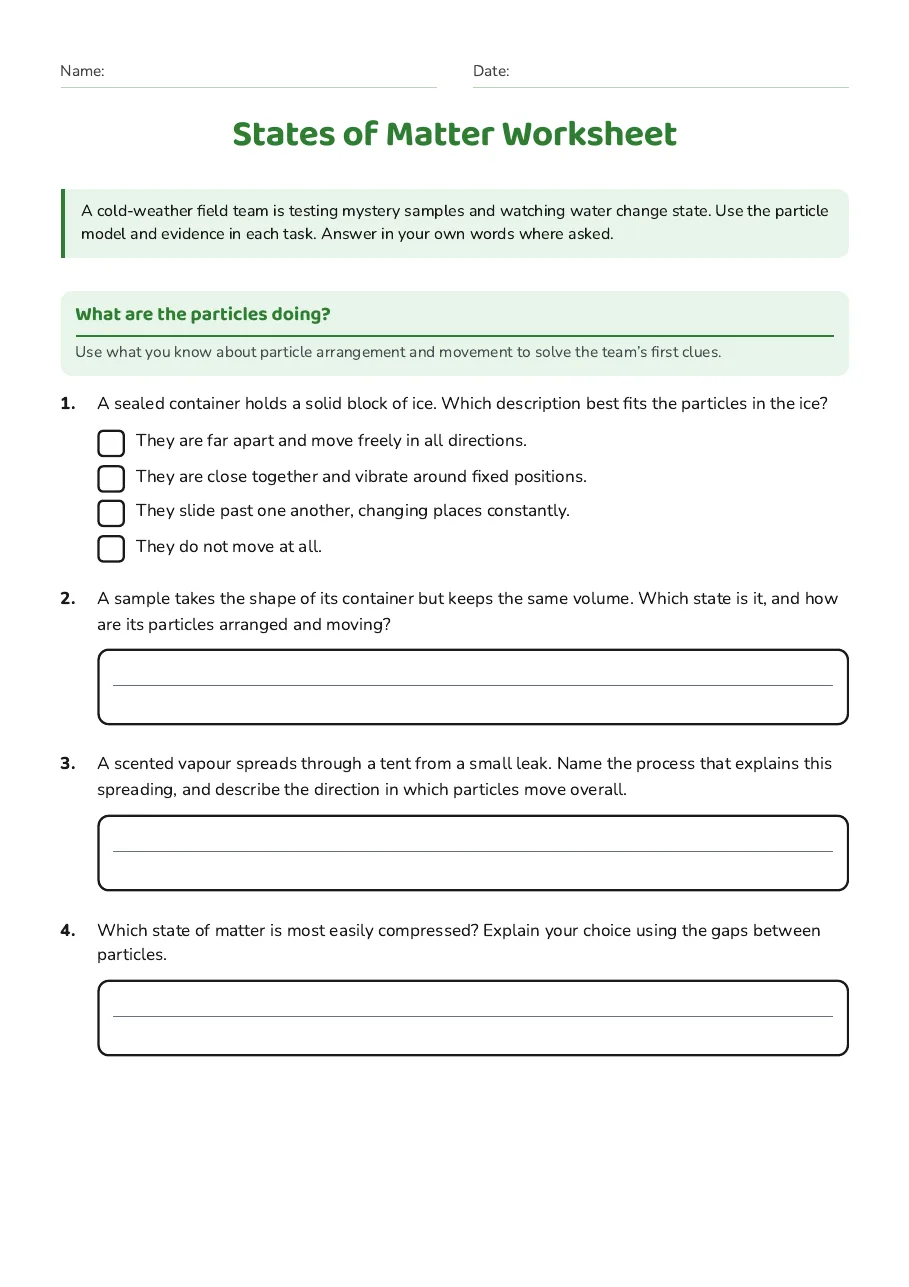
What are the particles doing?
Use what you know about particle arrangement and movement to solve the team’s first clues.
- They are far apart and move freely in all directions.
- They are close together and vibrate around fixed positions.
- They slide past one another, changing places constantly.
- They do not move at all.
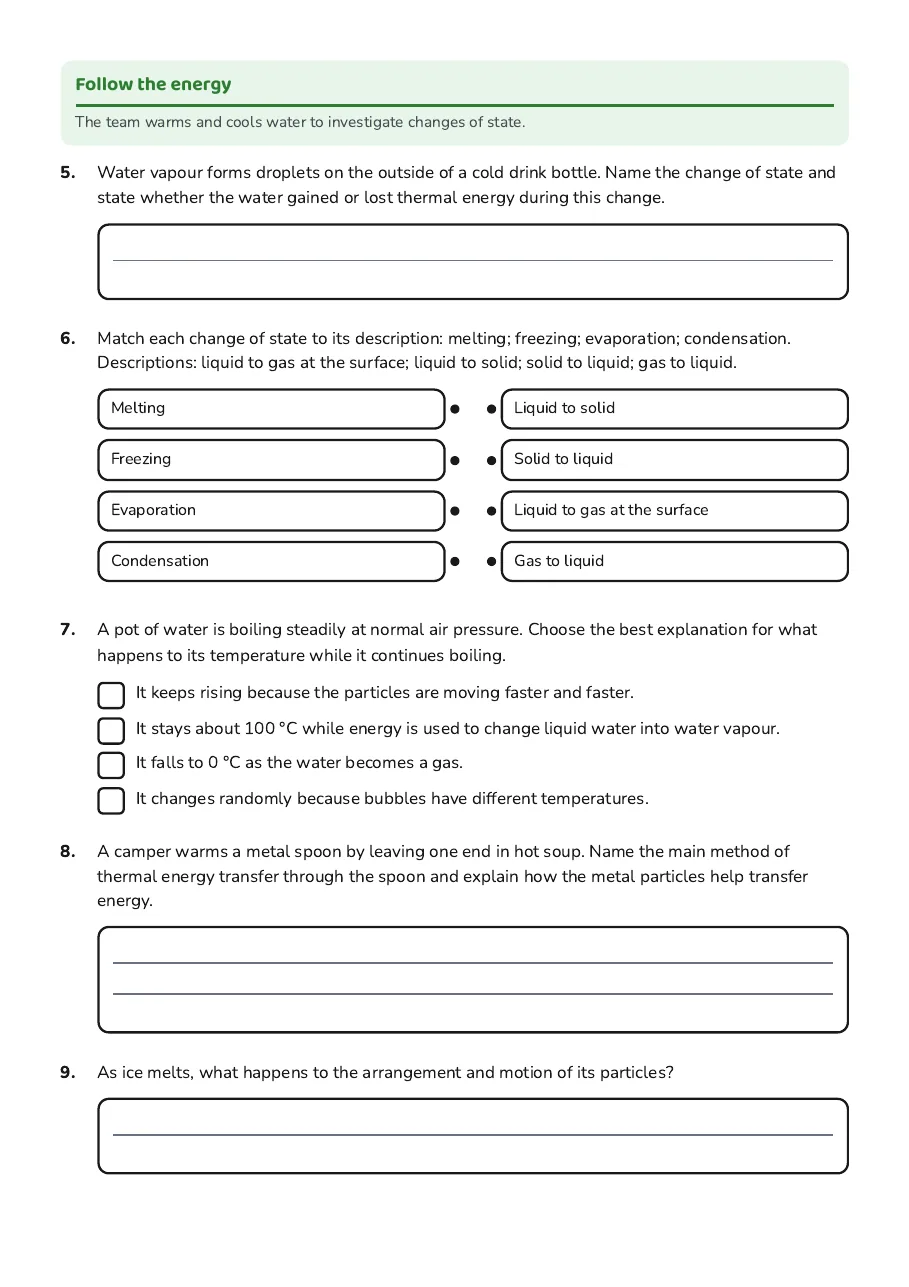
Follow the energy
The team warms and cools water to investigate changes of state.
- Melting
- Freezing
- Evaporation
- Condensation
- Liquid to solid
- Solid to liquid
- Liquid to gas at the surface
- Gas to liquid
- It keeps rising because the particles are moving faster and faster.
- It stays about 100 °C while energy is used to change liquid water into water vapour.
- It falls to 0 °C as the water becomes a gas.
- It changes randomly because bubbles have different temperatures.
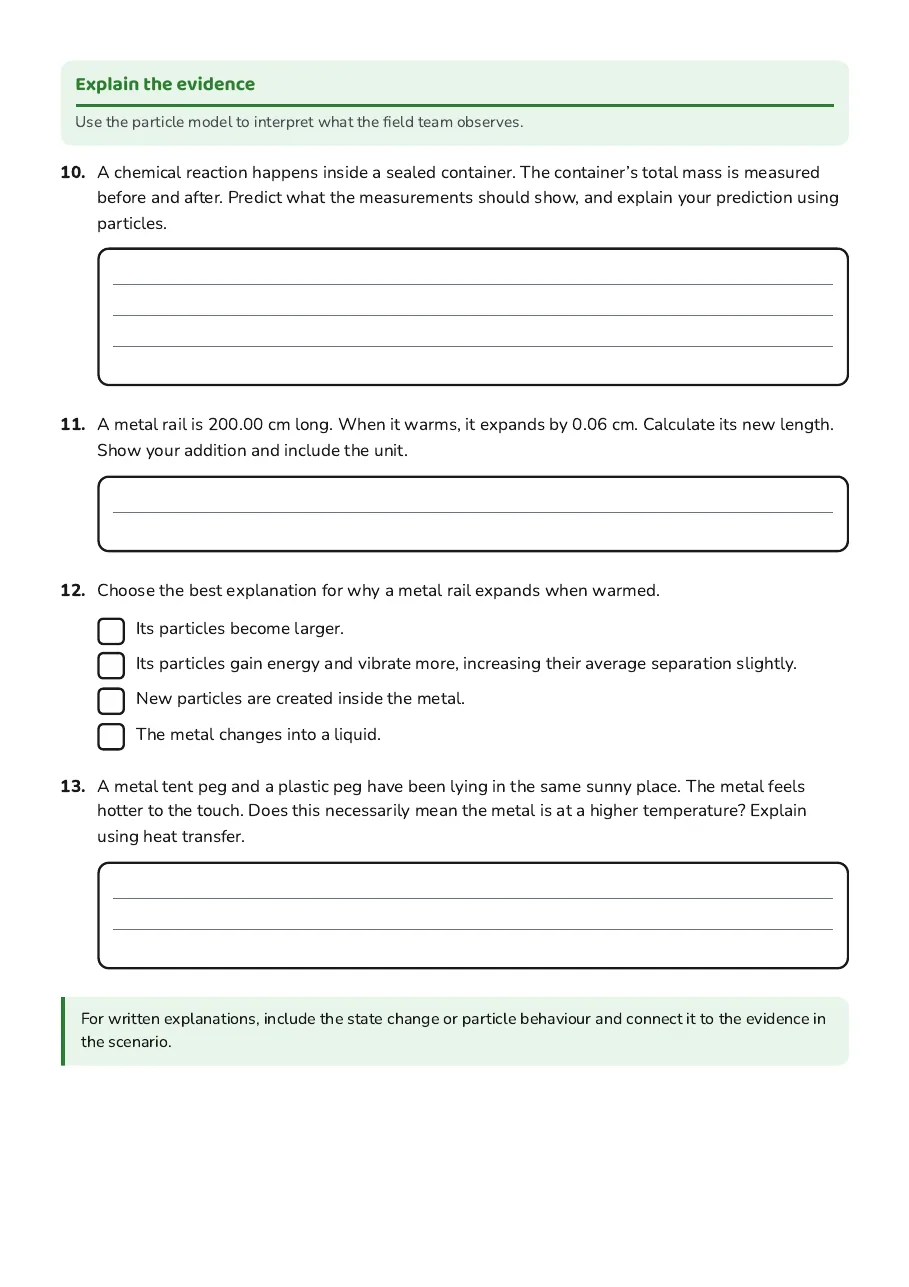
Explain the evidence
Use the particle model to interpret what the field team observes.
- Its particles become larger.
- Its particles gain energy and vibrate more, increasing their average separation slightly.
- New particles are created inside the metal.
- The metal changes into a liquid.
3 printable pages
Page 1
Page 2
Page 3
About This Worksheet
Free in Kuraplan
Sign up free, grab the PDF, and customize it for your class.
Print-Ready
Formatted for standard paper. Clean layout, easy to read.
AI-Generated
Created with Kuraplan's AI, designed for real classroom use.
For Teachers & Parents
Use in classrooms, for homework, tutoring, or homeschool.
Need a custom version of this worksheet?
Kuraplan's AI generates custom worksheets in seconds — differentiated for every learner, aligned to your curriculum.
Generate Custom Worksheets — Free