ScienceFreePrintable
Supervised Biological Investigation
A free science worksheet ready for your classroom. Open in Kuraplan to grab the print-ready PDF, customize it for your students, or generate a fresh version in seconds.
Name:Date:
Supervised Biological Investigation
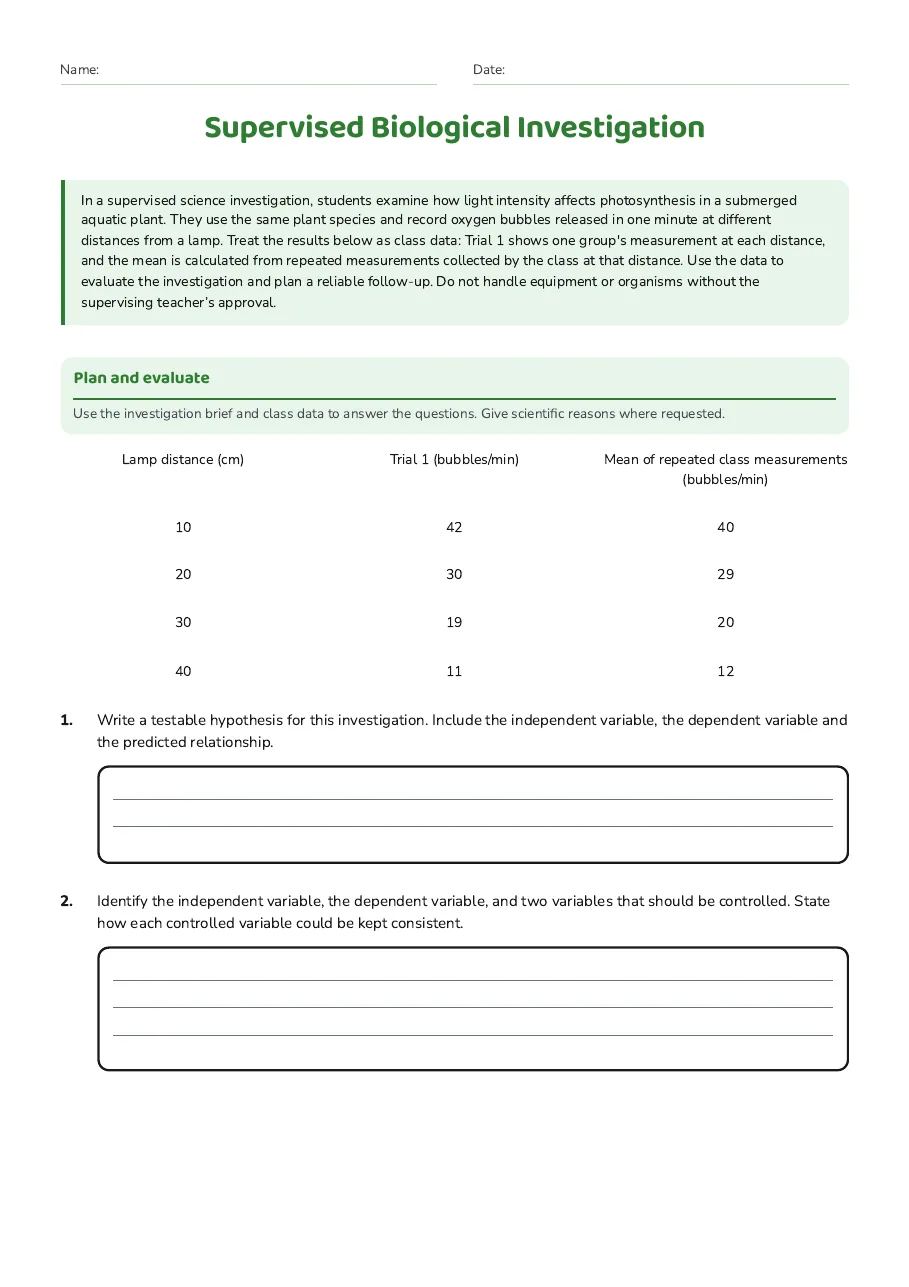
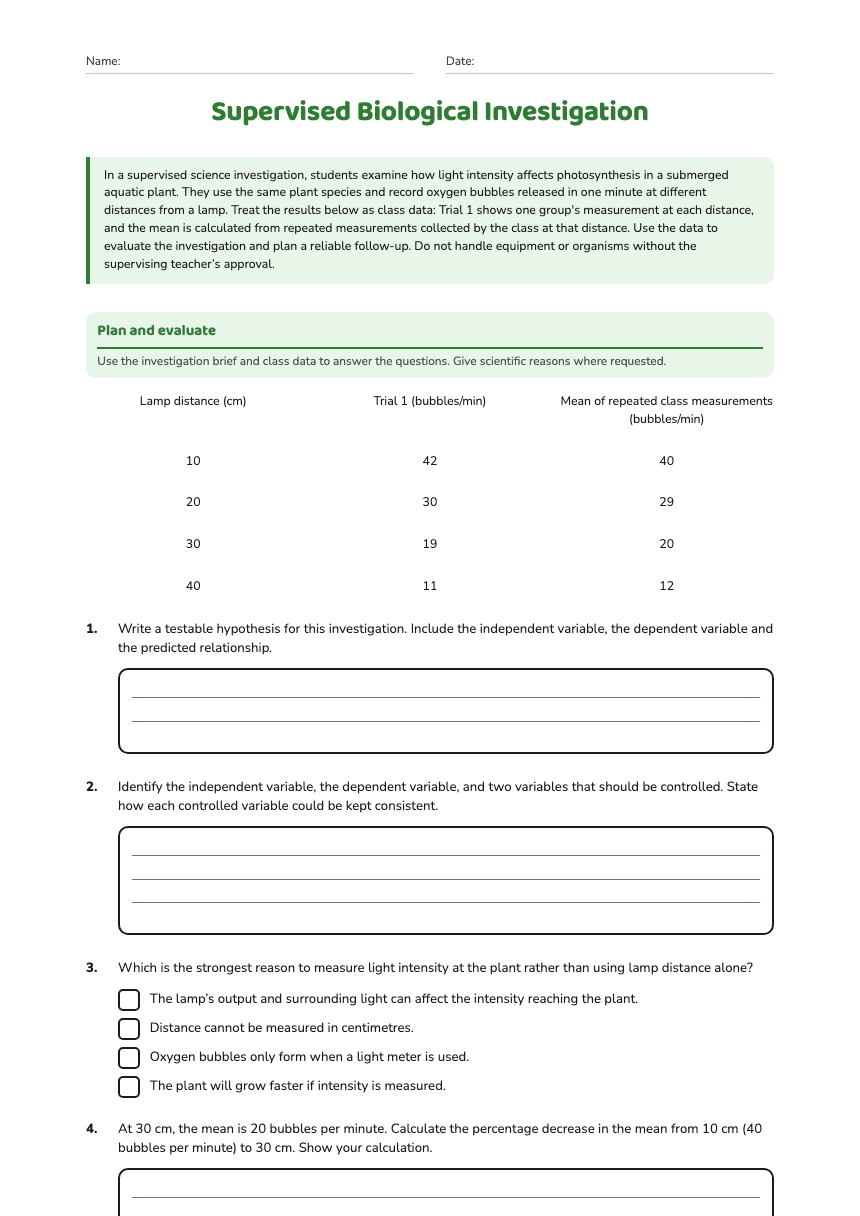
In a supervised science investigation, students examine how light intensity affects photosynthesis in a submerged aquatic plant. They use the same plant species and record oxygen bubbles released in one minute at different distances from a lamp. Treat the results below as class data: Trial 1 shows one group's measurement at each distance, and the mean is calculated from repeated measurements collected by the class at that distance. Use the data to evaluate the investigation and plan a reliable follow-up. Do not handle equipment or organisms without the supervising teacher’s approval.
Plan and evaluate
Use the investigation brief and class data to answer the questions. Give scientific reasons where requested.
Lamp distance (cm)
Trial 1 (bubbles/min)
Mean of repeated class measurements (bubbles/min)
10
42
40
20
30
29
30
19
20
40
11
12
1.Write a testable hypothesis for this investigation. Include the independent variable, the dependent variable and the predicted relationship.
2.Identify the independent variable, the dependent variable, and two variables that should be controlled. State how each controlled variable could be kept consistent.
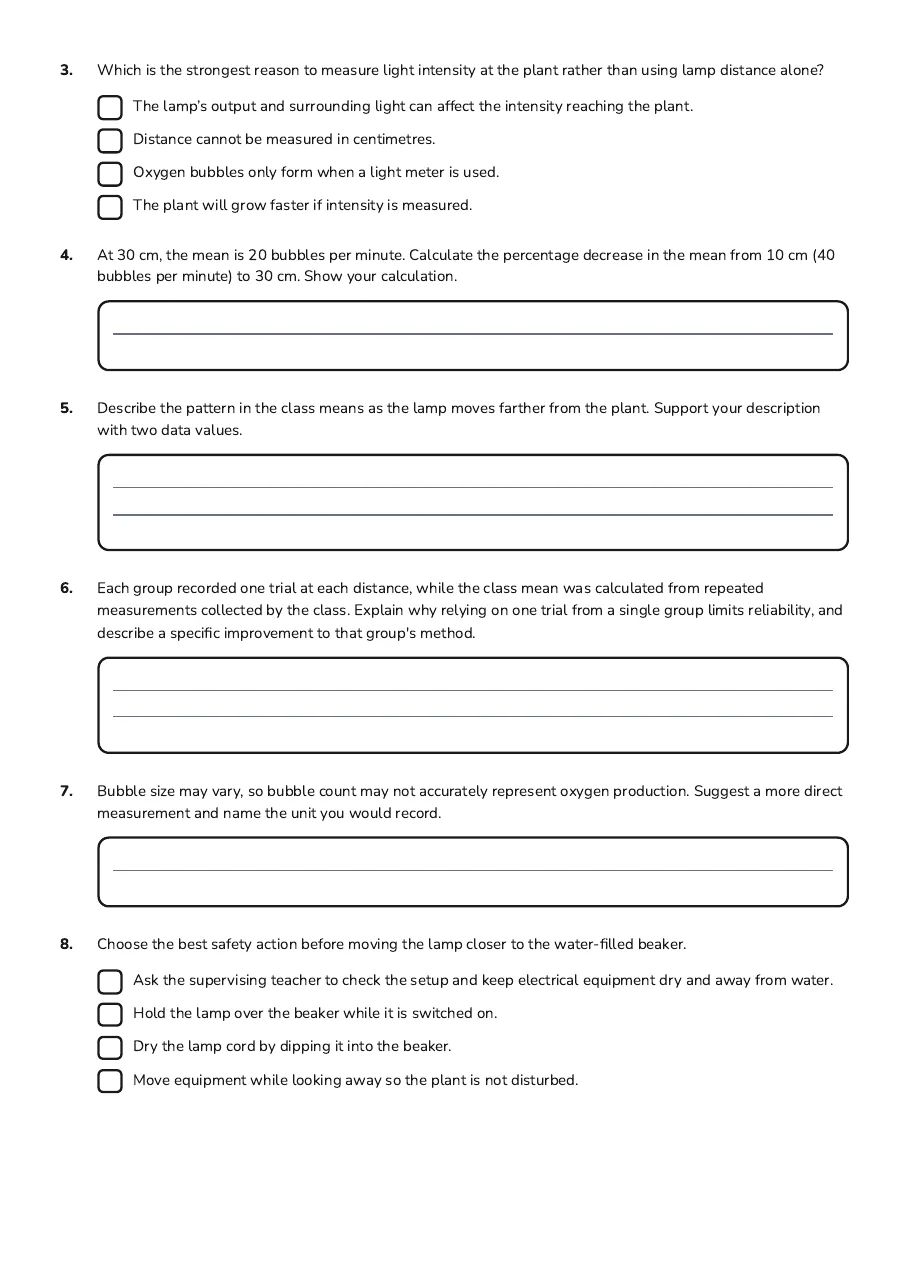
3.Which is the strongest reason to measure light intensity at the plant rather than using lamp distance alone?
- The lamp’s output and surrounding light can affect the intensity reaching the plant.
- Distance cannot be measured in centimetres.
- Oxygen bubbles only form when a light meter is used.
- The plant will grow faster if intensity is measured.
4.At 30 cm, the mean is 20 bubbles per minute. Calculate the percentage decrease in the mean from 10 cm (40 bubbles per minute) to 30 cm. Show your calculation.
5.Describe the pattern in the class means as the lamp moves farther from the plant. Support your description with two data values.
6.Each group recorded one trial at each distance, while the class mean was calculated from repeated measurements collected by the class. Explain why relying on one trial from a single group limits reliability, and describe a specific improvement to that group's method.
7.Bubble size may vary, so bubble count may not accurately represent oxygen production. Suggest a more direct measurement and name the unit you would record.
8.Choose the best safety action before moving the lamp closer to the water-filled beaker.
- Ask the supervising teacher to check the setup and keep electrical equipment dry and away from water.
- Hold the lamp over the beaker while it is switched on.
- Dry the lamp cord by dipping it into the beaker.
- Move equipment while looking away so the plant is not disturbed.
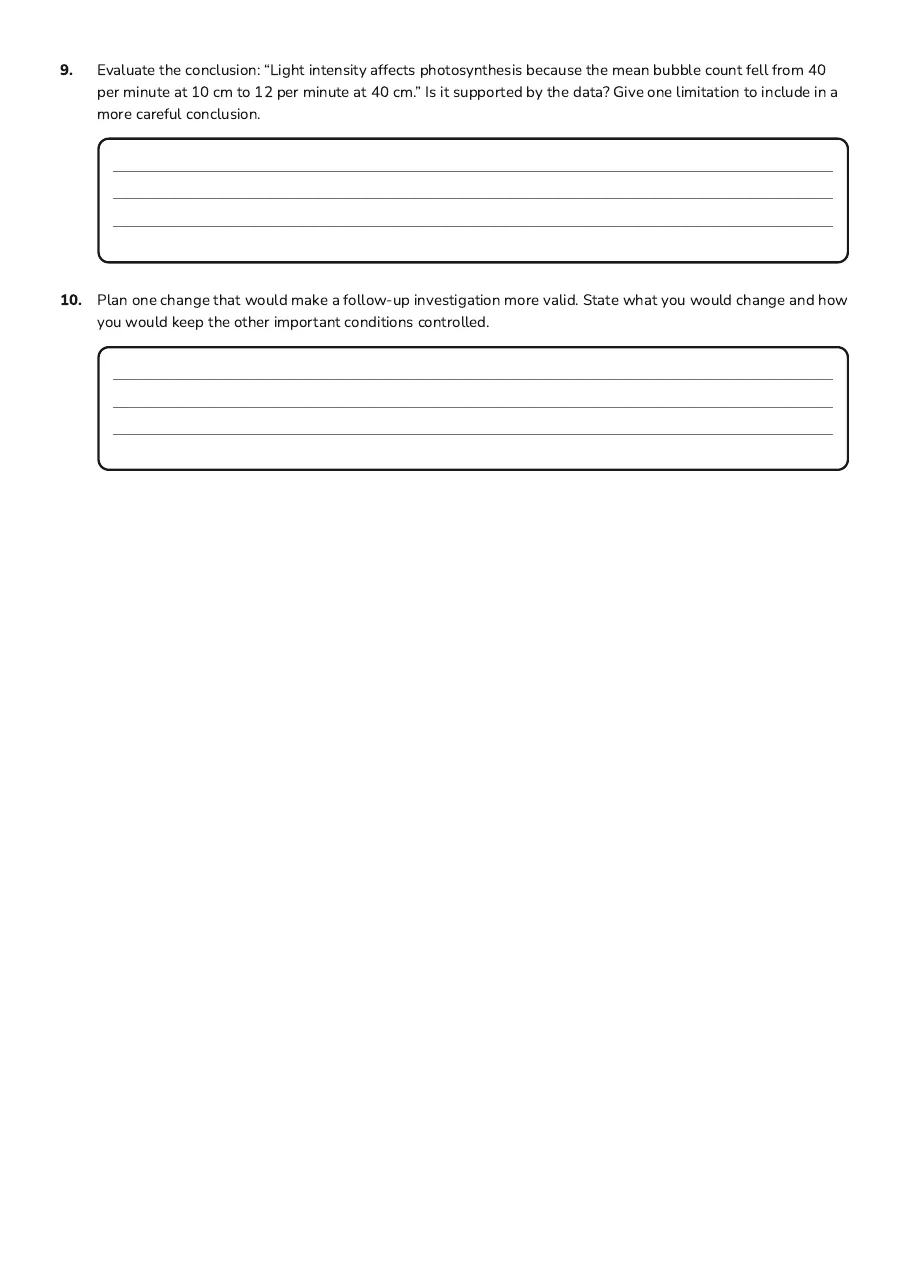
9.Evaluate the conclusion: “Light intensity affects photosynthesis because the mean bubble count fell from 40 per minute at 10 cm to 12 per minute at 40 cm.” Is it supported by the data? Give one limitation to include in a more careful conclusion.
10.Plan one change that would make a follow-up investigation more valid. State what you would change and how you would keep the other important conditions controlled.
About This Worksheet
Free in Kuraplan
Sign up free, grab the PDF, and customize it for your class.
Print-Ready
Formatted for standard paper. Clean layout, easy to read.
AI-Generated
Created with Kuraplan's AI, designed for real classroom use.
For Teachers & Parents
Use in classrooms, for homework, tutoring, or homeschool.
Need a custom version of this worksheet?
Kuraplan's AI generates custom worksheets in seconds — differentiated for every learner, aligned to your curriculum.
Generate Custom Worksheets — Free No credit card Curriculum-aligned Under 60 seconds
More Science Worksheets

Year 5
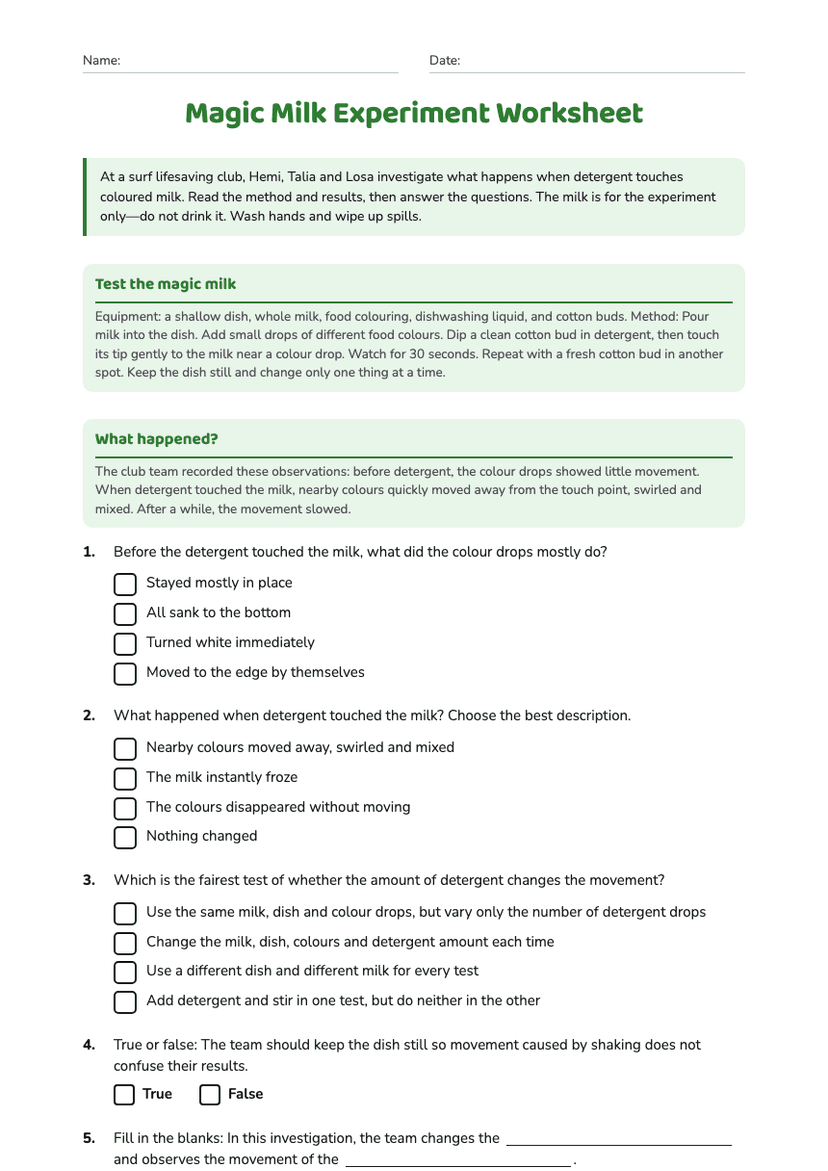
Magic Milk Experiment Worksheet
Free
Year 6–8
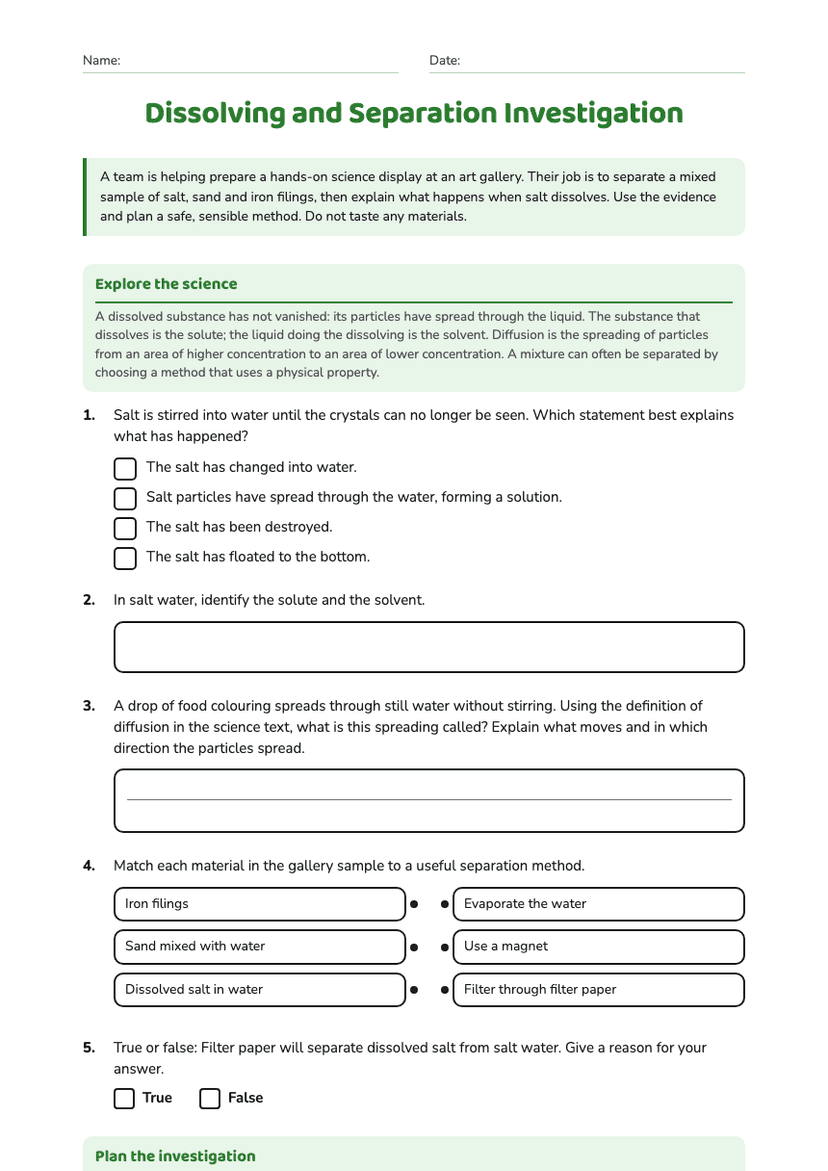
Dissolving and Separation Investigation
Free
Year 5
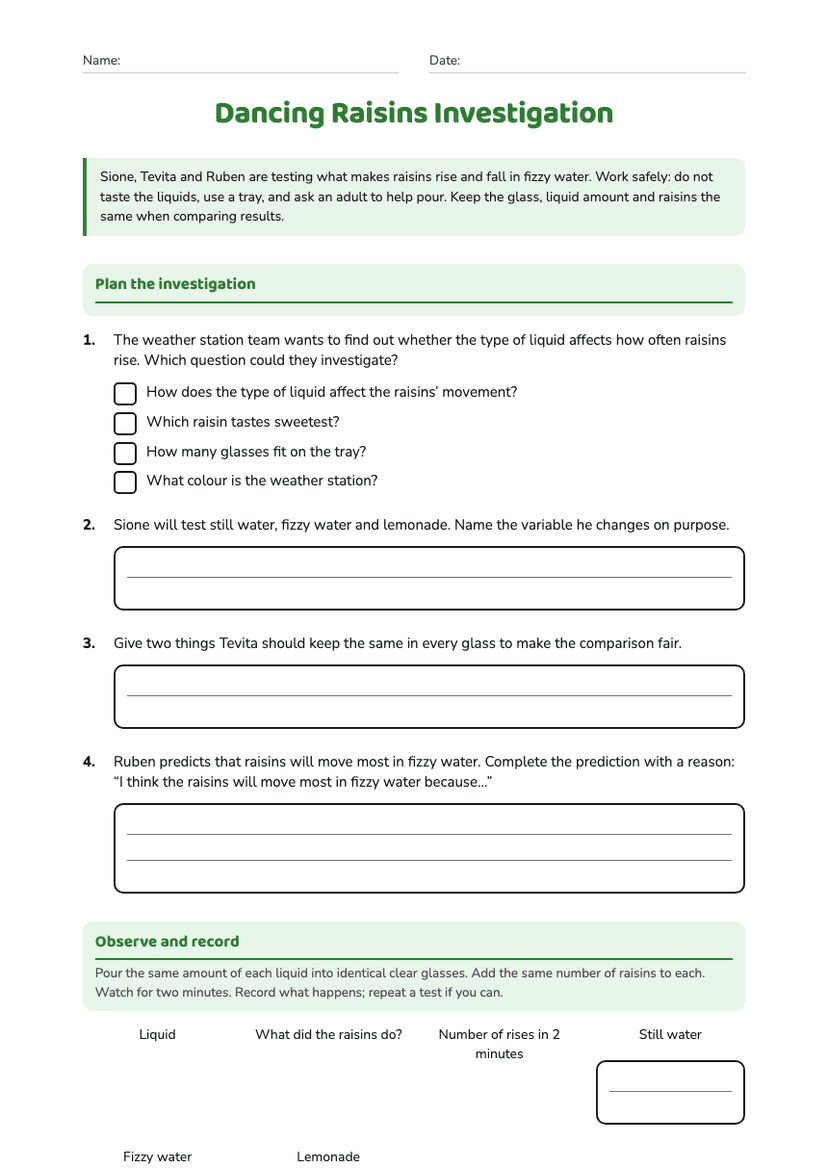
Dancing Raisins Investigation
Free
Year 4
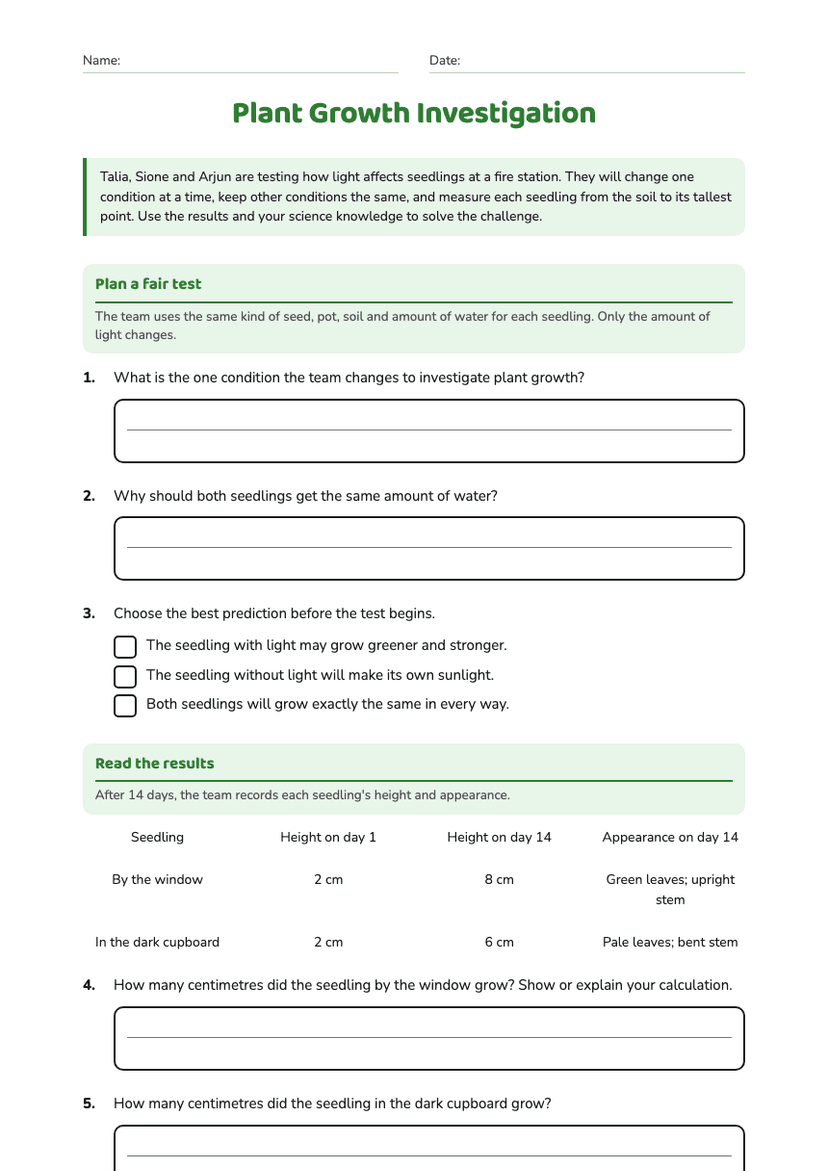
Plant Growth Investigation
Free
Year 7
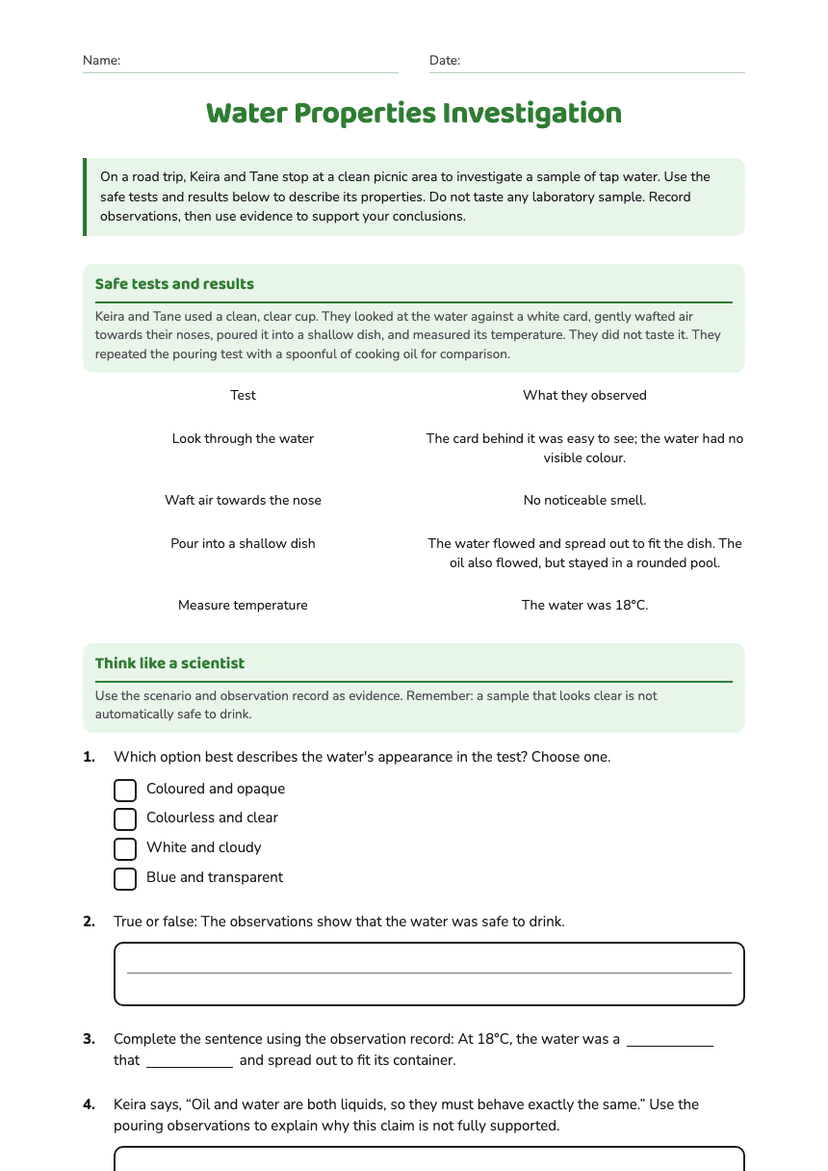
Water Properties Investigation
Free
Year 8
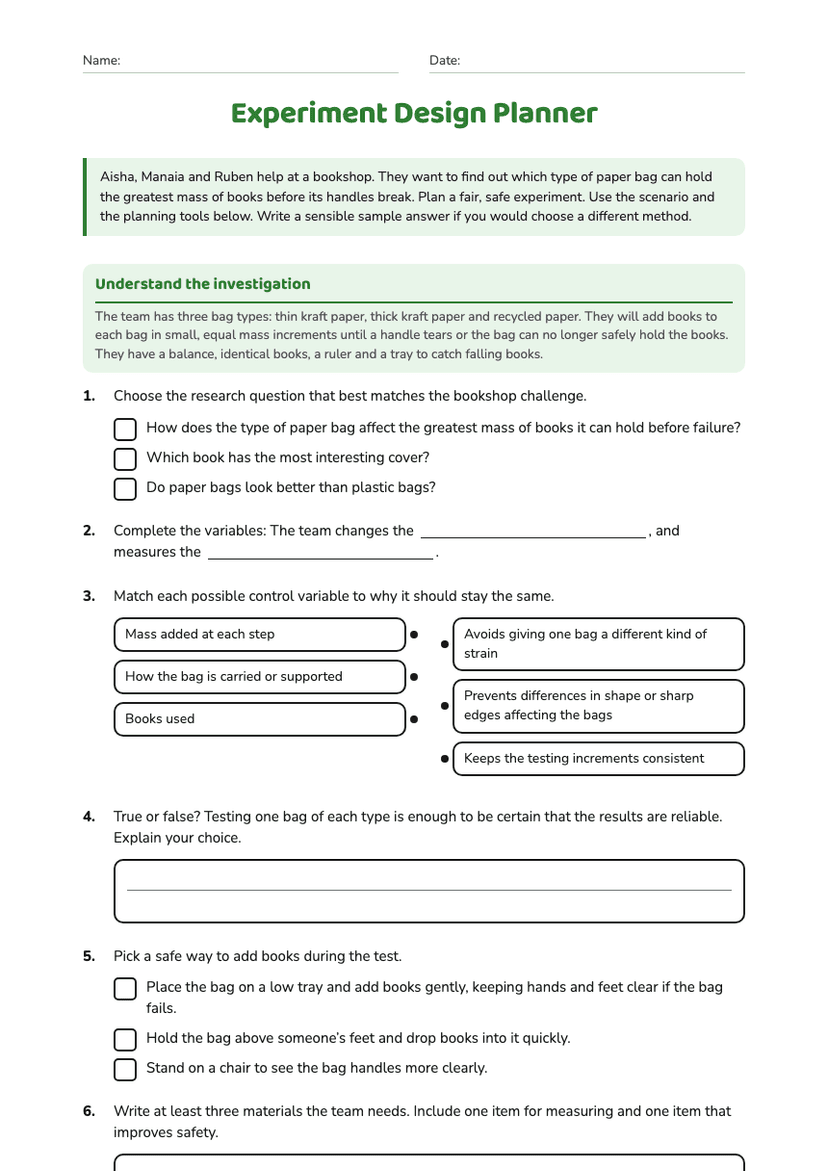
Experiment Design Planner
Free
Year 1
Sensory Cause Effect Experiments
Free
Year 1–6