FreePrintable

14th Amendment and Equality

A free, printable general worksheet ready for your classroom. Download instantly, print, and hand out to your students — no account needed.

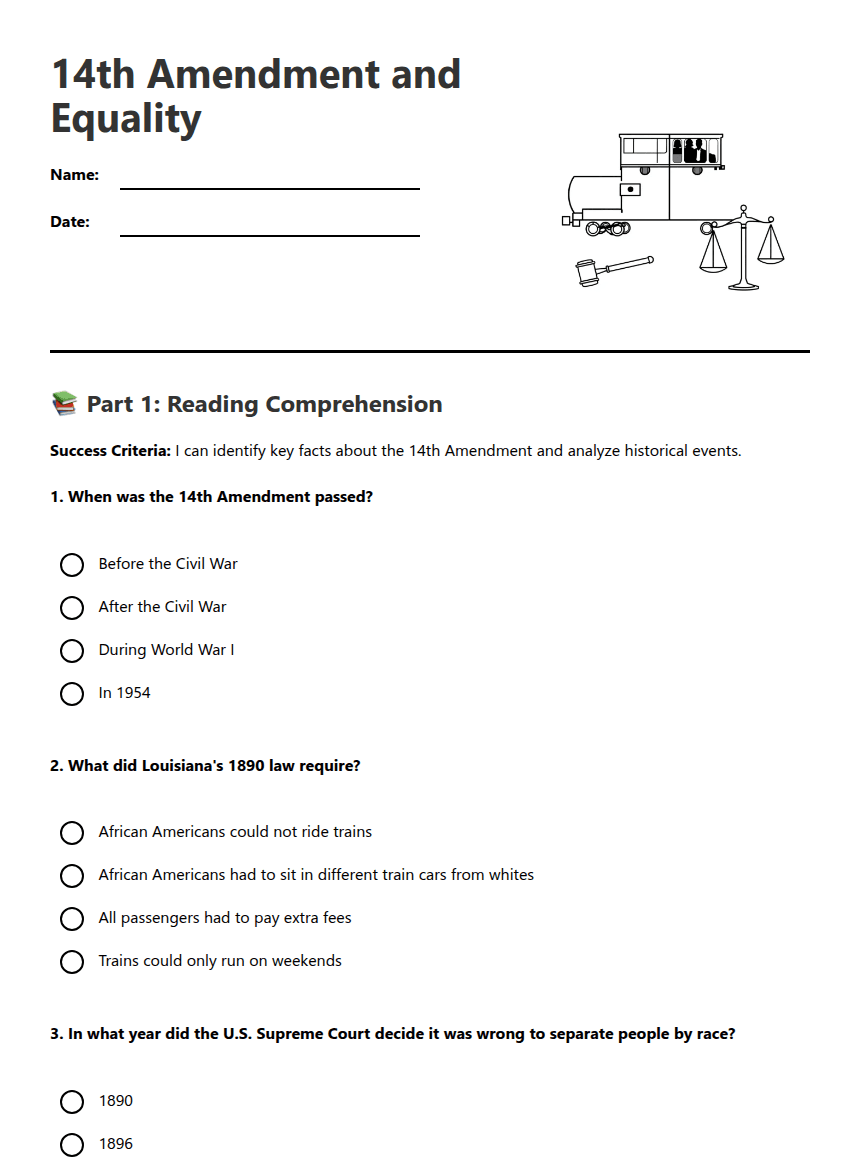
14th Amendment and Equality worksheet preview

14th Amendment and Equality

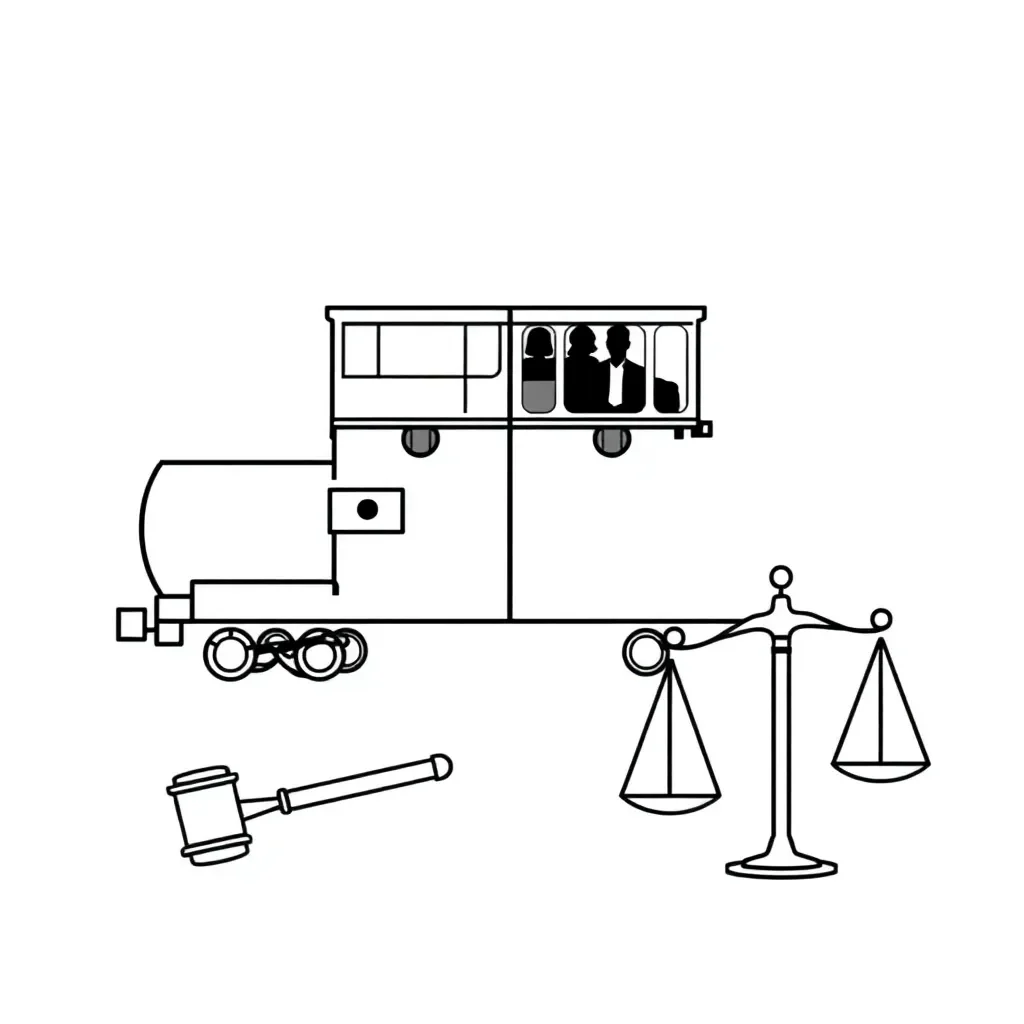
14th Amendment and equality illustration

📖 The 14th Amendment

After the Civil War, the 14th Amendment was passed. This amendment was an addition to the laws that guided the United States at that time. The 14th Amendment made sure that former slaves were treated fairly. Every state had to accept the new law. However, not everyone agreed about the law's meaning. 

What did I just learn?
How does it connect to my big topic?

In 1890, Louisiana passed a law that made African American train riders sit in a different train car from whites. Some citizens wanted to change that law. They came up with a plan. Homer Plessy volunteered to be arrested for breaking the law. His lawyer said that the law broke the 14th Amendment. Both the local court and the state court found Plessy guilty. In 1896, he took his case to the U.S. Supreme Court. This is the most important court in the U.S. This court also found him guilty. The judges decided that separate places for blacks and whites were okay as long as the places were equal. 
What did I just learn?
How does it connect to my big topic?

More laws were passed in the South to keep African Americans and whites apart. These laws stayed in place for over fifty years. In 1954, the U.S. Supreme Court decided it was wrong to separate people because of their race.
What did I just learn?
How does it connect to my big topic?

📚 Part 1: Reading Comprehension

Success Criteria: I can identify key facts about the 14th Amendment and analyze historical events.

1. When was the 14th Amendment passed?

Before the Civil War

After the Civil War

During World War I

In 1954

2. What did Louisiana's 1890 law require?

African Americans could not ride trains

African Americans had to sit in different train cars from whites

All passengers had to pay extra fees

Trains could only run on weekends

3. In what year did the U.S. Supreme Court decide it was wrong to separate people by race?

1890

1896

1954

1965

4. How long did segregation laws stay in place in the South?

About 10 years

About 25 years

Over 50 years

Over 100 years

✏️ Part 2: Analysis and Understanding

Success Criteria: I can explain the purpose and impact of the 14th Amendment using evidence from the text.

5. Why was the 14th Amendment created? Use details from the passage.
6. Explain Homer Plessy's plan and why he volunteered to be arrested.
7. What does "separate but equal" mean, and how did this idea affect African Americans for over 50 years?

🎯 Part 3: Critical Thinking

Success Criteria: I can connect historical events to modern concepts of equality and justice.

8. Extension Activity: Compare the 1896 Supreme Court decision with the 1954 decision. What changed in American society during those 58 years?
9. Personal Connection: How do you think the 14th Amendment affects your life today? Give one specific example.

About This Worksheet

Free Download

No sign-up, no email, no paywall. Just download and print.

Print-Ready

Formatted for standard paper. Clean layout, easy to read.

AI-Generated

Created with Kuraplan's AI, designed for real classroom use.

For Teachers & Parents

Use in classrooms, for homework, tutoring, or homeschool.

Need a custom version of this worksheet?

Kuraplan's AI generates custom worksheets in seconds — differentiated for every learner, aligned to your curriculum.

Generate Custom Worksheets — Free
No credit card Curriculum-aligned Under 60 seconds

More General Worksheets