Bubonic Plague Historical Analysis
A free, printable general worksheet ready for your classroom. Download instantly, print, and hand out to your students — no account needed.
Bubonic Plague Historical Analysis
📖 Part 1: Reading Comprehension
I can: Analyze the causes and effects of the bubonic plague on medieval European society.
Read the passage below and answer the questions that follow:
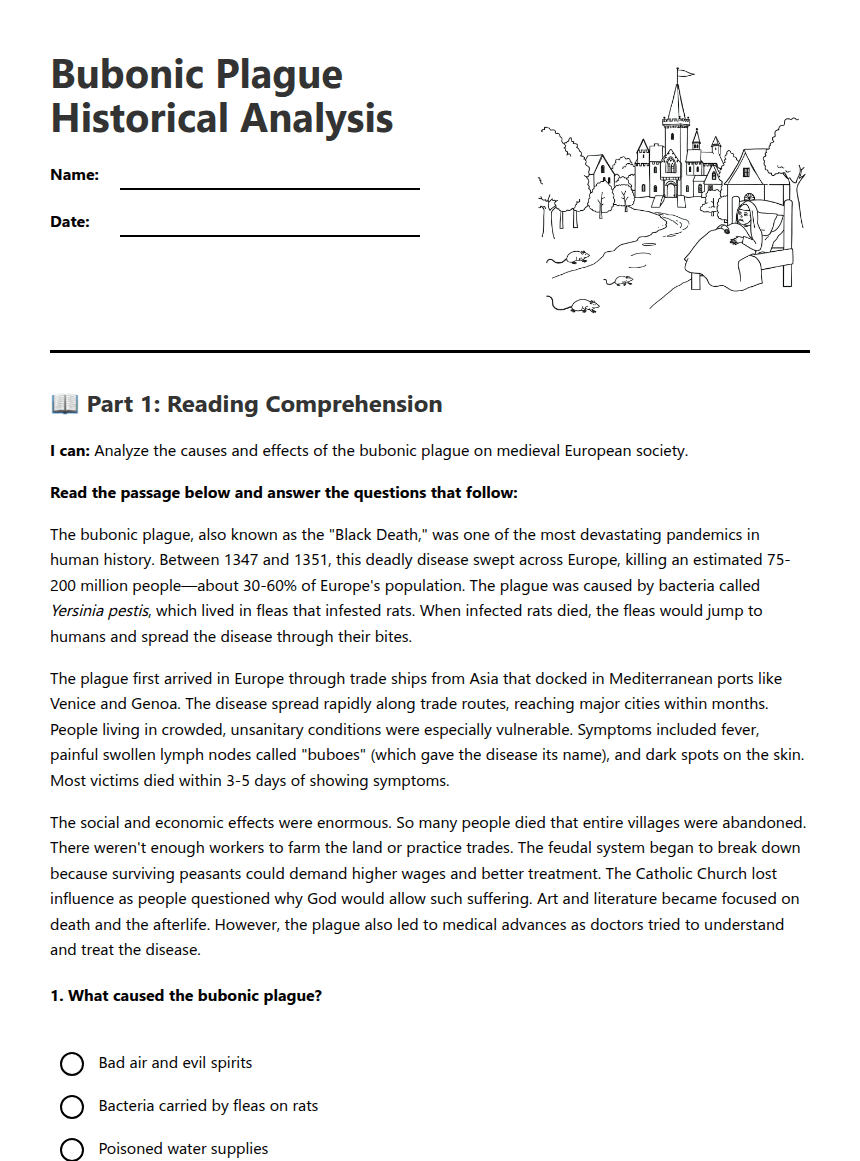
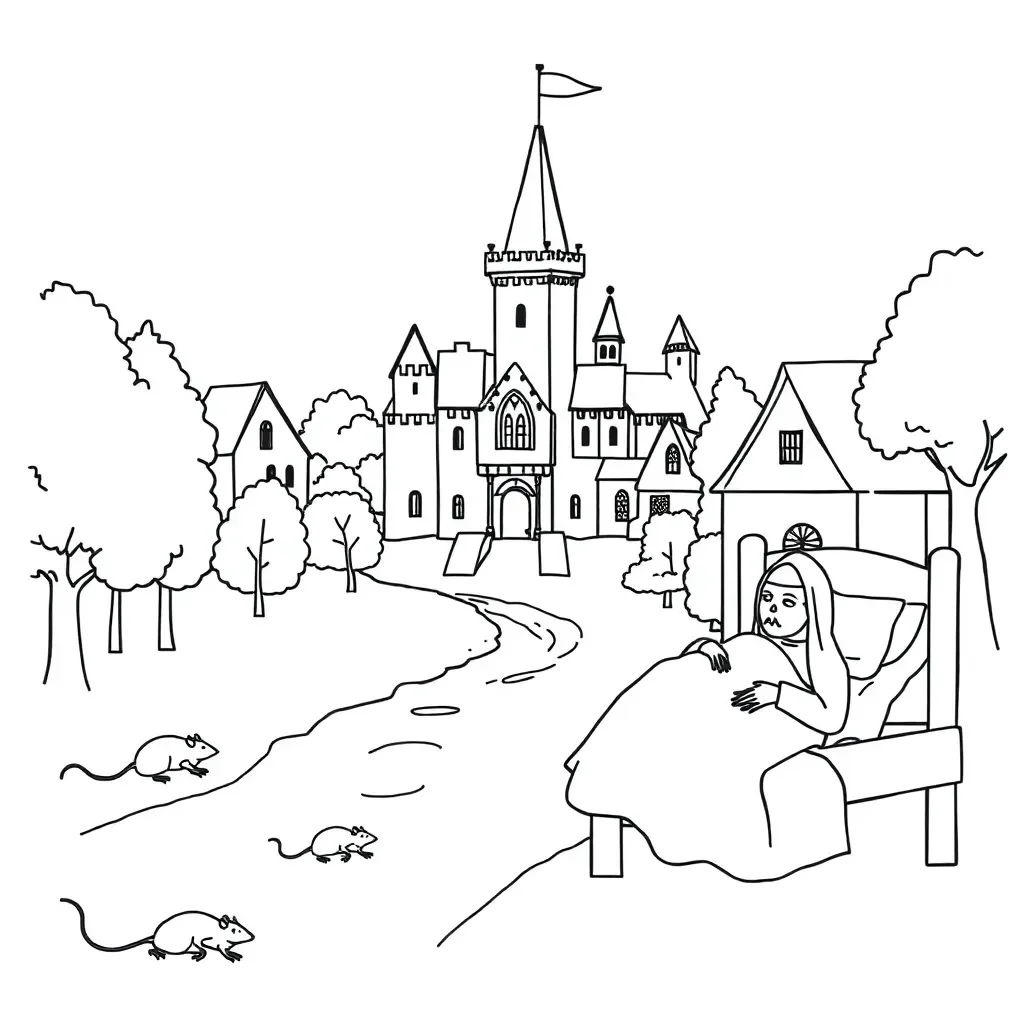
The bubonic plague, also known as the "Black Death," was one of the most devastating pandemics in human history. Between 1347 and 1351, this deadly disease swept across Europe, killing an estimated 75-200 million people—about 30-60% of Europe's population. The plague was caused by bacteria called Yersinia pestis, which lived in fleas that infested rats. When infected rats died, the fleas would jump to humans and spread the disease through their bites.
The plague first arrived in Europe through trade ships from Asia that docked in Mediterranean ports like Venice and Genoa. The disease spread rapidly along trade routes, reaching major cities within months. People living in crowded, unsanitary conditions were especially vulnerable. Symptoms included fever, painful swollen lymph nodes called "buboes" (which gave the disease its name), and dark spots on the skin. Most victims died within 3-5 days of showing symptoms.
The social and economic effects were enormous. So many people died that entire villages were abandoned. There weren't enough workers to farm the land or practice trades. The feudal system began to break down because surviving peasants could demand higher wages and better treatment. The Catholic Church lost influence as people questioned why God would allow such suffering. Art and literature became focused on death and the afterlife. However, the plague also led to medical advances as doctors tried to understand and treat the disease.
Between ______% and ______% of people died.
1. _________________________________
2. _________________________________
🧠 Part 2: Critical Thinking Analysis
I can: Evaluate the long-term impacts of the bubonic plague on European society and connect historical events to modern pandemics.
🎯 Part 3: Historical Connections
I can: Make connections between historical events and analyze cause-and-effect relationships.
About This Worksheet
Free Download
No sign-up, no email, no paywall. Just download and print.
Print-Ready
Formatted for standard paper. Clean layout, easy to read.
AI-Generated
Created with Kuraplan's AI, designed for real classroom use.
For Teachers & Parents
Use in classrooms, for homework, tutoring, or homeschool.
Need a custom version of this worksheet?
Kuraplan's AI generates custom worksheets in seconds — differentiated for every learner, aligned to your curriculum.
Generate Custom Worksheets — Free