First World War: Causes
A free history worksheet ready for your classroom. Open in Kuraplan to grab the print-ready PDF, customize it for your students, or generate a fresh version in seconds.
First World War: Causes
📚 Part 1: Context and Chronology
Learning objectives: By the end of this worksheet, you should be able to explain the main causes of the First World War, analyse historical sources, describe consequences, and make a supported judgement about significance.
What caused the First World War?
The First World War began in 1914 after years of tension between European powers. Militarism meant that countries built large armies and navies and believed military strength was important. Alliances divided Europe into rival groups. Germany, Austria-Hungary and Italy formed the Triple Alliance, while Britain, France and Russia formed the Triple Entente.
Imperialism caused rivalry because countries competed for colonies, trade and influence around the world. Nationalism made people strongly proud of their nation and, in some areas, encouraged demands for independence. Tensions were especially high in the Balkans, where different national groups lived under the rule of empires.
The short-term trigger was the assassination of Archduke Franz Ferdinand of Austria-Hungary at Sarajevo on 28 June 1914 by Gavrilo Princip, a Serbian nationalist. Austria-Hungary blamed Serbia and declared war. The alliance system then helped turn a regional crisis into a wider European war.
On the Western Front, German forces fought Britain, France and their allies. By late 1914, neither side had won a quick victory, so soldiers dug trenches. Trench warfare led to a long stalemate, with attacks often gaining very little ground. Soldiers from the British Empire, including India, Canada, Australia, New Zealand and parts of Africa, served alongside British forces. Troops and resources also came from countries across the wider world.
The fighting ended with the Armistice of 11 November 1918. In 1919, the Treaty of Versailles placed strict terms on Germany, including accepting responsibility for the war, reducing its armed forces and paying reparations. The treaty aimed to create peace but also caused anger and resentment.
_____ Treaty of Versailles is signed.
_____ Assassination of Franz Ferdinand.
_____ The Armistice ends the fighting.
_____ Trench warfare develops on the Western Front.
_____ Austria-Hungary declares war on Serbia.
Glossary
Armistice: an agreement to stop fighting. Empire: a group of territories controlled by one country. Nationalism: strong pride in and loyalty to a nation. Reparations: payments demanded from a defeated country. Stalemate: a situation in which neither side can achieve victory.
🔎 Part 2: Sources and Historical Thinking
Source A: British recruitment poster description, 1914
This invented but historically plausible description is based on the types of posters used at the time.
“A tall British soldier stands beside a Union flag. Bold words ask: ‘Will you stand aside while your country needs you?’ Smaller writing encourages young men to join the army and protect home and empire.”
Source B: Letter from a British soldier, Western Front, 1915
This invented but historically plausible extract represents the experiences described by soldiers in wartime letters.
“Dear Sister, We have spent another wet night in the trench. The officers say the line must be held, and everyone is trying to do his duty. We hear that men have arrived from India and Canada. It reminds us that this war reaches far beyond France.”
✏️ Part 3: Judgement and Answer Key
Write a balanced answer. Explain the importance of the assassination, but also consider militarism, alliances, imperialism and nationalism. Finish with a clear judgement.
Teacher answer key: indicative answers
1. Treaty of Versailles: 5; assassination: 1; Armistice: 4; trench warfare develops: 3; Austria-Hungary declares war: 2.
2. A–4, B–3, C–2, D–1.
3. Answers may include providing soldiers, food, raw materials, money or military bases. Suitable examples include troops from India, Canada, Australia, New Zealand or Africa.
4. The purpose was to persuade men to enlist. It uses patriotism, duty, pressure and concern for home and empire. It may make joining the army seem honourable while hiding the dangers of war.
5. The source suggests that trenches were wet and uncomfortable, that soldiers were expected to hold their position, and that troops from across the British Empire served on the Western Front.
6. Source A is a wartime recruitment message designed to persuade, so it is useful for showing official propaganda and attitudes but limited because it is one-sided. Source B is a soldier’s letter from 1915, useful for personal experience and the global nature of the army, but limited because it reflects one person’s view and may leave out information.
7. Militarism, alliances, imperialism and nationalism.
8. The alliance system meant that a dispute between Austria-Hungary and Serbia drew in other countries, turning a regional crisis into a wider war. The Treaty of Versailles led to German disarmament, reparations, loss of territory and resentment.
9. The assassination directly began the July Crisis, but the war became general because of existing tensions, rival alliances, military plans and nationalist attitudes.
Simple marking guide for Question 10
1–3 marks: Identifies a cause with limited explanation.
4–6 marks: Explains the assassination and at least one other cause, with some relevant detail.
7–9 marks: Explains several causes and begins to compare their importance. Includes accurate supporting evidence.
10–12 marks: Presents a balanced, well-supported argument about short-term and long-term causes, explaining that the assassination was an important trigger but that underlying tensions made a wider war more likely. Reaches a clear judgement.
About This Worksheet
Free in Kuraplan
Sign up free, grab the PDF, and customize it for your class.
Print-Ready
Formatted for standard paper. Clean layout, easy to read.
AI-Generated
Created with Kuraplan's AI, designed for real classroom use.
For Teachers & Parents
Use in classrooms, for homework, tutoring, or homeschool.
Need a custom version of this worksheet?
Kuraplan's AI generates custom worksheets in seconds — differentiated for every learner, aligned to your curriculum.
Generate Custom Worksheets — FreeMore History Worksheets
Arkansas History Learning Packet
Free
Arkansas History Made Accessible
Free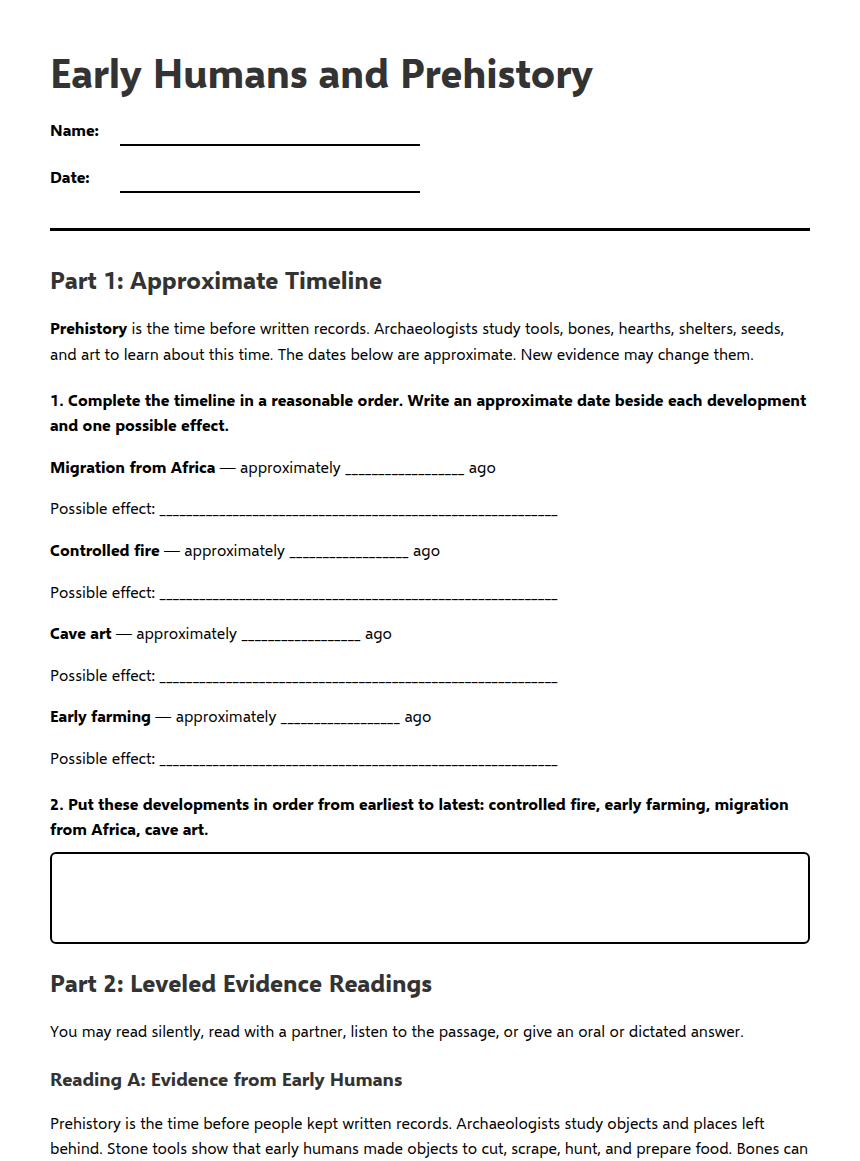
Early Humans and Prehistory
Free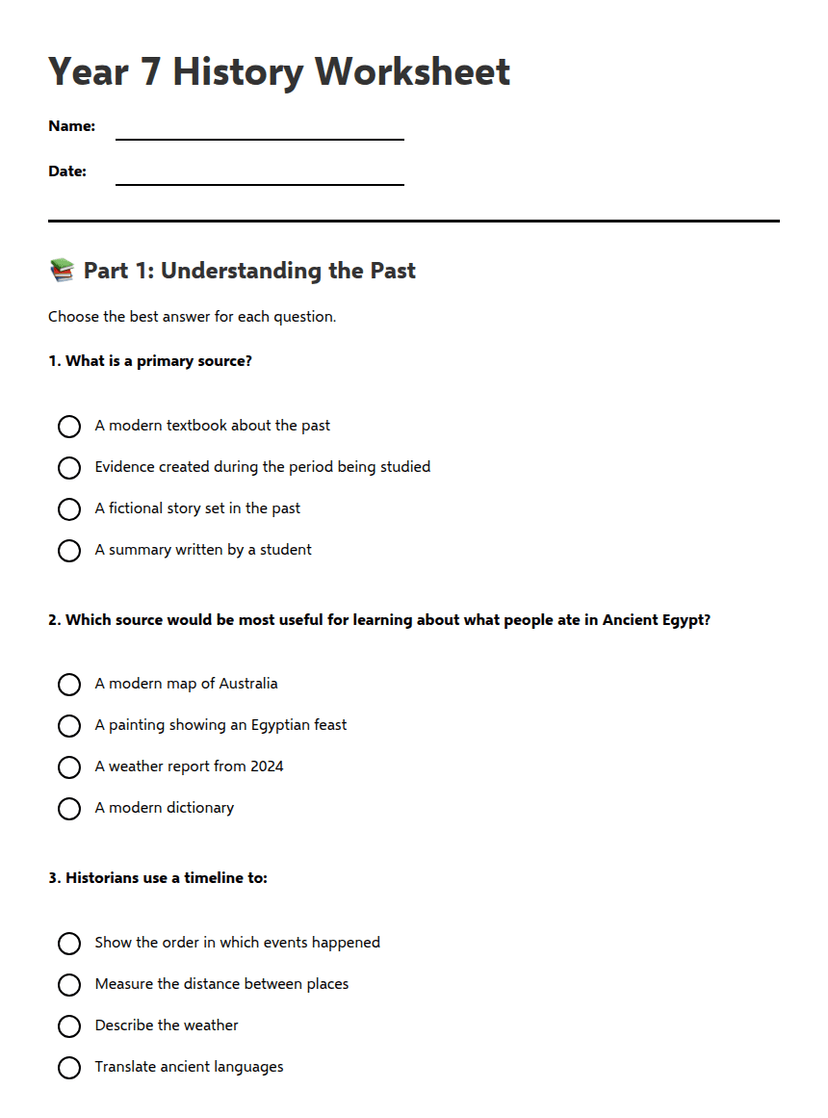
Year 7 History Worksheet
Free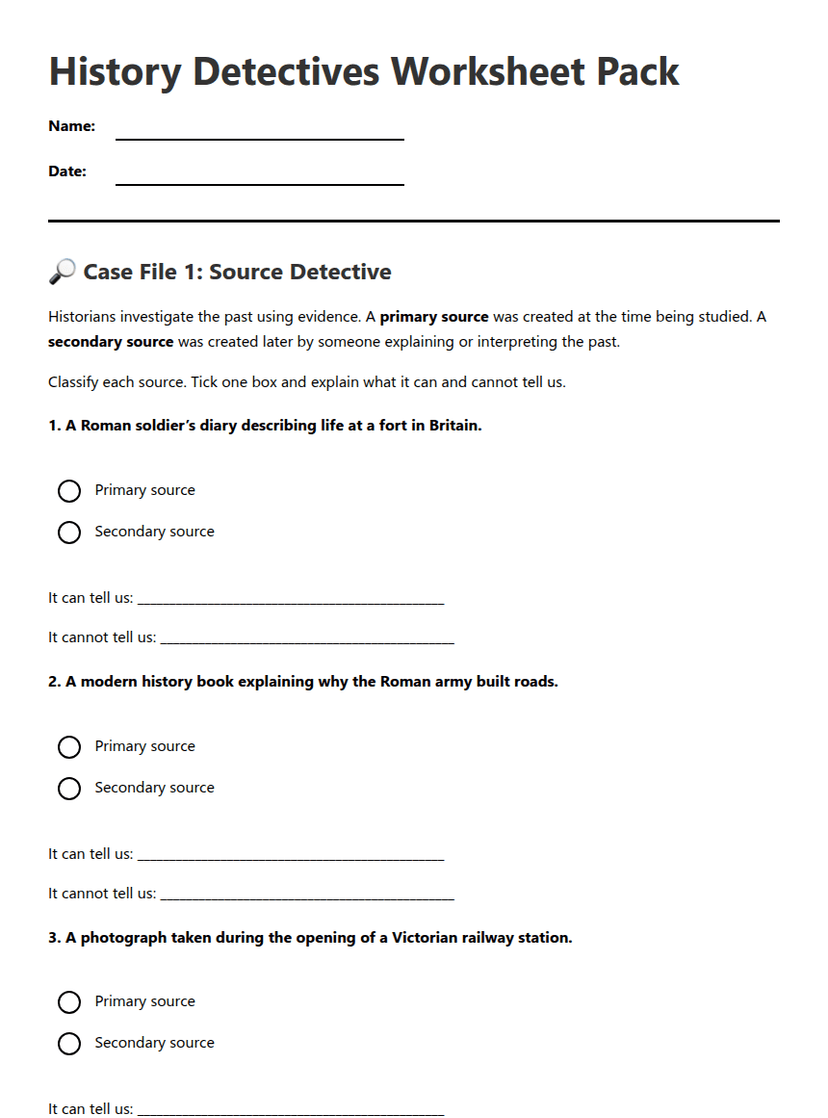
History Detectives Worksheet Pack
Free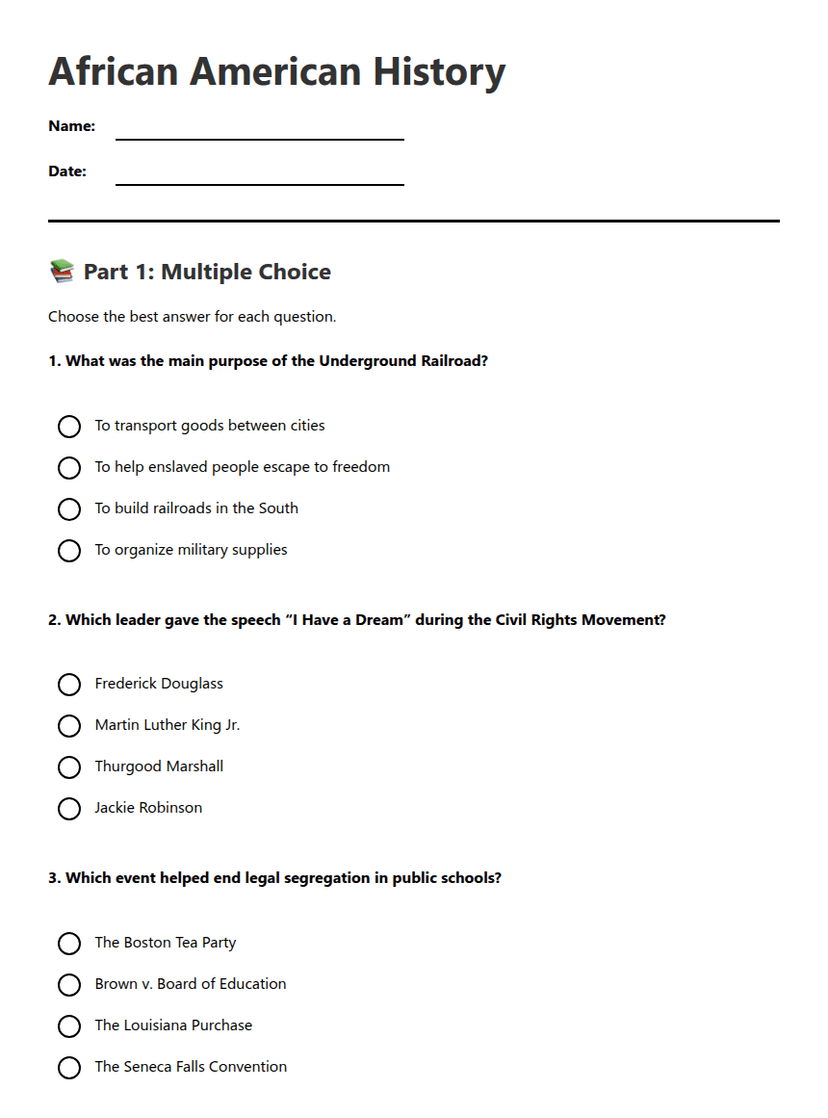
African American History
Free
Australian History Texts
Free