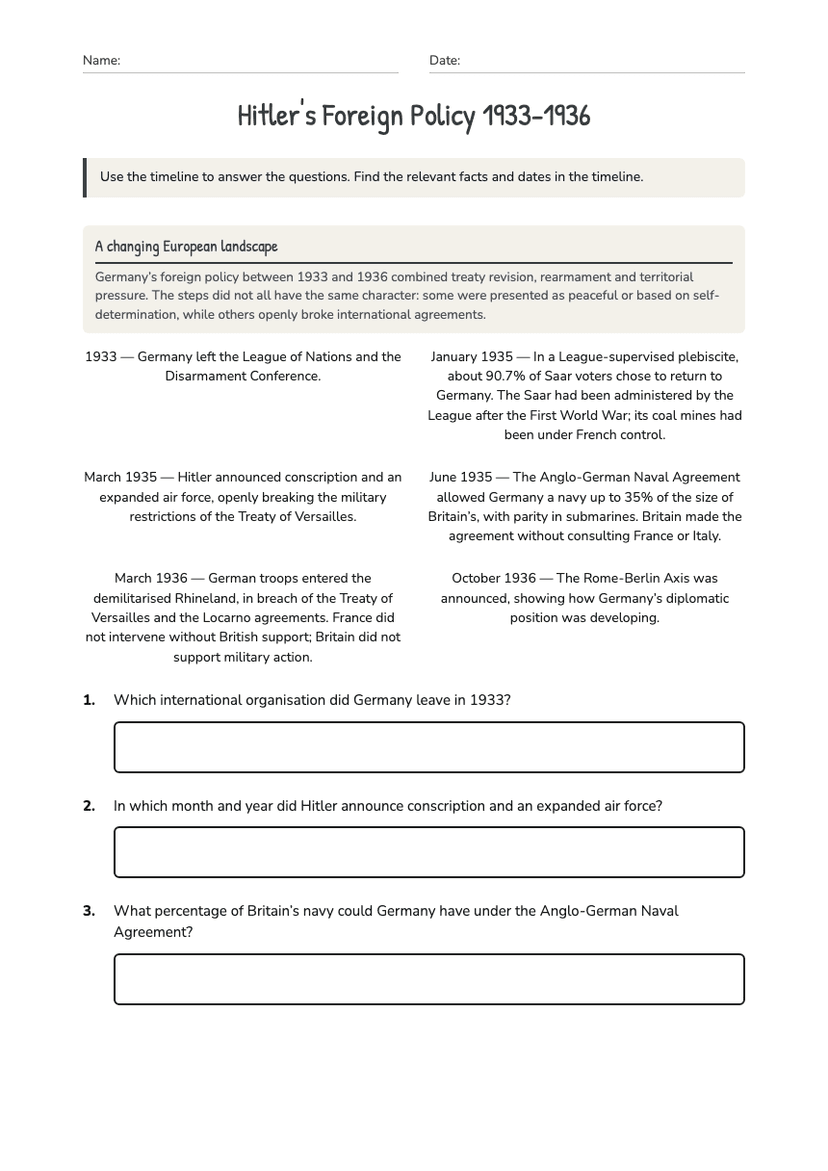
History Detectives Worksheet Pack
A free history worksheet ready for your classroom. Open in Kuraplan to grab the print-ready PDF, customize it for your students, or generate a fresh version in seconds.
History Detectives Worksheet Pack
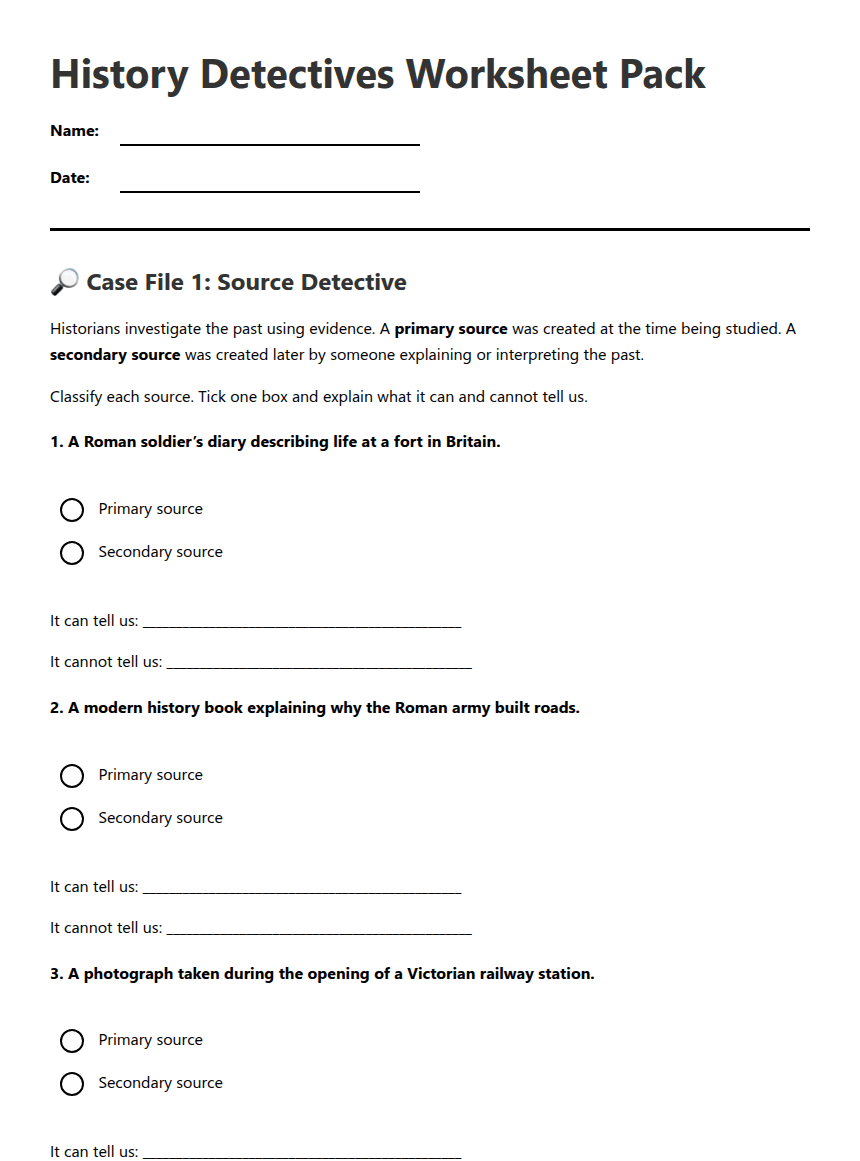
🔎 Case File 1: Source Detective
Historians investigate the past using evidence. A primary source was created at the time being studied. A secondary source was created later by someone explaining or interpreting the past.
Classify each source. Tick one box and explain what it can and cannot tell us.
It can tell us: ________________________________________________
It cannot tell us: ______________________________________________
It can tell us: ________________________________________________
It cannot tell us: ______________________________________________
It can tell us: ________________________________________________
It cannot tell us: ______________________________________________
It can tell us: ________________________________________________
It cannot tell us: ______________________________________________
It can tell us: ________________________________________________
It cannot tell us: ______________________________________________
It can tell us: ________________________________________________
It cannot tell us: ______________________________________________
🕵️ Case File 2: Timeline Challenge
Put these investigation steps in the most sensible order. Write numbers 1–8 in the boxes, then explain why your first and last steps belong there.
____ Compare the evidence and look for agreements or disagreements.
____ Ask a focused question about the past.
____ Share a claim supported by evidence.
____ Find and collect relevant sources.
____ Check who created each source and when.
____ Decide what the evidence suggests.
____ Record useful facts, quotations or details.
____ Ask whether the evidence is reliable and useful.
🗝️ Case File 3: Evidence to Claim
Mystery event: In 1892, the people of the fictional town of Bellford held a sudden meeting after the town bell rang three times at midnight. What caused the meeting?
Source A: Town newspaper, 1892
“The bell warned everyone that the river had flooded. Brave townspeople worked together to move families to higher ground.”
Source B: Diary of Ada Morris, a shopkeeper, 1892
“I heard the bell but saw no flood. People hurried towards the old mill. Some carried lanterns and tools.”
Source C: Letter from the mill owner to the town council, 1892
“The old mill is safe and has caused no trouble. Rumours about damage are exaggerated.”
Source D: History book published in 2020
“Local records suggest that a broken water wheel damaged part of the old mill. The midnight meeting may have been called to organise repairs.”
The midnight meeting was probably caused by ______________________________ because Source ___ says ____________________________________________. However, Source ___ suggests ____________________________________________.
✅ Teacher Answer Guide
Source Detective: 1 Primary; 2 Secondary; 3 Primary; 4 Secondary; 5 Primary; 6 Secondary. Accept explanations that identify the source’s viewpoint, detail or context, and recognise that no source tells the whole story.
Timeline Challenge: Suggested order: 1 Ask a focused question; 2 Find and collect relevant sources; 3 Check who created each source and when; 4 Record useful facts, quotations or details; 5 Ask whether the evidence is reliable and useful; 6 Compare the evidence; 7 Decide what the evidence suggests; 8 Share a supported claim.
Evidence to Claim: 9 Source C, because the mill owner may want to protect his reputation or property. 10 Sources A and B are acceptable, with B especially useful for a first-hand observation. 11 Accept references to Source B’s mention of the old mill, lanterns and tools, or Source D’s evidence about the damaged water wheel. Claims should use evidence and acknowledge that sources may disagree.
About This Worksheet
Free in Kuraplan
Sign up free, grab the PDF, and customize it for your class.
Print-Ready
Formatted for standard paper. Clean layout, easy to read.
AI-Generated
Created with Kuraplan's AI, designed for real classroom use.
For Teachers & Parents
Use in classrooms, for homework, tutoring, or homeschool.
Need a custom version of this worksheet?
Kuraplan's AI generates custom worksheets in seconds — differentiated for every learner, aligned to your curriculum.
Generate Custom Worksheets — FreeMore History Worksheets
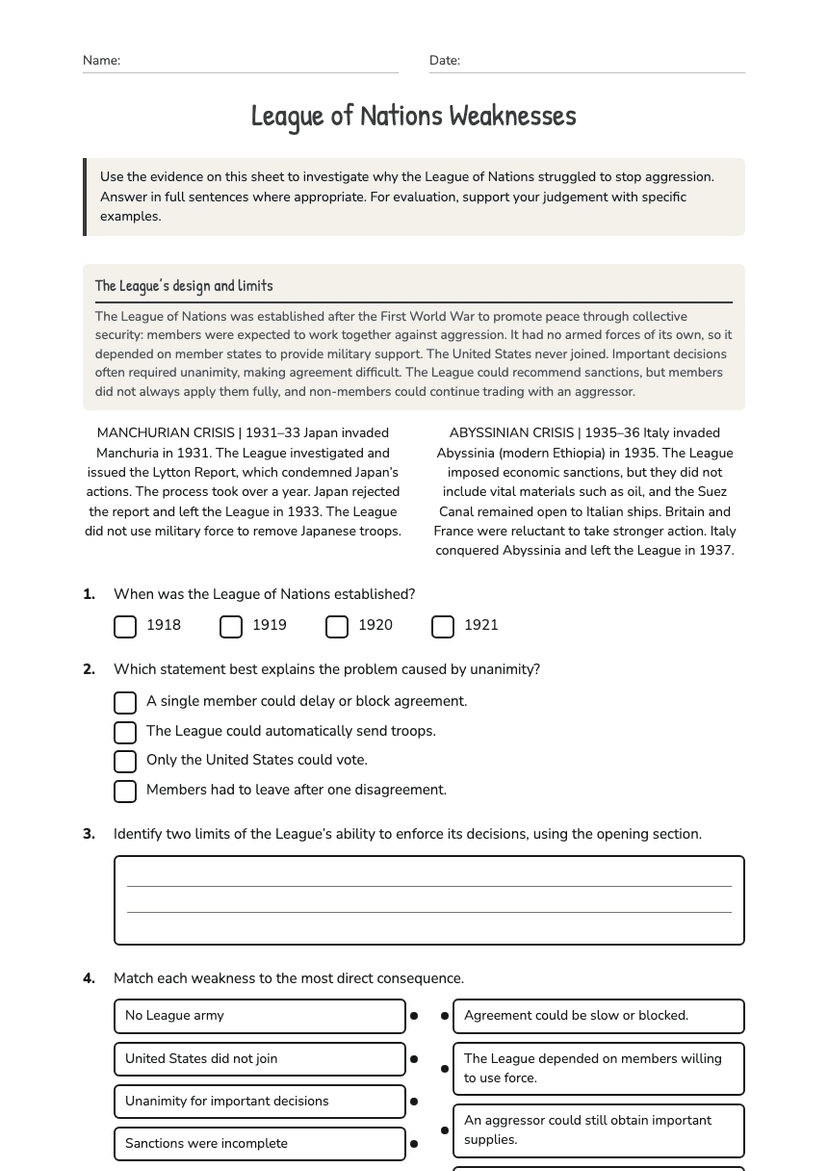
League of Nations Weaknesses
Free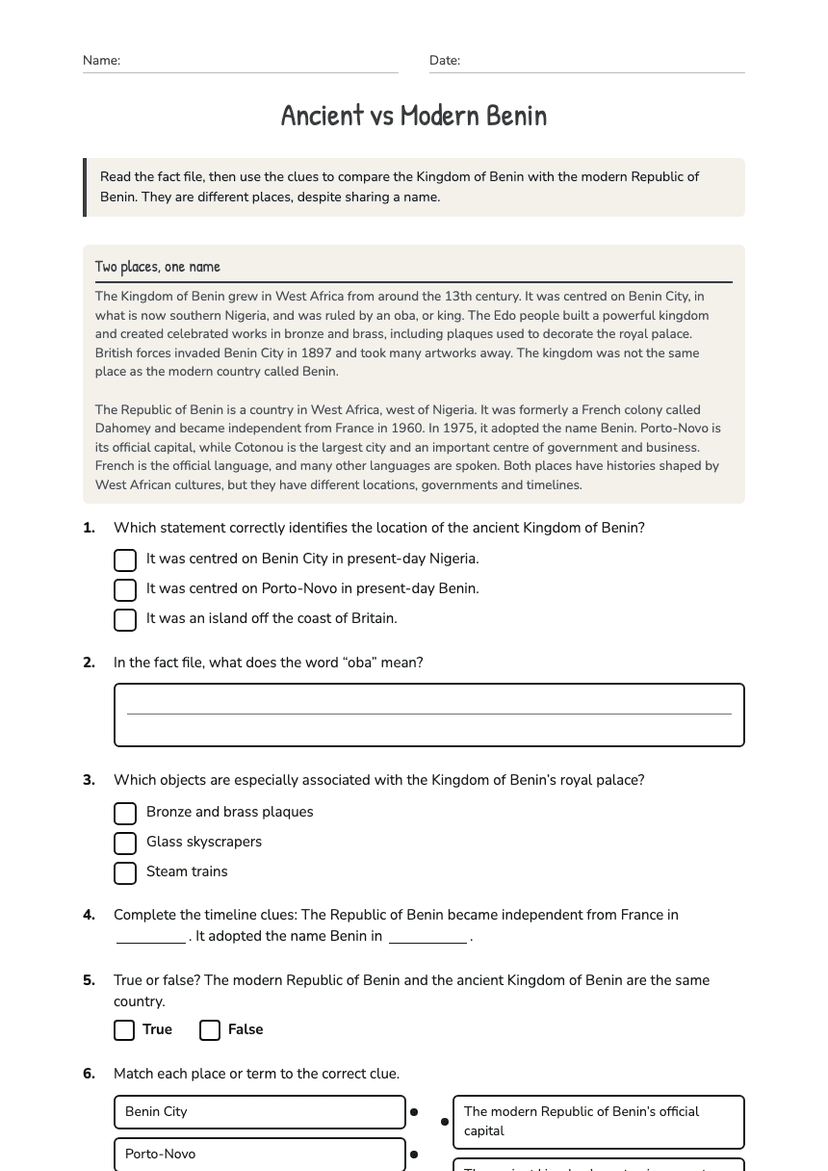
Ancient vs Modern Benin
Free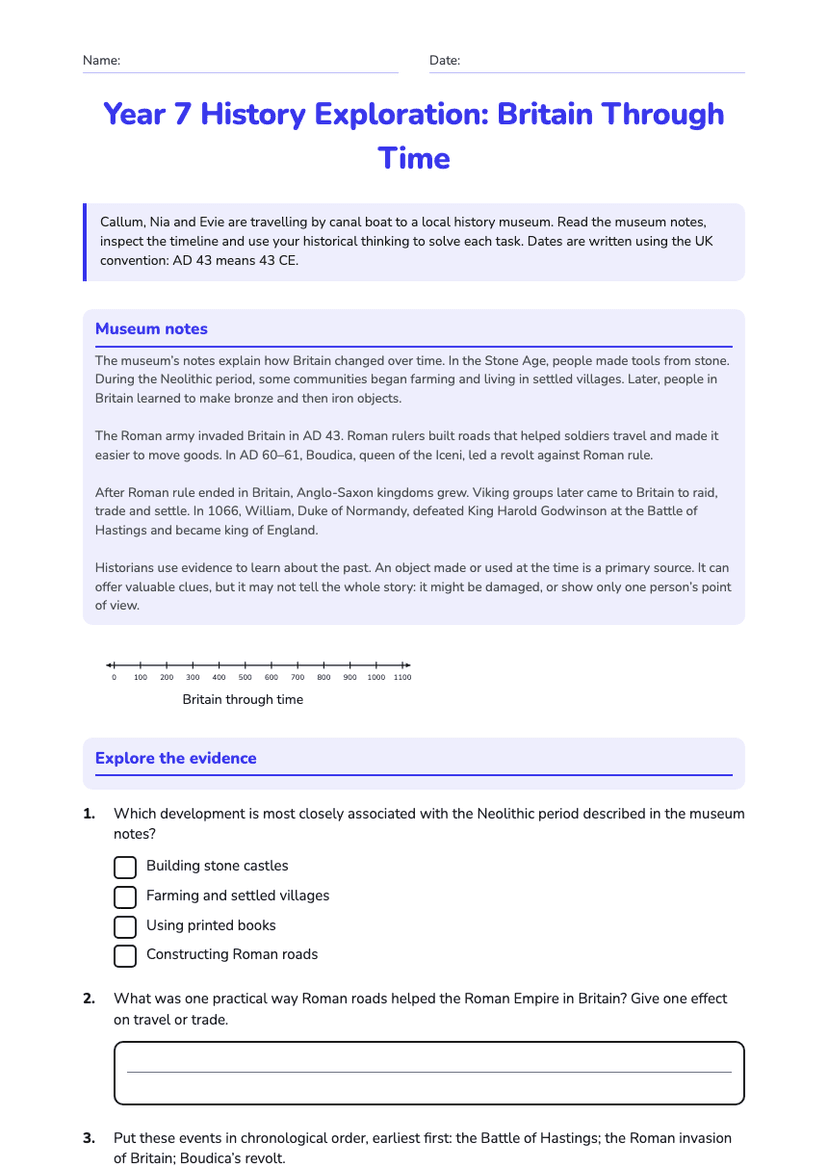
Year 7 History Exploration: Britain Through Time
Free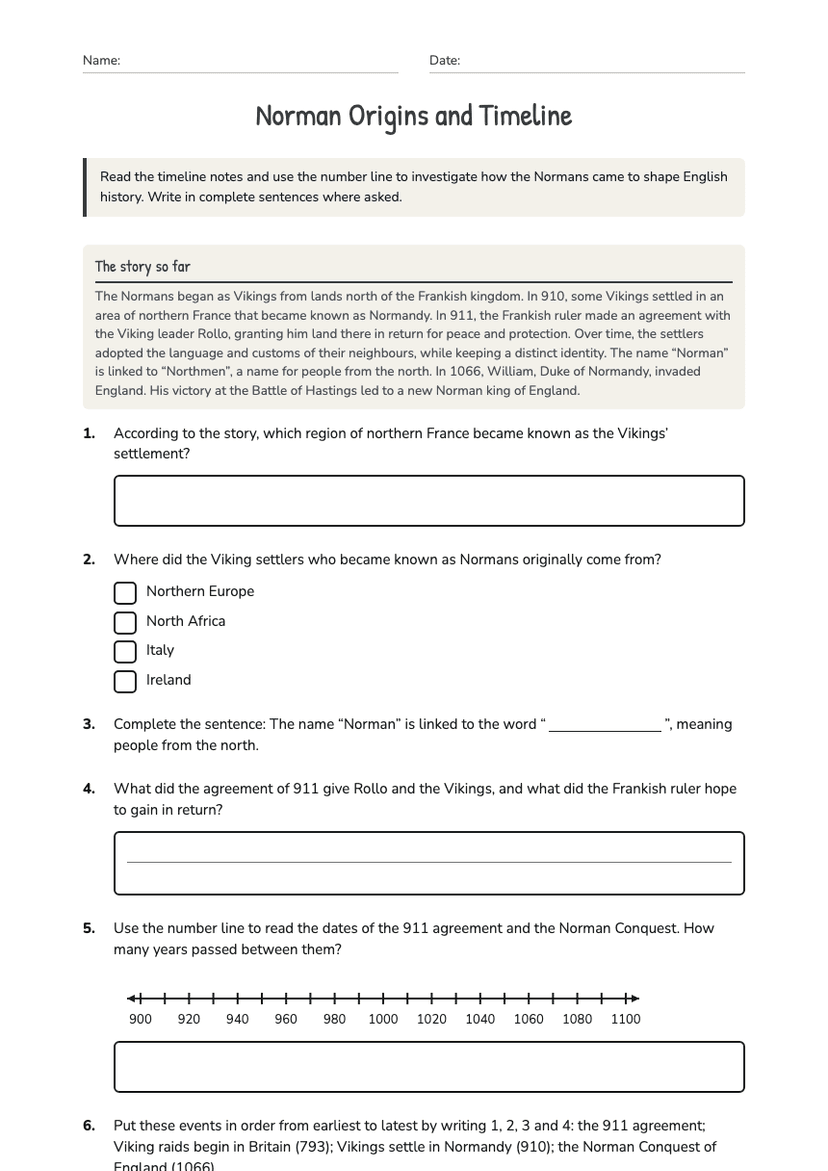
Norman Origins and Timeline
Free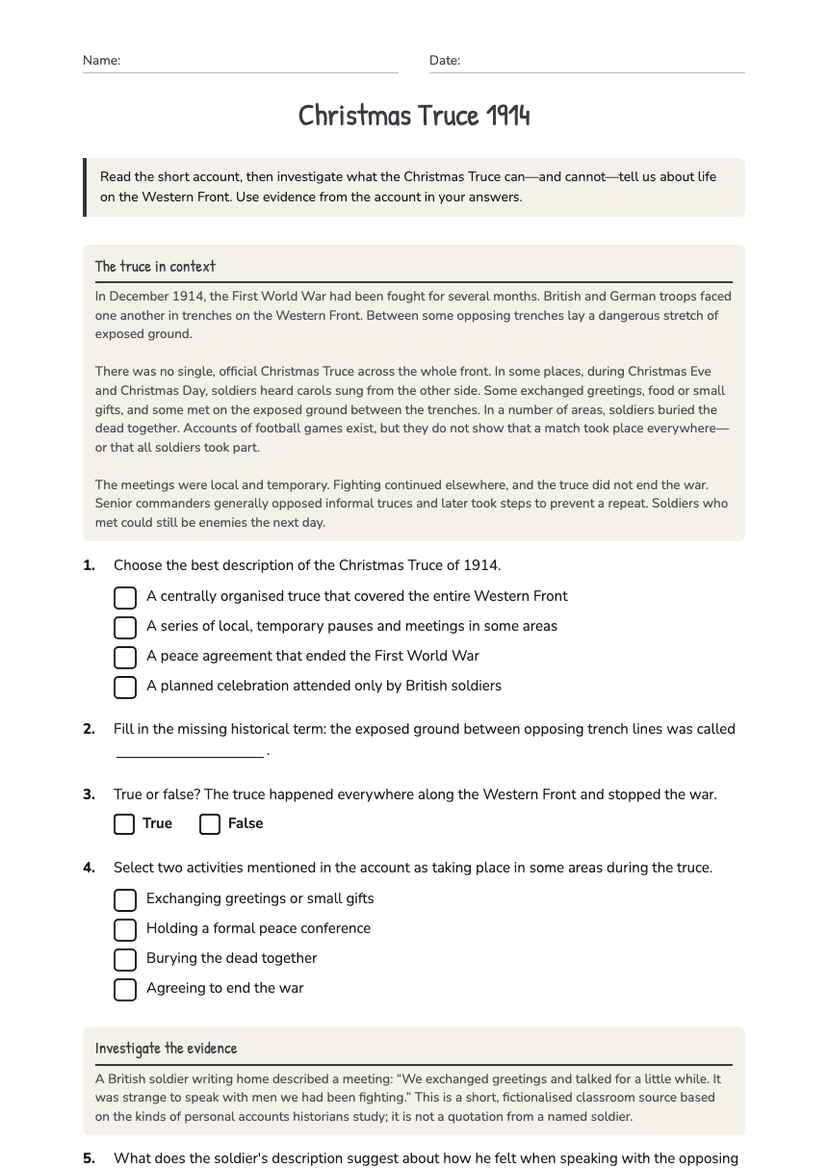
Christmas Truce 1914
Free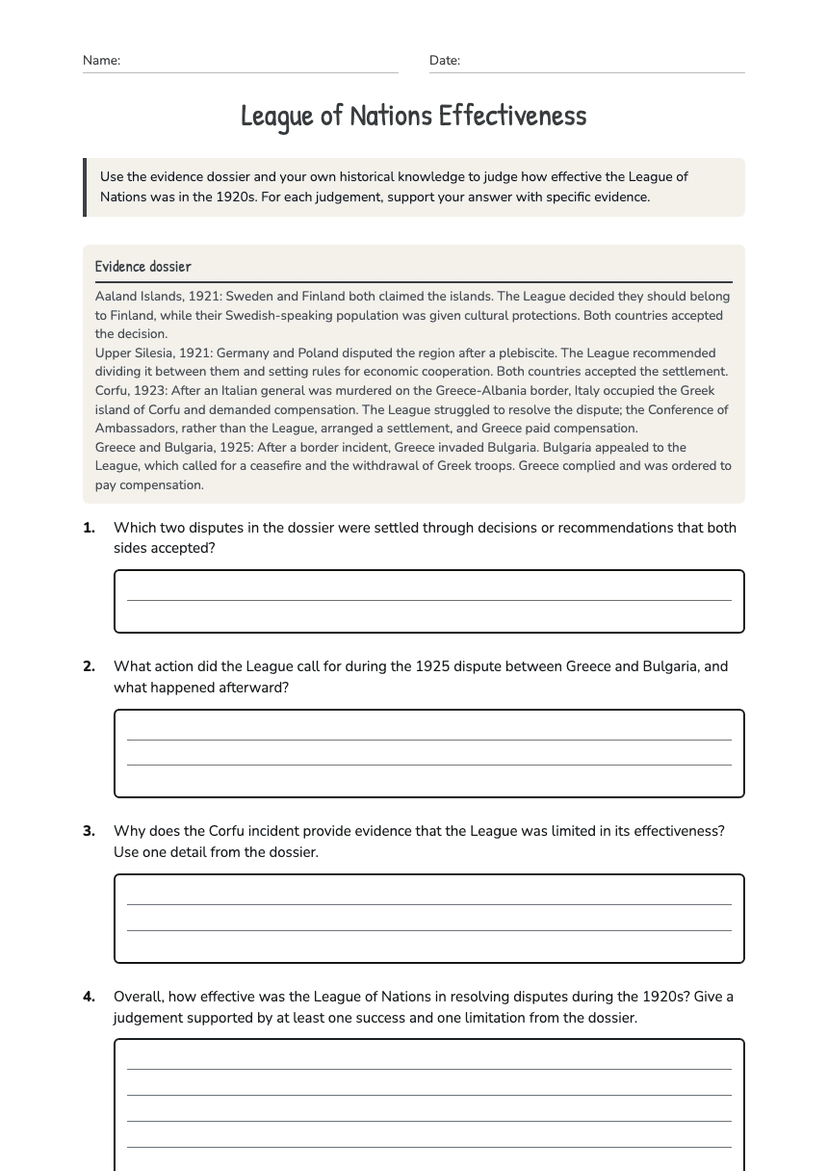
League of Nations Effectiveness
Free
Loyalty in Freedom's Fight
Free