Government Types and Power
A free, printable general worksheet ready for your classroom. Download instantly, print, and hand out to your students — no account needed.
Government Types and Power
📖 Reading Passage: Government Types and Power Around the World
What is Government?
Government is the system by which a country, state, or community is controlled and organised. Every nation needs some form of government to make laws, provide services, maintain order, and protect its citizens. Throughout history, different types of government have emerged, each with its own way of distributing and exercising power.
Democracy: Power to the People
Democracy comes from the Greek words "demos" (people) and "kratos" (power), literally meaning "power of the people." In a democratic system, citizens have the right to participate in decision-making, usually through voting for representatives who will govern on their behalf. There are two main types of democracy: direct democracy, where citizens vote directly on issues, and representative democracy, where citizens elect representatives to make decisions for them.
New Zealand operates as a representative democracy, where citizens aged 18 and over can vote for members of Parliament every three years. Our democratic system ensures that power ultimately rests with the people, who can change their government through regular elections. The principle of "one person, one vote" means that every citizen's voice carries equal weight in choosing our leaders.
Monarchy: Traditional Royal Rule
A monarchy is a form of government where a single person, usually called a king or queen, serves as the head of state. In absolute monarchies, the monarch has complete power over the government and people. However, most modern monarchies are constitutional monarchies, where the monarch's power is limited by a constitution and other government institutions.
New Zealand is a constitutional monarchy, which means we have Queen Elizabeth II as our head of state, represented locally by the Governor-General. However, the Queen and Governor-General have very limited political power. Real governing power lies with our elected Parliament and Prime Minister. This system combines the tradition and stability of monarchy with the democratic participation of citizens in choosing their government.
Republic: Elected Leadership
A republic is a form of government where the head of state is elected rather than inheriting their position. In republics, power is held by elected representatives and leaders who are accountable to the people. Countries like the United States, France, and Australia (which is considering becoming a republic) operate under republican systems.
The key difference between a republic and a constitutional monarchy like New Zealand is that republics have an elected president as head of state, while we have an inherited monarch. Both systems can be democratic, as the real governing power comes from elected representatives in both cases.
Dictatorship and Authoritarian Rule
A dictatorship is a form of government where one person or a small group holds absolute power, usually without the consent of the people. Dictators often come to power through force and maintain control through military strength, propaganda, and suppression of opposition. Citizens in dictatorships typically have few rights and freedoms compared to those living in democracies.
Throughout history, many countries have suffered under dictatorial rule, where people could not freely express their opinions, choose their leaders, or enjoy basic human rights. This is why democratic systems like New Zealand's are so valuable – they protect individual freedoms and ensure that power remains with the people.
New Zealand's Government Structure
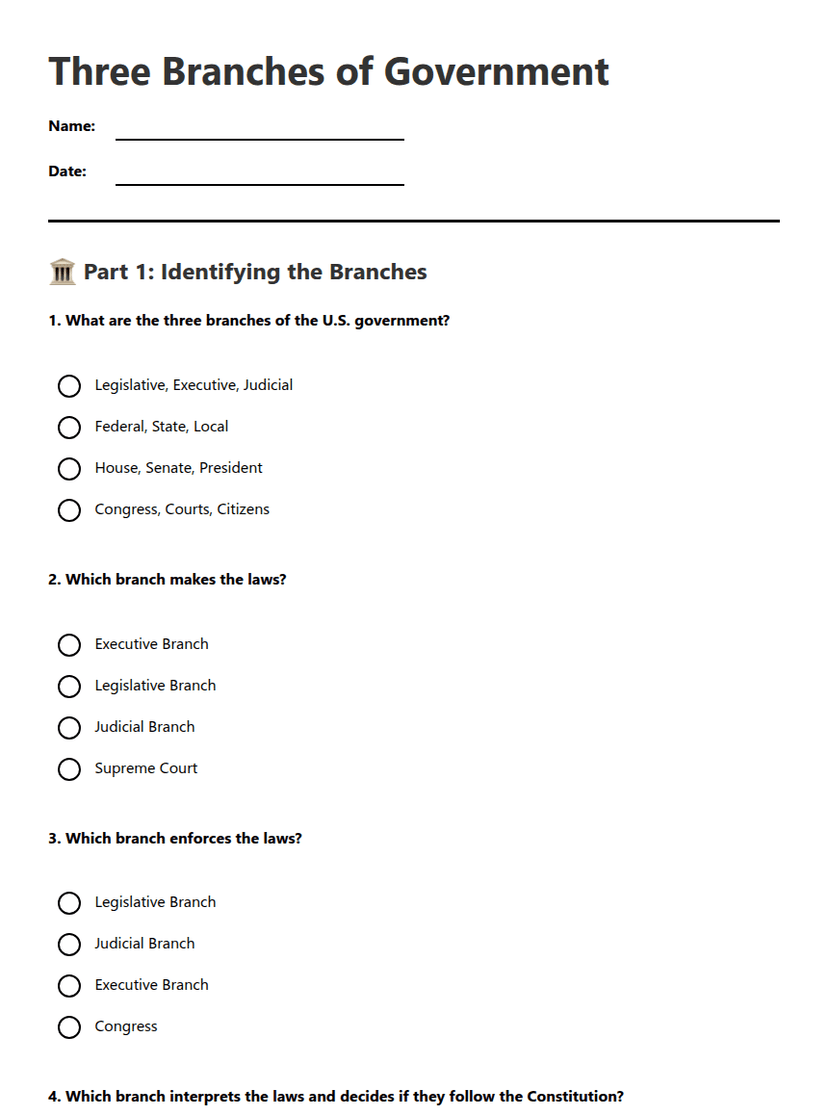
New Zealand operates under a Westminster parliamentary system, inherited from our British colonial history. Our government has three main branches: the Executive (Prime Minister and Cabinet), the Legislature (Parliament), and the Judiciary (courts and judges). This separation of powers helps prevent any one group from becoming too powerful.
Parliament is the supreme law-making body in New Zealand, consisting of 120 Members of Parliament (MPs) elected through a Mixed Member Proportional (MMP) voting system. Citizens vote for both a local electorate MP and a political party. This system ensures that Parliament roughly reflects the proportion of votes each party received nationwide.
The Prime Minister is the head of government and is usually the leader of the political party or coalition that can command majority support in Parliament. The Prime Minister chooses other MPs to serve as Ministers in charge of different government departments like health, education, and transport. Together, these Ministers form the Cabinet, which makes important government decisions.
The Governor-General represents the Queen in New Zealand and performs ceremonial duties like opening Parliament and giving royal assent to laws. However, the Governor-General acts on the advice of elected politicians and does not make independent political decisions.
Local Government in New Zealand
New Zealand also has local government structures that manage community services and local issues. Regional councils manage environmental issues like water quality and public transport across large areas. City and district councils handle local services like rubbish collection, libraries, parks, and building consents. These local governments are also democratically elected, allowing communities to have a say in decisions that directly affect their daily lives.
The Treaty of Waitangi and Māori Governance
New Zealand's government structure is unique because it recognises the special relationship between Māori and the Crown established by the Treaty of Waitangi in 1840. This treaty acknowledged Māori as tangata whenua (people of the land) and promised to protect Māori rights and interests. Today, this is reflected in various ways, including dedicated Māori seats in Parliament, consultation requirements on issues affecting Māori, and recognition of tikanga Māori (Māori customs) in legal processes.
Rights and Responsibilities in Democracy
Living in a democracy like New Zealand comes with both rights and responsibilities. Citizens have the right to vote, freedom of speech, freedom of religion, and equal treatment under the law. The New Zealand Bill of Rights Act 1990 protects these fundamental freedoms. However, with these rights come responsibilities: to respect others' rights, obey the law, participate in civic life, and contribute to society through activities like paying taxes and jury service.
Comparing Government Systems
When comparing different government systems, several factors are important: how leaders are chosen, how much power citizens have, how individual rights are protected, and how responsive the government is to people's needs. Democratic systems like New Zealand's generally score well in all these areas because they include regular elections, protection of individual rights, independent courts, and free media that can criticise the government.
Authoritarian systems may sometimes appear more efficient because decisions can be made quickly without extensive consultation. However, they often fail to represent citizens' interests and can lead to corruption, inequality, and human rights abuses. The checks and balances in democratic systems, while sometimes making decision-making slower, help ensure that power is used responsibly and in the public interest.
New Zealand's Place in the World
New Zealand is recognised internationally as one of the world's most democratic and least corrupt countries. Our government system provides stability, protects individual rights, and allows for peaceful changes of government through regular elections. This has contributed to New Zealand's reputation as a safe, fair, and prosperous country where people from diverse backgrounds can live together harmoniously.
Our democratic traditions also mean that New Zealand can be a voice for democracy and human rights in international forums. We work with other democratic countries to promote peace, cooperation, and respect for human rights around the world.
Challenges and Future Considerations
Even strong democracies like New Zealand face ongoing challenges. These include ensuring that all citizens feel represented, addressing inequality, responding to global issues like climate change, and adapting to technological changes that affect how people communicate and participate in democracy. Young people like yourselves will play a crucial role in shaping how our democracy evolves to meet these challenges.
Understanding different types of government helps us appreciate the freedoms we enjoy in New Zealand while recognising our responsibility to protect and strengthen our democratic system. Democracy requires active participation from citizens who are informed, engaged, and committed to the common good.
🤔 Comprehension Questions
💭 Critical Thinking
Rights:
Responsibilities:
About This Worksheet
Free Download
No sign-up, no email, no paywall. Just download and print.
Print-Ready
Formatted for standard paper. Clean layout, easy to read.
AI-Generated
Created with Kuraplan's AI, designed for real classroom use.
For Teachers & Parents
Use in classrooms, for homework, tutoring, or homeschool.
Need a custom version of this worksheet?
Kuraplan's AI generates custom worksheets in seconds — differentiated for every learner, aligned to your curriculum.
Generate Custom Worksheets — Free