Linear Programming Introduction
A free maths worksheet ready for your classroom. Open in Kuraplan to grab the print-ready PDF, customize it for your students, or generate a fresh version in seconds.
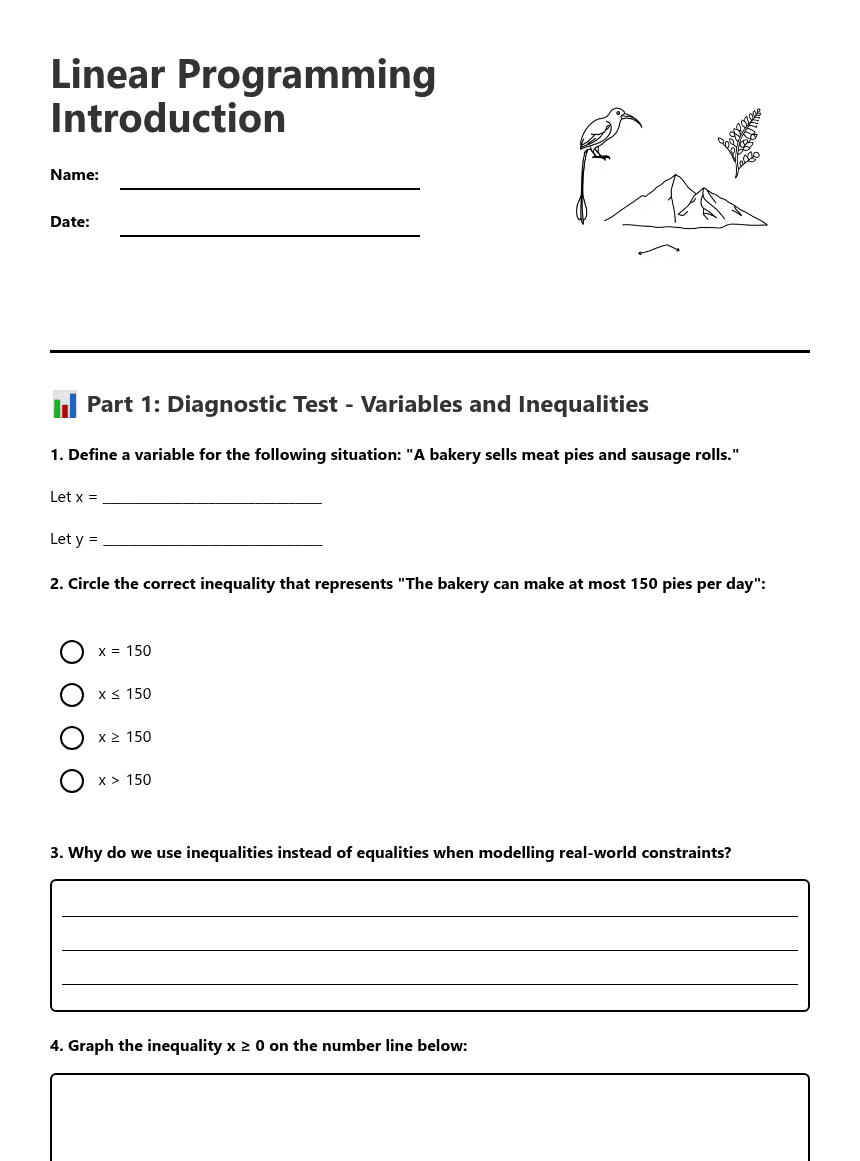
Linear Programming Introduction

📊 Part 1: Diagnostic Test - Variables and Inequalities
Let x = _________________________________
Let y = _________________________________
🏭 Part 2: Understanding Variables and Constraints
a) Define variables: Let x = _________________ and y = _________________
b) The factory cannot produce negative quantities. Write this constraint:
_______ and _______
c) The factory has 200 hours of labour available. If chairs take 3 hours and tables take 5 hours to make, write the constraint:
_________________________________
🎯 Part 3: Writing Inequalities from Context
Scenario: The company has the following limitations:
• They cannot make negative quantities
• Each car uses 4 units of wood, each doll uses 3 units. Maximum wood available: 120 units
• Each car takes 2 hours to make, each doll takes 3 hours. Maximum labour: 90 hours
• They must make at least 5 cars to meet a contract
💰 Part 4: Real-World Application
a) Define variables: s = _____________, l = _____________
b) Write the budget constraint: _________________________________
c) Write the non-negativity constraints: _______ and _______
d) If the student wants to buy at least 2 sandwiches, write this constraint: _______
🤔 Part 5: Reflection and Extension
About This Worksheet
Free in Kuraplan
Sign up free, grab the PDF, and customize it for your class.
Print-Ready
Formatted for standard paper. Clean layout, easy to read.
AI-Generated
Created with Kuraplan's AI, designed for real classroom use.
For Teachers & Parents
Use in classrooms, for homework, tutoring, or homeschool.
Need a custom version of this worksheet?
Kuraplan's AI generates custom worksheets in seconds — differentiated for every learner, aligned to your curriculum.
Generate Custom Worksheets — FreeMore Maths Worksheets
Year 4 Maths Placement Test
Free
Functional Skills Maths Revision
Free
Functional Skills Maths Assessment
Free
Functional Skills Maths Practice
Free
Maths Trivia Team Challenge
Free
Year 9 Maths Revision
Free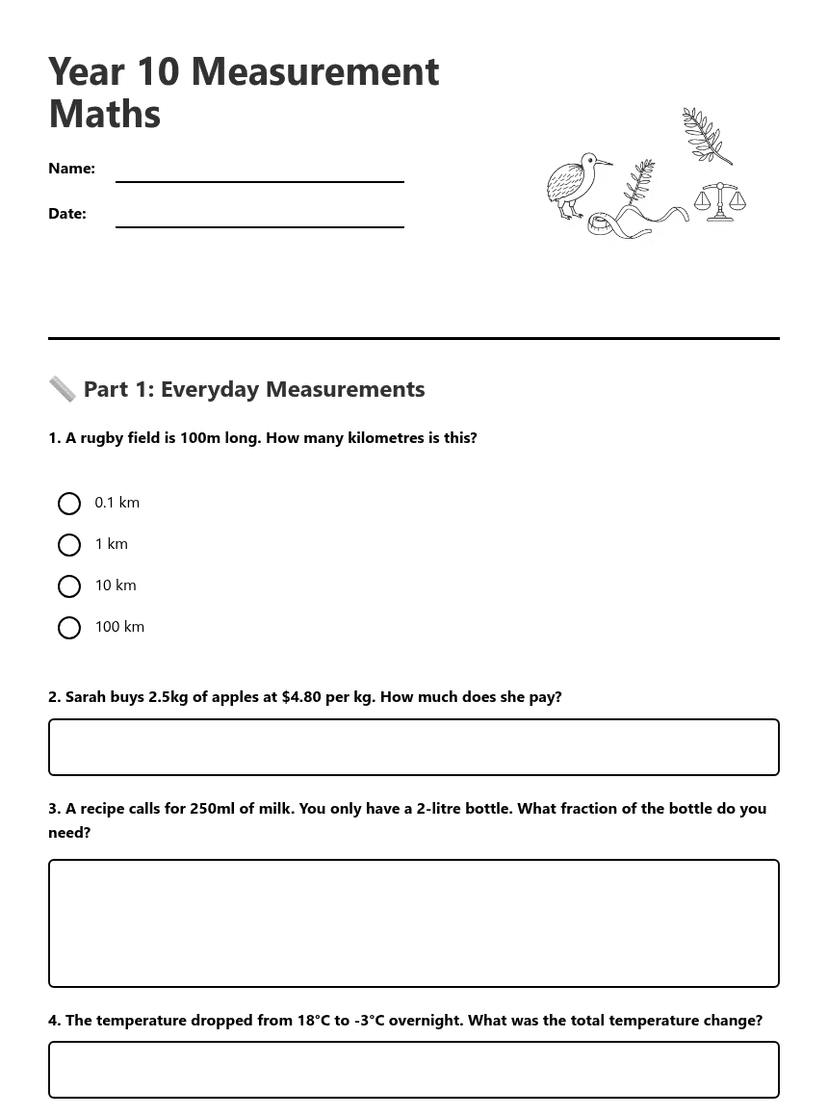
Year 10 Measurement Maths
Free