Living Things Classification Worksheet
A free science worksheet ready for your classroom. Open in Kuraplan to grab the print-ready PDF, customize it for your students, or generate a fresh version in seconds.
Living Things Classification Worksheet
🔬 Part 1: Understanding Classification
🌿 Part 2: Kingdom Characteristics
📸 Part 3: Organism Classification Activity
Instructions: For each organism described below, identify which kingdom it belongs to and explain your reasoning based on the observable characteristics.
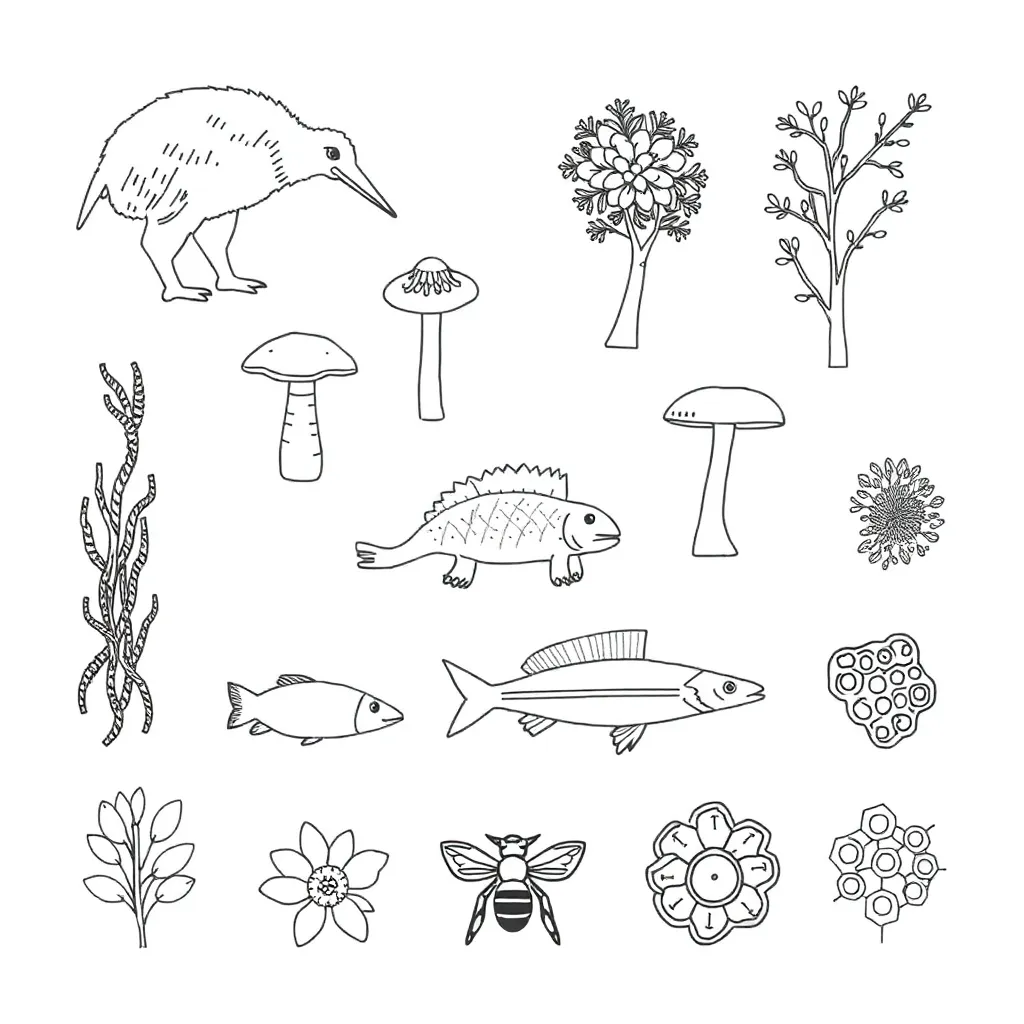
Description: A large, flightless bird native to New Zealand. It moves around by walking and climbing, feeds on native plants, fruits and leaves. It has feathers, a beak, and lays eggs.
Kingdom: ________________
Key characteristics that helped you decide:
Description: A large tree with red flowers found along New Zealand coastlines. It has roots, stems, leaves, and produces its own food using sunlight. It cannot move from place to place.
Kingdom: ________________
Key characteristics that helped you decide:
Description: A shelf-like growth found on dead tree trunks. It has no leaves or roots, cannot move, and feeds by breaking down dead wood material. It reproduces using spores.
Kingdom: ________________
Key characteristics that helped you decide:
Description: A tiny, single-celled organism visible only under a microscope. It can change shape and move by extending parts of its body. It feeds by surrounding and absorbing food particles.
Kingdom: ________________
Key characteristics that helped you decide:
Description: Extremely tiny, single-celled organisms found in the human digestive system. They are much smaller than other single-celled organisms and have a different internal structure with no nucleus.
Kingdom: ________________
Key characteristics that helped you decide:
Description: A reptile native to New Zealand that looks like a lizard. It moves by walking, hunts insects and small animals for food, has scales, and can regulate its body temperature using the environment.
Kingdom: ________________
Key characteristics that helped you decide:
🧠 Part 4: Critical Thinking
Classification helps scientists _____________ and study the incredible _____________ of life on Earth. As new _____________ is discovered and technology improves, scientists may _____________ how they group certain organisms.
🎨 Part 5: Creative Application
About This Worksheet
Free in Kuraplan
Sign up free, grab the PDF, and customize it for your class.
Print-Ready
Formatted for standard paper. Clean layout, easy to read.
AI-Generated
Created with Kuraplan's AI, designed for real classroom use.
For Teachers & Parents
Use in classrooms, for homework, tutoring, or homeschool.
Need a custom version of this worksheet?
Kuraplan's AI generates custom worksheets in seconds — differentiated for every learner, aligned to your curriculum.
Generate Custom Worksheets — FreeMore Science Worksheets
Variables in Science Investigations
Free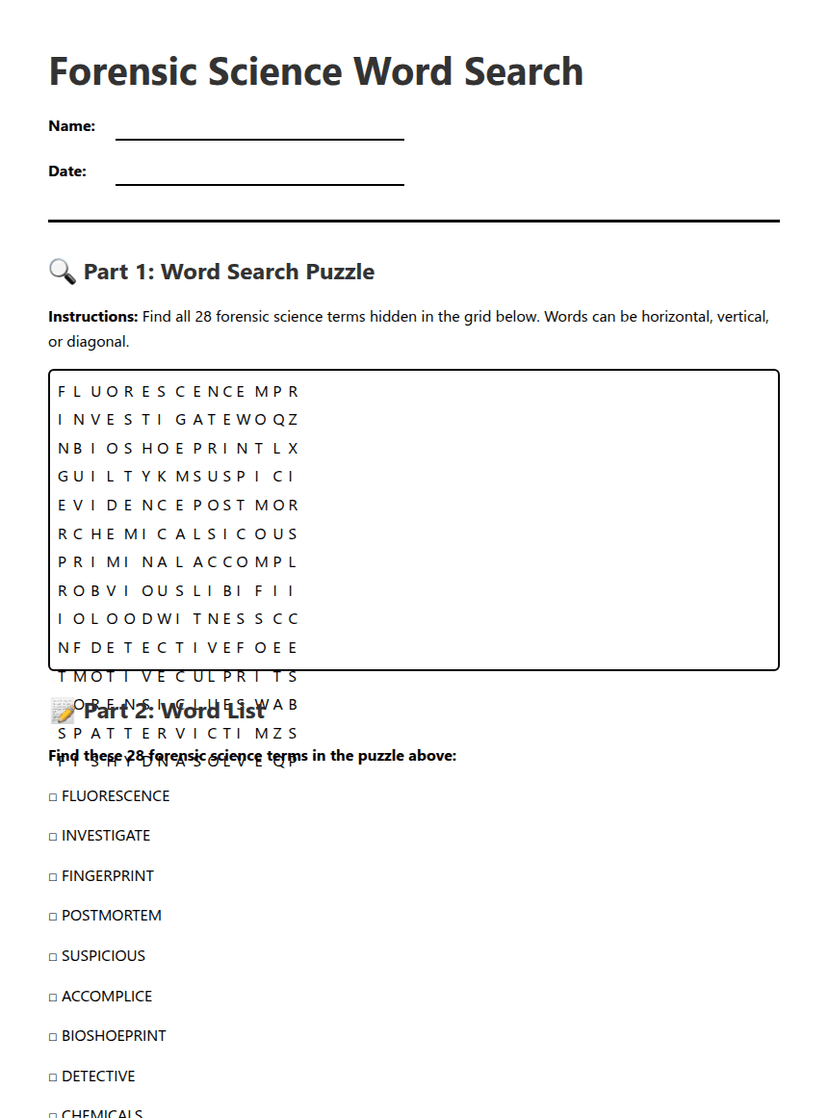
Forensic Science Word Search
Free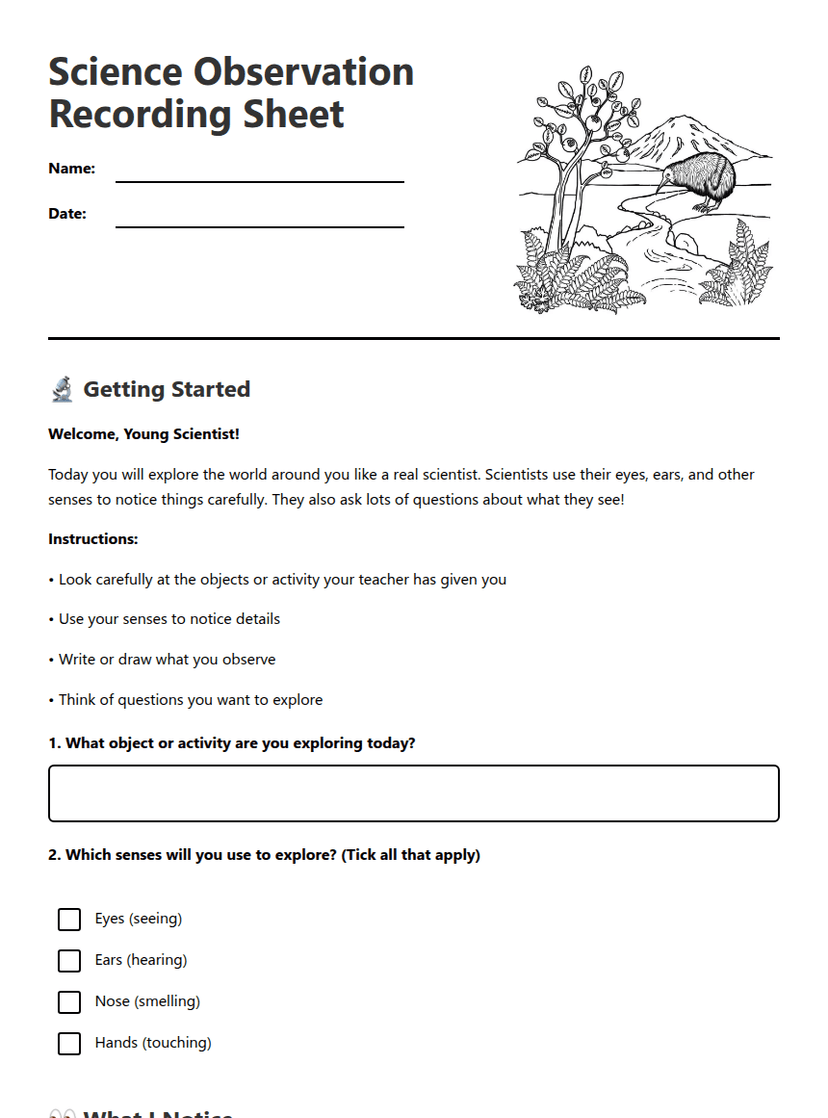
Science Observation Recording Sheet
Free
Science Objects Exploration
Free
Sports Science Introduction
Free
Senior Social Science Icebreaker
Free
What is Science?
Free