Living Things Workbook
A free science worksheet ready for your classroom. Open in Kuraplan to grab the print-ready PDF, customize it for your students, or generate a fresh version in seconds.
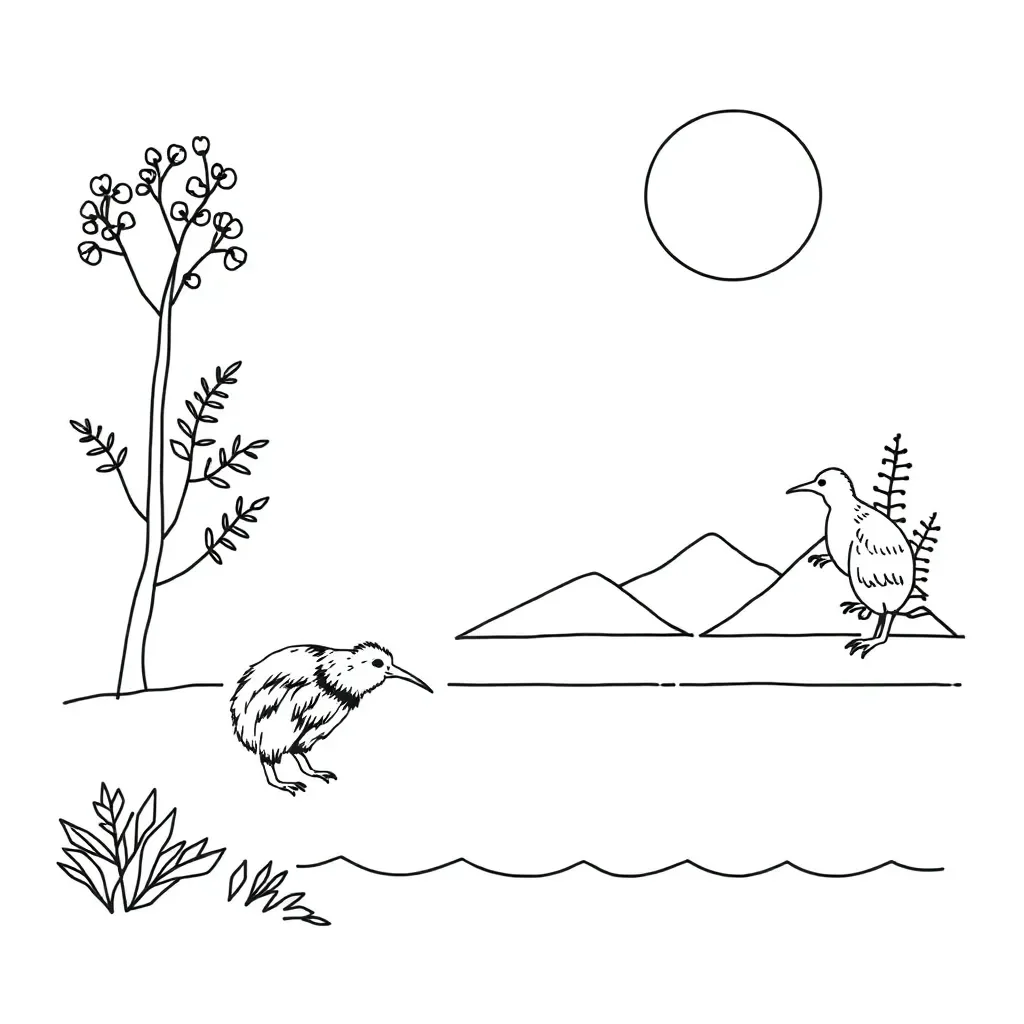
Exploring Living Things - Student Workbook
🔍 Section 1: What Do I Already Know?
Instructions: Complete this diagnostic section to reflect on your current understanding of living things.
Key Ideas:
🔬 Section 2: Cells - Structure and Function
Instructions: Explore the basic building blocks of life.
Retrieval Practice (5 mins): Write down everything you remember about cells from previous learning.
Key Ideas:
📊 Section 3: Classification and Biodiversity
Instructions: Investigate how scientists organise and classify living things.
Retrieval Practice (5 mins): List as many different groups of living things as you can think of.
Species, Kingdom, Genus, Family, Order, Class, Phylum
Key Ideas:
🌿 Section 4: Ecological Systems
Instructions: Explore how living and non-living factors interact in ecosystems.
Retrieval Practice (5 mins): Draw a simple food chain with 4 organisms.
Key Ideas:
♻️ Section 5: Matter Cycling and Energy Flow
Instructions: Understand how energy and matter move through ecosystems.
Retrieval Practice (5 mins): Explain where plants get their energy from.
Carbon dioxide + _______ → _______ + Oxygen (using light energy)
Key Ideas:
🦎 Section 6: Adaptations and Natural Selection
Instructions: Investigate how organisms adapt to their environments over time.
Retrieval Practice (5 mins): Name an animal adaptation and explain how it helps survival.
Key Ideas:
🌍 Section 7: Human Impacts and Stewardship
Instructions: Examine how humans affect ecosystems and our role as kaitiaki (guardians).
Retrieval Practice (5 mins): List three ways humans impact the environment.
Key Ideas:
📈 Section 8: Scientific Investigation and Data
Instructions: Practice designing investigations and interpreting data about living things.
Retrieval Practice (5 mins): What makes a fair test?
Forest A: Tui (15), Fantail (8), Robin (12), Kereru (3)
Forest B: Tui (22), Fantail (18), Robin (6), Kereru (9)
Which forest has greater biodiversity? Explain your reasoning:
Key Ideas:
🎤 Section 9: Presentation Planning and Reflection
Instructions: Plan your presentation on living things and reflect on your learning.
Retrieval Practice (5 mins): What topic from this unit interests you most?
Key Ideas:
✅ Section 10: Final Review and Goal Setting
Instructions: Review your learning and set goals for future study.
Final Key Ideas - Most Important Things I Learned:
About This Worksheet
Free in Kuraplan
Sign up free, grab the PDF, and customize it for your class.
Print-Ready
Formatted for standard paper. Clean layout, easy to read.
AI-Generated
Created with Kuraplan's AI, designed for real classroom use.
For Teachers & Parents
Use in classrooms, for homework, tutoring, or homeschool.
Need a custom version of this worksheet?
Kuraplan's AI generates custom worksheets in seconds — differentiated for every learner, aligned to your curriculum.
Generate Custom Worksheets — FreeMore Science Worksheets
Danforth: Authority and Conscience
Free
Natural Resources Science
Free
Natural Resources Science
Free
Vitamins, Minerals, and Protein Science
Free
Exploring Science Materials
Free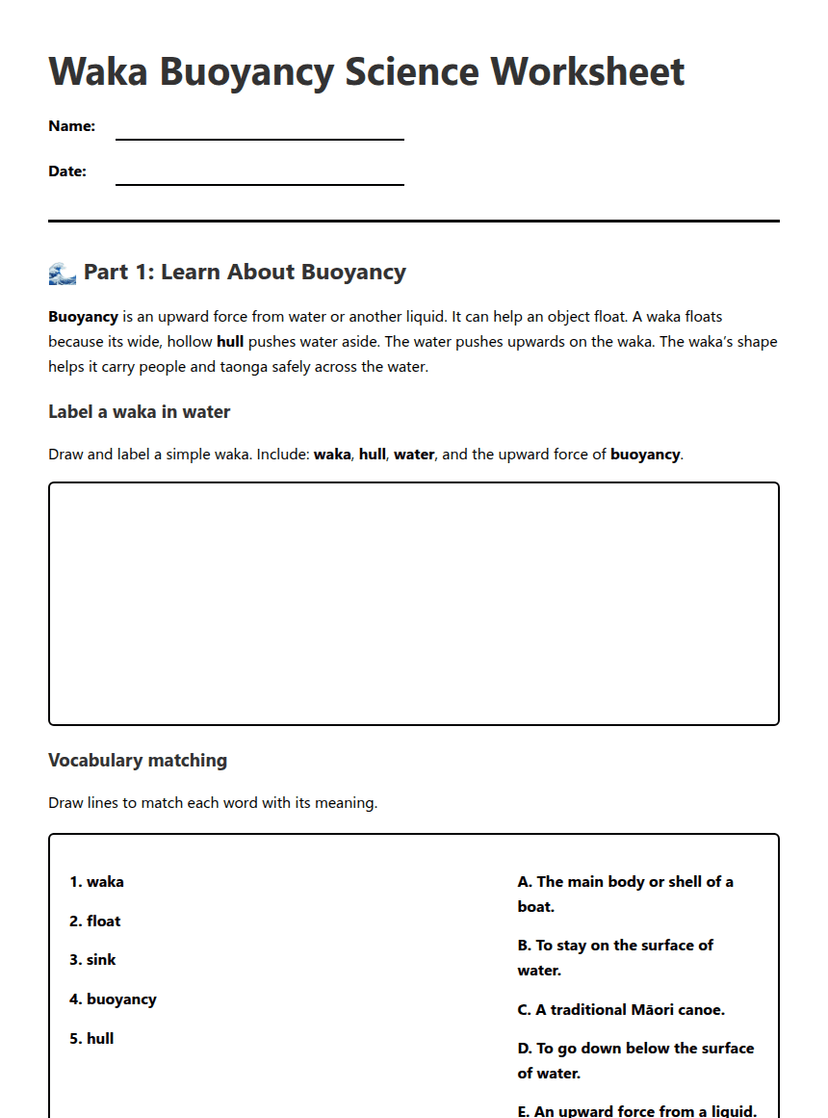
Waka Buoyancy Science Worksheet
Free
Science Skills Made Simple
Free