Year 6 Multiplication Problems
A free maths worksheet ready for your classroom. Open in Kuraplan to grab the print-ready PDF, customize it for your students, or generate a fresh version in seconds.
Year 6 Multiplication Problems
🧠 Part 1: Problem Solving Questions
🎯 Part 2: More Problem Solving
📋 Answer Sheet
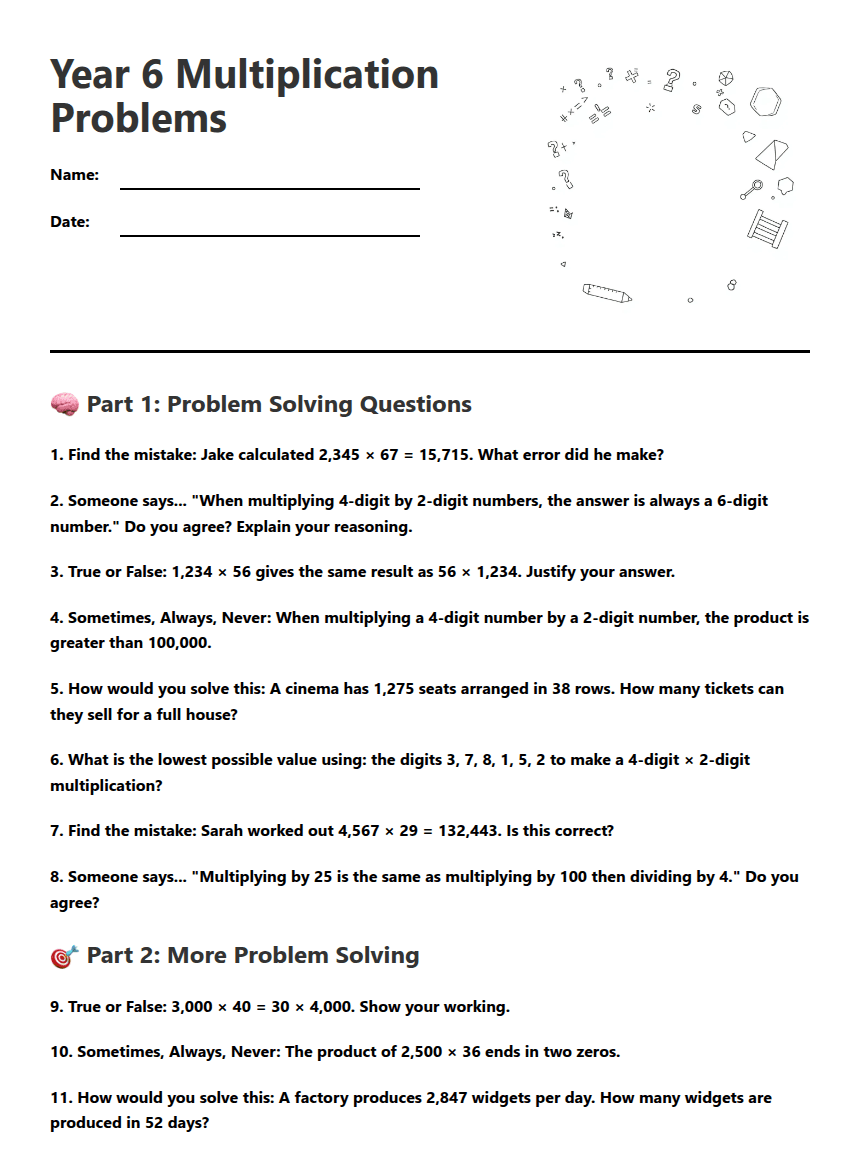
1. Jake's answer should be 157,015. He likely made an error in place value or addition of partial products.
2. Disagree. Example: 1,000 × 10 = 10,000 (5 digits). The product can be 5 or 6 digits.
3. True. This demonstrates the commutative property of multiplication.
4. Sometimes. Depends on the specific numbers (e.g., 1,000 × 10 = 10,000 < 100,000).
5. 1,275 × 38 = 48,450 tickets
6. 1,235 × 78 = 96,330 (arrange smallest digits first for minimum product)
7. Incorrect. 4,567 × 29 = 132,443 should be 132,443. Need to check calculation.
8. Agree. 25 = 100 ÷ 4, so multiplying by 25 equals multiplying by 100 then dividing by 4.
9. True. Both equal 120,000 (commutative and associative properties).
10. Always. 2,500 ends in two zeros, 36 has no trailing zeros, so product keeps the two zeros.
11. 2,847 × 52 = 148,044 widgets
12. 9,864 × 21 = 207,144 (arrange largest digits first for maximum product)
13. Correct answer is 305,505. Need to verify Tom's working method.
14. Disagree. This only works for single digits (e.g., 3 × 11 = 33). For larger numbers, it's more complex.
15. False. 1,999 × 50 ≈ 2,000 × 50 = 100,000, while 2,000 × 49 = 98,000. First is larger.
About This Worksheet
Free in Kuraplan
Sign up free, grab the PDF, and customize it for your class.
Print-Ready
Formatted for standard paper. Clean layout, easy to read.
AI-Generated
Created with Kuraplan's AI, designed for real classroom use.
For Teachers & Parents
Use in classrooms, for homework, tutoring, or homeschool.
Need a custom version of this worksheet?
Kuraplan's AI generates custom worksheets in seconds — differentiated for every learner, aligned to your curriculum.
Generate Custom Worksheets — FreeMore Maths Worksheets
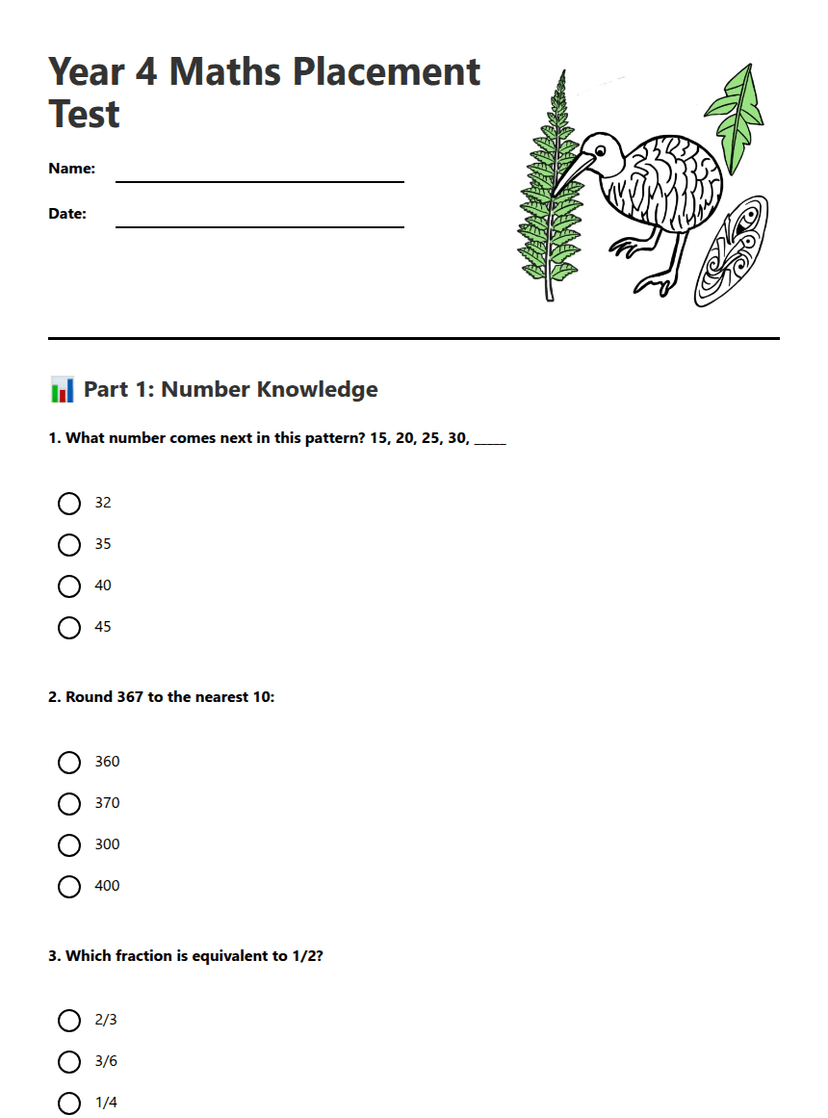
Year 4 Maths Placement Test
Free
Functional Skills Maths Revision
Free
Functional Skills Maths Assessment
Free
Functional Skills Maths Practice
Free
Maths Trivia Team Challenge
Free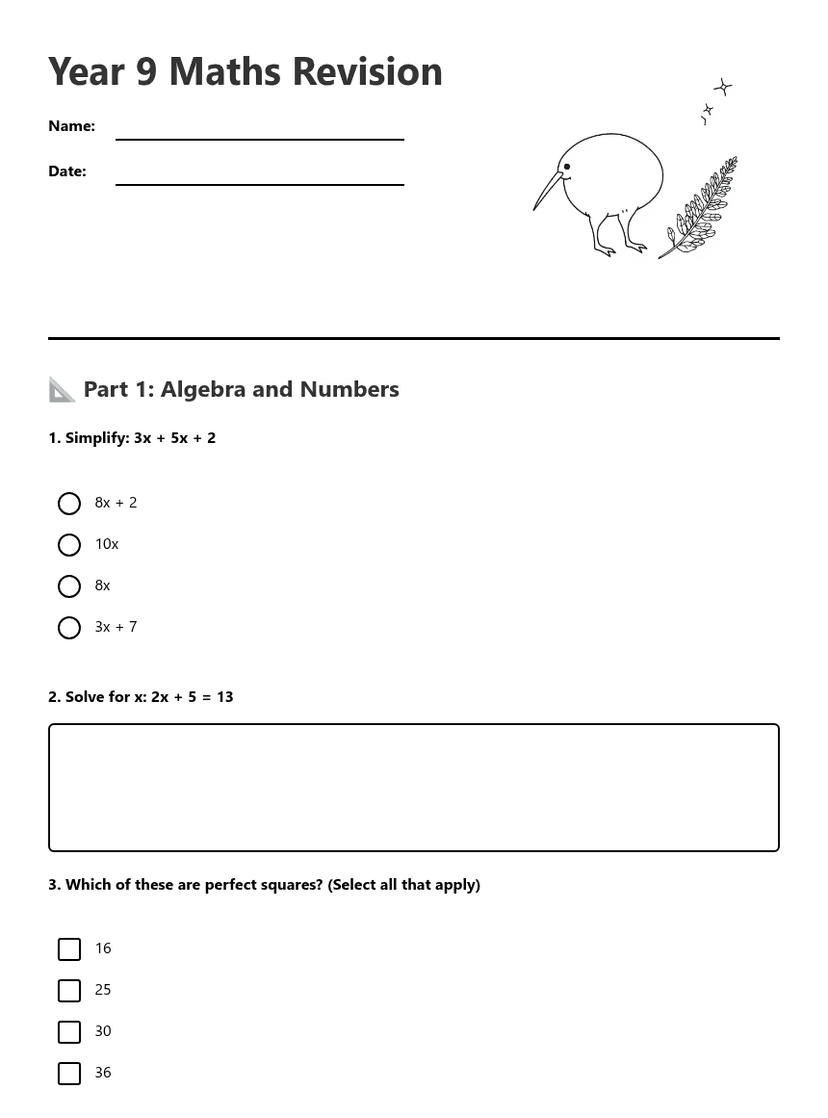
Year 9 Maths Revision
Free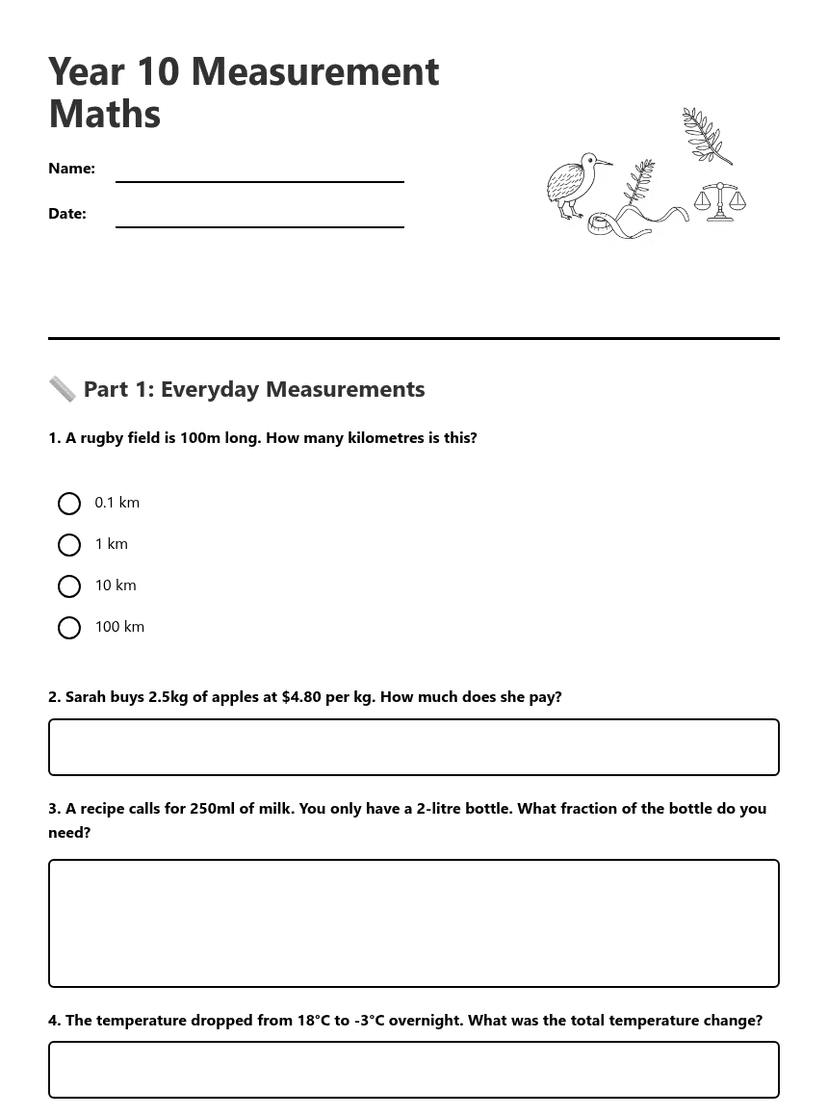
Year 10 Measurement Maths
Free