Energy Balance and Metabolism
A free health worksheet ready for your classroom. Open in Kuraplan to grab the print-ready PDF, customize it for your students, or generate a fresh version in seconds.
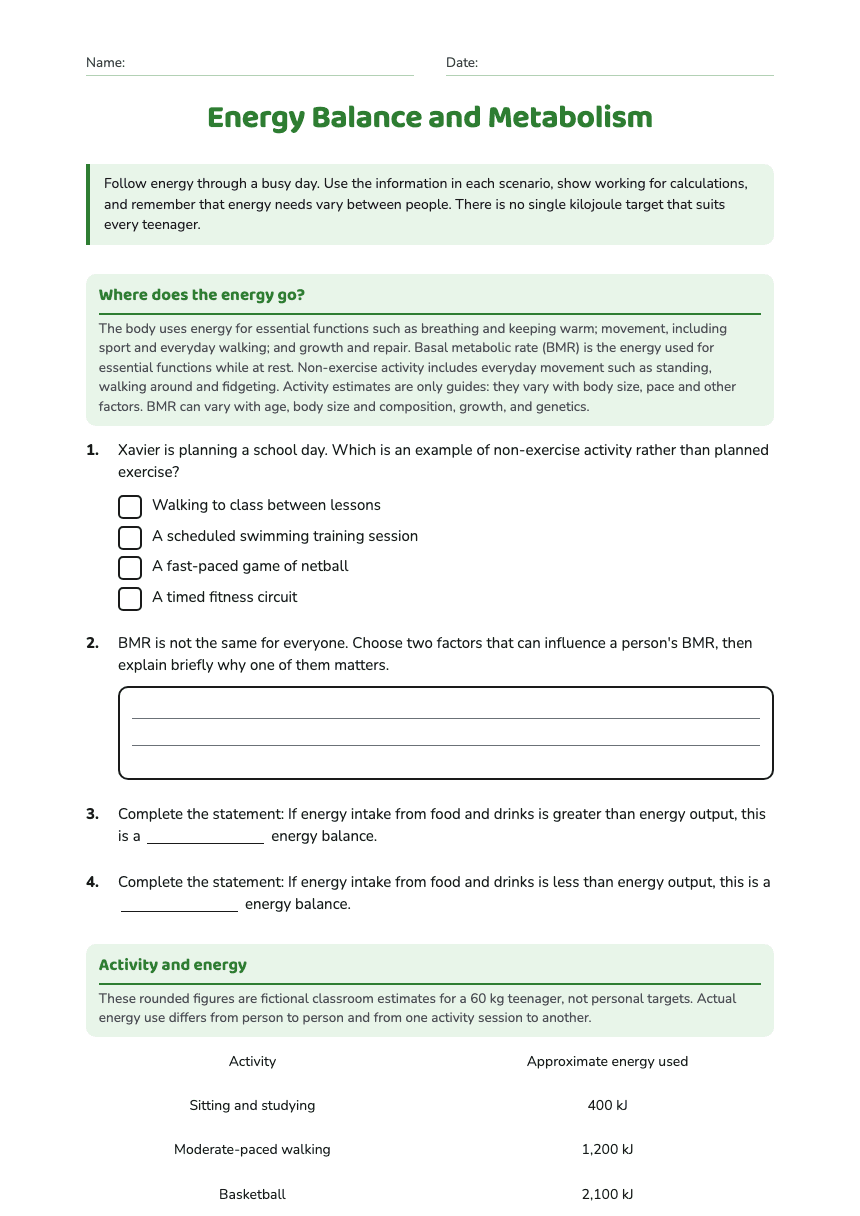
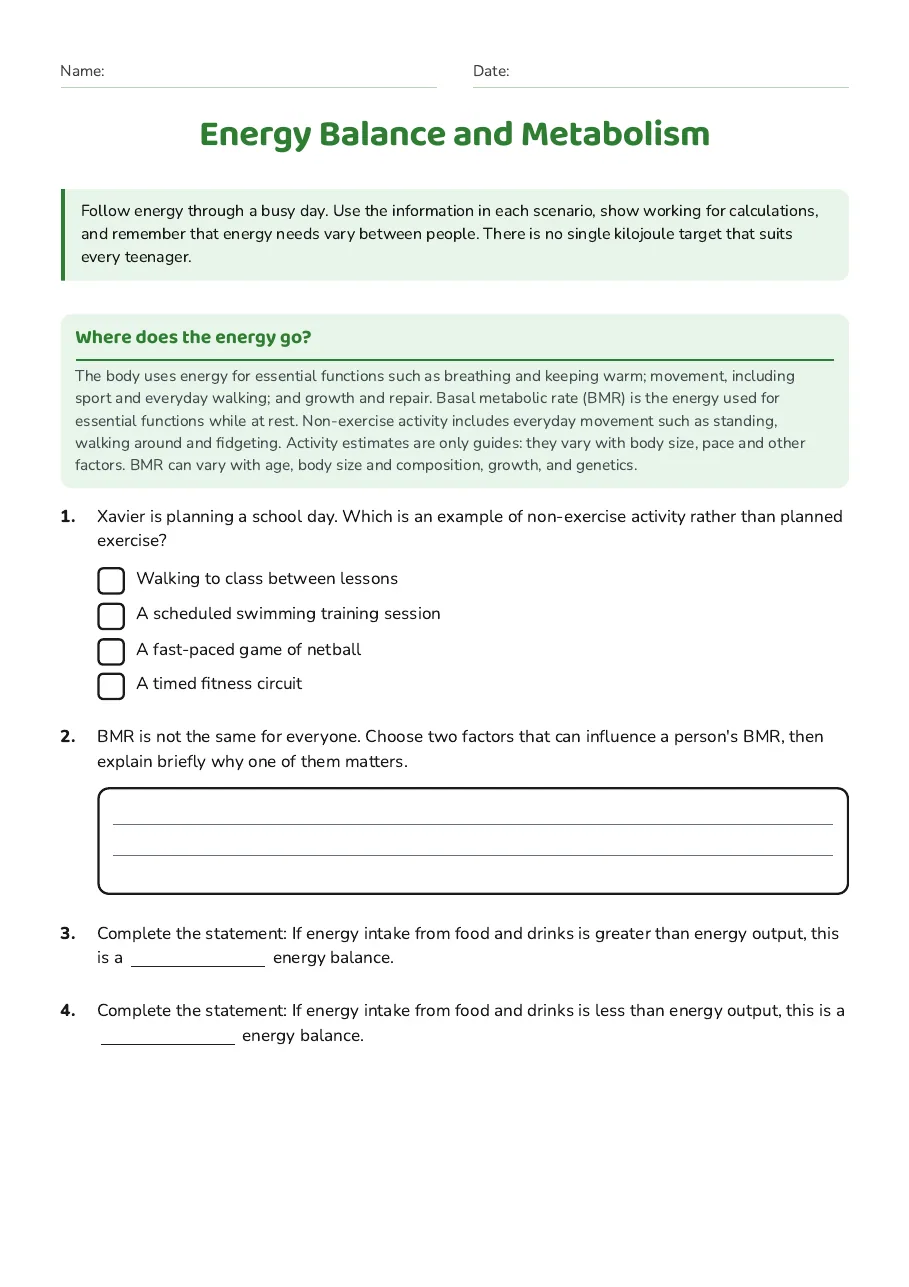
Energy Balance and Metabolism
Where does the energy go?
The body uses energy for essential functions such as breathing and keeping warm; movement, including sport and everyday walking; and growth and repair. Basal metabolic rate (BMR) is the energy used for essential functions while at rest. Non-exercise activity includes everyday movement such as standing, walking around and fidgeting. Activity estimates are only guides: they vary with body size, pace and other factors. BMR can vary with age, body size and composition, growth, and genetics.
- Walking to class between lessons
- A scheduled swimming training session
- A fast-paced game of netball
- A timed fitness circuit
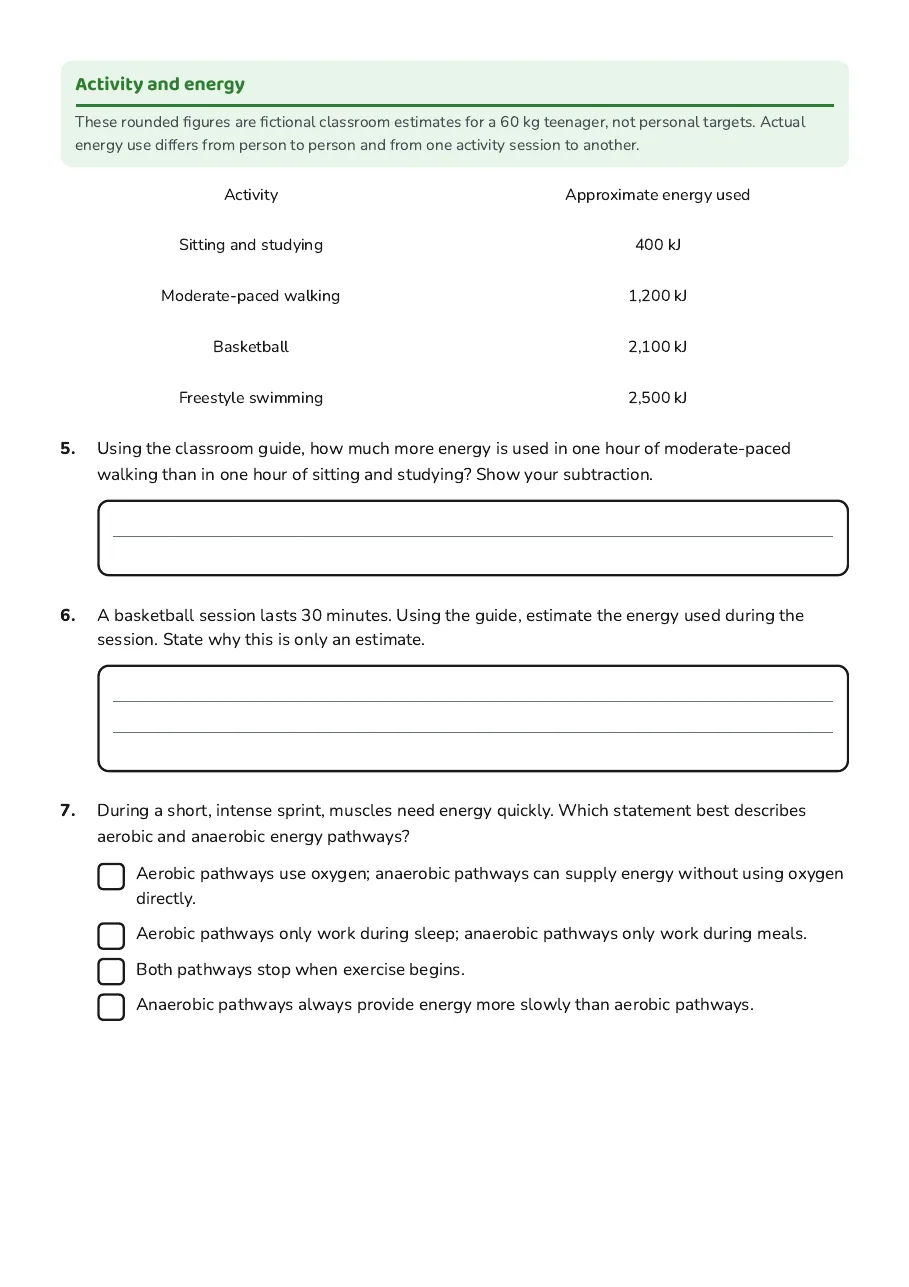
Activity and energy
These rounded figures are fictional classroom estimates for a 60 kg teenager, not personal targets. Actual energy use differs from person to person and from one activity session to another.
Activity
Approximate energy used
Sitting and studying
400 kJ
Moderate-paced walking
1,200 kJ
Basketball
2,100 kJ
Freestyle swimming
2,500 kJ
- Aerobic pathways use oxygen; anaerobic pathways can supply energy without using oxygen directly.
- Aerobic pathways only work during sleep; anaerobic pathways only work during meals.
- Both pathways stop when exercise begins.
- Anaerobic pathways always provide energy more slowly than aerobic pathways.
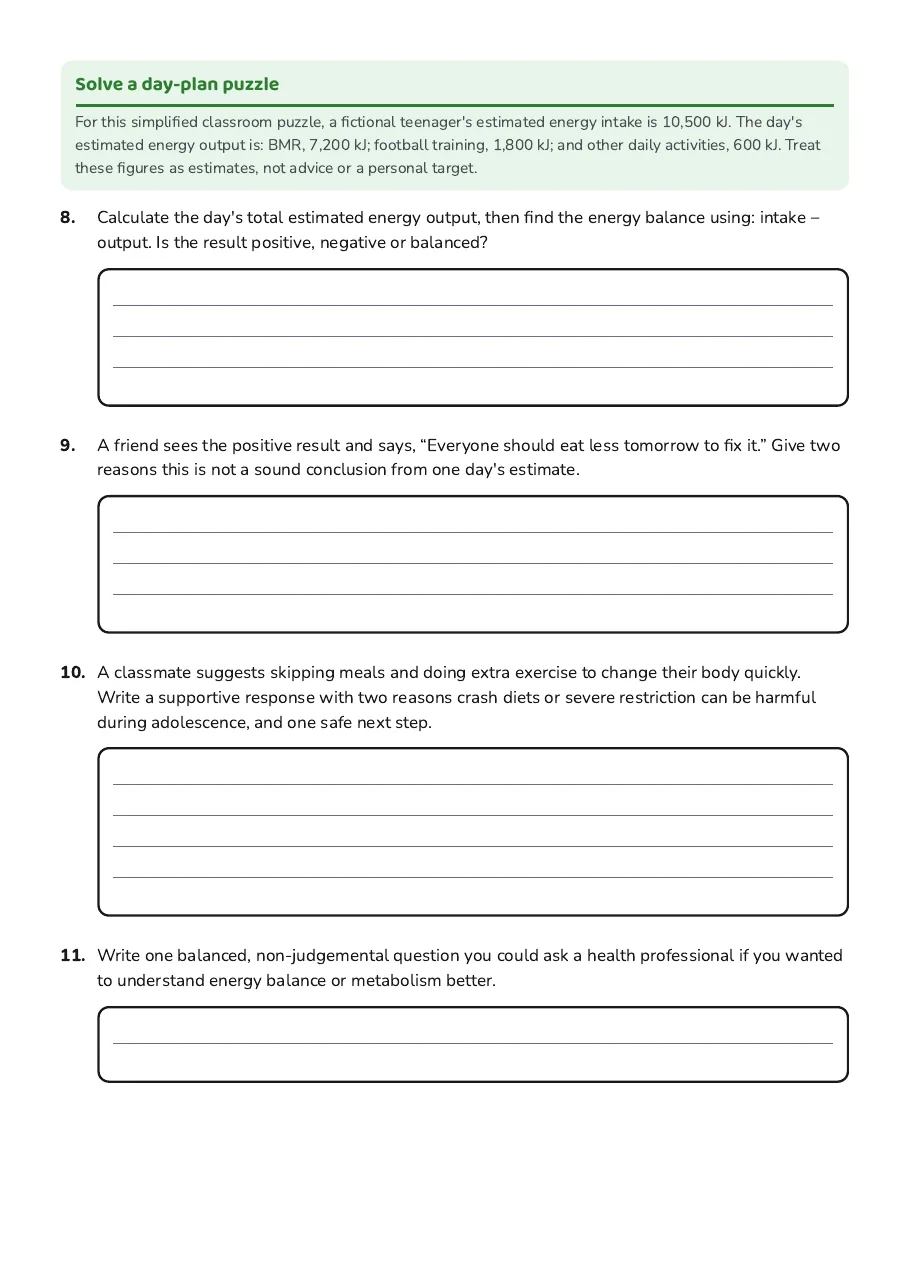
Solve a day-plan puzzle
For this simplified classroom puzzle, a fictional teenager's estimated energy intake is 10,500 kJ. The day's estimated energy output is: BMR, 7,200 kJ; football training, 1,800 kJ; and other daily activities, 600 kJ. Treat these figures as estimates, not advice or a personal target.
3 printable pages
Page 1
Page 2
Page 3
About This Worksheet
Free in Kuraplan
Sign up free, grab the PDF, and customize it for your class.
Print-Ready
Formatted for standard paper. Clean layout, easy to read.
AI-Generated
Created with Kuraplan's AI, designed for real classroom use.
For Teachers & Parents
Use in classrooms, for homework, tutoring, or homeschool.
Need a custom version of this worksheet?
Kuraplan's AI generates custom worksheets in seconds — differentiated for every learner, aligned to your curriculum.
Generate Custom Worksheets — Free