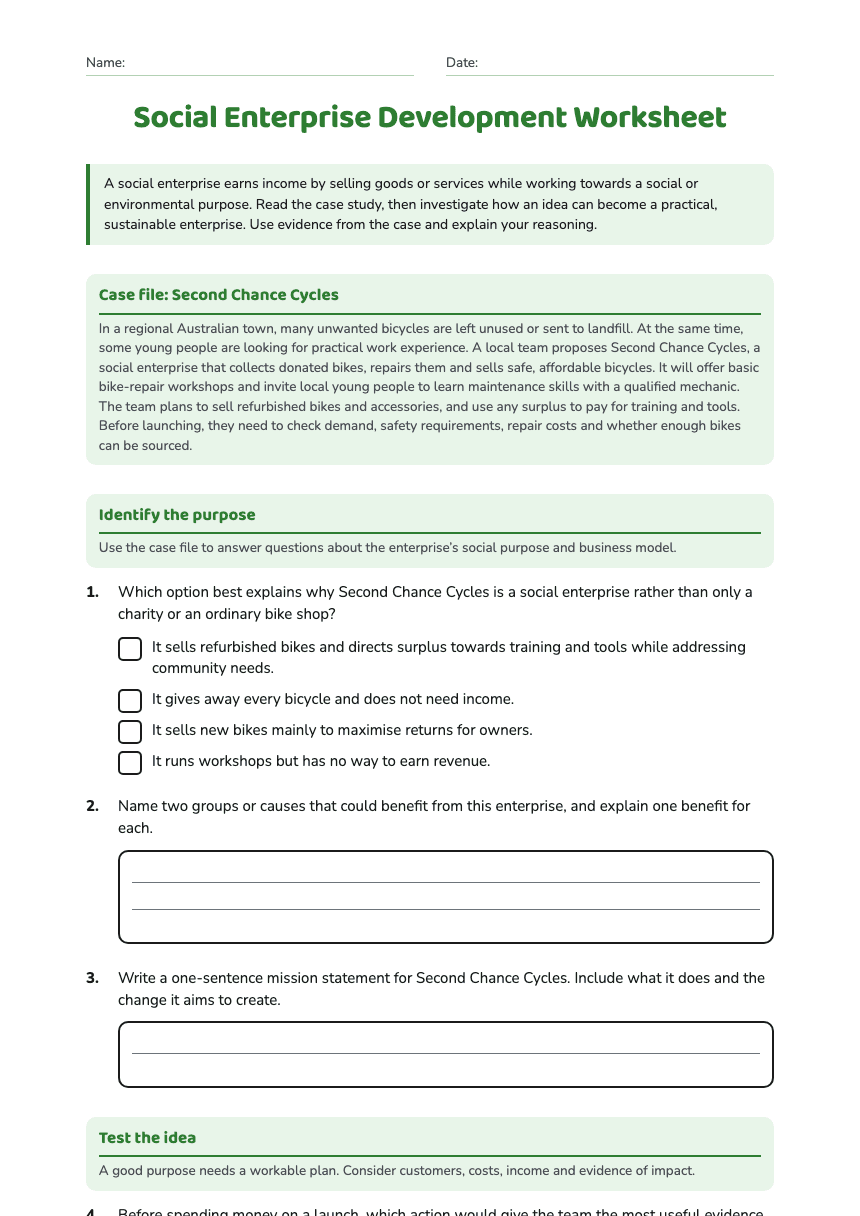
Social Enterprise Development Worksheet
A free social sciences worksheet ready for your classroom. Open in Kuraplan to grab the print-ready PDF, customize it for your students, or generate a fresh version in seconds.
Social Enterprise Development Worksheet
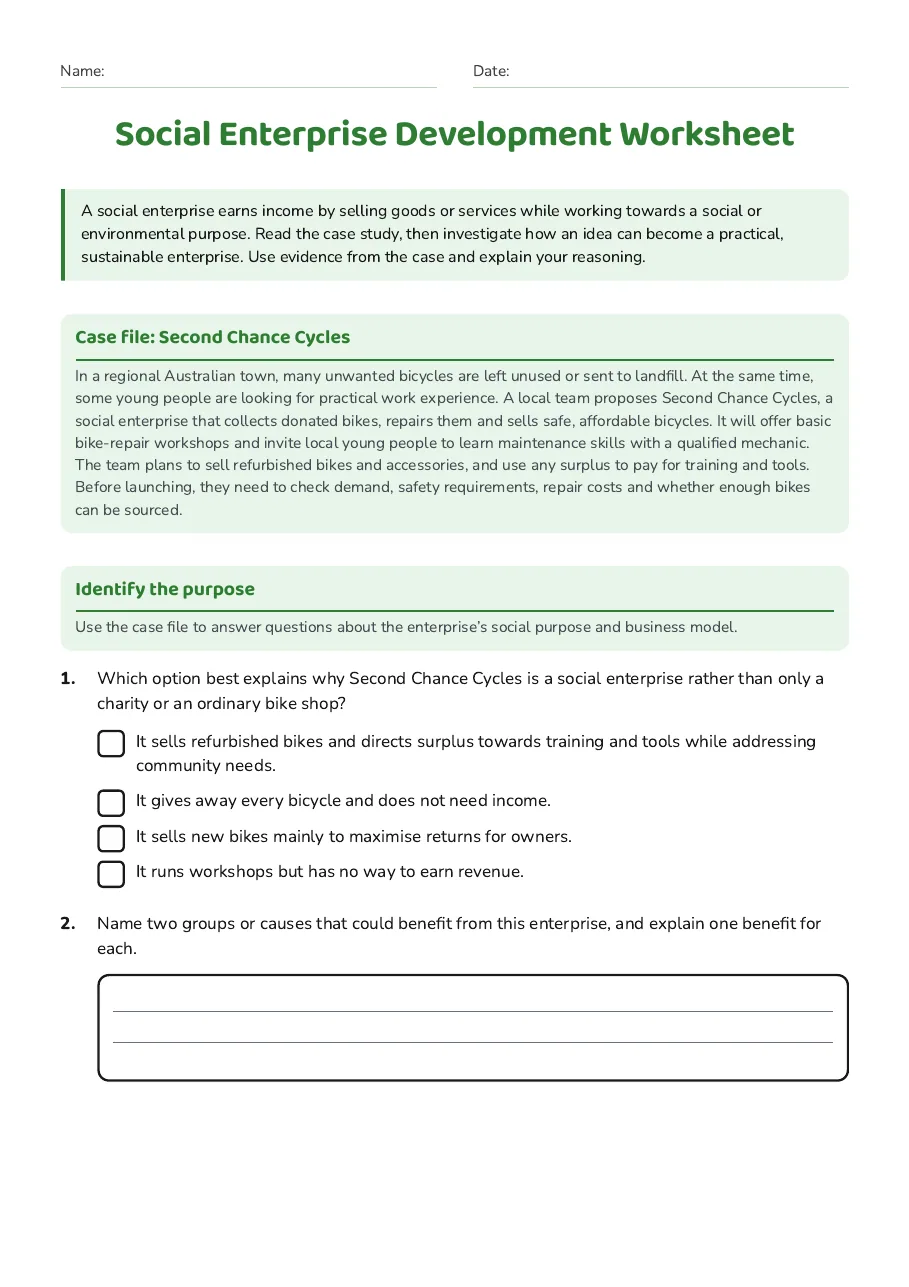
Case file: Second Chance Cycles
In a regional Australian town, many unwanted bicycles are left unused or sent to landfill. At the same time, some young people are looking for practical work experience. A local team proposes Second Chance Cycles, a social enterprise that collects donated bikes, repairs them and sells safe, affordable bicycles. It will offer basic bike-repair workshops and invite local young people to learn maintenance skills with a qualified mechanic. The team plans to sell refurbished bikes and accessories, and use any surplus to pay for training and tools. Before launching, they need to check demand, safety requirements, repair costs and whether enough bikes can be sourced.
Identify the purpose
Use the case file to answer questions about the enterprise’s social purpose and business model.
- It sells refurbished bikes and directs surplus towards training and tools while addressing community needs.
- It gives away every bicycle and does not need income.
- It sells new bikes mainly to maximise returns for owners.
- It runs workshops but has no way to earn revenue.
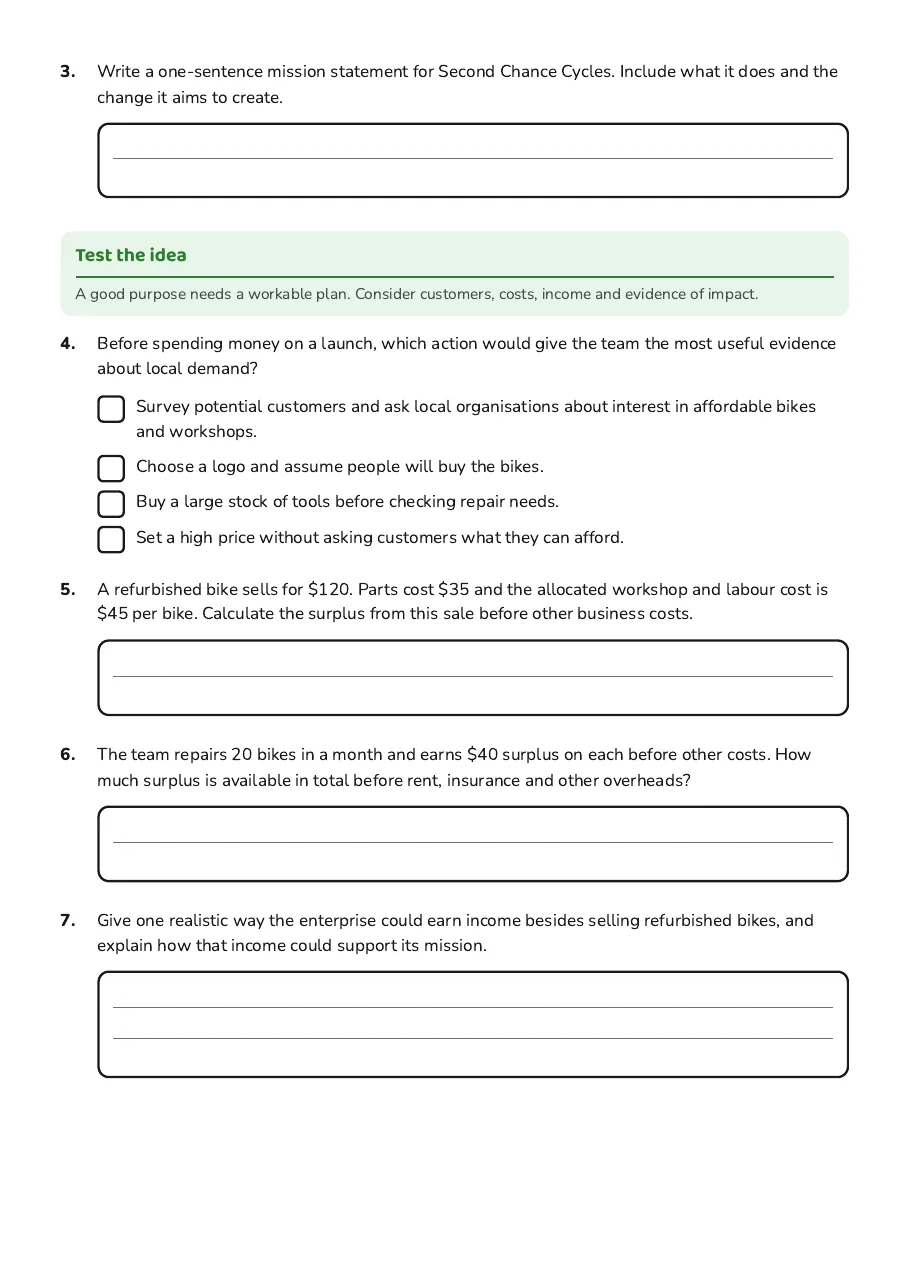
Test the idea
A good purpose needs a workable plan. Consider customers, costs, income and evidence of impact.
- Survey potential customers and ask local organisations about interest in affordable bikes and workshops.
- Choose a logo and assume people will buy the bikes.
- Buy a large stock of tools before checking repair needs.
- Set a high price without asking customers what they can afford.
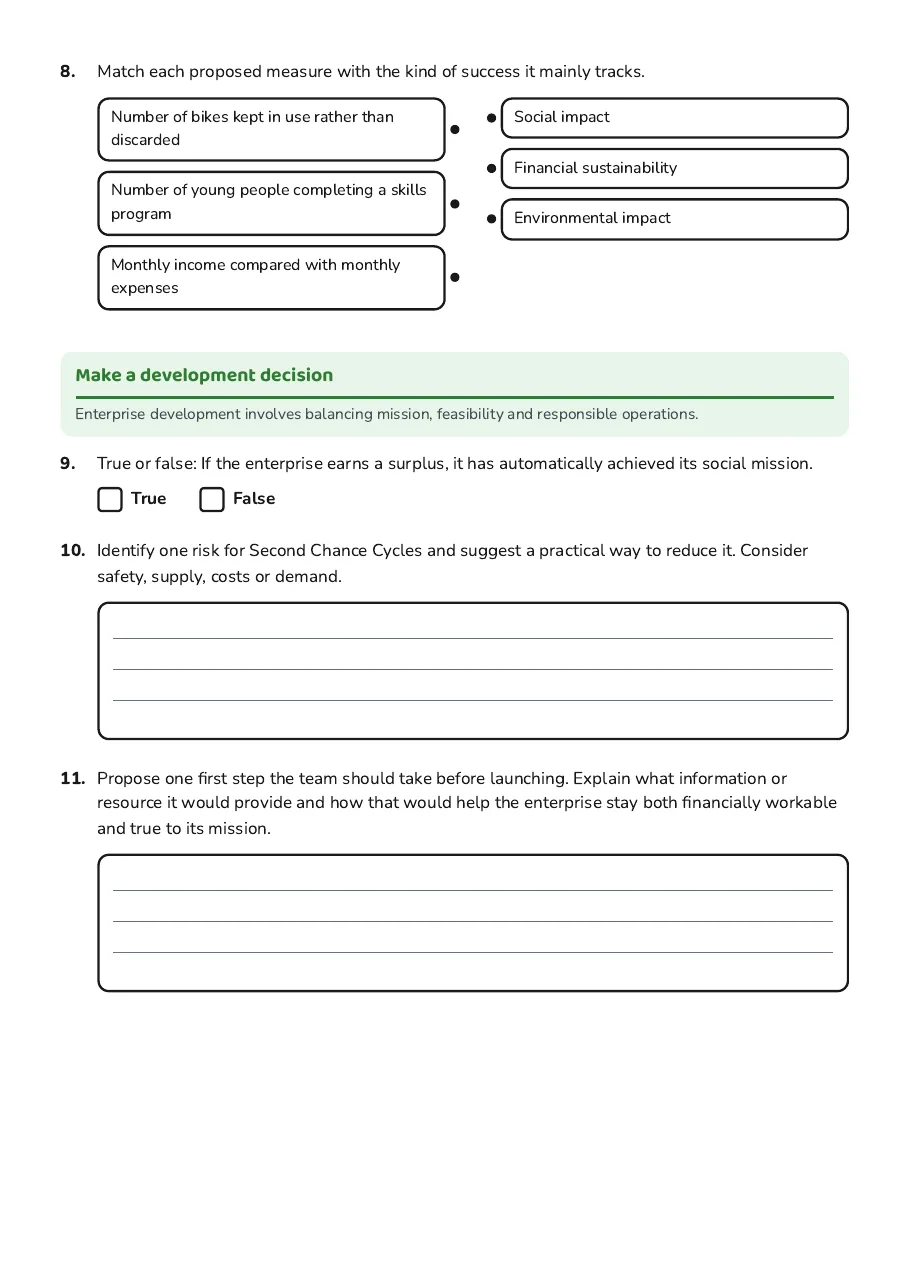
- Number of bikes kept in use rather than discarded
- Number of young people completing a skills program
- Monthly income compared with monthly expenses
- Social impact
- Financial sustainability
- Environmental impact
Make a development decision
Enterprise development involves balancing mission, feasibility and responsible operations.
3 printable pages
Page 1
Page 2
Page 3
About This Worksheet
Free in Kuraplan
Sign up free, grab the PDF, and customize it for your class.
Print-Ready
Formatted for standard paper. Clean layout, easy to read.
AI-Generated
Created with Kuraplan's AI, designed for real classroom use.
For Teachers & Parents
Use in classrooms, for homework, tutoring, or homeschool.
Need a custom version of this worksheet?
Kuraplan's AI generates custom worksheets in seconds — differentiated for every learner, aligned to your curriculum.
Generate Custom Worksheets — Free