The first day often feels like a race against the clock. You need to welcome students, learn who's in the room, explain how the classroom works, and begin meaningful instruction, all within a limited schedule. Trying to cover everything usually leaves students with a blur of directions and teachers with little useful information.
The strongest first day lesson plans balance belonging, clarity, movement, and a small academic success. A practical lens is to connect, orient, engage, assess, and close. The seven adaptable scenarios below can be shortened, combined, or reshaped for different grades and subjects. A platform such as Kuraplan can also help turn a chosen structure into standards-aligned materials, differentiated practice, worksheets, or visual aids.
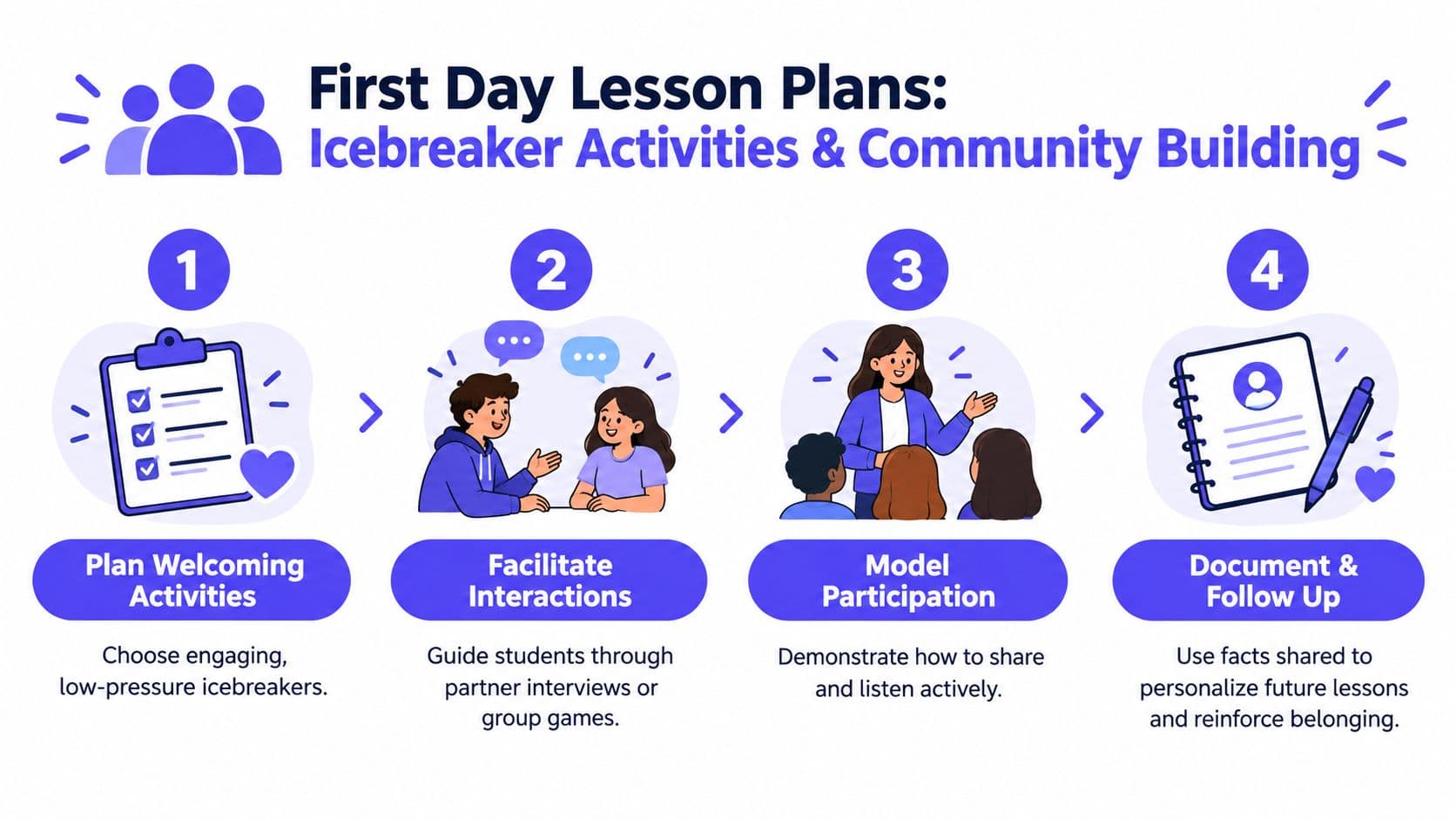
1. Icebreaker Activities and Community Building
A community-building lesson works best when it gives students a reason to talk, not just a prompt that forces everyone to perform. The purpose is to help students discover low-risk points of connection while you observe who speaks easily, who prefers listening, and which pairings feel comfortable.
Try a Find Someone Who grid in elementary school. Students circulate with a simple sheet containing prompts such as “has a pet,” “likes drawing,” or “speaks another language,” then record classmates' names. In a middle school advisory, use short partner interviews followed by a choice of sharing with a partner, small group, or whole class. High school students can use a Classroom Passport, collecting signatures after classmates share approved facts.
Keep each activity brief enough to preserve energy. Model one exchange before students begin, including how to decline a question respectfully and how to listen without interrupting.
A workable sequence
- Connect: Greet students at the door and offer a visible choice of seat or starting task.
- Orient: Explain the conversation norms and demonstrate the activity with a volunteer.
- Engage: Run the partner or small-group activity.
- Assess: Ask students to write one fact they learned and one question they still have.
- Close: Invite a few volunteers to share, without requiring every student to speak publicly.
The trade-off is clear. A lively mixer can create warmth, but an unstructured one can overwhelm anxious students and produce shallow conversations. Pair shy students strategically, begin with small groups, and let students use drawing, writing, nodding, or a prepared sentence frame as participation options.
For more ready-to-adapt prompts, use this icebreaker generator for classroom activities. Save interesting facts and refer back to them during the first week. When a teacher remembers a student's interest in animals, music, football, or building, the original activity becomes the beginning of a relationship rather than a one-day game.
2. Classroom Expectations and Procedures Co-Creation
Students need to know what respect, responsibility, and safety look like in observable behavior. A list of rules on the wall may be easy to prepare, but it doesn't teach students how to act during arrival, transitions, discussions, independent work, or dismissal.
Begin with broad categories, then ask students to translate each category into an action. Primary students can sort picture cards under “What does respect look like?” Upper elementary classes might create anchor charts for hand-raising, lining up, using supplies, and asking for help. Secondary students can discuss device use, discussion habits, note-taking, late work, and group collaboration.
Suggested timing and practice
Use a short welcome, a guided discussion, a class chart, and immediate rehearsal. For every major routine, explain it, model it, identify an example and a non-example, then let students practise. Classroom-norm guidance from Vanderbilt's IRIS Center supports teaching expectations directly and reinforcing them consistently rather than assuming students already know the procedures.
Use if-then language to make expectations concrete:
- Listening: If someone is sharing, then we listen without interrupting.
- Materials: If you need a supply, then you follow the posted process before asking.
- Movement: If the signal sounds, then you stop, look, and wait for the next direction.
- Repair: If a mistake affects someone else, then you acknowledge it and help fix it.
Practical rule: Co-create the language, but don't negotiate away routines that protect safety, access, or learning time.
Practice one or two procedures immediately. A first-day lesson should include entering, beginning work, getting supplies, moving between activities, turning in work, cleaning up, and leaving where relevant. DePaul's first-day teaching guide also emphasizes starting with procedures students will use right away.
Post the final expectations visibly and photograph the chart for future reference. Kuraplan can help turn the agreed language into classroom posters and visual aids, while picture cues and translated keywords can make the same expectations more accessible to multilingual learners and students who benefit from visual structure.
3. Interest Inventories and Learning Profile Assessment
Use the first-day inventory to make later teaching more responsive. Students should see a clear connection between what they share and the examples, texts, practice tasks, or group work you choose.
Start with a choice of response formats. Younger children can select picture cards or draw activities they enjoy, people they learn with, and things they want to try. Intermediate students may complete a short digital form independently. Secondary students can combine written responses with brief conversations about interests, strengths, challenges, and future study or career ideas. Special education teams can also gather information during arrival and transitions, including communication preferences, sensory needs, and support strategies that have worked before.
A practical first-day sequence:
- Welcome: Explain the purpose, and let students skip a question or respond privately.
- Respond: Provide writing, drawing, typing, dictation, or an adult conversation.
- Notice: Look for interests, access needs, and responses that require individual follow-up.
- Apply: Use one or two suitable responses in an upcoming lesson.
- Revisit: Check whether the information still reflects the student.
Keep the survey to five to ten questions, following the planning approach in All Schools' first-lesson guidance. Open prompts such as “What do you love to do outside of school?” usually reveal more than a set of yes-or-no questions.
The main trade-off is detail versus trust. A long questionnaire can gather more information, yet it may feel like paperwork before students know you. A short version gives you a usable starting point, protects privacy, and leaves room for a conversation when a response signals a significant need.
Only ask for information you can use. If students mention skateboarding, graphic novels, cooking, gaming, local wildlife, or music, bring those interests into examples when they fit the lesson. Kuraplan can help generate lesson ideas and differentiated practice around those interests. The teacher decides what remains relevant, respectful, and instructionally sound. Save the responses securely, then use a simple class profile to plan examples, partners, and support without turning personal information into a public label.
4. Read-Aloud and Shared Reading Experience
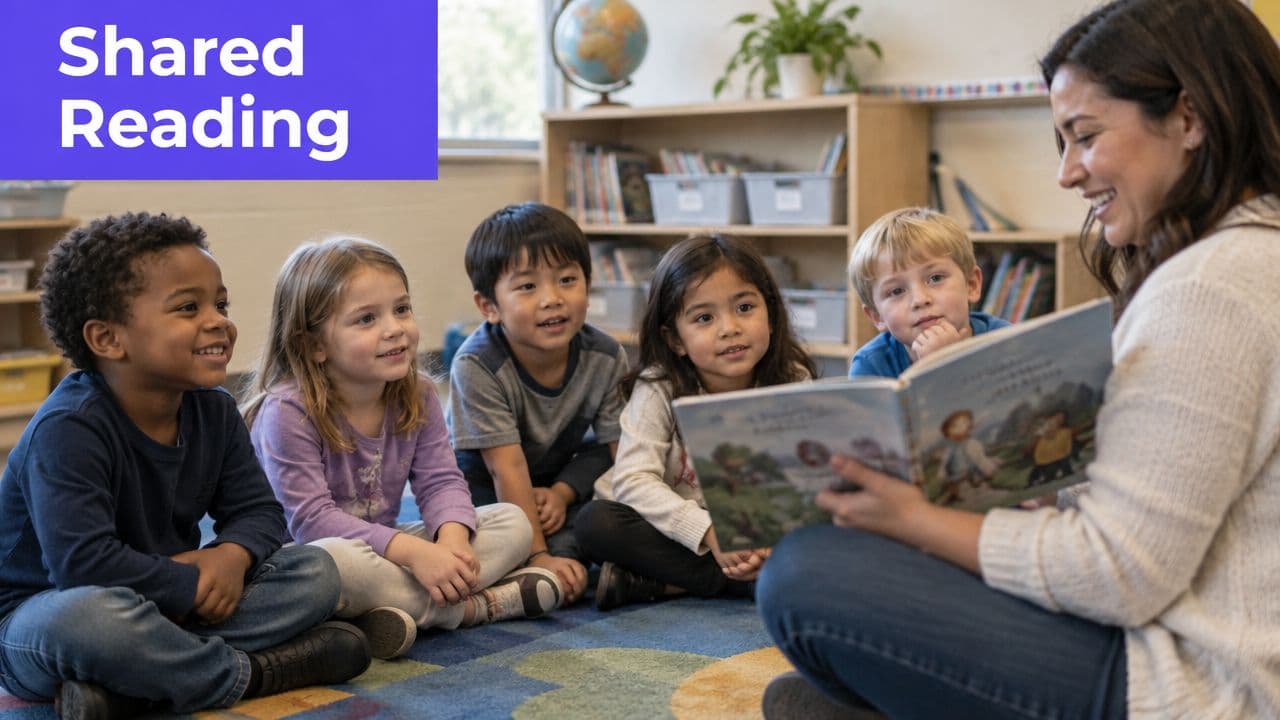
A shared text gives the class a common starting point. It can settle the room, show that reading matters, and open a discussion about belonging, curiosity, emotions, identity, or the habits of thoughtful learners. Choose for the group, rather than relying only on a first-day theme.
Kindergarten teachers might use The Kissing Hand to discuss separation and reassurance. A second-grade class could meet a relatable character through a Ramona story. Fourth-grade teachers might use Wonder or The Wild Robot to introduce acceptance and belonging. Older students can study a short story, poem, or picture book such as The Arrival, examining how images, language, and structure create meaning.
Protect the story's rhythm
Read the text aloud before class. Mark moments for a change in expression, an illustration to display, or a prediction pause. A brief think-aloud, such as “I'm wondering what will happen next,” models active reading without turning the lesson into a quiz.
Use this sequence, adjusting the pauses to suit the group:
- Before reading: Introduce the title, invite a prediction, and explain response choices.
- During reading: Stop at selected points for predictions, feelings, or connections.
- After reading: Ask one or two open questions about the character, problem, or central idea.
- Extend: Offer a drawing, connection paragraph, character map, or short analytical response.
A quiet sketch, gesture, sticky-note thought, or partner conversation lets students participate without interrupting every page. Too many pauses can weaken the story's rhythm, while too few give you little evidence of student thinking. For younger readers, use pictures, oral responses, and movement. Older students can annotate, compare interpretations, or analyse craft. Students who need language or sensory support may benefit from previewed vocabulary, a visual sequence, repeated lines, or a choice to listen without speaking.
For a short visual example of shared reading practice, use the video below as a planning reference.
5. Interactive Scavenger Hunt and Classroom Exploration
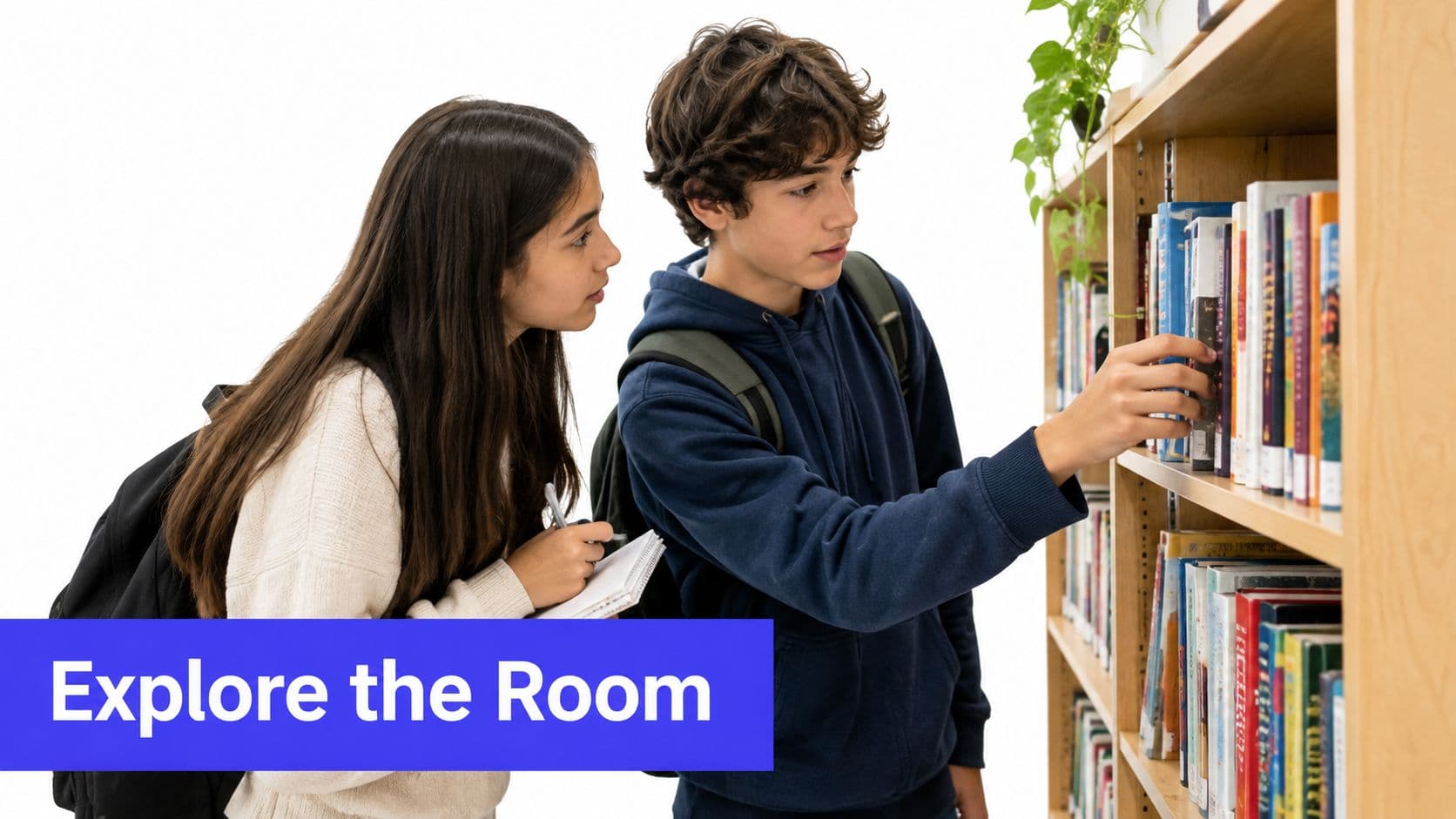
Students settle faster when they know how the room works. A classroom exploration turns shelves, supplies, technology, visual schedules, finished-work trays, help signals, and calm spaces into familiar tools. The purpose is to practise access and movement before those routines matter during independent work.
Begin at one location rather than handing out every clue at once. Model how to read a clue, carry the recording sheet, move with a partner, and stop at the signal. At each destination, students complete a small action: identify a supply, practise returning it, read a direction, or record a symbol.
Use a route that matches the group:
- Primary: Illustrated cards can guide non-readers to learning centres, the sink, the library, or the bag area. Adult-supported pairs and a short route keep the task manageable.
- Intermediate: Riddles or number clues can lead to subject materials. Add relevant vocabulary and a partner recording sheet.
- Secondary: QR codes can connect students with classroom expectations, digital resources, or brief welcome messages. Include a question about how to access each resource.
- Inclusive settings: Reduce visual clutter, simplify language, show a predictable route, and offer sensory breaks or a seated alternative.
A useful sequence is:
- Tour the room and explain the boundaries.
- Demonstrate one clue and one completed task.
- Send pairs or small groups to selected locations.
- Pause with a clear signal and visible time cue.
- Regroup for retrieval and reflection.
The activity supports movement and memory, yet it can create noise if students begin before the boundaries are clear. Pair students deliberately, teach the stop signal first, and limit the number of open locations. Add a few discoveries that make the room inviting, such as a comfort object, recommended book, or classroom joke.
Photograph the completed hunt or the places students found. Kuraplan can later turn those images into visual reminders or documentation for parent communication. End with a seated retrieval task: students draw a key supply's location, explain one movement rule, or identify where to go for help.
6. Standards-Aligned Mini-Lesson with Scaffolded Practice
A first-day academic task should show students what learning looks like in this classroom while giving you useful evidence about their starting points. Choose one manageable skill, keep the outcome visible, and allow enough time for students to explain their thinking.
Start with the task, rather than a lengthy introduction. For primary students, teach one letter-sound correspondence through picture matching and simple writing. In intermediate mathematics, model a problem-solving strategy with a concrete example, then let partners solve a related problem. In secondary English, annotate a short passage together before students mark a second passage. English learners may need visuals, gestures, word banks, and sentence frames.
Use the following sequence as a flexible routine:
- Model: Narrate the decisions you make as you demonstrate the skill.
- Name: State the strategy, learning intention, and evidence of success. Use guidance on learning intentions and success criteria as a planning prompt.
- Practise: Let students work with a partner, manipulatives, visuals, or a partially completed template.
- Check: Circulate, listen for misconceptions, and record support needs without grading the work.
- Reflect: Ask students to show, explain, or describe one step they completed.
Keep the lesson narrow. A complex activity may cover more content, but it can make the first academic experience feel like a test. A smaller task gives you less curriculum coverage and better evidence about confidence, language, stamina, and independence.
Prepare different routes through the same objective. Offer reduced writing, oral responses, worked examples, challenge prompts, or a partially completed model. For younger learners, use picture cards and manipulatives. Older students may work from a model paragraph, equation scaffold, or vocabulary bank. Kuraplan can help create standards-aligned objectives and multiple versions of a practice task with scaffolding included. Celebrate careful thinking and progress, not speed or ranking.
7. Goal-Setting and Personal Reflection Activity
A student may write “get better at math” on the first day, then forget the goal by Friday. Reflection has value only when students can see the target, choose a manageable action, and know when the class will revisit it.
Give the reflection a real follow-up
Use a short conference, notebook entry, or goal card to connect the activity with future instruction. Younger students can draw or dictate something they want to learn, such as reading chapter books or making a friend. Intermediate students can select one academic goal and one personal or social goal with pictures and sentence starters. Secondary students might write subject-specific SMART goals and store them in a private digital document, portfolio, or approved classroom display.
Offer different response routes. Students may need visual goal boards, dictated answers, communication devices, or a brief one-to-one interview. The trade-off is simple: a written form is faster to collect, while conversation often reveals needs that a form misses.
Use this timing pattern:
- 5 minutes, reflect: Ask what feels exciting, difficult, or important about the class.
- 5 minutes, choose: Select one academic goal and one personal or social goal.
- 5 minutes, plan: Name a next action and the support that may help.
- 5 minutes, share: Respond privately, with a partner, in writing, through drawing, or by recording.
- 2 minutes, close: Identify when the goal will be checked again.
Make each goal observable. “Learn my multiplication facts to five” gives the learner and teacher something to revisit. Explain what progress might look like, allow revisions when priorities or understanding change, and avoid turning the activity into a public ranking system.
Capture the final commitment with an exit ticket. These exit ticket ideas can connect reflection to evidence of learning. For a complementary perspective on how students set goals, adapt the language to the students' age rather than copying an adult planning format.
Display goals only with permission. Schedule weekly or monthly check-ins, recognize incremental progress, and respond without shame when a goal changes or remains unmet. Kuraplan can help create goal-tracking documents and differentiated reflection prompts aligned with individual targets. The teacher's follow-up conversation still matters most because it identifies the support the student needs next.
First-Day Lesson Plans: 7-Point Comparison
| Approach | 🔄 Implementation complexity | ⚡ Resources & efficiency | 📊 Expected outcomes | ⭐ Key advantages | 💡 Quick tip |
|---|---|---|---|---|---|
| Icebreaker Activities & Community Building | Low–Medium, simple formats but needs active facilitation | Quick (10–15 min); minimal materials (cards, name tags) | Faster rapport, increased psychological safety and early engagement | Sets welcoming tone; reduces anxiety; gives teacher social insights | Keep activities short; model participation; pair shy students |
| Classroom Expectations & Procedures Co-Creation | Medium–High, requires facilitation and consensus-building | Moderate (30–45 min); visual anchors (poster/chart supplies) | Stronger student ownership of norms; fewer behavior issues long-term | Increases buy-in; makes expectations explicit; supports restorative practice | Start with broad categories then specify; practice 1–2 procedures Day 1 |
| Interest Inventories & Learning Profile Assessment | Medium, data collection plus interpretation | Moderate (5–15 min surveys + time to review); may use digital tools | Actionable data for differentiation and early support identification | Personalizes instruction; centers student voice; informs planning | Keep surveys very short; use open-ended Qs and act on responses quickly |
| Read-Aloud & Shared Reading Experience | Low, prep to choose text and rehearse reading | Quick–Moderate (15–30 min); one well-chosen text | Shared experience, models fluent reading, assesses listening/comprehension | Universally engaging; models strategies; low-pressure intro to content | Choose age-appropriate, illustrated texts; use think‑alouds and prediction stops |
| Interactive Scavenger Hunt & Classroom Exploration | Medium, plan clues, layout, and safety/scaffolds | Moderate (20–30 min); printed/digital checklists or QR codes | Students learn physical routines and resource locations; kinesthetic engagement | Active, movement-based acclimation; great for kinesthetic learners | Model one example first; set time limits and strategic buddies |
| Standards-Aligned Mini-Lesson with Scaffolded Practice | High, requires standards alignment and careful scaffolding | Moderate (8–15 min direct instruction + prep time); materials for guided practice | Early formative data; builds academic confidence and sets expectations | Signals learning priority; provides quick assessment; integrates SEL | Pick a skill students can succeed at; use multimodal scaffolds and celebrate effort |
| Goal-Setting & Personal Reflection Activity | Medium, needs scaffolding and safe sharing structures | Moderate (15–30 min); templates or art materials for documentation | Increased motivation, metacognition, and long-term accountability | Centers student agency; provides targets for tracking growth | Make goals specific and achievable; schedule regular check-ins and celebrate progress |
Turn One Good Plan Into a Strong First Week
Don't try to make Day One represent the entire year. Choose one primary purpose, then attach a short welcome, a practised routine, and a calm exit reflection. That structure gives students a clear beginning and gives you information you can use tomorrow.
Use community building when students seem anxious, unfamiliar with one another, or reluctant to participate. Choose co-created expectations when routines, safety, or discussion habits are the immediate priority. Use classroom exploration when students need movement or the physical space has many resources to learn. Select a mini-lesson when academic continuity matters and you want students to experience an early success. Use interest inventories when differentiation data will shape upcoming instruction, and choose goal setting when student agency and reflection need an early place in the room.
A read-aloud can support almost any of these purposes. It offers a shared experience for a nervous group, creates a bridge into a mini-lesson, provides language for discussing norms, or gives students a low-pressure way to respond through drawing and conversation. The best choice depends on what your students need when they arrive, not on which activity looks most attractive online.
Prepare three practical backups:
- A printable alternative: Keep paper directions and a low-preparation task available if devices, links, or displays fail.
- Visual directions: Show the sequence with icons, examples, translated keywords, or a model students can reference without waiting for you.
- An extension task: Provide a quiet drawing, reading, sorting, or challenge prompt for early finishers.
The University of Illinois Chicago's first-day teaching guidance emphasizes that the syllabus and opening plan shape students' first impression, while practical preparation includes reviewing the roster, learning names, visiting the classroom, and planning how supplies and space will be used. The American Statistical Association's archived day-one activities) also show how an opening activity can introduce content and reveal student thinking through structured data collection.
The best first day lesson plans are simple enough to run confidently and flexible enough to reveal what students need next. Select the purpose, rehearse the transitions, protect student choice, and leave enough space to notice what the room is telling you. Kuraplan can help adapt the selected plan into aligned worksheets, visuals, differentiated practice, and follow-up materials.
Kuraplan helps K–12 teachers turn a first-day structure into standards-aligned lesson plans, printable worksheets, visual aids, differentiated practice, and assessment prompts. Choose a community, routine, reading, exploration, mini-lesson, or reflection scenario, then visit Kuraplan to shape it into materials you can use with your class.