Art Media Techniques for Communication
Grade 9 Visual Art Exploring artistic expression and meaning
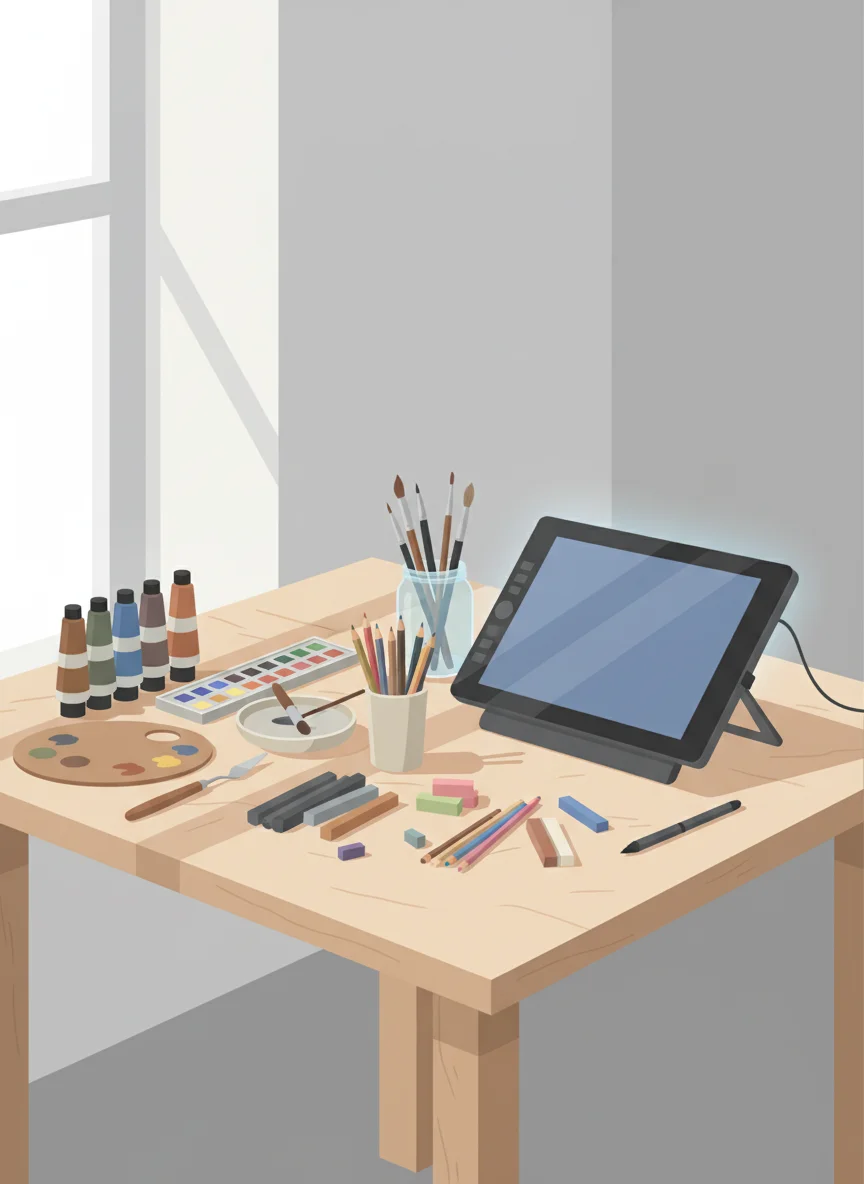
What is Art Media?
Materials and tools used to create art Each medium has unique properties Choice of media affects the message Traditional and digital options available
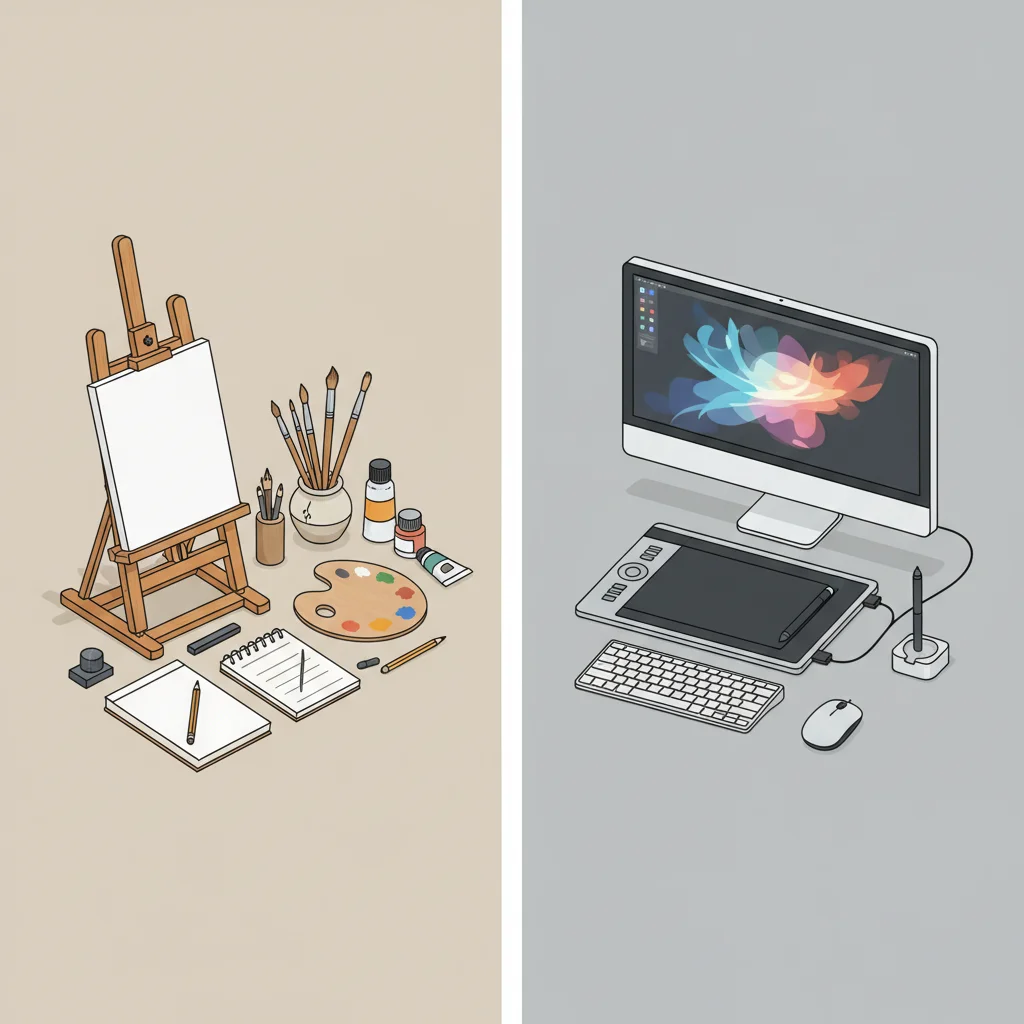
Traditional vs Digital Media
{"left":"Oil paints create rich textures\nWatercolors offer transparency\nCharcoal provides dramatic contrasts\nPencil allows precise detail","right":"Digital tools offer unlimited colors\nEasy editing and correction\nLayering capabilities\nSpecial effects and filters"}
Drawing Media Techniques
Graphite pencils for shading and detail Charcoal for bold, dramatic effects Colored pencils for vibrant illustration Ink for precise line work and contrast
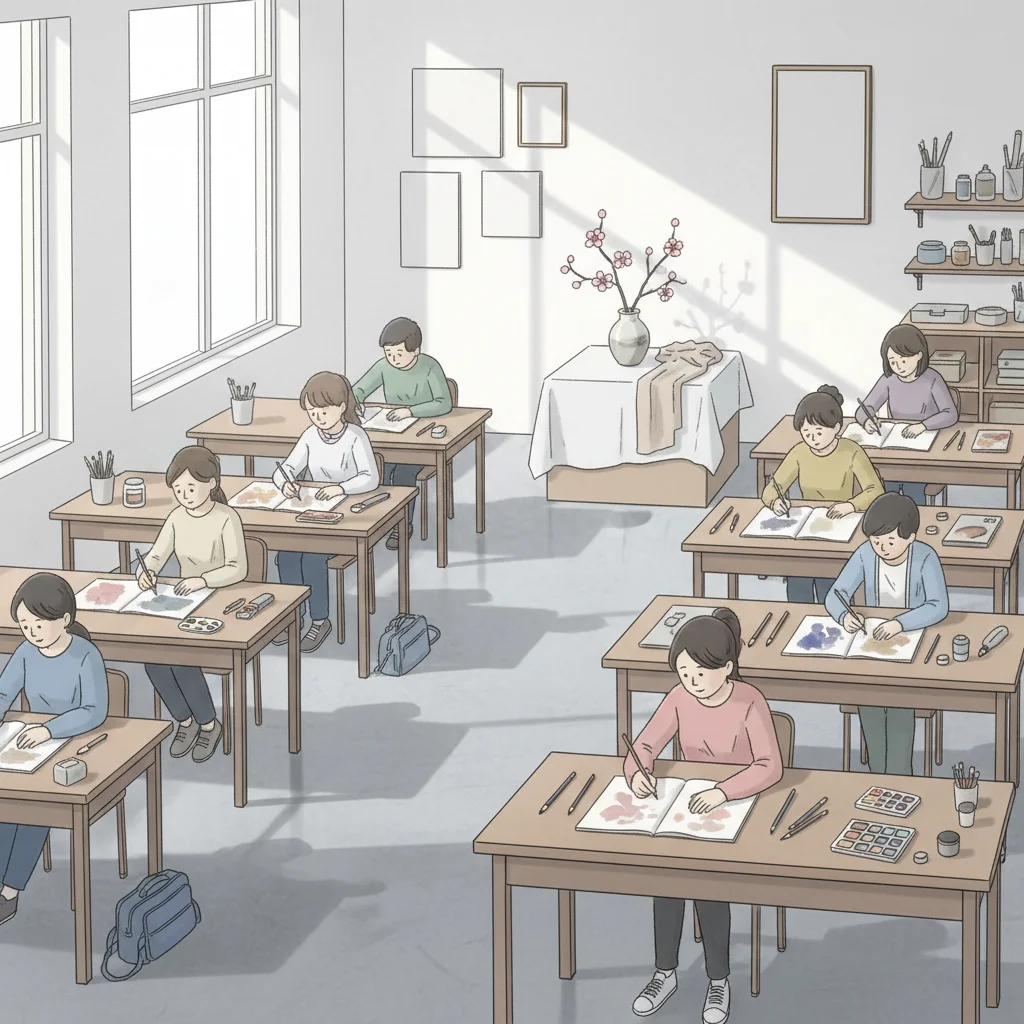
Quick Sketch Challenge
Choose one drawing medium Sketch the same object three times Use different techniques each time Compare the emotional impact
Painting Media Exploration
Watercolor: transparent, flowing effects Acrylic: versatile, quick-drying Oil paint: rich colors, slow drying Tempera: bright, opaque coverage
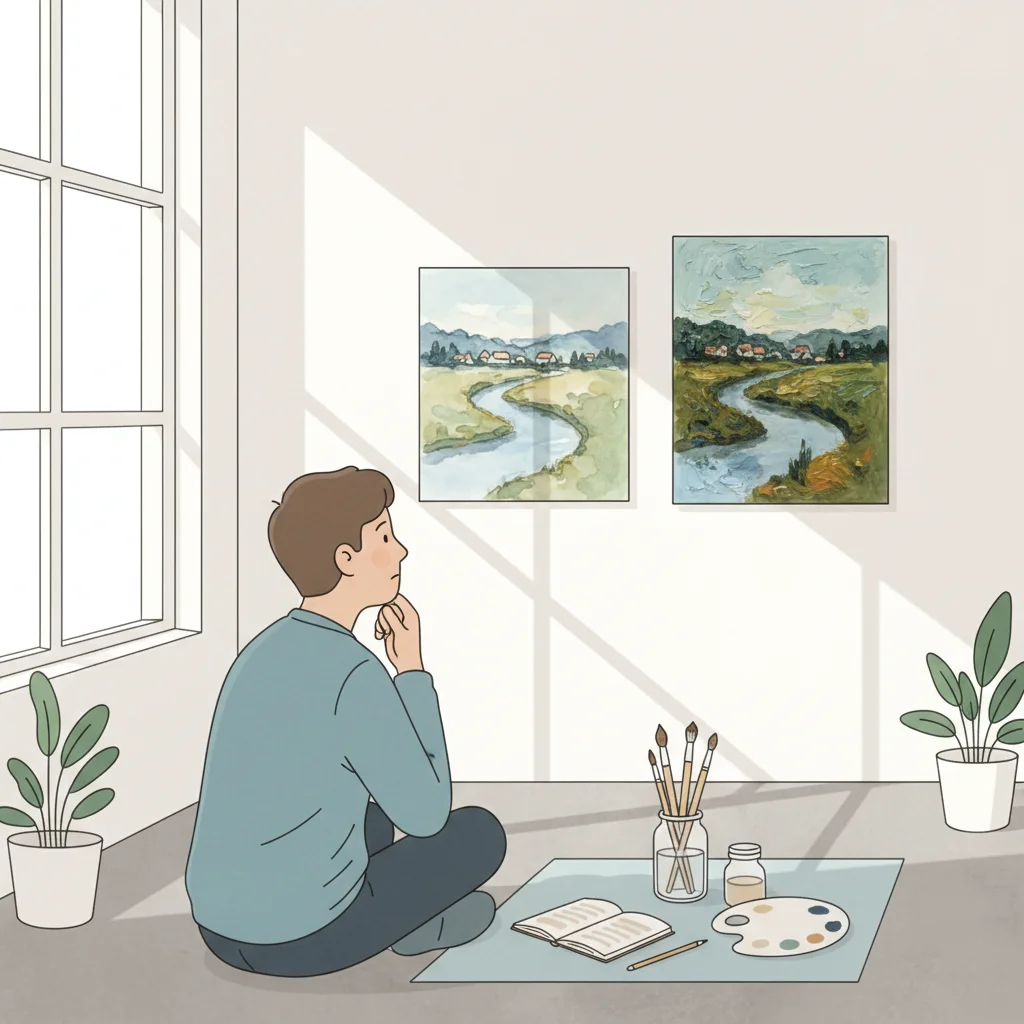
Think and Discuss
Why might an artist choose watercolor over oil paint for a particular message? How does the medium affect the viewer's emotional response?
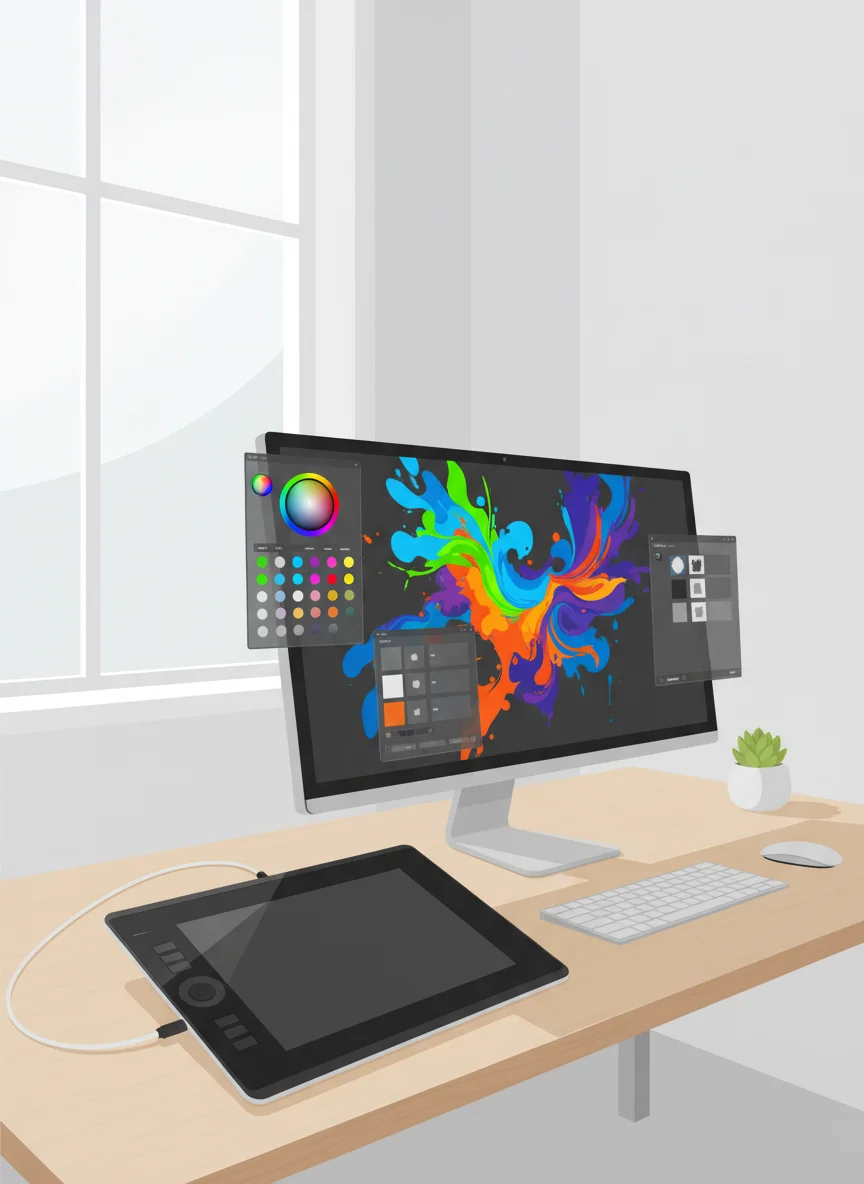
Digital Art Revolution
Endless color possibilities Non-destructive editing Layer-based composition Special effects and filters Easy sharing and reproduction
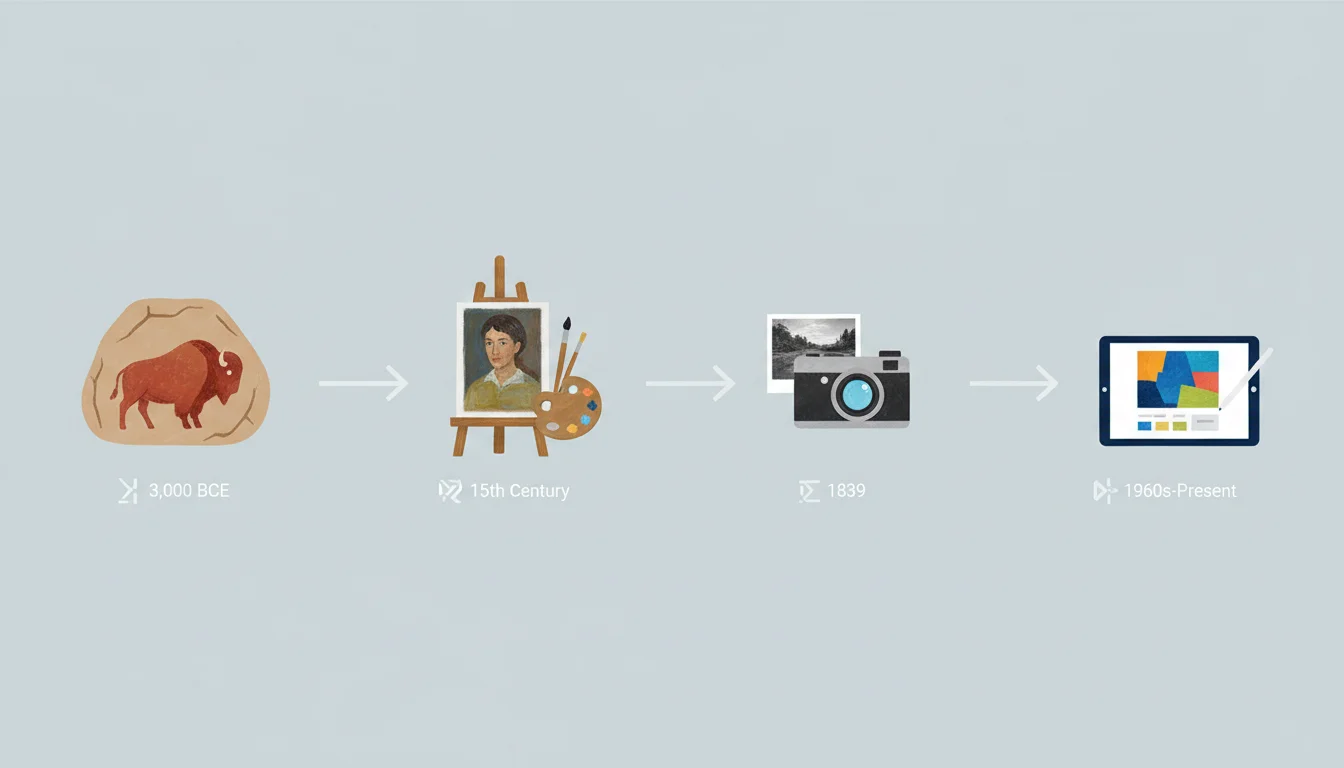
Evolution of Art Media Timeline
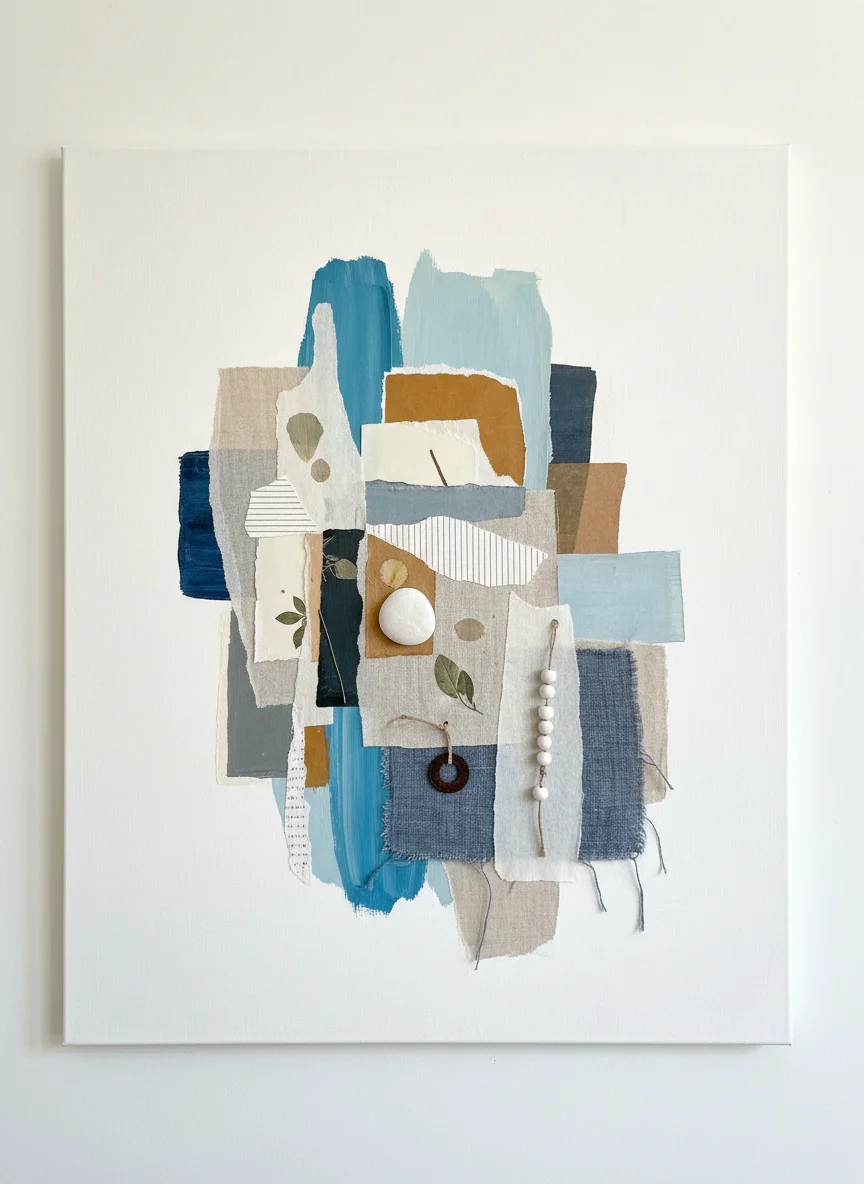
Mixed Media Approaches
Combining different materials Collage and assemblage techniques Texture and dimensional effects Enhanced storytelling possibilities
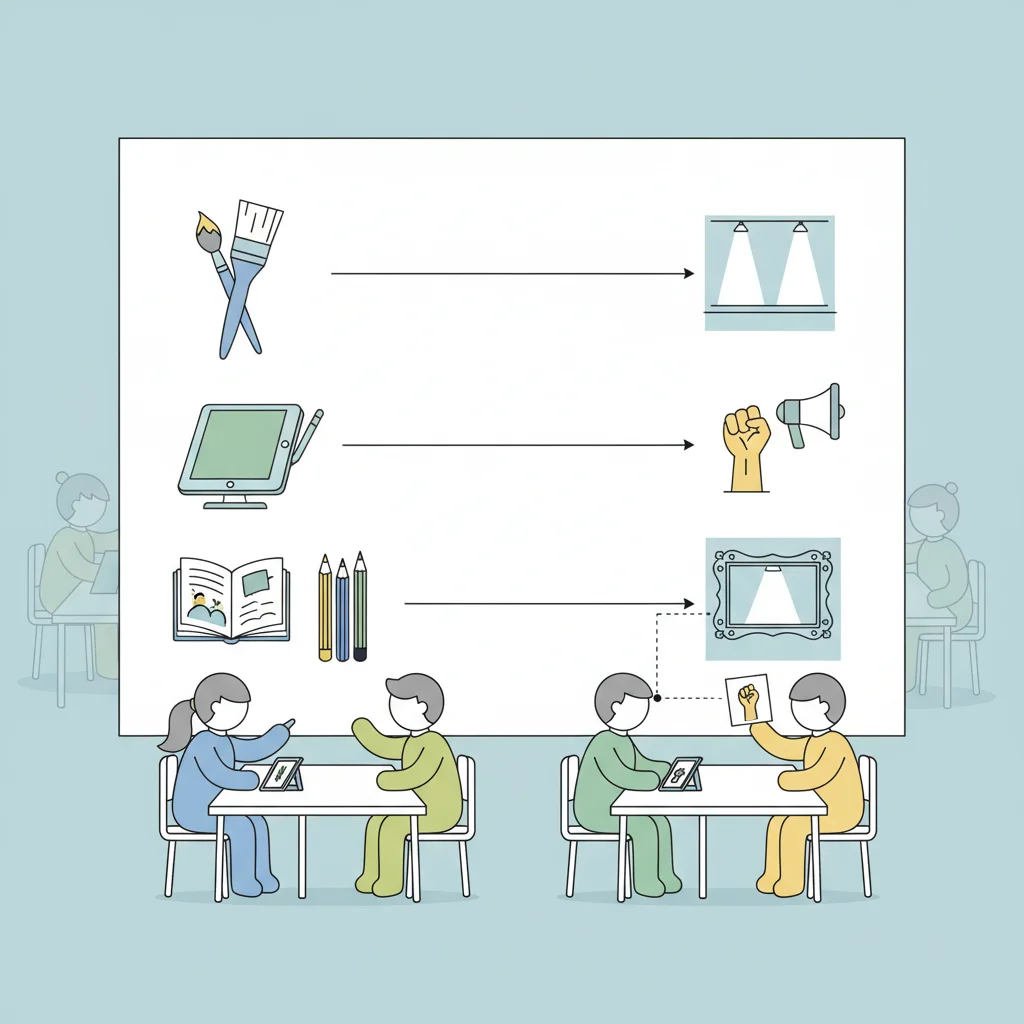
Media Matching Exercise
Match the message to the best medium Consider audience and purpose Think about practical constraints Discuss your choices with a partner
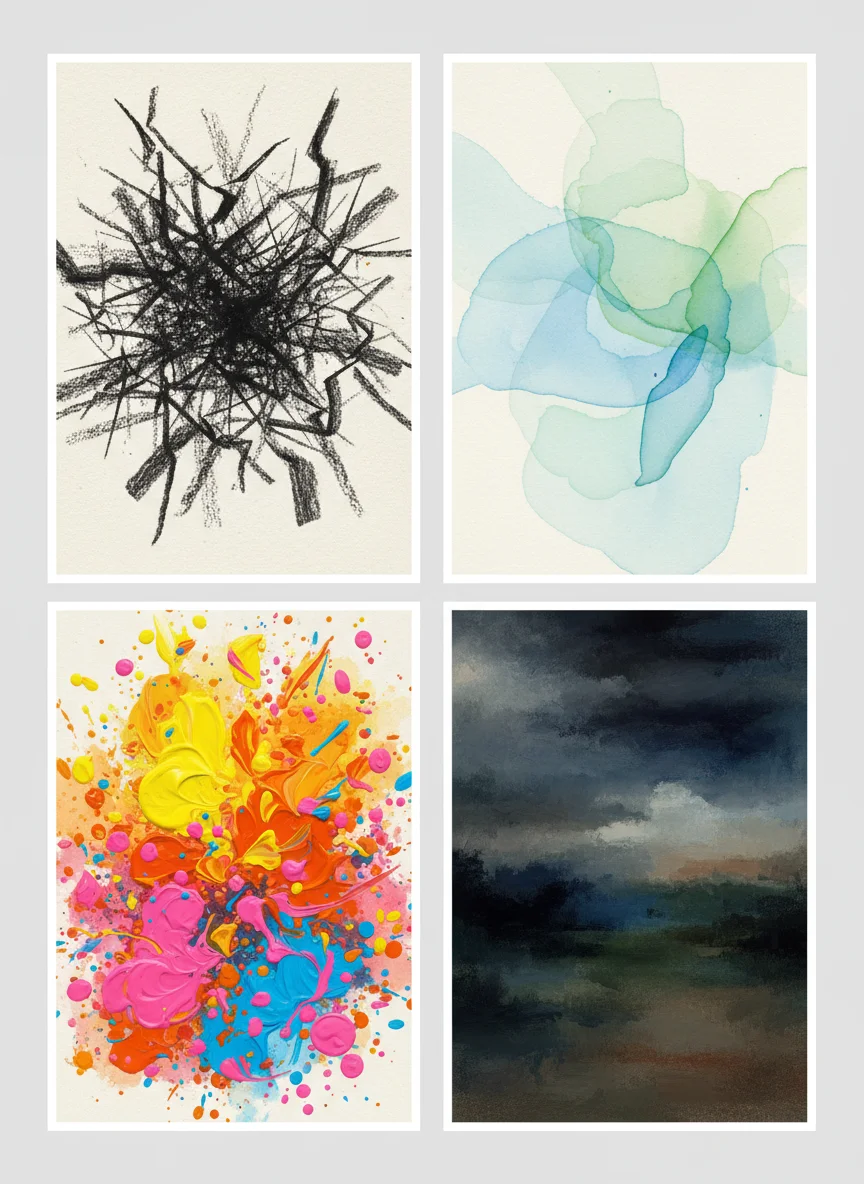
Communicating Emotions Through Media
Rough textures suggest conflict or energy Smooth surfaces convey calm or elegance Bright colors express joy or excitement Dark tones communicate mystery or sadness
8 more slides available after you open the deck.
Download all 20 slidesMore Visual Art slide decks
Other ready-to-teach visual art decks for Canadian classrooms.
