It's Sunday night. You've got newcomers arriving tomorrow, a stack of standards you didn't write, and about forty minutes before you need to stop planning and sleep. You don't need another giant library to scroll. You need something you can teach on Monday.
That's how I've judged these ESL resources for teachers. Each one gets a real classroom job, like a newcomer's first week, a push-in co-teaching block, or a family night handout. I also state the access catch upfront. Some are free, some need a district email, some sit behind membership or a subscription. That matters at 9 p.m. on a Sunday.
The list mixes free hubs, membership associations, paid lesson banks, and one research guide. A big catalog doesn't win by default. What wins is fit for your students, your proficiency levels, your standards, and the planning time you've got. If you're working outside the U.S. system, the same fit test applies whether you're using these sites or classroom tools for Kenya's CBE curriculum. Pick for the lesson in front of you, not for the bookmark folder.
1. Colorín Colorado
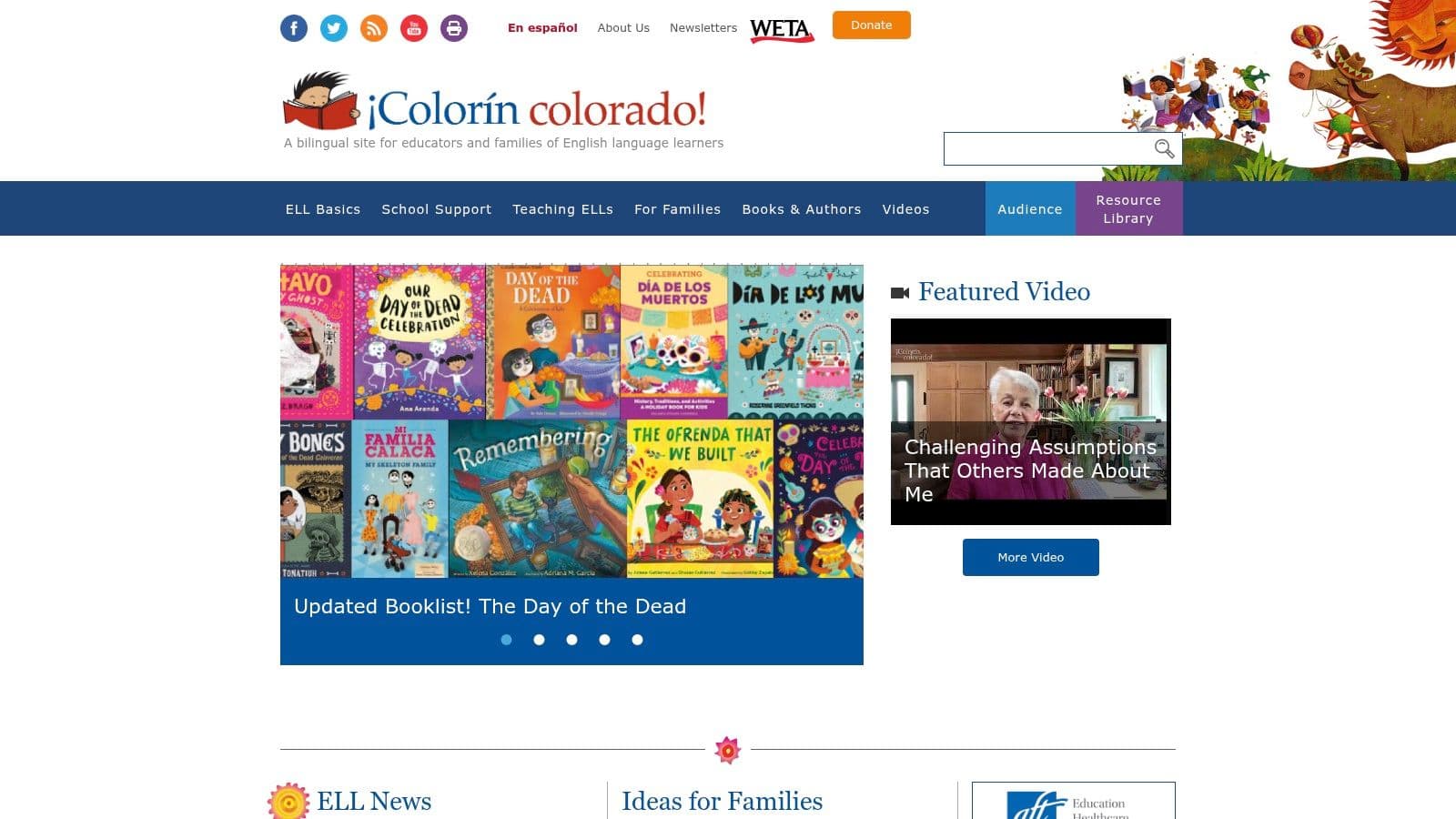
Access catch. Free, with no subscription. Start at Colorín Colorado for practical guidance in a U.S. PreK–12 setting.
For a newcomer's first week, use its classroom strategy library for ideas across literacy, math, science, social studies, and special education. Videos, toolkits, and articles make it easier to find a starting point during a planning period. For family night, Colorín on the Go offers shareable strategies and family tips in several languages.
Family communication can be a weak spot. In a 2025 survey of 874 educators reported by Education Week, 51% said they had received no professional development on working with English learners' families. Colorín Colorado gives teachers material to draw on when planning that communication.
Where it stops
The library is not a sequenced curriculum, and it is not all available in every language. Use its family tips as a starting point, then check translated materials for accurate meaning, captions, tone, and dialect before sending them home. A language translator tool can help draft a version, but it cannot replace that careful review. If you make a video explainer, an ShortGenius AI ad generator is one tool to consider, though an advertising tool is not a substitute for clear family-facing content.
2. WIDA Resource Library
If your district uses WIDA, this is the planning backbone, not a quick worksheet grab. Access catch. Much is public, but some resources and professional learning sit behind a secure portal or depend on your state or school access.
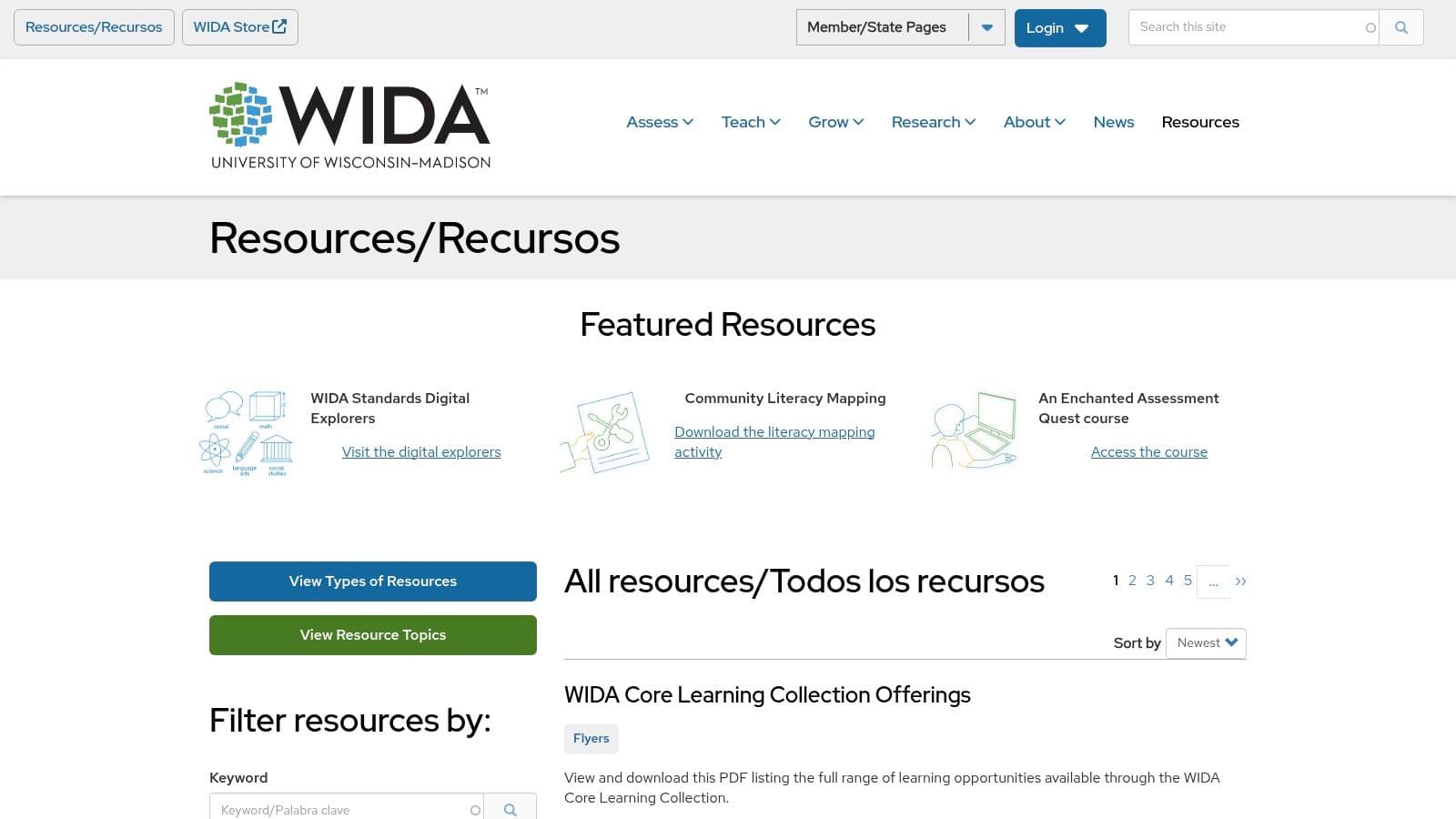
Use the WIDA Resource Library for a push-in co-teaching block. Its proficiency descriptors and standards guidance help you write a language objective that sits next to the content objective, instead of bolting vocabulary on at the end.
- Best for planning: Instructional materials tied to language development goals by proficiency level.
- Best for teams: Assessment and accommodation guidance your co-teacher can follow.
- Best for families: Tools that explain what proficiency progress looks like in plain language.
That alignment work matches how outcomes get tracked. Federal systems such as Ed Data Express publish state-reported English learner counts, which is a reminder that your scaffolds connect to monitored progress, not just a single lesson.
The downside is weight. When you need one activity in ten minutes, standards documents can slow you down. I use WIDA to set the target, then I build the task elsewhere.
3. British Council TeachingEnglish
Access catch. Many resources are free without a paid subscription, though you'll want an account for some community and course features.
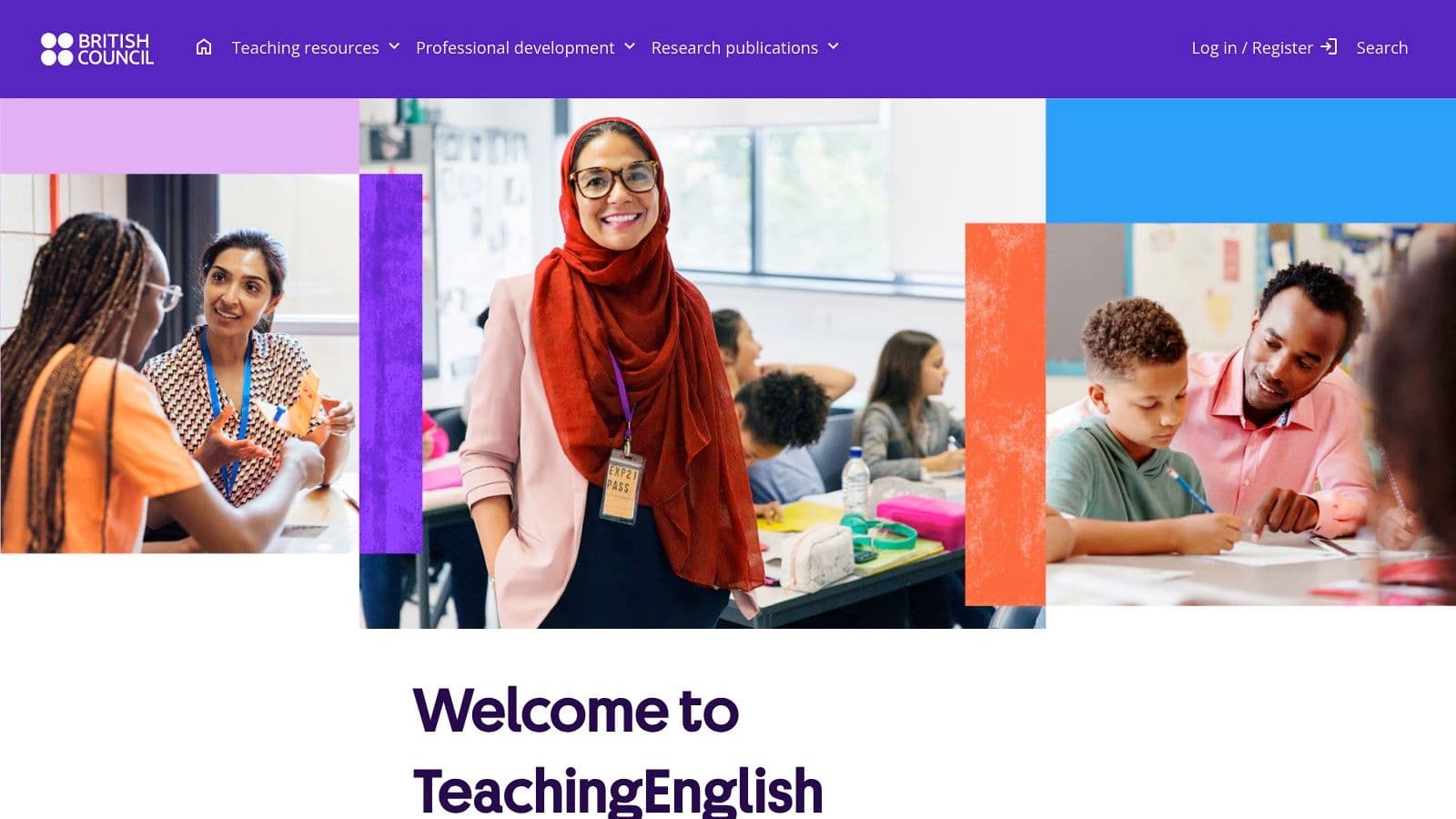
Go to British Council TeachingEnglish when your textbook lesson is flat and you need a speaking task, a topical reading, or a warmer that doesn't waste fifteen minutes. Lessons are organized by age group, proficiency level, and teaching context, with articles, webinars, and videos for your own learning.
It's strong on classroom practice beyond grammar drills. You'll find primary and secondary materials you can adapt quickly, plus a teacher community when you're stuck for an idea.
Practical rule: Steal the activity structure, then rewrite the examples for your kids, your town, and your content words.
The trade-off is localization. It uses CEFR levels, which don't map neatly onto most U.S. district proficiency frameworks, and examples may feel international in a way your students don't recognize. Don't force the level label. Check the actual language demand, sentence length, and background knowledge the task assumes, then adjust.
4. American English, U.S. Department of State
Access catch. Free. This one is built for English teachers broadly, including international EFL settings, so U.S. K to 12 teachers should expect to adapt.
American English from the U.S. Department of State works best for engaging practice. Think printable games, stories, songs, and short activities for speaking, listening, and vocabulary when energy is low on a Friday afternoon.
What to grab first
Start in Teacher's Corner for skills, grammar, inclusion, classroom management, and technology. Then look at Shaping the Way We Teach English if you want video-based training you can watch in chunks. The search by age and proficiency helps, but the site is broad and you can lose twenty minutes wandering.
The open, reusable spirit here has a history. UNESCO's open educational resources glossary entry notes UNESCO adopted the term “open educational resources” in 2002 for materials that can be freely accessed, reused, adapted, and redistributed under suitable licensing. That's the mindset to bring to this site. Take the game, change the cultural references, lower or raise the reading level, and make it yours. Don't teach it exactly as printed if your newcomers won't recognize the context.
5. PBS LearningMedia
Sometimes your learners don't need another passage. They need to see it first. Access catch. Free to browse, with account features for saving and organizing.
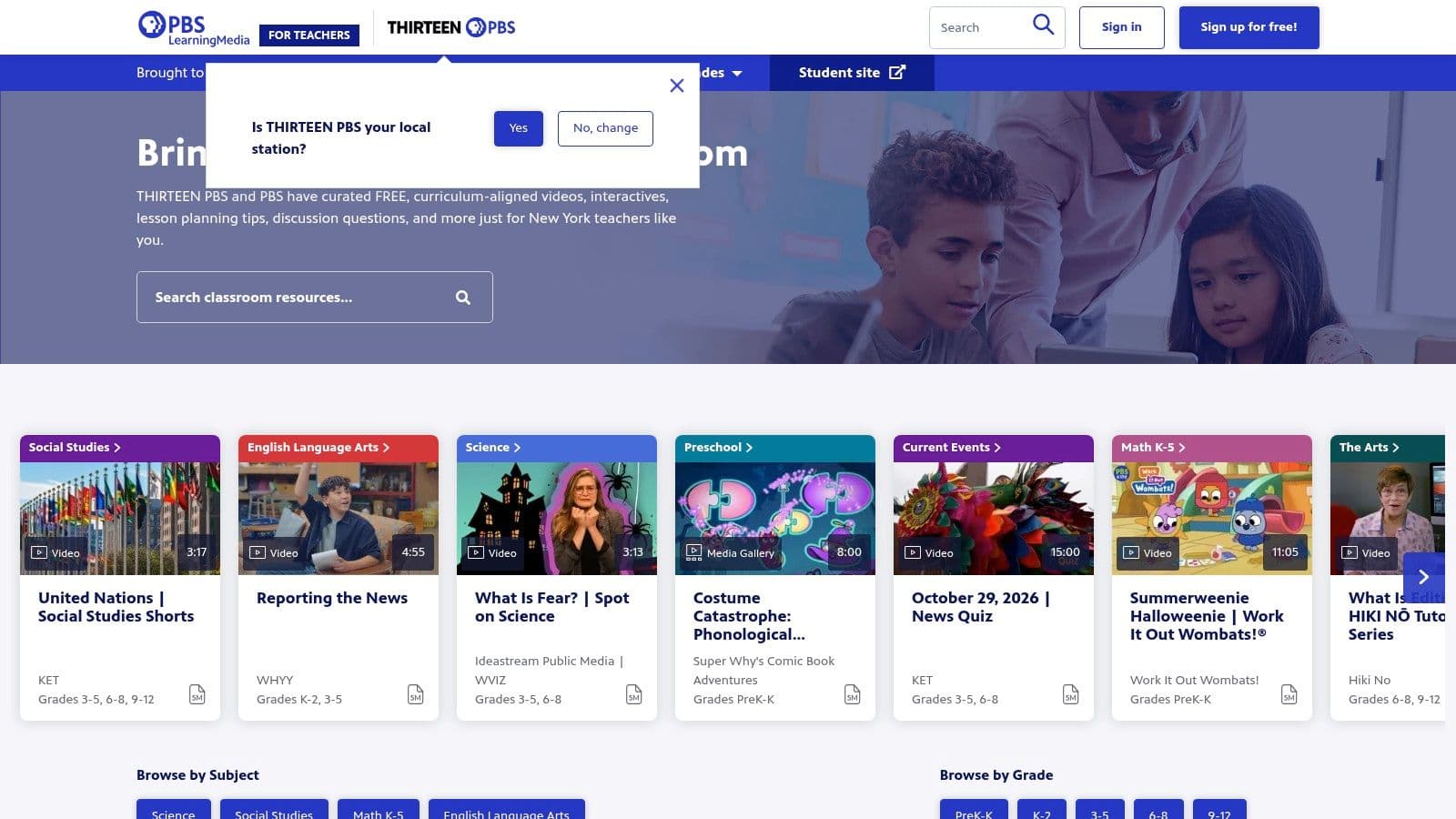
Use PBS LearningMedia for content-based instruction. A short science or social studies video builds background before reading, gives students images to point to while they talk, and makes abstract words concrete. That's gold in a push-in lesson where the content teacher is moving fast.
- Before reading: Show the clip, preteach five words, let students talk in pairs.
- During viewing: Pause for sentence frames, not just comprehension questions.
- After viewing: Turn the discussion into a labeled diagram or short write.
It's not a dedicated ESL curriculum. You'll add the language objective, vocabulary support, and follow-up task yourself. Kuraplan can help turn that video discussion into a differentiated worksheet, but you still decide which words matter. If you skip that step, students enjoy the video and leave with little usable English.
6. ReadWorks
Access catch. Free for K to 12 teachers with an account. This is your reading block workhorse.
ReadWorks gives you fiction and nonfiction passages, eBooks, audio, vocabulary support, and question sets. For English learners, look at the ELL collections and the Spanish and English paired texts. A student can build background in Spanish first, then tackle a related English passage with more confidence.
StepReads and audio help when one class spans several reading levels, which is most of us. I use ReadWorks for small-group reading where I need the same topic at different levels, then bring everyone back for one discussion.
When a passage is close but not quite right, Kuraplan's differentiate text tool can help you adjust a version for a beginner without stripping out the ideas. Review it before printing. Simplified should not mean empty.
The limit is clear. Spanish paired texts don't help your Arabic, Haitian Creole, or Ukrainian speakers with a first language scaffold, and the question sets still need matching to proficiency. Don't assign every question to every learner. Pick the ones that match your target.
7. Ellii (formerly ESL Library)
Access catch. Paid subscription for full access. I judge Ellii on prep time saved. If it doesn't save you real time, don't pay for it.
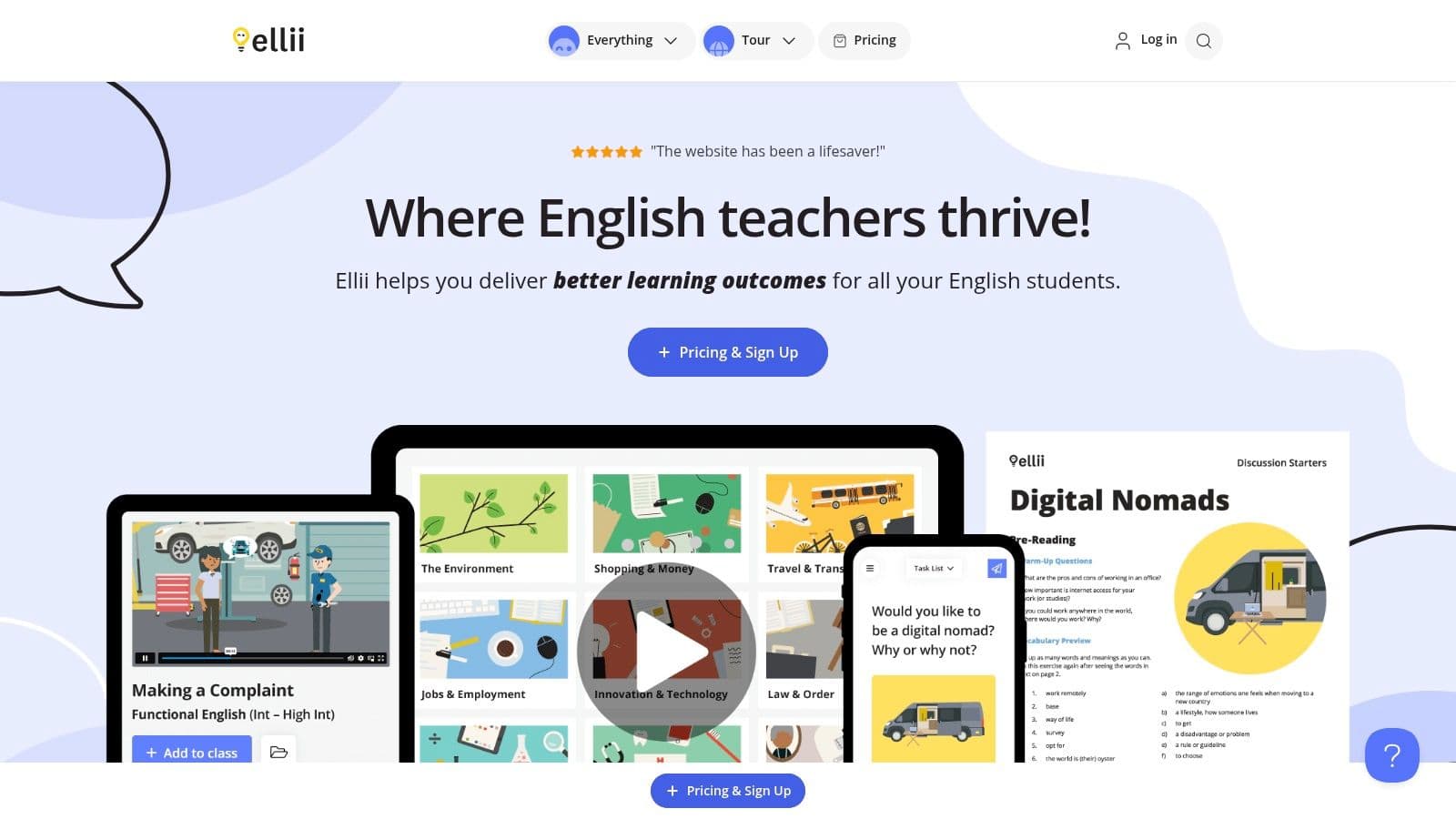
Ellii is a searchable bank of ready-made lessons by topic, skill, age, and proficiency, in print and digital formats. It's useful when you need targeted grammar, vocabulary, pronunciation, or a young learner lesson tomorrow and you don't have the hour to build it well.
Digital adoption is already normal, but training lags. A 2025 global survey described by the British Council found language-learning apps were used by 48% of 1,348 English-language teachers across 118 countries, while only 20% felt sufficiently trained to use AI. A structured lesson bank can be easier to roll out than a pile of disconnected tools.
Pair an Ellii lesson with a focused practice sheet like Kuraplan's everyday vocabulary worksheet for ELLs when students need repetition. The weakness is alignment. Much of the catalog is general ESL material, not U.S. grade-level standards-aligned curriculum, so check fit before you assign a whole unit.
8. Off2Class
Access catch. This is the big one. Eligible K to 12 district teachers can register free with a district email. Independent teachers and other users may need a paid plan.
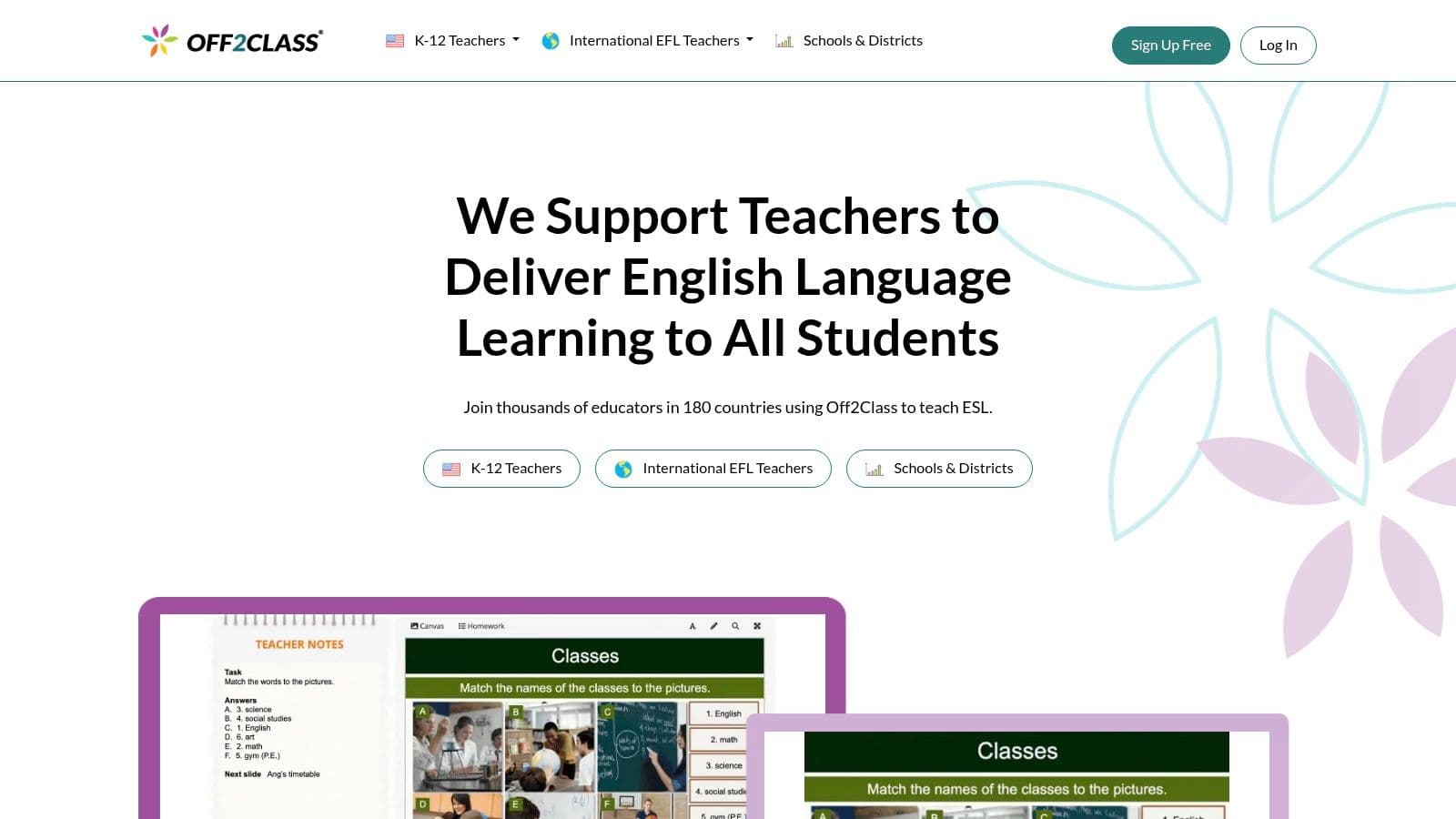
Choose Off2Class when you want sequence, not random activities. It offers structured ESL lessons, digital student-facing materials, and placement and progress tools. For a newcomer group that meets daily, that progression matters more than a clever one-off game.
Check the fit before you commit
Run two or three lessons with your actual students. Does the pacing match your block? Do the topics match their age and schooling history? Can beginners show understanding without producing full sentences on day one?
England's 2025 Language Trends survey found 82% of surveyed schools reported using commercially produced language-learning resources. Broad adoption doesn't prove fit for your roster. Schools buy platforms, teachers still differentiate.
Off2Class gives you more structure than a worksheet folder, but its sequence may not match your district standards or curriculum. Use its placement information as one data point, then watch what students do with real classroom tasks.
9. TESOL International Association
Access catch. Some of TESOL's most useful collections are for members. Check whether your school will cover membership before relying on them for regular planning.
TESOL International Association supports professional learning, community, publications, and advocacy. Its member Resource Center offers lesson plans, teaching tips, activities, and assessment tools. The ELT Toolkit focuses on technology for English teaching.
For a general education teacher supporting multilingual learners, the practical value is guidance and ideas to adapt, not a ready-made sequence for tomorrow's class. A nationally representative 2025 survey reported by Education Week found that about half of teachers serving multilingual learners felt not at all or only somewhat prepared. Worksheets alone will not address that gap. TESOL's resources and professional community can give teachers models and approaches to draw on.
A membership is worth it when it changes how you plan, not when it just gives you more downloads.
Use TESOL for professional learning and a faster tool for daily lesson production. It is an association, not a complete curriculum, and member-only access can frustrate teachers whose schools will not pay.
10. What Works Clearinghouse English Learner Practice Guide
Access catch. Free. It's also not a lesson library, so don't open it at 9 p.m. expecting printable pages.
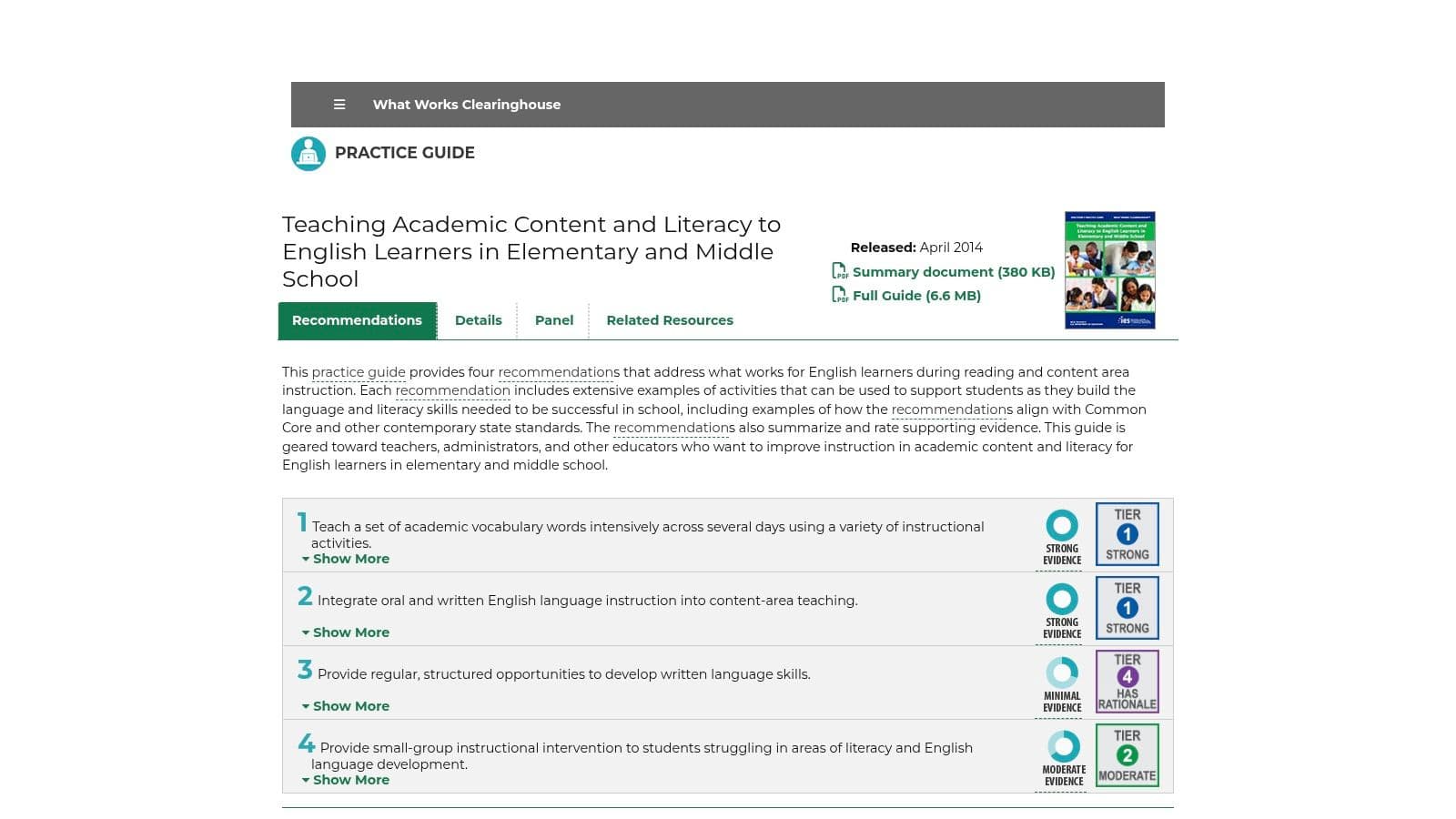
Use the What Works Clearinghouse English Learner Practice Guide during team planning or a PLC. Released in 2014, it focuses on elementary and middle school English learners, academic content, and literacy, with examples and evidence discussion.
The vocabulary guidance is directly usable. The U.S. Institute of Education Sciences practice guide summary recommends teaching a focused set of academic vocabulary words intensively over several days. That means student-friendly definitions, examples and non-examples, concrete representations, checking questions, and structured talk. Not a word list on Monday and a quiz on Friday with nothing in between.
That's why I keep it on this list of ESL resources for teachers. It stops you from collecting activities that look busy and forces a better question. What language will students use, and how many chances will they get to use it?
How the ten ESL resources compare on cost, access, and fit
| Item | Cost | Best for | Access requirement | Main limitation |
|---|---|---|---|---|
| Colorín Colorado | Free | Practical PreK–12 English learner strategies and family resources | Public access | Not a complete, sequenced curriculum |
| WIDA Resource Library | Free resources; some access may vary | Planning aligned with WIDA standards and assessments | Some materials require an account or qualifying state or school access | Can be extensive for educators seeking quick activities |
| British Council TeachingEnglish | Many resources are free | Lesson ideas and professional learning for English teachers | Public access; some features may require registration | CEFR levels and international contexts may need adaptation |
| American English, U.S. Department of State | Free | Teaching activities, materials, and teacher training | Public access | Some resources need localization for U.S. K–12 settings |
| PBS LearningMedia | Free | Using media to support content-based language instruction | Public access; an account helps save and share resources | Teachers may need to add language scaffolds and follow-up tasks |
| ReadWorks | Free | Reading comprehension practice with English learner supports | Teacher account may be needed for classroom tools | Spanish–English paired texts do not support speakers of every language |
| Ellii (formerly ESL Library) | Paid subscription | Ready-made lessons across ages, skills, and proficiency levels | Subscription required for full access | Much of the catalog is not aligned to U.S. grade-level standards |
| Off2Class | Free for eligible district K–12 teachers; other plans may be paid | Structured English-language instruction | District email required for eligible free access; otherwise plan-dependent | Lesson sequence may not fit local standards or student needs |
| TESOL International Association | Membership required for some resources and benefits | Professional development, networking, and teaching resources | Public resources available; some collections require membership | Not a complete curriculum or lesson library |
| What Works Clearinghouse: English Learner Practice Guide | Free | Evidence-informed planning and professional learning | Public access | Older practice guide, not a daily lesson-planning tool |
Build a Small Toolkit Before You Build a Big Library
Don't bookmark all ten tonight. You'll use none of them well. Build a small toolkit you can reach for without thinking.
Pick one free library for daily material. Colorín Colorado works if you need family and general education strategies. ReadWorks works if your pain point is leveled reading. PBS LearningMedia works if your students need visual background before text. British Council TeachingEnglish and American English work when you need fresh activities, but budget adaptation time.
Pick one professional or research source to keep you honest. WIDA helps you set proficiency-based targets if your state uses it. TESOL helps you grow beyond downloading. The What Works Clearinghouse guide helps your team agree on vocabulary and academic language routines that hold up across classrooms.
Pick one planning tool that turns good source material into something your exact students can use. That's where generating your own adapted worksheets or lesson plans can be faster than searching for a perfect printable. A tool like Kuraplan can turn a lesson into a printable worksheet in a few clicks, differentiate the reading level, and add visuals. You still review every scaffold, translation, and question before it reaches students. Fast drafting is helpful. Blind printing isn't.
Small-group time needs the same discipline. The IES evidence summary on elementary English learner instruction recommends intervention of at least 30 minutes per day in groups of no more than five or six students. That only works if the task is targeted. Group by a specific skill, teach explicitly, and check progress quickly. A smaller group doing the same generic worksheet is just whole-class teaching with fewer chairs.
Match the toolkit to the job in front of you. Newcomer's first week? Prioritize survival vocabulary, visuals, family communication, and low-risk speaking. Push-in science block? Prioritize background building, academic vocabulary taught over several days, sentence frames, and a shared language objective with your co-teacher. Independent practice? Prioritize leveled text, audio support, and questions students can answer without you standing beside them.
Don't ignore home language. A bilingual vocabulary preview or a family note in a language caregivers read can do more than another English-only page, as long as a qualified person checks it. Machine translation can draft, but it shouldn't be the final voice of your school.
Here's your concrete next step. Pick one resource from this list, use it in next week's lesson, and note one thing students could say or write afterward that they couldn't before. If you can't name that change, the resource didn't do its job, no matter how polished it looked.
Turn the resource you pick into a lesson your students can use with Kuraplan, where you can build standards-aligned ESL lesson plans, differentiated worksheets, vocabulary practice, and visuals in minutes. Bring your WIDA target, ReadWorks passage, or newcomer word set, generate a draft, review it like a teacher, and print something ready for tomorrow.