MathsFreePrintable
Divisibility Rules Exploration
A free maths worksheet ready for your classroom. Open in Kuraplan to grab the print-ready PDF, customize it for your students, or generate a fresh version in seconds.
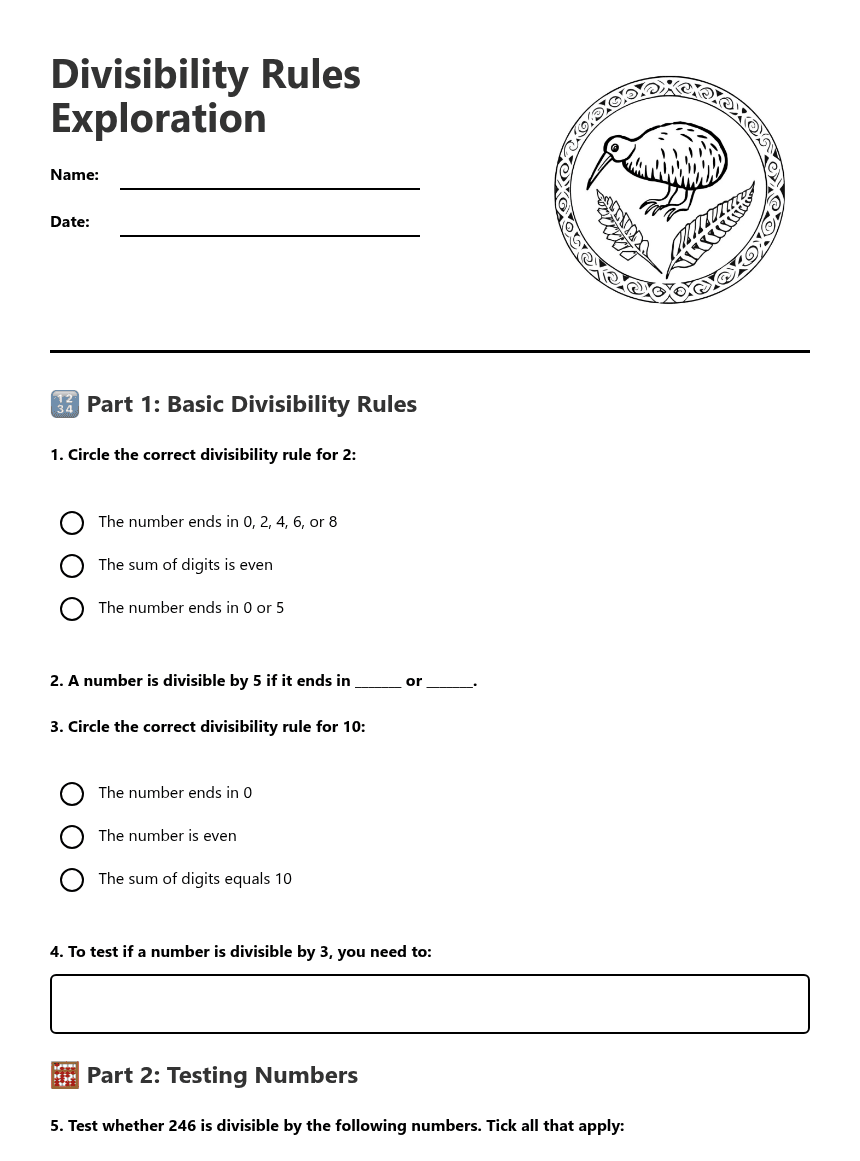
Divisibility Rules Exploration

🔢 Part 1: Basic Divisibility Rules
1. Circle the correct divisibility rule for 2:
The number ends in 0, 2, 4, 6, or 8
The sum of digits is even
The number ends in 0 or 5
2. A number is divisible by 5 if it ends in _______ or _______.
3. Circle the correct divisibility rule for 10:
The number ends in 0
The number is even
The sum of digits equals 10
4. To test if a number is divisible by 3, you need to:
🧮 Part 2: Testing Numbers
5. Test whether 246 is divisible by the following numbers. Tick all that apply:
2 (even number)
3 (sum of digits: 2+4+6 = ___)
5 (ends in 0 or 5)
6 (divisible by both 2 and 3)
6. Show your working to test if 135 is divisible by 9:
7. Which of these numbers are divisible by 4? (Hint: Check if the last two digits form a number divisible by 4)
1,236 (last two digits: 36)
2,418 (last two digits: 18)
3,524 (last two digits: 24)
4,567 (last two digits: 67)
🎯 Part 3: Pattern Investigation
8. Using a 100s board, colour or mark all multiples of 6. Describe the pattern you notice:
9. Match each divisibility rule with the correct number:
1. Ends in 0
2. Sum of digits divisible by 9
3. Last two digits divisible by 4
4. Divisible by both 2 and 3
A. Divisible by 4
B. Divisible by 6
C. Divisible by 9
D. Divisible by 10
🚀 Part 4: Challenge Problems
10. A number is divisible by 8 if its last three digits form a number divisible by 8. Test if 23,456 is divisible by 8:
11. For divisibility by 11, you alternate adding and subtracting digits from right to left. If the result is divisible by 11, then the original number is too. Test 1,331:
Working: 1 - 3 + 3 - 1 = _______
12. Real-life application: You have 84 lollies to share equally amongst groups. List all the possible group sizes (factors of 84) using divisibility rules:
💭 Part 5: Reflection
13. Which divisibility rule do you find most useful in everyday maths? Explain why:
14. Create your own number and test it for divisibility by 2, 3, 5, and 9. Show all your working:
My number: ___________
15. How do divisibility rules help make division easier? Give an example:
About This Worksheet
Free in Kuraplan
Sign up free, grab the PDF, and customize it for your class.
Print-Ready
Formatted for standard paper. Clean layout, easy to read.
AI-Generated
Created with Kuraplan's AI, designed for real classroom use.
For Teachers & Parents
Use in classrooms, for homework, tutoring, or homeschool.
Need a custom version of this worksheet?
Kuraplan's AI generates custom worksheets in seconds — differentiated for every learner, aligned to your curriculum.
Generate Custom Worksheets — Free No credit card Curriculum-aligned Under 60 seconds
More Maths Worksheets
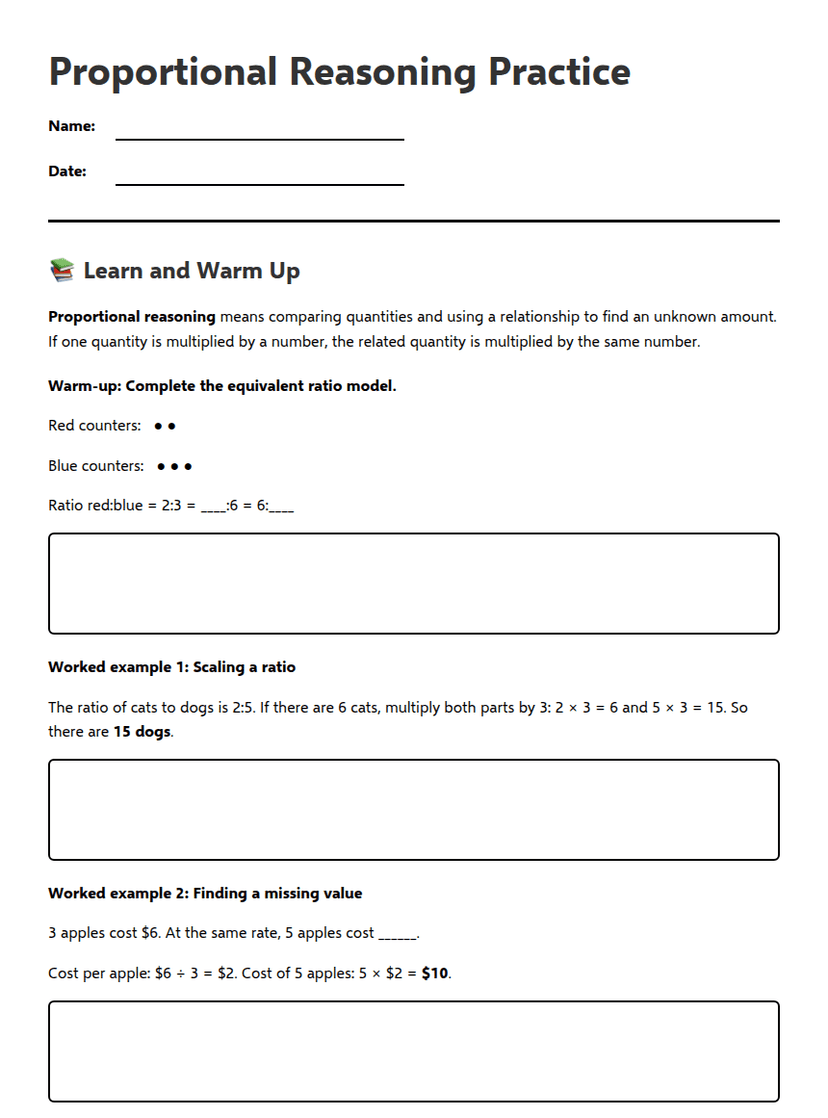
Year 6
Proportional Reasoning Practice
Free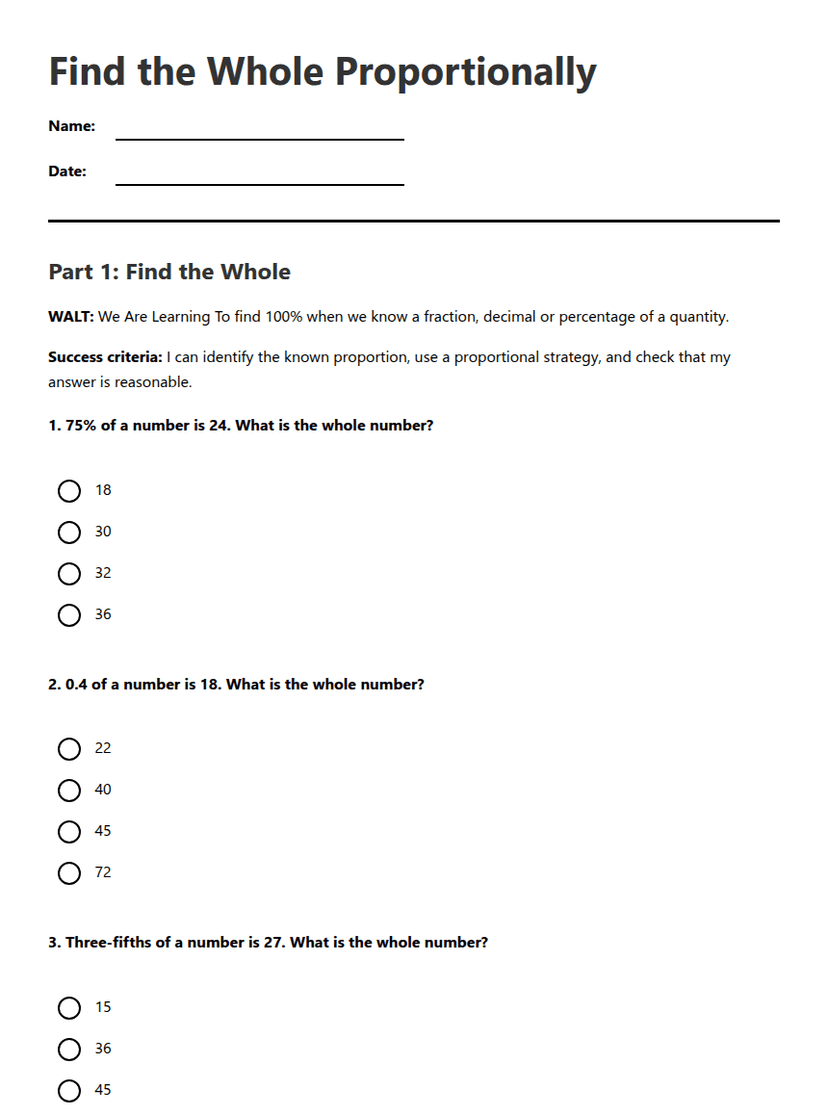
Year 6
Find the Whole Proportionally
Free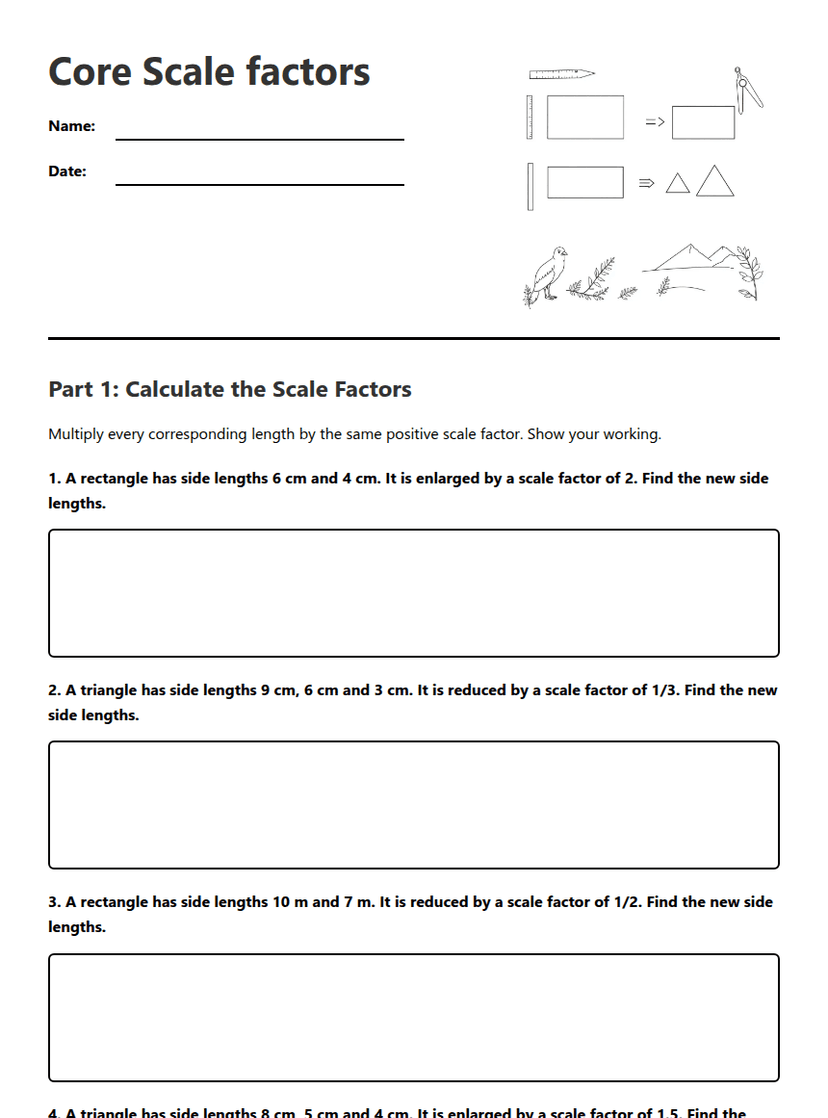
Year 8
Core Scale Factors
Free
Year 8
Advanced Scale factors
Free
Year 8
Basic Scale Factors Worksheet
Free
Year 7
Proportion and Ratios Worksheet
Free
Year 6
Proportional Reasoning Practice
Free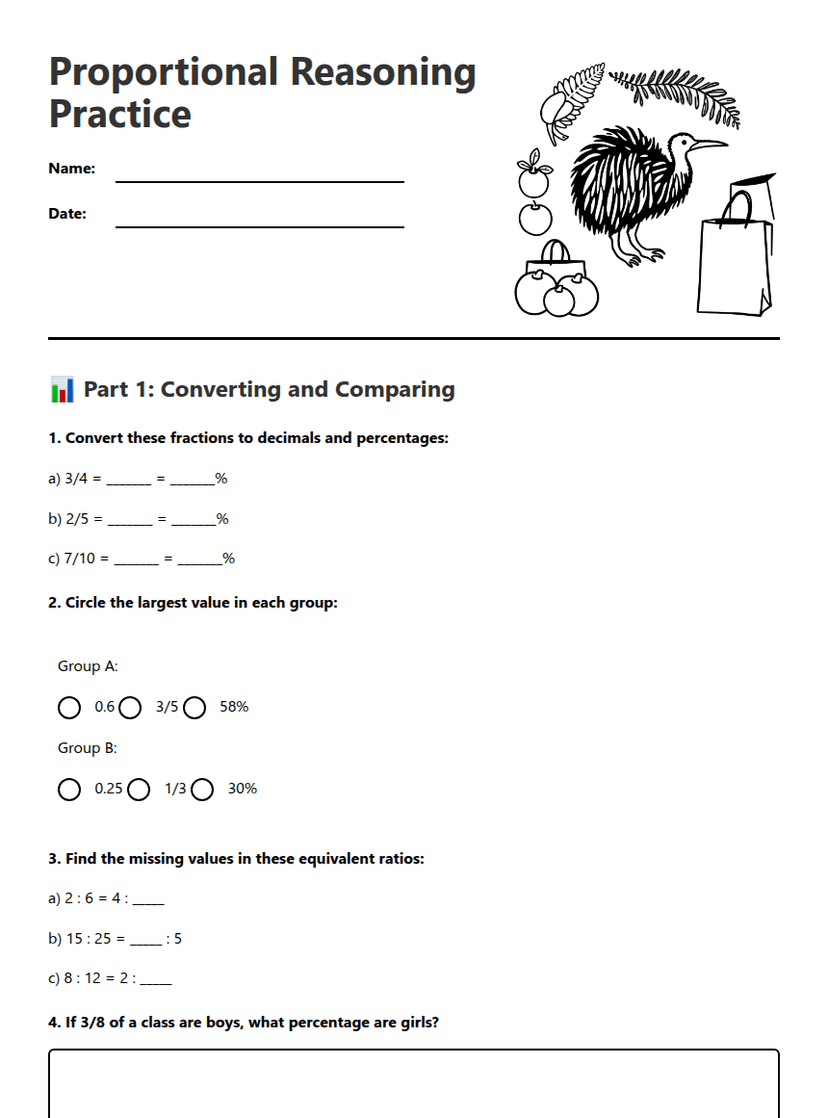
Year 6